Lead-Gen now on Auto-Pilot withBuild My Campaign
Valasys Media — Empowering marketers with powerful insights

5 Remarkable Ways to Repurpose Content in B2B Marketing

Content repurposing is imperative to the success of B2B marketing and therefore B2B marketers need to keep abreast with the queries.

Valasys Media
Valasys Media
Last updated on: Apr 8, 2026
Content

Content repurposing is imperative to the success of B2B marketing.

B2B marketers focus on attracting the ever-evolving buyer persona. Therefore, they need to keep their content strategies abreast with the queries of their potential clients, to match up with their intellectual, psychological & visual delights. Content repurposing helps in targeting new buyer persona, getting rid of outdated trends & giving a new makeover to all-time favorite contents.

Creating personalized content helps in the retention of clients, which in turn, can increase the Return on Investment (ROI), anywhere between 5% to 95% (Source: Brain & Company). Thus, quality content lays the foundation for client acquisition as well as retention.

According to eMarketer, 60% of B2B marketers create at least one new piece of content every day. It’s true that content lives forever, however, it might lose its influence due to several reasons some of which include having old statistical figures, not having the unique pitch to appeal to the ever-evolving buyer persona anymore, having disrupted ideas on solicited topics. Repurposing or recycling content will not only help in restoring its effect but will also assure that it is in alignment with the marketing & sales strategies of B2B marketers.

The efficacy of content is implied from the fact that over 2 million blogs are written every day (Source: MarketingProfs). A well-planned content strategy is the mainstay of inbound sales & helps buyer persona through all the stages of their buying cycle i.e. awareness, consideration & decision.

When to Repurpose Content

If there is content on a website that no longer suffices the need of the buyer persona, it will fail to keep them engaged.

There are several signs that infer content repurposing including a decline in the engagement level on particular content or blog, increase in the exit rates on the webpage, drop in the clicks on the call to action (CTA) buttons & descent of website conversions. Under such circumstances, one should start thinking about the ways to repurpose the piece of content.

How to Repurpose Content

Marketers should inspect why they want to repurpose any content before they actually do it. According to Robert Duke, Marketing Manager and Spokesperson of Blue Mail Media:

“A good piece of content never gets old if we know how to find the ‘new’ out of it, every time!”

Content repurposing can not only help escape the extra time spent on creating new content but can also give the marketers a second chance to promote their content & optimize their revenue, provided it is orchestrated properly with the marketing & sales goals of a company.

Methods to Repurpose Content

Depending upon the type of content, the target audience & the business goals of a company, there can be various ways to repurpose a piece of content. Let’s have look at the most impactful ones within the B2B domain:

1. Turning Quora Q&A into Blog Posts:

Find a relevant question on Quora, aligned with your business & with several up-votes and answer it as pioneers in the business without forgetting to link back to your blog or website that answers the same question, in greater detail.

This serves two main purposes:

Build My Campaign

  • Gives B2B marketers valuable traffic on their website, composed majorly of the people looking for those answers
  • Helps marketers secure their brand equity

2. Convert Slideshows, E-books & Content into Infographics:

Human beings are visual learners and due to which take in 90% of the information visually (Source: semrush.com).

B2B marketers have found that infographics have proven to be 66% more effective in helping potential buyers with a buying decision than plain text (Source: Upwork). For this reason, marketers need to first define the objective of their infographic & align it with their marketing goals.

Infographics can show data & text simultaneously in distinct sections, in a way, that is easier for potential clients to understand. Due to their visual appeal, infographs trigger a prompt response (buying decision or signing up using CTA) from potential buyers & are one of the most powerful weapons in the content marketing arsenal of any B2B company.

Have a look at some infographs we created by repurposing old blogs and shared on Slideshare.

3. Sharing Statistics through Twitter:

Twitter is described as the micro-blogging social media website (multum in parvo, as the Latins, would put it).

Tag the statistical figures that you have researched for, & share it with the target audience & the major influencers in your field. Engage the influencers with your post so that they can retweet it, comment on it & share it which, in turn, will expose your content to a greater number of relevant people including your potential buyers.

Experiment with statistical posts blended with infographics, for better audience engagement. Have a look at our Twitter account to discover how.

4. Converting Interview Extracts of Industry Thought Leaders into Expert Advise E-books:

Interviews from the industry experts can be segued to e-books which will attract the targeted buyer persona, as well as instill confidence in them to make a quicker decision at any stage of their individual buying cycles.

5. Stuffing Old Blogs with Case Studies:

People relate more to stories & engage better with the business objectives of B2B marketers if they are conveyed in the form of impactful stories. Marketers can prepare their own stories using their internal analytical tools.

For example, when they test their website design, they can always publish in their blog posts the kind of colors or graphics that appealed most to their audience. Similarly, trends from the industry also make appealing case studies to support content.

In Conclusion:

Repurposing content is an indispensable part of any content strategy. Content needs to be evaluated & updated frequently so that it’s always a “good-fit” & serves the requirements of a buyer persona. We, at Valasys Media, help B2B marketers with a robust content syndication service in order to help them meet their business requirements. For more details, feel free to get in touch.

Related Posts

credit-card-online-security-checklist

Securing Your Credit Card for Online Use: An Essential Checklist

Guest Author

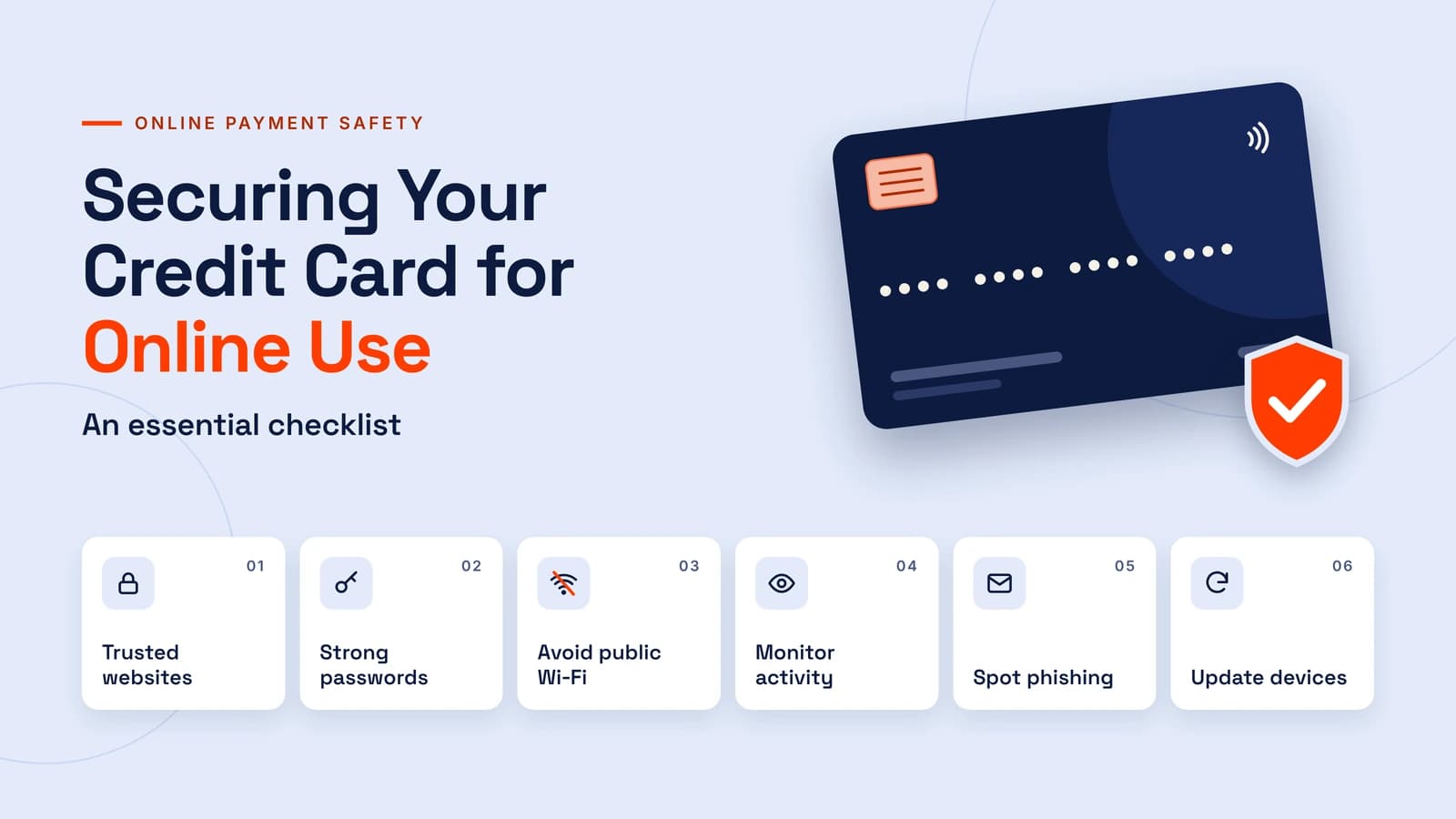
Our modern lifestyle increasingly relies on convenience and connectivity. This is reflected in nearly all aspects of living, including how we obtain goods and services. Today, e-commerce has evolved into a dominant force in daily life, allowing consumers to access everyday essentials and other products from the comfort of their homes. However, along with the rise of online transactions comes the growing risk of falling victim to cybersecurity threats. Because individuals often rely on credit cards to make electronic payments, it‘s essential to practice greater vigilance when using these financial tools online to prevent their personal and financial information from being compromised. To that end, here are some practical considerations that can help individuals secure their credit cards when making purchases online: 1) Use Secure and Trusted Websites for Online Purchases One of the most important steps in ensuring secure online credit card transactions is verifying that the website used for a purchase is legitimate and secure. Reputable websites typically use encrypted connections that protect the information entered by users. You can often confirm this protection by checking for “https” at the beginning of the website address or by viewing the security icon displayed by most web browsers. Also, take time to evaluate unfamiliar online stores before entering payment details. Fraudulent websites may imitate legitimate retailers in order to collect credit card information from unsuspecting users. Reviewing the website’s domain name, examining its contact information, and searching for independent customer feedback before you use your Maya credit card can help you determine whether the site is trustworthy. 2) Strengthen Account Protection with Strong Passwords Many e-commerce platforms store payment information within user accounts to simplify future purchases. While this feature adds convenience, it also risks exposing saved credit card details if an account is accessed without authorization. As such, individuals should use strong passwords for their shopping and payment accounts. A secure password usually contains a combination of letters and numbers and avoids easily guessed information such as names or birthdays. In addition, it’s helpful to use different passwords for different online services. When the same password is used across several websites, a single security breach may allow attackers to gain access to multiple accounts. A number of platforms also provide additional authentication steps that require a verification code during login attempts. These features add another layer of security that can help prevent unauthorized users from accessing accounts that contain stored payment information. 3) Avoid Public Wi-Fi When Entering Credit Card Information Public wireless networks, which are often available in cafes, airports, or hotels, may offer convenient internet access, but they may not provide the same level of security as private connections. Some public networks lack proper encryption, which can make it easier for cybercriminals to intercept information transmitted through the connection. Thus, entering credit card details while connected to an unsecured network may increase the risk of data exposure. When making online purchases, it’s safer to use a trusted private internet connection such as a home network or a secure mobile data connection. If you must complete a purchase while away from home, confirm that the website uses encryption and avoid connecting to unknown networks. 4) Monitor Credit Card Activity Regularly Regularly reviewing credit card activity can help you detect unauthorized transactions before they cause significant financial harm. Most financial institutions provide mobile banking applications or online platforms that allow cardholders to view their transaction history. You should also make it a point to check recent purchases on a routine basis so that there’s a better chance of you quickly identifying charges you don’t recognize. The most reputable credit card providers also offer SMS, email, or app notifications that alert cardholders when a transaction occurs. Prompt awareness of unusual activity allows consumers to report suspicious transactions to their financial institution without delay, which often helps prevent additional fraudulent charges. 5) Be Cautious of Phishing and Online Scams Phishing scams are designed to trick individuals into revealing personal or financial information through deceptive messages. These scams often appear as emails or text messages from senders pretending to be a bank, payment platform, or online retailer. The message may request urgent action, such as confirmation of account details, or direct the recipient to a fraudulent website that asks for credit card information. Individuals should approach unexpected payment requests or account warnings with caution. Before clicking links in suspicious messages, you’ll want to visit the company’s official website by typing the address directly into your browser to verify whether the message is from a trusted source. Legitimate institutions rarely ask customers to provide sensitive financial information through unsolicited messages. Being mindful of these tactics can help prevent the accidental disclosure of credit card details. 6) Keep Devices and Software Updated Computers, smartphones, and tablets rely on operating systems and applications that occasionally require updates. These updates often contain security improvements that address newly discovered vulnerabilities. It’s crucial to pay attention to these updates to prevent exposure to malware that could capture financial information. Keeping devices updated helps maintain a safer environment for online payments. By installing software updates promptly and using reputable security programs, you can reduce the likelihood of malicious software being installed on a device. Credit cards are valuable for enhancing convenience and flexibility in managing payments in today’s digital economy. While these financial tools come with protective features of their own, maintaining secure electronic transactions still largely depends on your credit card use habits and online practices. If you can leverage your card’s security features, stay aware of common cybersecurity threats, and maintain safe online behavior, you should be able to ensure that your personal and financial information remains secure. This approach not only limits online security risks but also allows you to enjoy the benefits of e-commerce with greater confidence and control.

The Role of a Security Operations Centre in Managing Cyber Risks

The Role of a Security Operations Centre in Managing Cyber Risks

Guest Author

Cyber risk is not managed by tools alone. Firewalls, endpoint agents and identity controls all generate signals, but somebody has to watch them, decide what matters and act before a minor intrusion becomes a reportable breach. That is what a security operations centre provides: a defined team, working to defined processes, responsible for noticing trouble and responding to it. Past a certain size, it is the difference between knowing an incident happened and hearing about it from a customer. What Is a Security Operation Centre? A security operations centre monitors an organisation’s systems for signs of attack and coordinates the response when something is found. It may be a staffed room, a distributed team working in shifts, a managed service, or a hybrid. The physical arrangement matters far less than the operating discipline. Understanding what a Security Operation Centre does is easier once separated from the technology it runs. Detection platforms, log correlation and automation tooling are instruments. The centre is the capability: defined roles, documented procedures, escalation paths that work at 2 a.m., and accountability for outcomes rather than dashboards. Core Functions of a Security Operation Centre Continuous Monitoring and Threat Detection Monitoring means collecting telemetry from endpoints, networks, cloud workloads and identity systems, then applying detection logic. The aim is not to see everything, but to see what indicates compromise: unusual authentication patterns, privilege escalation, unexpected outbound traffic, tampering with logging itself. Incident Response and Containment When a detection holds up, the centre moves to action: isolating hosts, disabling accounts, blocking infrastructure and preserving evidence. The quality of this stage depends on preparation. Teams that have rehearsed a ransomware scenario behave differently from those reading the plan for the first time. Threat Intelligence and Proactive Hunting Mature centres do not wait for alerts. They use intelligence about attacker techniques to hunt for activity the detection rules missed, then feed what they find back into new detections. This closes the gap between what is known publicly and what the organisation can see. How a Security Operation Centre Reduces Business Cyber Risk Risk reduction comes from compressing time. Most damaging incidents involve a period during which an attacker is inside the environment and nobody knows: establishing persistence, harvesting credentials, locating valuable data. Detection shortens that period, and every hour removed reduces what must be contained, reported and remediated. Four further contributions tend to matter to boards: Decision support. Someone can say whether an exposure affects the organisation, rather than forwarding an advisory. Regulatory readiness. Breach notification deadlines are short, and case records let the team meet them with evidence. Third-party assurance. Customers and insurers increasingly ask who monitors the environment and how. Prioritised remediation. Observed attacker behaviour shows which weaknesses matter most, which beats a severity list. In-House vs Outsourced Security Operation Centre Models Building internally gives the deepest business context. An internal analyst knows which server runs payroll and which odd login is the finance director travelling. The cost is substantial: round-the-clock coverage realistically needs eight to twelve people, plus tooling, training and the attention to retain them. Outsourcing to a managed provider buys coverage immediately and spreads cost across clients. The trade-off is context. External teams work from runbooks rather than familiarity, so escalations arrive with less interpretation and handover needs real attention. The hybrid arrangement is now the common choice for mid-sized organisations. The provider handles first-line triage and out-of-hours monitoring; an internal lead owns escalation, incident command and the relationship with the business. What makes it work is unambiguous ownership of decisions, written down before the first incident rather than negotiated during one. Security Operation Centre Roles and Team Structure A functioning centre has distinct roles rather than a pool of generalists. First-line analysts triage alerts against documented criteria. Second-line analysts investigate what survives triage and lead containment. Detection engineers build and tune the content that generates alerts. Intelligence specialists provide adversary context, and a manager owns process, metrics and executive reporting. Two structural points are consistently underrated. The first is authority: a centre that must request permission to isolate a machine during an active intrusion loses time it cannot recover, which is whypublished SOC design strategies place mandates alongside structure and staffing. The second is career progression. Triage work burns people out, and teams without a route upward lose trained analysts to employers who offer one. SOC Metrics That Show Cyber Risk Is Falling Alert counts measure activity, not effectiveness. Useful measures track the process: time to detect, time to triage, time to contain, and the proportion of incidents found internally rather than reported by a third party. That last ratio is the clearest indicator of whether monitoring works. Two further measures deserve attention. Detection coverage against known attacker techniques shows where visibility is missing. Alert quality, the share of escalations that prove genuine, shows whether analysts spend time on real work or noise. Metrics should also be reported in business terms. Executives respond to dwell time and containment of material systems, not volumes of events processed. Common Security Operation Centre Challenges The constraints are consistent across organisations.Annual security operations surveys repeatedly find that the obstacles teams cite most often are missing context around what they are seeing and a shortage of skilled staff, with limited enterprise-wide visibility close behind. The same research notes that most centres are small, commonly eleven to twenty-five people, relative to the volume they handle. Three responses help. Automate enrichment so analysts receive context rather than gathering it manually. Invest in asset inventory, because detection without knowing what a system does produces alerts nobody can judge. And tune aggressively: a quieter queue of higher-quality alerts beats comprehensive coverage nobody has time to review. Conclusion A security operations centre manages cyber risk by turning scattered signals into decisions and decisions into action, quickly enough to limit damage. The model matters less than the fundamentals: clear roles, documented processes, real authority to act, visibility into the systems that matter, and measurement showing whether detection and containment are improving. Organisations that treat it as a staffed capability with executive

Why MQLs Do Not Become HQLs: 5 Common Reasons

Why MQLs Do Not Become HQLs: 5 Common Reasons

Pranali Shelar

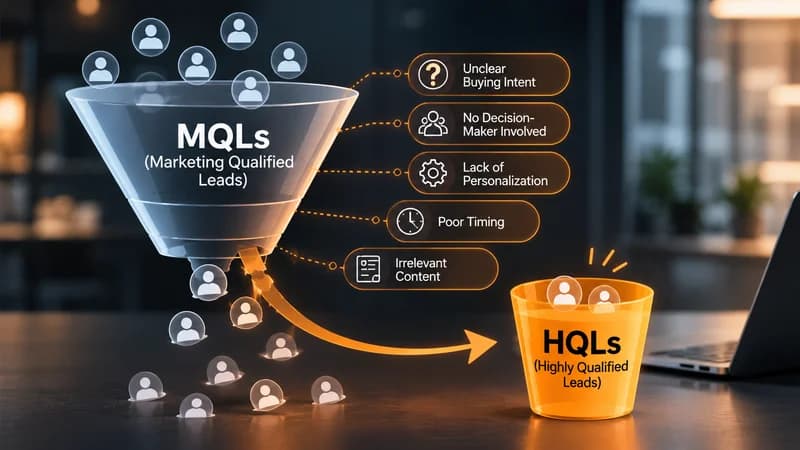
Marketing reports 400 MQLs. Sales asks how many are worth calling. Suddenly, that impressive number needs a little explaining. The gap between lead volume and actual business impact raises a bigger question: are MQLs really reflecting revenue potential? You’re investing in demand generation, paying for lead delivery, and meeting campaign targets. But if Sales keeps rejecting the leads, what exactly is that investment producing? The problem may not be the qualification framework itself. It may be the lack of alignment between how marketing and sales interpret it. When both departments apply different definitions of what makes a lead qualified, the same MQL can meet Marketing’s expectations but fall short of Sales’ requirements.  MQLs do not become HQLs when the initial criteria used to capture and classify interest don’t match what Sales needs to consider a prospect qualified. Why Do MQLs Fail to Become HQLs? MQLs fail to become HQLs when they meet basic marketing criteria like engagement and demographic thresholds but lack additional evidence of buying interest, such as repeated website visits, longer sessions, or search propensity across search and generative engines, and fall short of the business requirements for further sales qualification. Common causes include audience mismatch, incomplete lead information, confusion between data verification and qualification, unclear delivery expectations, and inadequate sales feedback. 5 Reasons MQLs Do Not Become HQLs Several issues can prevent an MQL from progressing into an HQL. The following table summarizes the five common reasons, what each looks like in practice, and how it affects lead quality. Reason What it looks like Business impact The campaign attracts the wrong audience Responses come from people outside the intended audience Lower audience relevance Contact details don’t tell the whole story Lead records lack useful business context Sales cannot assess the prospect confidently Verification gets mistaken for qualification Valid contact details are treated as proof of qualification Unqualified contacts move forward Provider and buyer have different delivery expectations Both sides interpret lead requirements differently More delivery disputes and rejected leads Sales feedback doesn’t explain the rejection Rejection reasons are vague or missing The same problems continue across campaigns Let’s look at each reason more closely. 1. The Campaign Attracts Interest, but Not the Right Audience A campaign can generate plenty of engagement without reaching the people most likely to become customers. For example, a cybersecurity report may attract IT students, consultants, practitioners, and senior security decision-makers. All may download the asset, but not all belong to the intended buying audience. This often points to a mismatch between campaign targeting and the intended customer profile. A clearly defined ideal customer profile helps establish which market and audience the campaign should reach. 2. Contact Details Don’t Tell the Whole Story A lead record may contain a valid business email, company name, and job title. That makes the contact identifiable, but it doesn’t necessarily make the person a qualified prospect. Sales may still lack basic context about the person’s business requirements or relevance to the solution. In other words, a complete contact record isn’t automatically a useful qualification record. Agreed HQL criteria help clarify what information should support a qualification decision. Incomplete lead information is one reason an MQL may fail to progress. The broader process of converting MQLs into HQLs depends on more than a valid contact record.   3. Verification Gets Mistaken for Qualification A verified email address confirms that contact information meets a basic validity check. It does not establish whether the prospect meets the buyer’s qualification requirements. Verification goes beyond email validity or contact accuracy.  This distinction is easy to miss when lead delivery reports emphasize verified records and completion rates. But verification and qualification answer different questions: Verification: Does the lead information meet the agreed verification requirements?  Qualification: Does the prospect meet the agreed requirements for further sales engagement? Treating these as interchangeable can make a campaign look successful on paper while leaving Sales with leads that aren’t ready for consideration. This distinction is particularly important in content syndication lead validation. 4. The Provider and Buyer Have Different Definitions of Delivery A provider may deliver the agreed number of leads and consider the campaign complete. The buyer, however, may evaluate success based on whether those leads meet its qualification requirements. For example, a campaign delivers 500 leads against the agreed target. Yet Sales rejects a significant portion because the contacts don’t match the expected audience or qualification criteria. The issue isn’t necessarily the delivery volume. It’s the difference between what the provider considers a completed lead and what the buyer considers a usable HQL. Similar disagreements can arise when sales rejects delivered leads. Both sides need to agree on qualification requirements before the campaign begins. 5. Sales Feedback Doesn’t Explain the Rejection Sales marks a lead as “poor quality” in the CRM. Marketing sees the rejection but has no idea what went wrong. Was the contact outside the target audience? Was the information inaccurate? Did the prospect lack a relevant business requirement? Without specific rejection reasons, marketing and lead generation teams cannot identify recurring problems. The same issues can continue across campaigns because nobody has enough evidence to pinpoint them. This is one reason the HQL generation process needs clear visibility into why leads are accepted or rejected. Why These Problems Matter When Evaluating HQL Programs A campaign can meet its delivery target and still fail to support the sales pipeline. That’s why businesses should evaluate HQL programs on more than lead volume. Look at whether the delivered contacts meet the agreed audience and qualification requirements, whether lead information is usable, and whether rejection reasons are documented. The distinction between HQL, MQL, SQL, and BANT also matters when teams set expectations. These terms represent different qualification contexts, and treating them as interchangeable can create avoidable delivery disputes. Fix the Diagnosis Before Scaling Lead Volume When MQLs fail to become HQLs, generating more leads isn’t automatically the answer. The first step is identifying whether the problem lies in audience targeting, lead information, qualification standards, or the feedback