Prologue
The very purpose of content marketing has been associated with the feedback mechanisms to trigger lead generation processes for B2B businesses. With the evolution of the content strategies for omnichannel marketing & with the evolution in the algorithms of the search engines, content marketing became an indispensable tool for the businesses, not only to generate leads but also to nurture them.
Content marketing is also associated with the on & off-page optimization of a business’ website, with diverse Email Marketing Campaigns for reputation building & enhancing brand resonance.
According to the Content Marketing Institute, Content marketing lies at the very core of all the lead generation efforts. The Content Marketing Institute defines content marketing as “the marketing technique of creating & distributing relevant & valuable content to attract, acquire, & engage a clearly defined & understood target audience – with the objective of driving profitable customer action”.
With the evolution in the search methodologies of the customers & simultaneously with the application of Artificial Intelligence (AI) & Machine Learning (ML) based techniques, the content strategy for omnichannel marketing has become more intelligent. The market can be desirably segmented by the brands to target their most relevant personas. The market segmentation & targeting is an indispensable part of a highly effective omnichannel marketing strategy.
Furthermore, the personas are also segmented based on their demographics, technographics, firmographic, psychographic, ‘fit-data’ as well as the methodologies opted by them for researching about their buying preferences and based on their past buying habits.
In the fiercely competitive modern B2B landscape, lead generation strategies have evolved to target the most relevant people showing the willingness to buy, to improve their experiences through omnichannel marketing & to expedite their journeys through the sales funnel, which ultimately results in optimized sales revenues for the brands. However, to build an effective lead generation strategy, one needs to start from the basics.
Lead generation encompasses the marketing processes focused on stimulating & capturing the interests of ideal personas in a product or service; motivated by the purpose of developing sales pipelines. In marketing, the action or process of identifying and cultivating potential customers for a business’ product or services is termed lead generation.
The biggest mistake that the marketers make in their content marketing strategies that adversely impact the lead generation process, include the following:
- They often fail to make a concrete & formal business strategy around their content strategies.
- They fail to measure the implications of their content marketing strategies & don’t quantify & co-relate it to the business KPIs of their brands at large.
- Most brands still confuse content marketing with campaign & suppose that there exists a stop date, whereas they need to define & act upon the long & short term goals associated with their content marketing endeavors.
- The pieces of content created must resonate with the interest areas of the prospects & should address their pain-points effectively.
- The format, look & feel of the pieces of content on the landing pages and on other pages driving website conversions such as “Thank You” page should be given special importance along with the format of text & the color section on the home-page or the primary domain of the website.
- There needs to a clear bifurcation between promotional content & thought leadership (understanding the pain points of your ideal customers & guiding them through solutions using an effective content strategy.
Tim Baker, Chief Product Officer at DataSift, quotes the importance of content marketing in driving businesses as follows:
“Customers are now smarter, more connected, more informed, more influenced and influential socially, and less likely to respond to campaign-bait. Marketing has to create content people actually want.”
Within the B2B dominion, content marketing can be used as an ultimate tool to drive quality leads. As the SEO strategies have evolved and become closely intertwined with the omnichannel digital strategies, content marketing has emerged as an insatiable tool that benefits B2B marketers with their core objectives including lead generation – irrespective of the diverse business models the brands might have employed.
Content Marketing Supplements & Strengthens the Omnichannel Lead generation Strategies
According to a study conducted by Marketo & Forbes, 93% of the B2B companies affirmed that content marketing generates more leads than traditional marketing strategies.
Content Marketing can be an effective tool for producing leads for the B2B businesses, provided the pieces of content being generated are of high-quality & relevant to the industry.
Furthermore, two independent studies by HubSpot unveil following statistics:
- 65% of the businesses acceded that driving traffic on their websites & generating quality leads were amongst their biggest marketing challenges
- 74% of the companies stated that converting leads into customers was their top priority
Marketers instead of targeting the largest geographies for marketing, these are focused on a niche-specific audience to accelerate & optimize their lead generation endeavors. Creating high-quality leads & expediting their paths to purchase are two core marketing objectives that can be accomplished by an intelligent content strategy.
Modern prospects start their buying journeys on diverse channels, including social media channels. Therefore, marketers need to register their presence across multiple marketing channels to maximize their referral traffic. One of the many ways to deliver highly valued pieces of content to the niche-specific prospects is through content syndication.
Following are some of the prime methods that can be employed by B2B marketers to create high-quality leads using omnichannel content strategies:
1. Employ Keyword Research to Create High-Quality Content for the Right Set of Prospects:
As the researching methodologies of customers have evolved, so have the ways they used to employ keywords to research. Modern buyers might use anything from long-tailed keywords to simple how-to questions while looking for solutions to their pain-points.
The marketers need to do their research before they architect & employ their content strategies to attract & engage with the prospects across diverse channels on the web. Creating relevant content not only attracts an increased number of potential buyers but also, in turn, helps to improve the visibility of the pieces of content across the web. Relevancy is an important factor when it comes to ranking high on Search Engine Result Pages (SERPs).
Tools such as Google Keyword Planner, KeywordTool.io. & SpyFu allows marketers to research which keywords are being played around by their competitors to rank for the SERPs & how many clicks they are being able to generate. Competitively benchmarking the best & relevant keywords for niche-specific audiences can help the marketers in strategizing & executing their content strategies around those keywords to optimize the return on their marketing investments (ROMIs).
However, marketers should be wary of using too much keyword stuffing in their content strategies as it is a retrogressive SEO practice. As long as the marketers stick to publishing & promoting highly relevant pieces of content, that resonate with the areas of interests of their target audiences & are found helpful by prospects to suffice their inquiries, the keywords needn’t be used more than a few times. Moreover, if marketers can create high-quality pieces of content using alternative forms of keywords can also help them in gaining higher positions on the SERPs.
According to a report published by Content Marketing Institute & MarketingProfs, 90% of the top-tier B2B brands curate their content strategies around the pain points of their customers.
Several online research platforms such as BuzzSumo, AnswerThePublic, Quora or Kparser can be used by marketers to research the most common questions/keywords being searched by their audiences. This helps them in designing their content strategies around the areas of interest of their target audiences.
2. Assimilating Case Studies into the Content Strategies:
Creating & publishing case studies is all about telling the success stories of brands & showing the value proposition of the products or services. Marketers may perceive case studies to be boring whereas when it comes to driving action for website conversions case studies strike the vulnerable emotional chord of the prospects. If the prospects can identify with the stories being told, they are automatically enticed to take relevant actions to optimize the website conversion rates.
According to research by the Content Marketing institute case studies happen to be the third most effective B2b content marketing method only next to In-person Events & Webinars/Webcasts in that order.
The case studies might be published on the parent website of a brand or as guest posts on websites with high domain authority. Case studies should be written methodologically, they need to be as detailed as possible, highlighting goals of a brand, their approaches to accomplish them through certain products or services, challenges being faced & approaches & research being used by the brands to overcome the challenges. The results should be published & their underlying importance should be highlighted. Brands must address their exclusive services which set them apart from their competitors & how they are the best fit for a niche-specific audience. The marketers should also necessarily align their core visions with the results being published.
Using numbers & statistics is highly beneficial in publishing case studies as it shows that people in the business are experts in quantifying & optimizing their endeavors for the betterment of their audiences & to accomplish the visions of their brands. In the long & short of it, justifying & backing-up the results by numbers inspires better trust & ensures that the prospects make a quicker buying decision.
3. Focus on Personalizing Omnichannel Marketing:
According to a recent study by Pure360 brands relying on conventional forms of personalization fail to engage customers & as a result, customers end-up being more demanding & agitated.
According to research published by Aberdeen Group Inc. companies having the strongest omnichannel strategies for engaging customers retain about 89% of their total customers on an average, whereas companies with weak omnichannel strategies engage only 33% of their customers.
Furthermore, research by Rosetta implies that highly engaged customers buy 90% more often, pay 60% higher per transaction & add three times higher annual revenue compared to other non-engaged counterparts.
The above statistics are enough to substantiate that the modern buyers need to be fed with specific pieces of information resonating with their pain-points on their preferred platforms studded across the web – be they social media platforms or other websites aligned with a particular niche that is often being visited by the audiences.
Synchronizing a multi-channel marketing strategy for engaging the customers ensures that there is a higher conversion & a greater overall return on investment. Gone are days of mono-channel marketing as it is not only outdated but just not worth all the hard work & effort.
4. Employ Micro & Macro Influencer Marketing Strategies:
Influencer marketing is the tactic wherein brands partner with influencers, often to increase both brand awareness & conversions generated from a niche-specific audience.
Marketers can invite the influencers to write guest blogs on their websites, talk about niche-specific products or services at disposal, on their web platforms, design e-books & slide shares & even to host podcasts relevant to their industries.
According to William Harris, Founder & CEO at Elumynt: “One of the best ways to get this content is from influencers – they know how to tell a story that fits the social media channel’s objective.”
According to a report published by Jeff Foster, co-founder & CEO at Tomoson, in convince&convert.com, businesses on an average generated $6.50 in revenue for each $1 invested in influencer marketing endeavor. 70% of the businesses made $2 or higher while 13% made $20 or more. Maximum businesses generated solid returns from their influencer marketing endeavors while just the bottom 18% failed to generate revenue altogether from their influencer marketing endeavors.
Influencer marketing remains one of the exponentially growing marketing channels. Marketers need to employ influencer marketing strategies to optimize their omnichannel content strategies for better Return on Investment (ROI). Measuring the endeavors of Influencer Marketing Campaigns & aligning them with the core Key Performance Indicators (KPIs) of brands at large should be the prime focus for the modern B2B marketers.
Influencer marketing also triggers positive Word of Mouth Marketing (WOMM), which further bolsters the Return on Investment (ROI) for the marketers.
According to a report published by invespcro.com, impressions from Word of Mouth Marketing (WOMM) result in 5x more sales than a paid media impression & people are 90% more likely to trust & purchase from a brand that has been recommended by a friend.
Within the modern pursuit of B2B marketing Word of Mouth Marketing (WOMM) is not only an essential element to build & maintain brand equity & brand resonance but also plays an indispensable role in reputation management across omnichannel.
Both the online & offline WOMM has a substantial impact in driving B2B businesses & the vision of the brands at large.
5. Hosting & Participating In Webinars & Podcasts to engage with the existing & potential customers as well as to tap into new Niches:
Not all of the potential buyers might be voracious readers and while they might be interested in or products or services, they mightn’t like to consume the required information in the form of e-books or blogs.
In fact, according to a study published by the Content Marketing Institute & MarketingProfs, podcasts are among the most effective types of content during the early stages of the buyers; journeys. Similarly, webinars are also beneficial to drive awareness during the early stages of buyers’ cycles but they have been seen to be most impactful during the middle stages of the buying cycles.
The marketers can host the podcasts specifically to speak with their niche-specific audiences & conversely can also participate in similar podcasts. Inviting Influencers from the industry drives higher audience engagement when hosting webinars or podcasts.
Similarly, highly relevant webinars addressing specifically the most ardent pain-points of niche-specific audience drives greater engagement & ultimately lead to better sales conversions.
Oftentimes, a sophisticated event solution event tool can be helpful in the registration of participants, in gathering & organizing lead data as well as in sending notifications to the attendees & taking follow-ups post-registrations. Tools such as Certain, TapCrowd can be used for hosting physical events whereas for virtual events ReadyTalk & GoToWebinar can be used.
6. Go for Content Syndication Targeting:
We have learned about the importance of employing a multi-channel content strategy for a better Return on Investment (ROI). Promoting the niche-specific pieces of content to the prospects by targeting them across omnichannel, is called content syndication.
According to Michael Schreiber, Founder MediaFeed.org, syndicated content not only helps in accelerating the direct traffic on the website (which is the tip of the iceberg) but is also beneficial in growing the organic traffic on the website.
The above statement is justified as content syndication is not only used for brand resonance & link building but is also of assistance as it drives additional referral traffic from diverse channels on the website. The pieces of content can be distributed to segmented personas based on their demographics, job titles, etc. & can be preferably be distributed to specific geographies as well.
7. Improved Visibility of your Website & other pieces of Content on diverse channels across as Search Engines as the marketers abide by best SEO (Search Engine Optimization) Strategies:
Google & other popular search engines tweak their algorithms quite often to keep abreast with the research methodologies & the buying habits of their personas. To stand up to the test of the relevance of the ever-evolving group of personas remains one of the biggest challenges of any modern content strategy.
Therefore, developing a highly impactful omnichannel strategy is a process that demands continuous research, rigor, and split-testing. A highly effective content strategy is characterized by the following features:
- It effectively shapes brand preferences & influences potential purchases
- It is capable of generating social media shares & inbound links
- It makes customers “the kings” & gives them the utmost priority
- It is highly relevant to resonate with the pain-points of the prospects & hence fuels the Search Engine Optimization (SEO) endeavors
- It increases brand awareness & helps marketers in creating high-quality leads by investing lesser money as compared to the conventional marketing methods
Prospects keep searching for their buying preferences. However, finding the same can be a challenge unless a brand abides by SEO-compliant & high-quality pieces of content to show the value proposition of their products or services.
Brands need to make themselves discoverable across the web. The organic ranks matter a lot & are a cumulative result of highly relevant omnichannel marketing practices.
SEO friendly pieces of content can be created by adopting a content strategy that is persuasive, agile & preferably evergreen or long-term. Such strategies have the following three highlighting aspects:
- They are characterized by frequent innovation, doing things that no competitors in the niche have done & made it work by frequent split-testing, timely execution & optimization.
- They have unique research statistics, meaningful correlations from diverse trends in the industry & are written in utterly convincing flows to captivate the attention of prospects & to entice them to act towards sales conversions.
- They focus on optimizing for their titles, meta-descriptions & URLs. Focus is also often on earning backlinks to other websites with high domain authority.
All these factors have a direct correlation with healthier Click-Through Rates (CTRs).
Bringing It All Together
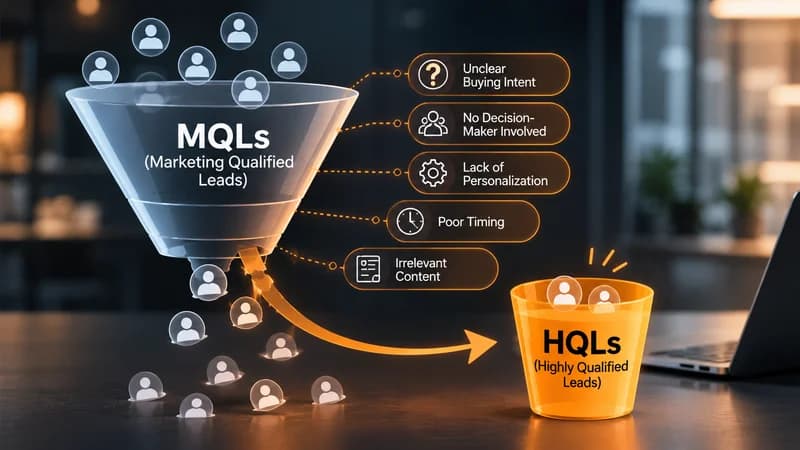
Lead generation strategies nowadays have evolved. Not only the quantity of leads matter but quality too. Marketers should be able to monitor the buying journeys of their prospects across omnichannel & should be able to feed them with highly relevant pieces of content during each stage of their buying cycles. Both marketing & sales qualified leads need exclusive treatments & hyper-personalized intelligent pieces of content based on “intent-targeting” & tracking of other explicit, implicit & psychographic behavior of the prospects.
The performance of the website & the endeavors of the omnichannel content strategies need to be measured with the help of tools such as Google Analytics, Omniture, Crazy Egg & Google Adwords. The upsurge or deterioration in the total website traffic, conversions, content engagement metrics, call to action performance & other important metrics need to measured independently as well as in orchestration with the Business Key Performance Indicators (KPIs) of the brands at large.
A/B testing the email campaigns, Landing Pages & websites for lead generation can help in optimizing users’ experiences (UX), clicks, sign-ups as well as the total sales conversions.
Heidi Bullock, Senior Director of Marketing at Marketo, describes the holistically integral & interdisciplinary plot of modern dynamic & evolving marketing strategies, as follows:
“Marketing is an exciting place to be right now, but it can also feel very overwhelming. Marketers feel pressure to be very metrics-driven, content producing geniuses, social stars, and spreadsheet wizards. I am pro any tool that simplifies some of this for marketers.”
Besides the above-mentioned methods, which lie at the heart of any B2B lead generation endeavor powered by content strategy, there can be other methods as well. Marketers should take care that irrespective of the strategy they choose, they need to effectively address the areas of interests or pain-points of their personas.
We at Valasys Media, use our wealth of knowledge to strategically design multi-channel content syndication services for our clients to increase their web visibility build their brand resonance & ultimately help them achieve their bottom-line goal of optimized sales revenues. We also have complimentary services such as white paid syndication, paid content distribution & content-centric demand generation services.
Our other services such as lead generation, lead nurturing, account-based marketing & appointment setting services are also highly-tailored to best suit the needs of our B2B clients aiding them to achieve higher ROI, improved users’ experiences & optimized sales conversions. For deciphering the trajectories to optimized sales revenues, leveraging perennially healthy sales pipelines, feel free to get in touch with our team of experts.