Lead-Gen now on Auto-Pilot withBuild My Campaign
Valasys Media — Empowering marketers with powerful insights

Integrating UberDuck AI with social media platforms

Enhance social media engagement with UberDuck AI integration. Streamline interactions and insights seamlessly across platforms.

Alok Chakraborty
Alok Chakraborty
Last updated on: Sep 11, 2024
Integrating UberDuck AI with social media platforms

UberDuck AI has taken the internet by storm, offering a powerful and accessible platform for generating high-quality synthetic vocals. But how can you leverage this innovative tool to elevate your social media presence? This blog delves into effective strategies for integrating UberDuck AI with various social media platforms, transforming your content creation process.

Why Integrate UberDuck AI with Social Media?

Want to grab attention and stand out in a crowded social media landscape? UberDuck AI can be your secret weapon! Here’s how:

  • Craft Captivating Audio Content:

Ditch the boring text and generate funny voiceovers, catchy jingles, or even educational narrations. Unique audio instantly grabs attention and keeps your audience engaged.

  • Become a Storytelling Master:

Breathe life into your social media stories with custom voiceovers. Immerse your followers by adding personalized commentary or distinctive character voices.

  • Boost Accessibility for All:

Expand your reach and cater to a wider audience by providing audio descriptions for your visual content. UberDuck AI lets you generate clear and concise voiceovers, making your content accessible to visually impaired users.

  • Inject Humor and Entertainment:

Liven up your social media presence with a dose of humor! Use UberDuck AI’s vast library of voices to create funny voiceovers or hilarious parodies. Laughter is a powerful tool for connecting with your audience.

Integrating Across Platforms

Now that you’ve seen the potential of UberDuck AI on social media, let’s dive into how to integrate it seamlessly across different platforms:

Twitter becomes a playground for hilarious tweets. Craft jokes with voiceovers or leverage UberDuck AI to generate text-to-speech versions of your written content, adding another layer of engagement.

Instagram Stories can come alive with custom voiceovers created with UberDuck AI. Imagine narrating your adventures, adding personality to your posts, or even giving your audience a glimpse into your world through unique character voices.

Level up your TikTok game with UberDuck AI! Generate catchy voiceovers or sound effects that perfectly complement your video content. This can add humor, set the mood, or simply make your videos more engaging.

Build My Campaign

Don’t forget YouTube! Elevate your videos with professional-sounding voiceovers generated by UberDuck AI. You can even use it to create unique intros and outros, instantly polishing your content.

Tips and Tricks for Seamless Integration

If in comparison, you are curious about using UberDuck as the AI and then the key skill in your social media strategy is that one of knowing how to create voiceovers. Here are some tips and tricks to ensure a seamless integration of UberDuck AI:

Choose the Right Voice:

Via UberDuck AI, you can either select from a wide repertoire of options, or you can have an AI voice generate a voice unique to you. Whether the audience you are directing at is a specific demographic or it is a certain type of tone, the right voice (identification) is what matters. Remember to take into account features like a person’s age, gender, accent, and even their personal style to discover a voice that will reflect just right for your content and intended audience.

Keep it Short and Sweet:

Owing to the rapidity of online social media, people are getting too much distracted, which results in shorter attention spans. To go for an instant targeted that will make the audience be glued to their seats, keep your voiceovers short and precise. Poverty is a multifaceted phenomenon that does not just affect people’s economic well-being but also their physical, mental and social lives. Therefore, it is crucial that poverty reduction strategies are comprehensive and tackle issues from different angles. Although conciseness is essential for catching attention and inspiring engagement, be sure that the detail used is appropriate.

Maintain Audio Quality:

It’s in a professional manner and you maintain credibility ensure your generated voice is of quality output. Make an effort to avoid static, laughter, heckling, and background noises; enunciate clearly and project your voice. The cutting-edge audio editing tools of UberDuck AI can be exploited to amplify audio quality and to remove any nuisance noises or distracting ones. In fact, via the use of concise and quality voice over, you can create something more durable and pleasant for your audience to stay along for the ride.

Experiment and Have Fun!

Do not be scared to release your creative mind and imagining the other side of the canvas, playing with different languages and style. Be the master of the game with all kinds of videos: tutorials, promotions, or entertainment content like flipbook animations. Leave nothing to chance but offer the world of videos. Search for your perfect match or to create something really unique, the interface of UberDuck AI is intuitive and the options can be customized. Your content can become interesting when you sprinkle it with your own personality and verve; then you keep your customers close to you and the brand.

The capability to excel in voiceovers is a must have for the flawless UberDuck AI integration into your social media peer. To effectively make your content stand-out, start with a well-chosen voice, then maintain short, crisp sentences, make sure the sound quality it high, and even dare to experiment to reach new audiences in unexpected ways.

Conclusion

What is interesting about UberDuck AI is that you don’t need to be a creative genius; with it, you get the opportunity to reach the proverbial sky in terms of content creation and engagement. Properly incorporating this strong AI component into your favorite platforms alone is a process that will change the way your audience deals with your content in the end.

UberDuck AI enhances accessibility by providing audio descriptions and transcripts, allowing focus on assembling and utilizing data effectively. By ensuring equal access to online content regardless of abilities, you demonstrate genuine care for the diverse needs of your followers. Moreover, your audiences will like you for being more inclusive.

UberDuck AI boosts re-engagement tools for your business and amplifies your brand’s voice across the digital market square. An innovative tool offering diverse templates for social media users to stand out and establish a dominant online presence.


Related Posts

curated programmatic deals checklist

Curated Programmatic Deals: A Buyer Checklist for Transparency, Audience Fit, and Pricing

Guest Author

Curated deals promise easier access to relevant ad inventory, but packaged ad impressions are not automatically a better buy. . Before activating a deal, check what inventory it includes, whether it matches your target audience, and how much you will pay in total, including all fees. buyers can add a curated deal to a campaign and manage it like any other: set budgets, bids, and targeting. The demand-side platform for advertisers from SmartyAds includes access to curated deals, giving teams a practical starting point for comparing packages against campaign requirements. What Are Curated Programmatic Deals and Why Do Buyers Use Them? A curator groups inventory using publisher selection, contextual signals, or audience criteria, often making the package available through a deal ID. This can simplify discovery across publishers. Unlike guaranteed deals, where the number of impressions is agreed in advance, curated deals still run on auctions. How many impressions you get depends on your bids and competition. Transparency Checklist: Supply Path Visibility, Publisher Lists, and Fee Disclosure Before activating a curated deal, use this checklist to verify the supply path and ensure your budget reaches legitimate inventory without hidden markups: Request the publisher or app list, seller identities, and any exclusions. Ask whether supply is direct or passes through resellers, and who can change the package after launch. Check ads.txt or app-ads.txt authorization where applicable. Remember that a deal name alone is not proof of inventory quality. Audience Fit Checklist: Data Signals, Contextual Alignment, and Scale Validation Before committing budget to a curated audience package, run through these checks to confirm that data sources are compliant and available scale meets your campaign goals: Ask what qualifies an impression and whether the signals are contextual, first-party, or third-party. Verify consent and permitted data use, and remember that an audience label describes a group, not verified individuals. Estimate eligible reach after geographic, device, and frequency restrictions, as a narrowly defined package may match the brief yet deliver too little volume to test reliably. Pricing Checklist: Deal Floor Mechanics, Curation Markups, and Margin Efficiency Clarify whether pricing uses a fixed rate, an auction floor, or dynamic pricing. A floor is a minimum acceptable bid, not necessarily the clearing price. Compare: DSP fees. Curation charges and data costs. Effective CPM for valid, viewable impressions. Check whether additional costs are included in the quoted rate or billed separately. Ongoing Governance: Monitoring Performance, Incrementality, and Deal Hygiene Track spend, win rate, viewability, invalid traffic, and qualified conversions by deal ID. Recheck publisher lists as packages change. Test curated supply against a comparable non-curated option, controlling for audience overlap where possible. Higher click-through rates alone do not establish incremental value. Conclusion: Turning Curated Deals into a Repeatable Buying Advantage Use a documented checklist for every deal. Keep packages that deliver verified audience fit and acceptable all-in economics; renegotiate or pause those that do not.

lms-software-training-delivery

How LMS Software Streamlines Training Delivery Across a Company

Guest Author

Company training often breaks into disconnected sessions, spreadsheets, and inbox reminders. A learning management system brings courses, assignments, records, and reporting into one workflow. Employees see what they need, managers track progress, and administrators control recurring requirements. The result is a repeatable process that supports onboarding, compliance, product knowledge, and role-based development. The following article explains how this structure improves delivery across departments and locations without creating extra administrative work for busy training teams. A company needs one training record even when its workforce includes office staff, field technicians, contractors, and remote employees. Separate spreadsheets create duplicate assignments and unclear ownership. With LMS software, each learner follows the assigned path, while managers receive a consistent view of completion, scores, and overdue work. That shared record supports faster decisions about retraining and access to job-specific duties. A Single Training Record Centralized course delivery removes the need for trainers to email separate files or repeat the same instructions. Administrators publish a course once, then assign it to selected teams, locations, or job roles. Updates reach every assigned learner through the same record. This approach keeps policy language consistent and gives employees one place to find required training. Scheduling tools turn training plans into timed workflows. A new employee can receive orientation tasks after a start date, while a supervisor can assign refresher work before a certification expires. Automated reminders reduce manual follow-up, and enrollment rules prevent gaps when teams change. Managers spend less time building rosters and more time reviewing completion data. One Workflow For Different Audiences Training rarely follows one pattern across a company. New hires need orientation, customer-facing staff need product updates, and supervisors need safety or compliance refreshers. An LMS stores these paths separately while keeping administration in one system. Role-based enrollment assigns the right content without asking every employee to browse a catalog. This approach reduces irrelevant coursework and improves completion. Progress Data Guides Intervention Completion reports show more than whether someone opened a course. Administrators can review assessment scores, time spent, overdue assignments, and repeated attempts. Those details reveal where a learner needs help or where a course needs revision. A manager can schedule coaching after a failed assessment instead of waiting for an annual review. Clear reporting also supports audit preparation by keeping records in one location. Dashboards help leaders compare completion by department, location, or role. They can identify teams with overdue requirements and direct attention where it is needed. A training administrator can export evidence for an internal review without asking supervisors to reconstruct attendance from email threads. This arrangement makes follow-up more precise and timely. Compliance Records Stay Current Regulated training depends on accurate dates, version control, and renewal rules. An LMS records when an employee completes a course and can assign the next requirement according to a defined schedule. Administrators can retire outdated material, publish revised content, and keep a history of learner activity. This approach reduces the risk of outdated instructions or missed renewal deadlines. Standardization Improves Training Quality A shared course template gives authors consistent fields for objectives, instructions, assessments, and completion rules. Learners encounter familiar navigation across departments, while administrators spend less time correcting missing information. Content owners can review a course on a set schedule and update examples when work practices change. The record then shows which version each learner completed. Connect Training To Business Routines An LMS connects training with routine workforce processes through defined roles and permissions. An administrator can limit editing rights to approved content owners while allowing managers to view team progress. Integrating with existing employee records can reduce duplicate data entry, but the setup should align with the company’s privacy and access rules. Clear ownership keeps records accurate after staff changes. Plan Implementation Around Measurable Work Successful adoption starts with a defined training map. Before configuring the LMS, leaders should list required courses, target roles, completion deadlines, and evidence owners. The team should then test enrollment rules with a small group and check reports against expected results. This process identifies missing permissions, confusing instructions, and incorrect due dates before broad rollout. Beneficial measures include completion rate, assessment performance, overdue work, and time to completion. A training team can review those measures by role or location each month. If one group falls behind, managers can check scheduling, course length, or access before assigning more reminders. This approach makes reporting a routine management task. Conclusion Company-wide training works best when delivery, records, and follow-up share one process. LMS software organizes assignments by role, sends timely reminders, records completion, and gives managers usable evidence. The next practical step is to map every required course to a role, owner, and deadline. Then test one enrollment path, review its report, and correct gaps before expanding across the company. This sequence builds control without adding unnecessary administrative steps to the training calendar.

credit-card-online-security-checklist

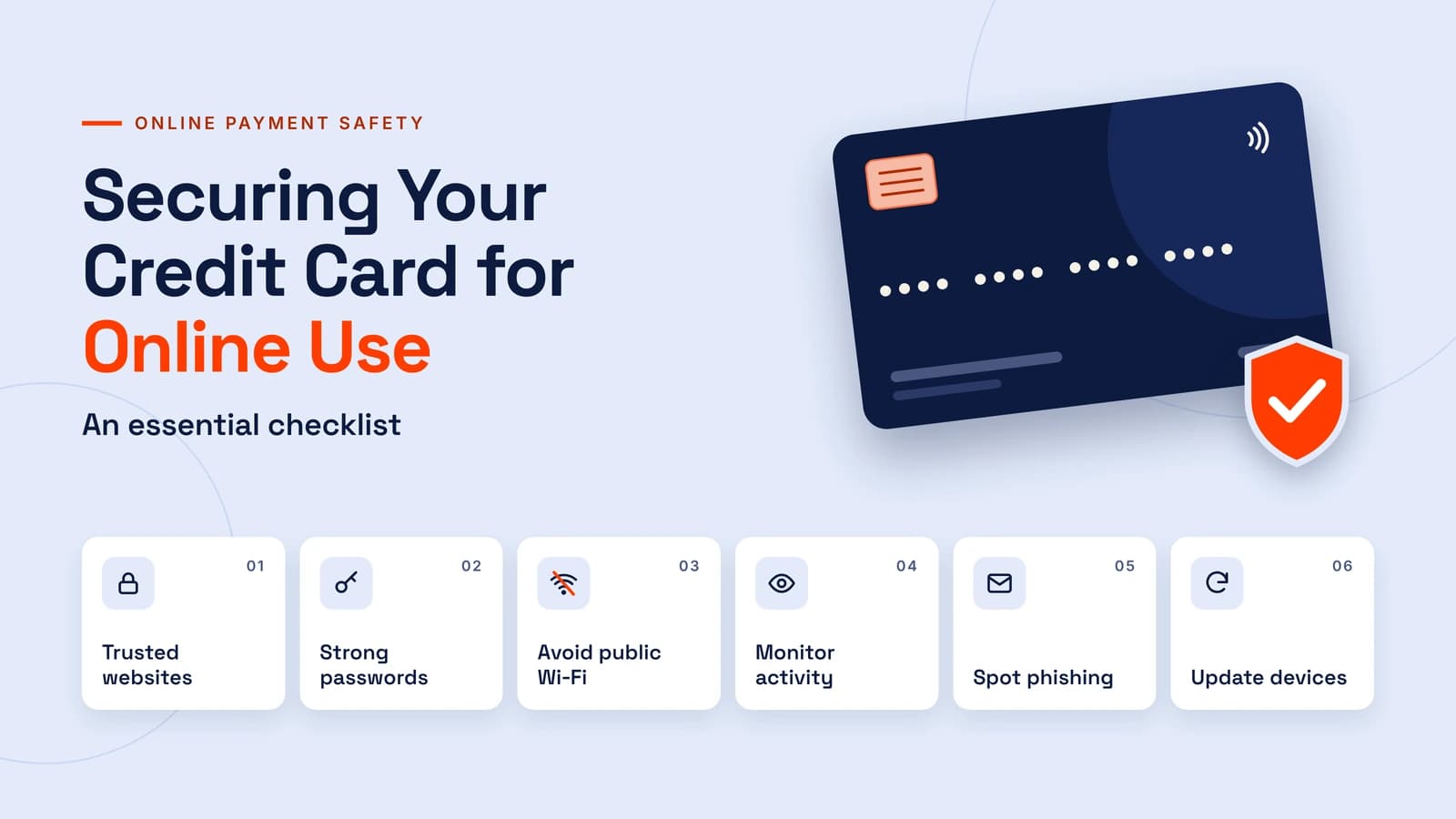
Securing Your Credit Card for Online Use: An Essential Checklist

Guest Author

Our modern lifestyle increasingly relies on convenience and connectivity. This is reflected in nearly all aspects of living, including how we obtain goods and services. Today, e-commerce has evolved into a dominant force in daily life, allowing consumers to access everyday essentials and other products from the comfort of their homes. However, along with the rise of online transactions comes the growing risk of falling victim to cybersecurity threats. Because individuals often rely on credit cards to make electronic payments, it‘s essential to practice greater vigilance when using these financial tools online to prevent their personal and financial information from being compromised. To that end, here are some practical considerations that can help individuals secure their credit cards when making purchases online: 1) Use Secure and Trusted Websites for Online Purchases One of the most important steps in ensuring secure online credit card transactions is verifying that the website used for a purchase is legitimate and secure. Reputable websites typically use encrypted connections that protect the information entered by users. You can often confirm this protection by checking for “https” at the beginning of the website address or by viewing the security icon displayed by most web browsers. Also, take time to evaluate unfamiliar online stores before entering payment details. Fraudulent websites may imitate legitimate retailers in order to collect credit card information from unsuspecting users. Reviewing the website’s domain name, examining its contact information, and searching for independent customer feedback before you use your Maya credit card can help you determine whether the site is trustworthy. 2) Strengthen Account Protection with Strong Passwords Many e-commerce platforms store payment information within user accounts to simplify future purchases. While this feature adds convenience, it also risks exposing saved credit card details if an account is accessed without authorization. As such, individuals should use strong passwords for their shopping and payment accounts. A secure password usually contains a combination of letters and numbers and avoids easily guessed information such as names or birthdays. In addition, it’s helpful to use different passwords for different online services. When the same password is used across several websites, a single security breach may allow attackers to gain access to multiple accounts. A number of platforms also provide additional authentication steps that require a verification code during login attempts. These features add another layer of security that can help prevent unauthorized users from accessing accounts that contain stored payment information. 3) Avoid Public Wi-Fi When Entering Credit Card Information Public wireless networks, which are often available in cafes, airports, or hotels, may offer convenient internet access, but they may not provide the same level of security as private connections. Some public networks lack proper encryption, which can make it easier for cybercriminals to intercept information transmitted through the connection. Thus, entering credit card details while connected to an unsecured network may increase the risk of data exposure. When making online purchases, it’s safer to use a trusted private internet connection such as a home network or a secure mobile data connection. If you must complete a purchase while away from home, confirm that the website uses encryption and avoid connecting to unknown networks. 4) Monitor Credit Card Activity Regularly Regularly reviewing credit card activity can help you detect unauthorized transactions before they cause significant financial harm. Most financial institutions provide mobile banking applications or online platforms that allow cardholders to view their transaction history. You should also make it a point to check recent purchases on a routine basis so that there’s a better chance of you quickly identifying charges you don’t recognize. The most reputable credit card providers also offer SMS, email, or app notifications that alert cardholders when a transaction occurs. Prompt awareness of unusual activity allows consumers to report suspicious transactions to their financial institution without delay, which often helps prevent additional fraudulent charges. 5) Be Cautious of Phishing and Online Scams Phishing scams are designed to trick individuals into revealing personal or financial information through deceptive messages. These scams often appear as emails or text messages from senders pretending to be a bank, payment platform, or online retailer. The message may request urgent action, such as confirmation of account details, or direct the recipient to a fraudulent website that asks for credit card information. Individuals should approach unexpected payment requests or account warnings with caution. Before clicking links in suspicious messages, you’ll want to visit the company’s official website by typing the address directly into your browser to verify whether the message is from a trusted source. Legitimate institutions rarely ask customers to provide sensitive financial information through unsolicited messages. Being mindful of these tactics can help prevent the accidental disclosure of credit card details. 6) Keep Devices and Software Updated Computers, smartphones, and tablets rely on operating systems and applications that occasionally require updates. These updates often contain security improvements that address newly discovered vulnerabilities. It’s crucial to pay attention to these updates to prevent exposure to malware that could capture financial information. Keeping devices updated helps maintain a safer environment for online payments. By installing software updates promptly and using reputable security programs, you can reduce the likelihood of malicious software being installed on a device. Credit cards are valuable for enhancing convenience and flexibility in managing payments in today’s digital economy. While these financial tools come with protective features of their own, maintaining secure electronic transactions still largely depends on your credit card use habits and online practices. If you can leverage your card’s security features, stay aware of common cybersecurity threats, and maintain safe online behavior, you should be able to ensure that your personal and financial information remains secure. This approach not only limits online security risks but also allows you to enjoy the benefits of e-commerce with greater confidence and control.