Lead-Gen now on Auto-Pilot withBuild My Campaign
Valasys Media — Empowering marketers with powerful insights

Google Drops Safe Browsing As a Page Experience Ranking Signal

Google updated the page experience ranking signal, the safe browsing and ad experience widgets got dropped how this will impact your website

Valasys Media
Valasys Media
Last updated on: Nov 16, 2023
Google Drops Safe Browsing As a Page Experience Ranking Signal

On the 4th of August 2021, Google updated the page experience report in Google Search Console that made it easier to navigate. With the changes, Google also removed safe browsing from the essential criteria that sites need to meet to benefit from the page experience ranking factor.

Consequently, Google updated the page experience report of the Search Console with a simplified design that removes redundant data. The safe browsing and ad experience widgets got dropped from the report.

Google explained the rationale behind this decision in a blog post:

“Safe Browsing Systems at Google are designed to keep users safe on the internet. Sometimes sites fall victim to third-party hijacking, which can cause Safe Browsing warnings to be surfaced. We recognize that these issues aren’t always within the control of site owners, which is why we’re clarifying that Safe Browsing isn’t used as a ranking signal and wouldn’t feature in the Page Experience report. Any Safe Browsing flags will continue to be surfaced in the Search Console outside of the Page Experience report.”

The declaration makes it clear that while safe browsing is no longer a part of Google’s Page Experience Ranking Signal, it still is an important factor that the webmasters must be mindful of – after all, no website owner would want to provide an unsafe browsing experience to their users.

The new page experience diagram looks like the following:

Build My Campaign

googleDropsImage

New Graphics Representing the Page Experience Signal; viz. Loading (LCP), Interactivity (FID), Visual Stability (CLS), Mobile Friendliness, HTTPS, and No Intrusive Interstitials.

Why Safe Browsing Is No Longer a Page Experience Ranking Signal?

The prime reason why safe browsing is now no longer a page experience ranking signal is that these issues can’t be always controlled by the website owners. As evident in the quotation used earlier in the blog, Google has made it clear that the sites can accidentally fall susceptible to third-party hijacking. While Google will still continue to notify these red flags; these notifications will fall outside of the page experience report.

What Else Changed in the Page Experience Report?

Besides the Safe Browsing, the Ad Experience Widget is also being removed as a page experience ranking signal. This change according to Google will help “avoid surfacing the same information on two parts of Search Console.” The Ad Experience report will continue to be availed of as a standalone tool that the users will be able to use to review the status of their site and identify the ad experiences violating the “Better Ads Standards.”

Other Improvements in the Page Experience Report

Along with the removal of the Safe Browsing and Ad Experience widgets, Google also rolled out more improvements to ensure that the report better handles the missing data:

  1. A “No recent data” banner was added to the Core Web Vitals report and Page Experience report
  2. Google fixed a bug that caused the report to show “Falling HTTPS” when Core Web Vitals data was missing
  3. The empty state text in the Core Web Vitals report and the Page Experience report was rephrased

Wrap Up

These recent changes in Google’s Page Experience Ranking Signal were rolled out to help the end-users build a website with a great page experience. With the removal of “Safe Browsing” as a Page Experience Ranking Signal, there will be on less ranking parameters for the site owners to worry about. While unsafe browsing still is a red flag, a wary signal for the webmasters, they can still get rid of them once they learn about them in Search Console; however, there’s certainly an extraordinary sense of ease that comes from knowing that safe browsing, which might not be at all times within your control, wouldn’t count against your website in the Google rankings

Valasys Media is amongst the pioneer players in the B2B Media publishing space with a proven track record of aligning the marketing and advertising strategies of our B2B clients with the expectations of their buyers. We help all our clients develop a sales enablement architecture and work rigorously to ensure their customers’ success so that they can develop a perennially healthy sales pipeline to fuel their revenue and other bottom-line goals. Contact us to learn how we can create a memorable experience for you and bring forth engagement, innovation, and innovation to your marketing & advertising campaigns.


Related Posts

What B2B Marketers Can Learn From Real Estate About Speed to Lead

What B2B Marketers Can Learn From Real Estate About Speed to Lead

Guest Author

B2B marketers spend heavily to generate demand: content, paid media, events and intent data. Yet one of the biggest drivers of conversion is often treated as a sales-ops detail: how quickly someone actually responds when a prospect raises their hand. Few industries feel this more sharply than US residential real estate. A buyer who submits an inquiry on a listing at 9pm is often contacting several agents at once, and research from Zillow published in December 2025 found that 47% of buyers hired the first agent they spoke with. That pressure has pushed real estate teams to rethink lead response from the ground up. Here are five lessons B2B marketers can borrow. 1. Measure response time like a funnel metric Most B2B dashboards track MQLs, SQLs, pipeline and win rates. Far fewer track time from form fill to first human conversation, broken down by source. The best real estate teams treat response time as a core KPI. They measure the median and the slowest 10% of responses, separate business hours from evenings and weekends, and compare close rates across response-time buckets: under five minutes, under an hour, same day and later. Building the same view in B2B is straightforward with CRM timestamps. It often reveals that a large share of inbound demo requests wait hours, especially when they arrive late in the day, on Fridays or across time zones. Industry benchmarks, such as these lead response time statistics, are useful for context, but your own data is what will convince sales leadership. 2. Cover the hours when buyers actually research Real estate leads cluster in evenings and weekends, when buyers have time to browse. Teams that only respond during office hours leave their most engaged prospects waiting. B2B buyers behave similarly. Decision-makers research vendors between meetings, after hours and across time zones. A prospect in California who submits a demo request at 4pm local time may be hitting an East Coast team’s inbox after hours. Real estate teams solved this with on-call rotations and, increasingly, AI assistants that make the first contact instantly. B2B teams can apply the same principle: guarantee a meaningful first response at any hour, even if a human takes over the next morning. 3. Make the first touch a conversation, not an acknowledgement An automated “Thanks, someone will be in touch” email technically responds in seconds, but it does not start a conversation. Real estate teams learned that instant auto-texts help, but the teams that win are the ones that actually talk to the buyer quickly, confirm what they want and book a next step. For B2B, that might mean letting prospects book a meeting instantly on the confirmation page, routing high-intent leads straight to an available rep, or using conversational tools that qualify and schedule in real time. 4. Route by intent, not just by territory Not every lead deserves the same urgency. Real estate teams prioritise buyers who are pre-approved, have a short timeline or asked about a specific property. Those leads get the fastest, most senior response. B2B marketers already have richer signals: intent data, firmographics, pages viewed and engagement history. The lesson is to use them in routing, not just in reporting. A demo request from an account that has been researching your category all week should not sit in a round-robin queue behind a student downloading an ebook. 5. Hand off with full context In real estate, nothing frustrates a buyer more than repeating the same answers to an assistant and then an agent. The best teams make sure the agent sees a summary of every earlier conversation before calling. B2B handoffs suffer from the same problem. When an SDR qualifies a lead and passes it to an account executive, the prospect should never be asked the same discovery questions twice. Notes, call recordings and intent signals should travel with the lead in the CRM. Where AI fits Real estate has become an early testing ground for AI in lead response. Voice AI assistants now call new property inquiries within a minute, ask a few qualifying questions, book appointments and write a summary into the CRM. Companies such as Mergro build exactly this for US real estate teams. The broader lesson for B2B is not to copy the tool, but the principle: let automation guarantee speed and consistency on the first touch, and let people focus on conversations that need judgement. Takeaway Demand generation does not end at the form fill. Real estate teams have shown that the minutes after a prospect raises their hand often matter as much as the campaign that brought them in. B2B marketers who measure response time, cover after-hours demand, route by intent and hand off with context will turn more of their pipeline into revenue.

Managed IT help desk services_ A smarter approach to business IT support

Managed IT help desk services: A smarter approach to business IT support

Guest Author

Technology has become an integral part of most businesses today, bringing significant improvements across all areas, from routine tasks to complex processes, and making daily operations run more efficiently. But the obvious benefits that digital technologies provide come at the cost of increasing complexity. The more tech tools and systems companies integrate into their workflows, the harder it becomes for IT teams to keep all these tech components safe and functional, so they can deliver the expected results.  When managing tech ecosystems and the issues and challenges that inevitably arise becomes too much for your company to handle, you can either hire more staff and invest in training your in-house team, or you can switch your approach and resort to managed IT help desk services instead.  IT help desk outsourcing can be a more advantageous choice for various reasons that we’re going to discuss below.  Managed IT help desk services explained  Managed IT help desk is a type of outsourced service where a third-party company provides ongoing tech support for businesses and handles a variety of IT-related issues and requirements. These services can complement the efforts of internal teams and fill in the gaps when there’s a lack of specialized skills, or they can replace them altogether.  The concept is simple: when the company that has contracted the service encounters an issue or requires tech assistance, they can contact the managed service provider (MSP) via phone, live chat, or email, offering details about the situation they’re dealing with. The help desk technicians will offer prompt guidance and step in to fix the problem. If the issue they have to address is more complicated, they will immediately get in touch with senior engineers who have the necessary expertise.  Working with an MSP usually involves remote collaboration as the contracted specialists handle most tasks from their own quarters, only traveling to clients’ locations when hardware fixes are necessary.  Most managed IT help desk services operate under a subscription-based model, where you have to pay a recurring monthly fee, depending on your company’s specific support needs and the package you opt for. The services included vary from one provider to another, but they typically cover the following:  Troubleshooting – Diagnosing and fixing basic issues, such as log-in problems, application errors, or faulty hardware, across a company’s tech infrastructure  Ticket management – Keeping track of issues and requests, organizing and routing them in the order of their importance  Software installation and access – Setting up tech tools and programs, tracking licenses, managing permissions and passwords   User onboarding – Integrating new employees into the company’s IT systems  Escalation – Redirecting complex network, software, and hardware issues that require expert intervention to specialized engineers  The advantages of outsourcing IT support   Partnering with an external IT support company instead of maintaining an internal team comes with various advantages. Options like FlairsTech managed IT help desk services can make a significant difference in terms of budgeting, support availability, resource access, scalability, and security.  Between hiring and training staff, paying monthly salaries, and investing in software and other tech products, maintaining an in-house IT support team can be rather costly. With a managed IT help desk, on the other hand, you only need to pay a predictable monthly fee, and you can also adjust the level of support you receive depending on how your business’ IT needs evolve over time.  The flexibility that outsourcing provides means that you can benefit from a tailored support plan that aligns with your company’s requirements, and you won’t ever have to spend money on things you don’t actually use, which can lead to considerable savings in the long run.  It’s also helpful and reassuring to be able to contact the help desk at every hour of the day and night, especially if your business operates internationally, and not be limited to standard business hours, which is usually the case with in-house teams. This ensures problems are fixed right away and reduces the risk of downtime considerably.  Having immediate access to a team of certified IT experts and advanced tech tools is another advantage that managed IT services offer. By contrast, internal teams often fall short in terms of skills and resources, as most companies cannot afford to keep a large number of specialists or invest in the latest technologies, two areas where MSPs excel.  Security is an aspect that managed IT support can help with as well. Having a team of dedicated tech professionals monitor company systems around the clock and proactively address vulnerabilities and issues before they escalate into something bigger leads to a stronger and safer tech infrastructure.  Ultimately, letting a third-party provider handle IT support can free up in-house teams, allowing them to handle more complex aspects related to strategic development rather than wasting time resetting passwords and debugging software.  Choosing a managed IT help desk service that is right for you  Outsourcing IT support makes sense when you want to cut back on costs and ensure your tech systems stay safe and efficient in the long run. But how do you go about choosing a service that is right for your business?   First of all, you need to figure out what support model works best for you. Consider your company’s tech needs and decide whether you’d benefit more from letting an MSP handle all your support requirements, or if it would be best to maintain a hybrid arrangement where you split tasks between your internal team and an external partner.  Make sure you evaluate the services that providers claim to offer thoroughly, and pay particular attention to how they handle after-hours calls and emergencies, as well as their Service Level Agreement (SLA) and the guidelines they follow for managing services.  If they offer demos for their tools or pilot programs, take advantage of them before you enter a partnership.  As your business grows and your tech ecosystem expands with it, switching to managed IT help desk services can prove a smart move, helping you navigate challenges with ease

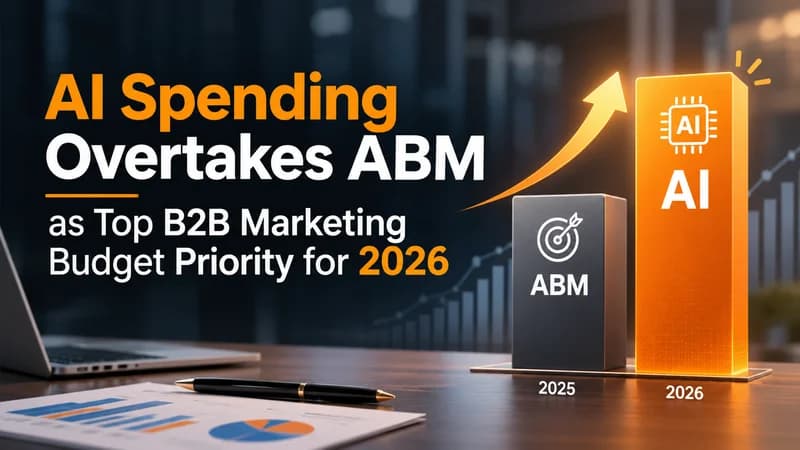
AI spending overtakes ABM as top B2B marketing budget priority for 2026

AI spending overtakes ABM as top B2B marketing budget priority for 2026

Mansi Hake

Nov 17, 2026: B2B marketers are placing artificial intelligence ahead of account-based marketing (ABM) in their spending plans for 2026, with 60.4% planning to increase investment in AI-powered marketing tools and platforms, according to the 2026 B2BMX Insights Benchmark Report published by B2BMX Insights (previously known as Demand Gen Report)  The finding marks a shift from the previous year’s priorities, when 44.7% of marketers identified ABM as a leading area for increased investment. The latest survey points to growing demand for AI-powered capabilities across marketing operations, although it does not indicate that organisations are moving away from ABM. AI adoption is also extending beyond experimentation. The report found that 70% of B2B marketers use AI to draft and scale content, while 75% of surveyed organisations have generative AI content tools integrated into their marketing technology stacks. Another 51% plan to test or deploy generative AI tools over the coming year. However, adoption across marketing functions remains uneven. While half of respondents said they were reallocating budgets towards AI-powered tools, 35.9% reported using AI across several workflows. The findings indicate that investment is increasing, but broader integration across marketing activities remains a work in progress. The report also points to a change in how B2B marketing performance is being assessed. Pipeline influence has emerged as the leading performance measure, while revenue-based quotas accounted for 33.33% of responses in 2026, up from 25.33% in 2025. The shift places greater emphasis on marketing’s contribution to sales outcomes rather than relying solely on lead-generation metrics. Spending plans also show that marketers are continuing to invest in established demand-generation channels. Some 62.2% of respondents plan to increase spending on in-person events and trade shows, while 54% intend to increase investment in lead-nurturing campaigns. The findings suggest that AI investment is growing alongside existing approaches to engaging prospects and developing sales opportunities.