Lead-Gen now on Auto-Pilot withBuild My Campaign
Valasys Media — Empowering marketers with powerful insights

How to Choose White Label Web Design Company

Learn more about what to consider when selecting a white label web design company and get tips on finding the best one to meet your needs.

Guest Author
Guest Author
Last updated on: Aug 10, 2026
How to Choose White Label Web Design Company

When choosing a white-label web design company, consider its reputation and flexibility. They should be able to respond to your queries quickly and provide regular updates about the development process. They should also be able to accommodate your needs as they grow.

Check whether their work is based on problem-solving concepts. A good service agency will not stop at coding and designing but will bring creative solutions to various issues.

Reputation

The reputation of a white-label company is an important factor to consider because it determines the quality of work that you receive. You can find out about an agency’s reputation by asking for references and reading reviews. Also, you can ask for a trial period to see how they work before making a long-term decision. The trial period will give you a chance to judge the quality of their services, as well as the speed and responsiveness of their staff.

When selecting a white-label web design company, look for one with an excellent online presence and a track record of success. In addition, make sure that the company is willing to answer your questions and provide you with a portfolio of past projects. Finding the ideal partner for your business will be made easier with this.

A good white-label marketing agency will be able to meet your needs and deliver results quickly. This will save you time and energy, as you’ll no longer have to spend time vetting experts and building systems. They will also be able to deliver results within your budget and timeframe. This makes it easy to expand your marketing services without investing too much in-house resources.

To ensure you get the best value from your white-label marketing agency, you should always compare quotes from several agencies before choosing a provider. Some companies may charge more, but they will probably offer a better service than others. Some white-label services may even be able to offer a free trial so that you can test them out before you commit to a long-term contract.

Another important factor to consider when choosing a white-label company is their problem-solving skills. As with any project, problems can arise at any point, so it’s important to choose an agency that is able to handle them effectively. A good white-label company will be able to provide creative solutions for both minor and complex issues.

A white-label web development company can be a great solution for digital marketing agencies who need to expand their services but don’t have the time or resources to develop their own web design services. By outsourcing their web development to a trusted partner, digital marketing agencies can keep their clients happy and make substantial profits.

Flexibility

White label web design is a great solution for digital agencies who want to offer website development services without investing in in-house talent. This approach allows them to provide their clients with a high-quality website that is designed and developed in a professional way. It also saves them time and money, which is important in the competitive digital marketing world.

A good white-label agency will have a system in place for collecting information about a client’s needs and goals. This will help them to deliver a solution that aligns with the client’s business model. In addition, it is important for a white-label agency to be able to adapt its solutions to future requirements. For example, as businesses evolve and change, their websites may need to be modified or updated.

Another important factor in selecting a white-label web design company is the ability to maintain communication with clients. This is critical for maintaining trust and providing quality work. The best companies will offer multiple options for communicating with clients, including regular online meetings, different apps, and emails. They will also be able to respond quickly to any questions or concerns that may arise during the project.

In addition, the best white-label web design company will be able to meet tight deadlines. This is especially important for businesses with a limited budget. This is because it will enable them to compete with other web design companies in the market and increase their chances of winning new business. Moreover, they will be able to make their services more affordable than their competitors by offering flexible pricing models and additional discounts for repeat business.

Whether you’re a digital marketing agency or a freelance designer, finding the right white-label web design partner can be challenging. There are many factors to consider, such as cost and expertise. You’ll need to find a partner that offers a reasonable price and can be trusted to deliver quality results. Luckily, there are plenty of options for web designers, including resellers, who are willing to take on projects at lower prices than traditional web design agencies. This means that you can make a substantial profit without having to invest in your own team.

Experience

The experience of a white-label web design company is important because it determines the quality of its work. Look for a company with a proven track record, as well as a portfolio that showcases its previous projects. Also, make sure to read online reviews and customer reviews.

A reputable white-label agency will use the latest technology to deliver the best possible results for businesses. This means that they will use modern code and design trends to create visually appealing websites that are also user-friendly and responsive. A reputable agency will also provide ongoing support and communication to ensure that clients are happy with their services.

White-label agencies are a great choice for digital marketing agencies who want to offer website design as a service without spending time and money building an in-house team. This way, the digital marketing agency can make more money by providing a full-service solution to its clients. In addition, this can help them stay ahead of their competitors by adding another service to their offering.

Another important consideration is scalability. A professional white-label web design partner will be able to scale up its team and resources in line with business growth. This allows them to serve more clients, provide better service, and increase revenue.

Whether you’re a small marketing agency or a large enterprise, white-label web design is a valuable investment for your business. By partnering with a white-label web development agency, you can save time and money while delivering high-quality websites for your clients. Plus, you can focus on other aspects of your business, such as client acquisition and growth.

In today’s tech-driven world, a website is an essential component of any brand. However, developing a website takes a lot of time and money. Many digital agencies don’t have the staff and resources to develop a new website for every client. This is why they turn to white-label web design companies like Always Fresh.

By leveraging the expertise of white-label web design companies, digital marketing agencies can expand their offerings and keep their clients happy. They can also save money on infrastructure and hiring costs. In addition, white-label web design companies can handle the entire project lifecycle from start to finish. This saves the digital marketing agency both time and money and gives them more freedom to focus on their core offerings.

Cost

Whether you’re a digital agency or a marketing company, finding a reliable white-label web design partner can help you save time and money. This service allows you to meet the demands of your clients while focusing on other areas of your business. However, there are some things you should consider before choosing a partner. These include their experience, cost, and flexibility. You also want to choose a partner that has excellent communication skills and is willing to collaborate with you on your projects.

A reputable white-label web design company will have a solid track record and a good online reputation. They should be able to provide references and examples of their work. They should also be able to answer your questions clearly and promptly. You should also look for a company that offers scalability and flexibility so that they can accommodate any changes in your business model or client base.

One of the main benefits of working with a white-label web design company is that it can significantly reduce your overall website building cost compared to hiring and managing an in-house team. This is important because it can help you keep your clients happy and maintain a competitive edge over other businesses in your niche. Additionally, it can help you save time and effort.

When selecting a white-label web design company, make sure they’re transparent about their fees and charges. Compare their quotes with those of other companies to determine if their prices are reasonable. If they are not, ask them why and find a more affordable option. It’s important to be clear about the type of services you need, including e-commerce web design, ongoing maintenance, and other specialized tasks.

You should also choose a white-label web design company that has an established track record in the industry and is well-versed in the latest technologies and trends. This will ensure that the site they build is modern, responsive, and easy to navigate. Additionally, they should be proficient in HTML, CSS, JavaScript, and other programming languages that are relevant to your industry.


Related Posts

AI spending overtakes ABM as top B2B marketing budget priority for 2026

AI spending overtakes ABM as top B2B marketing budget priority for 2026

Mansi Hake

Nov 17, 2026: B2B marketers are placing artificial intelligence ahead of account-based marketing (ABM) in their spending plans for 2026, with 60.4% planning to increase investment in AI-powered marketing tools and platforms, according to the 2026 B2BMX Insights Benchmark Report published by B2BMX Insights (previously known as Demand Gen Report)  The finding marks a shift from the previous year’s priorities, when 44.7% of marketers identified ABM as a leading area for increased investment. The latest survey points to growing demand for AI-powered capabilities across marketing operations, although it does not indicate that organisations are moving away from ABM. AI adoption is also extending beyond experimentation. The report found that 70% of B2B marketers use AI to draft and scale content, while 75% of surveyed organisations have generative AI content tools integrated into their marketing technology stacks. Another 51% plan to test or deploy generative AI tools over the coming year. However, adoption across marketing functions remains uneven. While half of respondents said they were reallocating budgets towards AI-powered tools, 35.9% reported using AI across several workflows. The findings indicate that investment is increasing, but broader integration across marketing activities remains a work in progress. The report also points to a change in how B2B marketing performance is being assessed. Pipeline influence has emerged as the leading performance measure, while revenue-based quotas accounted for 33.33% of responses in 2026, up from 25.33% in 2025. The shift places greater emphasis on marketing’s contribution to sales outcomes rather than relying solely on lead-generation metrics. Spending plans also show that marketers are continuing to invest in established demand-generation channels. Some 62.2% of respondents plan to increase spending on in-person events and trade shows, while 54% intend to increase investment in lead-nurturing campaigns. The findings suggest that AI investment is growing alongside existing approaches to engaging prospects and developing sales opportunities.

Facing Construction Delays? Experienced Lawyers Help Address Contractual Disagreements Effectively

Facing Construction Delays? Experienced Lawyers Help Address Contractual Disagreements Effectively

Guest Author

Most delay disputes are lost on paper, before any hearing. A single missed notice can sink an otherwise strong claim. When schedules slip, both sides reach for the contract. A seasoned construction attorney treats that document as a recovery map. Clauses on extensions, damages and dispute procedure each carry weight. Excusable delays, notice rules and shared fault all shape outcomes. So does choosing the right forum for resolution. Field records, written months earlier, can carry the decisive proof. Paperwork, in short, decides who absorbs the cost of lost time. Delay Claims Start With Contract Wording Each agreement allocates the risk of lost time differently. Some grant extra days without extra money; others allow both. Liquidated damages clauses set a fixed daily charge for late completion. A lawyer studies these terms before anyone files a claim. That early review can reveal leverage a site team overlooks. Which Setbacks Justify a Time Extension? Not every holdup earns extra days. Courts and arbitrators separate excusable events from contractor-caused ones. Recognized grounds for relief include: Owner-directed design changes alter the original scope of work. Unforeseen site conditions differ sharply from the bid documents. Severe weather exceeds the averages the contract anticipated. Late owner approvals halt crews waiting on decisions. Missed Notice Deadlines Destroy Valid Claims Here, timing matters more than merit. Standard forms demand written notice shortly after a delay begins. Courts enforce those windows strictly, even against legitimate claims. A construction attorney builds a notice calendar at project kickoff. Each letter then cites the clause, cause and expected impact. Such discipline turns routine correspondence into admissible evidence. What If Both Parties Caused the Slippage? Concurrent delay is where disputes turn technical. Picture an owner releasing drawings late while crews sit short-staffed. Neither side can pin the whole period elsewhere. Experts run critical path analysis against the baseline schedule. Superintendent daily logs supply the raw evidence for that analysis. Counsel then apportions responsibility one day at a time. Why Try Mediation Before Filing Suit? Litigation can outlast the project it concerns. Mediation brings a quicker, confidential route: Work continues while talks proceed. Costs stay far below trial. Business relationships survive the dispute. Parties control the final terms. If talks collapse, arbitration remains available. Many contracts mandate this stepped sequence. A neutral mediator tests each side’s numbers privately. The Superintendent’s Logbook Settles More Disputes Delay disputes look like legal battles from the outside. In practice, the superintendent’s daily log decides most of them. Critical path experts and polished briefs rest on those entries. A crew count noted at dawn can outweigh testimony. Lawyers can argue only what someone recorded at the time. Sloppy logs leave sharp advocates with little to prove. So real protection begins long before counsel enters the room. FAQs When should a contractor contact a lawyer about delays? Before signing is best, while risky clauses remain negotiable. At minimum, call once the first schedule slip surfaces. Prompt advice protects notice rights with short expiry windows, and waiting costs leverage. Can an owner recover money for late completion? Yes, through liquidated damages or proven actual losses. The contract decides which route applies. Excused delays can reduce those charges, and penalty-style amounts may face court challenge. Does a no-damages-for-delay clause bar all compensation? Such a clause does not settle every case. Courts recognize exceptions for active interference or bad faith. Enforceability shifts between jurisdictions, making legal review essential before conceding anything. How long does a delay dispute take to resolve? Mediation can conclude in a few weeks of focused sessions. Arbitration and litigation can stretch across months or years. Schedule complexity and expert involvement drive that timeline.

Cloud-Based LinkedIn Prospecting Tools_ Features and Safety Compared

Cloud-Based LinkedIn Prospecting Tools: Features and Safety Compared

Guest Author

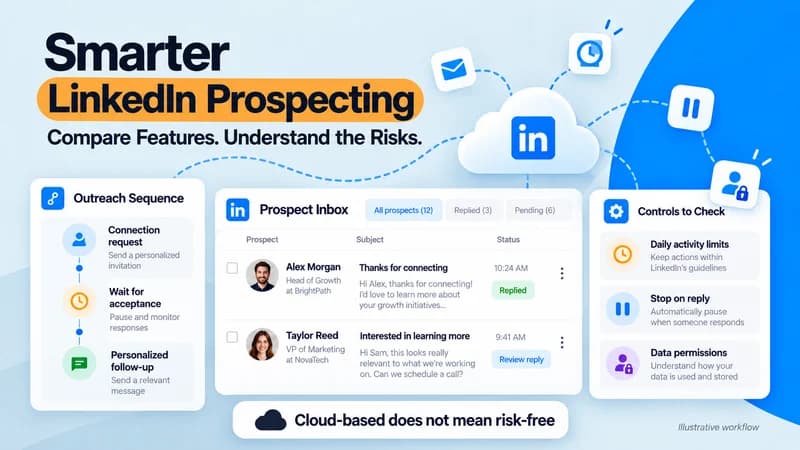
Follow-ups slip when your calendar fills up. Campaigns stop when your laptop sleeps. And every vendor page calls its tool “safe,” so no claim is easy to trust. The short answer: cloud-based tools keep sequences running without your device, but none removes account risk. Compare them on targeting, sequence logic, pacing controls, reply handling, and data practices. Below are the rules to know first, the features worth paying for, the safety settings to check, and a pilot test to run before you commit. Start with the rules, because they shape every safe setup. Know the Rules Before You Automate LinkedIn’s User Agreement prohibits bots and unauthorized automated activity, so every third-party tool carries some account risk. A vendor can reduce that risk through pacing and design, but cannot remove it. Privacy law matters too. Business contacts are still people, and these rules for business-to-business marketing explain when messaging them needs a lawful basis. Under UK data protection law, serious breaches can bring fines of up to £17.5 million or 4% of global annual turnover, whichever is higher. LinkedIn Message Automation: What It Does and What to Automate Managing connection requests, messages, and follow-ups takes time. With LinkedIn message automation, software handles these tasks based on rules you set. It does not pick your audience or write a strong offer for you. Teams use it to automate LinkedIn connection messages and set up automated LinkedIn follow-ups, helping them keep conversations moving after a request is accepted. Good candidates to automate: A short, truthful connection note, or no note A first message after acceptance One or two follow-ups with delays Stop-on-reply logic Keep these human: replies, objection handling, and anything that needs judgment. Cloud-Based vs. Desktop vs. Browser Extension Tools Where the software runs affects reliability and how your activity looks to LinkedIn. Cloud-based LinkedIn automation tools: run on vendor servers, so campaigns continue when your device is off. Ask how the vendor handles IP addresses and sessions. Desktop apps: run on your computer and usually need it on. Browser extensions: run inside your LinkedIn session and typically need the browser open. LinkedIn’s rules cover third-party software and extensions alike. Cloud deployment doesn’t make a tool safe. It only makes steady pacing easier to control. Features That Matter When You Compare Tools LinkedIn reports more than 1.3 billion members, so volume is never your constraint. Targeting is. Compare these features: Lead sourcing: LinkedIn search, Sales Navigator lists, CSV imports, or a built-in database Sequence logic: delays and if/else conditions that branch on acceptance or reply Personalization: variables you can verify, plus AI drafts you can edit Reply handling: a unified inbox, labeling, and stop-on-reply Multichannel flow: LinkedIn and email in one sequence, so the same prospect isn’t contacted twice Team controls: workspaces, permissions, and white-label options Integrations: CRM sync or API access, so replies reach your system of record Skylead, for example, runs LinkedIn messages, InMails, and email in one sequence with if/else conditions. It adds a B2B database, AI enrichment, and an AI SDR for replies. Safety Settings to Compare LinkedIn publishes no single universal message limit, so a tool’s controls matter more than any headline number. Look for: Adjustable daily limits per account A gradual ramp-up for new or inactive profiles Sending windows that match the prospect’s working hours Randomized delays between actions Automatic pause when LinkedIn shows warnings or actions fail Stop-on-reply on every follow-up Clear documentation on how sessions and IPs are handled A practical rule: the pattern to avoid is a sudden jump from no activity to full volume. Steady, gradual increases look far more like normal use. Treat any safety guarantee as a red flag. No vendor controls LinkedIn’s decisions. How Pricing Models Differ Prices change, so compare structure instead of numbers. Check whether you pay per seat, per LinkedIn account, flat for a team, or by usage credits for data and AI. Then ask what is included, such as email sending, enrichment, AI replies, extra accounts, and white-labeling. Model cost at the number of accounts you expect to run in 12 months. Which Setup Fits Your Team The right tool depends on who is sending. Solo founder or small sales team: choose simple 2 to 3 step sequences, warm segments, and strong pacing controls. Recruiting team: prioritize a shared inbox, permissions, and careful handling of candidate data. Agency: look for workspaces, per-client permissions, white-labeling, and pricing that doesn’t grow with every seat. Larger or regulated company: ask for written documentation on data handling before procurement review. The Pilot Test Most Comparisons Skip Feature lists don’t show how a tool behaves under real conditions. Before rolling out to a team, run a small pilot: Pick one warm, well-defined segment, such as people who engaged with a relevant post. Start below the vendor’s suggested limits and raise them gradually while watching acceptance and warnings. Reply to your own test campaign from a second account and confirm the sequence stops. Change one variable at a time, such as the first message or send time. Check export options, so your data can leave with you. Then score each tool from 1 to 5 on stability, control clarity, support response, and data export. Here is an illustrative example, not real results. Tool A scores 5, 4, 4, and 5, for 18 out of 20. Tool B scores 4, 3, 3, and 2, for 12. Tool A wins even if both tools had similar early replies. Data Privacy Rules for US Prospecting US teams face state privacy laws too. If you handle personal information about California residents, California privacy law requirements may apply to how you collect, store, and delete prospect data. Collect only what you need, honor deletion and opt-out requests, and confirm the details with legal counsel. Where to Start Pick one warm segment, shortlist two or three tools, and run one pilot. Confirm the safety controls work before you add volume. If running LinkedIn and email from one sequence is your gap, Skylead’s free trial is an