
Lead-Gen now on Auto-Pilot withBuild My Campaign
Valasys Media — Empowering marketers with powerful insights

8 Most Asked Midjourney ai Questions on Internet

The midjourney.ai platform is quickly becoming the go-to destination for Artificial Intelligence (AI) related questions.

Alok Chakraborty
Alok Chakraborty
Last updated on: Oct 10, 2023
Top-8-Mos-Asked-Midjourney-ai-Questions-on-the-Internet (1)

Introduction

Midjourney AI is an innovative technology company specializing in AI solutions to enhance human experiences and revolutionize industries. They leverage cutting-edge machine learning, natural language processing, and computer vision techniques. Their solutions include virtual assistants, chatbots, recommendation engines, sentiment analysis, and image recognition.

Midjourney AI’s strength lies in understanding and analyzing large data sets for valuable insights and informed decision-making. Their AI-powered solutions automate processes, improve efficiency, and offer personalized experiences. With a skilled team of AI researchers, engineers, and data scientists, Midjourney AI stays ahead in AI advancements, delivering state-of-the-art technologies with real-world impact.

They aim to empower businesses in customer service, operations, and innovation. Midjourney AI’s dedication to leveraging AI potential drives industry transformation and shapes the future of human-machine interactions.

Midjourney AI has gained significant popularity as a powerful tool for various tasks. As a result, users often have common questions regarding subscription management, pricing, usage, and integration.

Let’s address the top eight most frequently asked questions about Midjourney AI.

How to Cancel Midjourney Subscription

  • Log in to your Midjourney AI account: Visit the Midjourney AI website and sign in using your credentials (username and password).
  • Navigate to the account settings or subscription management section: Look for a “Settings” or “Account” tab on the website. In some cases, you may find a dedicated “Subscription” or “Billing” section.
  • Find the cancellation option: Within the account settings or subscription management section, search for the option to cancel your subscription. It may be labeled as “Cancel Subscription” or “Terminate Account.”
  • Follow the provided instructions: Once you have located the cancellation option, carefully read the instructions or prompts provided. The cancellation procedure will be walked through by them.

The cancellation process may vary depending on the platform and services provided by Midjourney AI. If you encounter any difficulties or cannot find the cancellation option, it’s best to consult Midjourney AI’s official documentation, support resources, or contact their customer support for specific instructions tailored to their platform.

How Much Does Midjourney Cost

Will you be going with Midjourney in the future? If so, you might need to pay a subscription fee in order to view all of the features of this AI art creation tool. It is not ideal to continue using the free trial because you are not even connected to the best features. You must be familiar with the pricing options and what they provide for that. Learn more about these subscription plans and their features by looking at the table:

https://docs.midjourney.com/docs/plans#:~:text=Plan%20Comparison,Basic

How to Subscribe to Midjourney

To subscribe to Midjourney AI, you can follow these steps:

  • Open your web browser and go to the official website.
  • Look for a navigation menu or a section on the homepage that mentions subscriptions, pricing, or plans. It is usually labeled as “Pricing,” “Plans,” or “Subscription.”
  • Click on the subscription or pricing section to access detailed information about the available plans and pricing options.
  • On the pricing page, you will typically find a list of different plans or subscription tiers. Review the features, limitations, and prices of each plan. Consider your requirements and budget to determine which plan suits you best.
  • Once you have chosen a plan, click on the “Subscribe,” “Sign Up,” or similar buttons to begin the subscription process.
  • You will be guided through the subscription process, which usually involves creating an account, providing your personal information, and selecting the preferred billing cycle (monthly or annual).
  • To complete the subscription, you will be prompted to enter your payment details. This may include credit card information or alternative payment methods depending on the options available.
  • After providing the necessary information, review and confirm your subscription details. Ensure that all the information is accurate before proceeding.
  • Follow the prompts to finalize your subscription. You may receive a confirmation email with details of your subscription and account information.

The specific subscription process may vary depending on Midjourney AI’s website and platform. If you encounter any difficulties during the subscription process, it’s best to consult Midjourney AI’s official documentation, support resources, or contact their customer support for assistance.

How to Use Midjourney for Free in 10 steps

To use AI for free, you can follow the steps by visiting the official Midjourney AI website:

  • Explore the website for trial or free version information.
  • Check for any trial offers or freemium versions.
  • Click on the trial offer or sign-up button to start the process.
  • Fill in your required information, such as name and email address.
  • Provide payment details if applicable (depending on the offer).
  • Follow the instructions to create an account and begin the trial.
  • Understand any limitations or features of the free version.
  • Utilize the available features as per the guidelines provided.
  • Review the terms and conditions, including the trial duration and usage limitations.

Remember to refer to the official Midjourney AI website or contact their customer support for the most accurate and up-to-date information regarding free trial offers or freemium versions.

How to Use Midjourney Bot?

To use the Midjourney AI bot, you can follow these steps:

  • Add the Midjourney AI bot to your platform: If you want to use the Midjourney AI bot on Discord, for example, search for the Midjourney AI bot on the Discord bot directory or visit the Midjourney AI website to find the relevant bot invitation link.
  • Invite the bot to your server: Click on the invitation link and follow the prompts to invite the Midjourney AI bot to your Discord server. Make sure you have the necessary permissions to add bots to the server.
  • Set up and configure the bot: Once the bot is added to your server, it may require some initial setup and configuration. This could involve specifying the desired command prefix, configuring any necessary permissions, or adjusting other bot settings. Follow the instructions provided by the bot or consult the bot’s documentation for guidance on the setup process.
  • Interact with the bot: Once the bot is active and configured, you can start interacting with it. Most bots, including Midjourney AI, have specific commands or prompts to initiate interactions. These commands may vary depending on the bot’s capabilities and features. Consult the bot’s documentation or help command to learn about the available commands and how to use them.
  • Follow the specified commands or prompts: To use the Midjourney AI bot, follow the specified commands or prompts provided by the bot. For example, you may use a command to generate text based on a given prompt or ask the bot specific questions. The bot will process your input and provide a response based on its AI capabilities.

By following these steps, you should be able to add and utilize the Midjourney AI bot on the supported platform, interacting with it using the specified commands or prompts.

How to Add Midjourney Bot to Discord

To add the Midjourney AI bot to your Discord server, you can follow these steps:

  • Log in to your Discord account:

Open the Discord application or visit the Discord website and log in with your credentials.

  • Navigate to the server settings:

In the Discord interface, locate the server where you want to add the Midjourney AI bot. Servers are listed on the left-hand side of the Discord window.

  • Access the server settings:

Right-click on the server name and select “Server Settings” from the context menu. This will open the server settings window.

  • Find the bot integration options:

Within the server settings, look for an option related to bot integration, usually labeled as “Integrations,” “Bots,” or “Manage Bots.”

  • Search for “Midjourney AI” or provide bot details:

In the bot integration section, search for “Midjourney AI” or enter specific details related to the Midjourney AI bot, such as its name or unique identifier.

Build My Campaign

  • Select the Midjourney AI bot:

Once you have located the Midjourney AI bot, click on it to access more details and options.

  • Follow the instructions to add the bot:

The bot integration section should provide instructions or a button to add the Midjourney AI bot to your Discord server. Follow the provided instructions, which may include granting permissions, specifying roles, or confirming the addition.

  • Configure bot permissions (if applicable):

Depending on the bot’s settings, you may need to configure its permissions within your Discord server. This allows you to control what the bot can do and access the server. Configure the permissions as per your requirements and the guidelines provided by the bot.

  • Confirm the addition:

Once you have completed the necessary steps, confirm the addition of the Midjourney AI bot to your Discord server.

  • Verify the bot’s presence:

You should now see the Midjourney AI bot listed among the members or bots in your Discord server. The bot is now ready to be used within the server.

By following these steps, you will be able to add the Midjourney AI bot to your Discord server, allowing you to interact with it and utilize its features within the server environment.

How to Join Midjourney Discord

1. Launch the Discord application on your device or visit the Discord website and log in using your Discord account credentials.

2. Use the search functionality within Discord to look for the Midjourney AI community or server. You can enter keywords like “Midjourney AI,” “Midjourney Discord,” or related terms to narrow down the search results.

3. Once you find the Midjourney AI community or server, there are two possible ways to join:

  • Server invite link: If there is a publicly available invite link for the Midjourney AI community or server, click on the link to join. This link may be shared on the official Midjourney AI website, social media channels, or other platforms.
  • Request an invite: In some cases, the community may require you to request an invite to join. This typically involves sending a message or making a request to the community administrators or moderators expressing your interest in joining the Midjourney Discord community. Look for instructions on how to request an invite on the Midjourney AI website or official communication channels.

4. After clicking on the invite link or requesting an invite, follow any provided instructions to complete the joining process. This may involve accepting terms of service, confirming your identity, or agreeing to community guidelines.

Once you have successfully completed the steps, you will be a member of the Discord community and gain access to its channels, discussions, and resources. Make sure to familiarize yourself with the community rules and guidelines to ensure a positive and productive experience within the Midjourney AI Discord community.

How to Use Image Prompts for Midjourney AI

Choose an image that you want to use to generate text or interact with the AI model. Ensure the image is in a supported format (such as JPEG, PNG) and relevant to the desired prompt.

Depending on the capabilities of the Midjourney AI platform, you may be able to directly upload the image to the platform or provide a URL linking to the image. Follow the instructions provided by the platform to input the image.

On the Midjourney AI platform or interface, find the command or function specifically designed for generating text or interactions based on image prompts. This command or function may vary depending on the platform, so consult the platform’s documentation or support resources for specific guidance.

Execute the command or function to initiate the generation process. This will prompt the AI model to process the image and provide a response or output based on the given image prompt.

Once the image prompt is processed, the AI model will generate text or provide instructions for further interaction. Follow the generated instructions to continue the conversation or utilize the generated output.

With the above, you will be able to use image prompts with Midjourney AI to generate text or interact with the AI model based on the provided image.

Final thoughts

These top eight frequently asked questions about Midjourney AI cover essential aspects such as subscription management, pricing, usage, and integration. By addressing these common queries, users can better understand and maximize their experience.

Make sure to refer to official documentation or support channels for the most accurate and up-to-date information.

Related Posts

Facing Construction Delays? Experienced Lawyers Help Address Contractual Disagreements Effectively

Facing Construction Delays? Experienced Lawyers Help Address Contractual Disagreements Effectively

Guest Author

Most delay disputes are lost on paper, before any hearing. A single missed notice can sink an otherwise strong claim. When schedules slip, both sides reach for the contract. A seasoned construction attorney treats that document as a recovery map. Clauses on extensions, damages and dispute procedure each carry weight. Excusable delays, notice rules and shared fault all shape outcomes. So does choosing the right forum for resolution. Field records, written months earlier, can carry the decisive proof. Paperwork, in short, decides who absorbs the cost of lost time. Delay Claims Start With Contract Wording Each agreement allocates the risk of lost time differently. Some grant extra days without extra money; others allow both. Liquidated damages clauses set a fixed daily charge for late completion. A lawyer studies these terms before anyone files a claim. That early review can reveal leverage a site team overlooks. Which Setbacks Justify a Time Extension? Not every holdup earns extra days. Courts and arbitrators separate excusable events from contractor-caused ones. Recognized grounds for relief include: Owner-directed design changes alter the original scope of work. Unforeseen site conditions differ sharply from the bid documents. Severe weather exceeds the averages the contract anticipated. Late owner approvals halt crews waiting on decisions. Missed Notice Deadlines Destroy Valid Claims Here, timing matters more than merit. Standard forms demand written notice shortly after a delay begins. Courts enforce those windows strictly, even against legitimate claims. A construction attorney builds a notice calendar at project kickoff. Each letter then cites the clause, cause and expected impact. Such discipline turns routine correspondence into admissible evidence. What If Both Parties Caused the Slippage? Concurrent delay is where disputes turn technical. Picture an owner releasing drawings late while crews sit short-staffed. Neither side can pin the whole period elsewhere. Experts run critical path analysis against the baseline schedule. Superintendent daily logs supply the raw evidence for that analysis. Counsel then apportions responsibility one day at a time. Why Try Mediation Before Filing Suit? Litigation can outlast the project it concerns. Mediation brings a quicker, confidential route: Work continues while talks proceed. Costs stay far below trial. Business relationships survive the dispute. Parties control the final terms. If talks collapse, arbitration remains available. Many contracts mandate this stepped sequence. A neutral mediator tests each side’s numbers privately. The Superintendent’s Logbook Settles More Disputes Delay disputes look like legal battles from the outside. In practice, the superintendent’s daily log decides most of them. Critical path experts and polished briefs rest on those entries. A crew count noted at dawn can outweigh testimony. Lawyers can argue only what someone recorded at the time. Sloppy logs leave sharp advocates with little to prove. So real protection begins long before counsel enters the room. FAQs When should a contractor contact a lawyer about delays? Before signing is best, while risky clauses remain negotiable. At minimum, call once the first schedule slip surfaces. Prompt advice protects notice rights with short expiry windows, and waiting costs leverage. Can an owner recover money for late completion? Yes, through liquidated damages or proven actual losses. The contract decides which route applies. Excused delays can reduce those charges, and penalty-style amounts may face court challenge. Does a no-damages-for-delay clause bar all compensation? Such a clause does not settle every case. Courts recognize exceptions for active interference or bad faith. Enforceability shifts between jurisdictions, making legal review essential before conceding anything. How long does a delay dispute take to resolve? Mediation can conclude in a few weeks of focused sessions. Arbitration and litigation can stretch across months or years. Schedule complexity and expert involvement drive that timeline.

Cloud-Based LinkedIn Prospecting Tools_ Features and Safety Compared

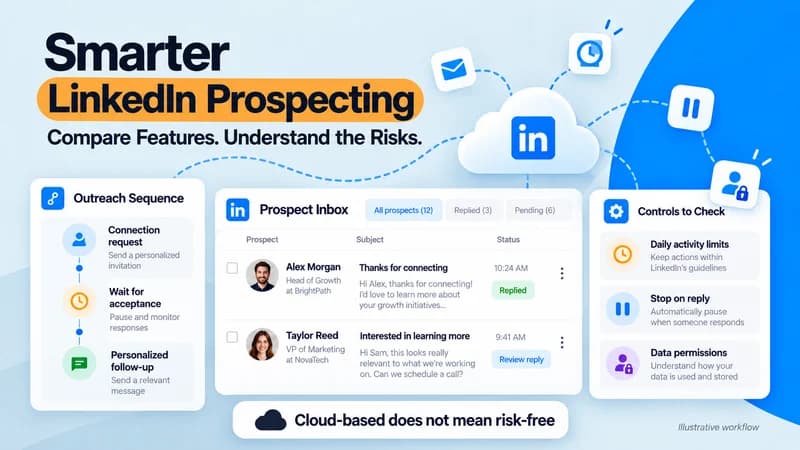
Cloud-Based LinkedIn Prospecting Tools: Features and Safety Compared

Guest Author

Follow-ups slip when your calendar fills up. Campaigns stop when your laptop sleeps. And every vendor page calls its tool “safe,” so no claim is easy to trust. The short answer: cloud-based tools keep sequences running without your device, but none removes account risk. Compare them on targeting, sequence logic, pacing controls, reply handling, and data practices. Below are the rules to know first, the features worth paying for, the safety settings to check, and a pilot test to run before you commit. Start with the rules, because they shape every safe setup. Know the Rules Before You Automate LinkedIn’s User Agreement prohibits bots and unauthorized automated activity, so every third-party tool carries some account risk. A vendor can reduce that risk through pacing and design, but cannot remove it. Privacy law matters too. Business contacts are still people, and these rules for business-to-business marketing explain when messaging them needs a lawful basis. Under UK data protection law, serious breaches can bring fines of up to £17.5 million or 4% of global annual turnover, whichever is higher. LinkedIn Message Automation: What It Does and What to Automate Managing connection requests, messages, and follow-ups takes time. With LinkedIn message automation, software handles these tasks based on rules you set. It does not pick your audience or write a strong offer for you. Teams use it to automate LinkedIn connection messages and set up automated LinkedIn follow-ups, helping them keep conversations moving after a request is accepted. Good candidates to automate: A short, truthful connection note, or no note A first message after acceptance One or two follow-ups with delays Stop-on-reply logic Keep these human: replies, objection handling, and anything that needs judgment. Cloud-Based vs. Desktop vs. Browser Extension Tools Where the software runs affects reliability and how your activity looks to LinkedIn. Cloud-based LinkedIn automation tools: run on vendor servers, so campaigns continue when your device is off. Ask how the vendor handles IP addresses and sessions. Desktop apps: run on your computer and usually need it on. Browser extensions: run inside your LinkedIn session and typically need the browser open. LinkedIn’s rules cover third-party software and extensions alike. Cloud deployment doesn’t make a tool safe. It only makes steady pacing easier to control. Features That Matter When You Compare Tools LinkedIn reports more than 1.3 billion members, so volume is never your constraint. Targeting is. Compare these features: Lead sourcing: LinkedIn search, Sales Navigator lists, CSV imports, or a built-in database Sequence logic: delays and if/else conditions that branch on acceptance or reply Personalization: variables you can verify, plus AI drafts you can edit Reply handling: a unified inbox, labeling, and stop-on-reply Multichannel flow: LinkedIn and email in one sequence, so the same prospect isn’t contacted twice Team controls: workspaces, permissions, and white-label options Integrations: CRM sync or API access, so replies reach your system of record Skylead, for example, runs LinkedIn messages, InMails, and email in one sequence with if/else conditions. It adds a B2B database, AI enrichment, and an AI SDR for replies. Safety Settings to Compare LinkedIn publishes no single universal message limit, so a tool’s controls matter more than any headline number. Look for: Adjustable daily limits per account A gradual ramp-up for new or inactive profiles Sending windows that match the prospect’s working hours Randomized delays between actions Automatic pause when LinkedIn shows warnings or actions fail Stop-on-reply on every follow-up Clear documentation on how sessions and IPs are handled A practical rule: the pattern to avoid is a sudden jump from no activity to full volume. Steady, gradual increases look far more like normal use. Treat any safety guarantee as a red flag. No vendor controls LinkedIn’s decisions. How Pricing Models Differ Prices change, so compare structure instead of numbers. Check whether you pay per seat, per LinkedIn account, flat for a team, or by usage credits for data and AI. Then ask what is included, such as email sending, enrichment, AI replies, extra accounts, and white-labeling. Model cost at the number of accounts you expect to run in 12 months. Which Setup Fits Your Team The right tool depends on who is sending. Solo founder or small sales team: choose simple 2 to 3 step sequences, warm segments, and strong pacing controls. Recruiting team: prioritize a shared inbox, permissions, and careful handling of candidate data. Agency: look for workspaces, per-client permissions, white-labeling, and pricing that doesn’t grow with every seat. Larger or regulated company: ask for written documentation on data handling before procurement review. The Pilot Test Most Comparisons Skip Feature lists don’t show how a tool behaves under real conditions. Before rolling out to a team, run a small pilot: Pick one warm, well-defined segment, such as people who engaged with a relevant post. Start below the vendor’s suggested limits and raise them gradually while watching acceptance and warnings. Reply to your own test campaign from a second account and confirm the sequence stops. Change one variable at a time, such as the first message or send time. Check export options, so your data can leave with you. Then score each tool from 1 to 5 on stability, control clarity, support response, and data export. Here is an illustrative example, not real results. Tool A scores 5, 4, 4, and 5, for 18 out of 20. Tool B scores 4, 3, 3, and 2, for 12. Tool A wins even if both tools had similar early replies. Data Privacy Rules for US Prospecting US teams face state privacy laws too. If you handle personal information about California residents, California privacy law requirements may apply to how you collect, store, and delete prospect data. Collect only what you need, honor deletion and opt-out requests, and confirm the details with legal counsel. Where to Start Pick one warm segment, shortlist two or three tools, and run one pilot. Confirm the safety controls work before you add volume. If running LinkedIn and email from one sequence is your gap, Skylead’s free trial is an

Exploring Montana MSB Insights and Future Potential Opportunities

Exploring Montana MSB Insights and Future Potential Opportunities

Guest Author

To maximize your experience with this innovative financial tool, familiarize yourself with its intuitive interface, which prioritizes user engagement. Its layout is designed for seamless navigation, enabling immediate access to various functionalities without unnecessary complexity. Take advantage of the real-time analytics functionalities available. These insights allow users to monitor transactions and assess performance metrics, providing a clear picture of financial standing and facilitating informed decision-making. The integration of advanced reporting tools can significantly enhance your ability to manage finances effectively. Consider utilizing the customizable features tailored to meet specific business needs. By adjusting parameters and options, users can align the system with their operational objectives, ensuring a personalized approach to transaction management and client relations. For optimal security, leverage the multi-layered protection protocols in place. This system employs cutting-edge encryption methods and regular security audits to safeguard personal and financial information, instilling confidence in users regarding data integrity. Engagement with available support channels is recommended for troubleshooting and maximizing the platform’s capabilities. Real-time assistance and extensive resource libraries can provide clarity and enhance overall functionality, ensuring users can navigate any challenges confidently. Understanding the User Interface of Montana MSB Begin with the dashboard, which acts as the central hub for navigation within the Montana MSB platform. Familiarize yourself with key sections such as transactions, reports, and user management that are easily accessible from the main menu. Utilize the search functionality for quick access to relevant data; this feature is particularly beneficial during high-traffic periods. Pay attention to customization options available in settings, allowing users to tailor notifications and preferences. Tooltips offer immediate guidance on various features, simplifying the learning curve. Regularly review updates to ensure you maximize the utility of modifications, as user feedback often leads to enhancements in layout and functionality. Integrating Payment Solutions within Montana MSB Choosing suitable payment gateways is critical for streamlined operations. Focus on integrating solutions that support multiple currencies and payment methods. Compatibility with popular options like credit cards, e-wallets, and bank transfers increases accessibility for users globally. API Integration Utilize robust APIs for seamless payment processing. This allows for real-time transaction handling, which enhances user experience and reduces waiting times. Ensure your development team is well-versed in API documentation to facilitate smooth integration. Security measures cannot be overlooked. Implement strong encryption protocols, such as SSL, to protect sensitive data during transactions. Regularly update security features to guard against potential threats and comply with industry standards. User Interface and Experience Design an intuitive user interface for payment processes. Simplifying the steps reduces cart abandonment rates. Consider features like one-click payments or saved payment methods to enhance user satisfaction. Monitoring transaction performance through analytics tools offers valuable insights into customer behavior. Analyze data to identify popular payment methods and adjust strategies accordingly. This ensures resources are allocated efficiently and user preferences are met. Collaboration with payment service providers is beneficial. Establish partnerships with reputable firms to access exclusive rates or services. This can give you an edge in competitive markets and enhance your offerings. Regular testing of payment systems is advisable to ensure compatibility and functionality. Conducting these tests post-integration will help identify any issues before they affect users. Continuous improvements keep the transaction process running smoothly. Security Protocols Implemented in Montana MSB Utilizing advanced encryption standards is critical to securing sensitive financial data. The encryption process converts information into a format that can only be read by authorized entities, thus preventing unauthorized access. Adopting AES-256, which is widely recognized for its robustness, ensures that data remains protected throughout transactions. Multi-Factor Authentication Incorporating multi-factor authentication (MFA) significantly enhances security layers. By requiring users to provide two or more verification factors, such as something they know (password) and something they have (a one-time code sent to their mobile device), the risk of unauthorized access diminishes. This method adds complexity to the login process, deterring potential breaches. Regular security audits are indispensable for identifying vulnerabilities. Conducting these assessments at predetermined intervals allows for timely updates to security protocols, ensuring alignment with current threats. The feedback from audits should inform continuous improvement in protection measures. Real-Time Monitoring Systems Implementing real-time monitoring systems allows for immediate detection of suspicious activities. These systems analyze user interactions and flag anomalies that could indicate fraud or cybersecurity threats. Quick response capabilities to detected issues minimize potential damage and ensure a prompt reaction to incidents. Analyzing Customer Support Options on Montana MSB To enhance user experience, consider utilizing live chat features for immediate assistance. This instant communication facilitates real-time problem resolution and can significantly boost user satisfaction. Support Channels Email Support: Allows for detailed inquiries and documentation. Response times can vary, so users should be prepared for potential delays. Phone Support: Ideal for urgent matters, offering direct contact with support agents. Check operating hours to maximize availability. FAQs: A well-structured FAQ section can address common concerns efficiently. Regular updates are key for accuracy. Evaluating response times is paramount. Generally, live chat offers the quickest turnaround, while email may require a longer wait, typically ranging from a few hours to a couple of days. Additional Resources Knowledge Base: Access to articles and guides can empower users to solve issues independently. Community Forums: Engaging with fellow users fosters knowledge sharing and may lead to quicker solutions. Feedback mechanisms play a vital role in service improvement. Encourage users to rate their support experiences and provide comments to refine offerings over time. Finally, comprehensive training for support staff is essential. Ensuring representatives are knowledgeable about the services and common issues can enhance the efficiency of assistance provided.