Lead-Gen now on Auto-Pilot withBuild My Campaign
Valasys Media — Empowering marketers with powerful insights

AI Posts

Why Clinical Operations Are Shifting to Platform-Enabled Healthcare

Why modern clinical operations are shifting to platform-enabled healthcare models

Guest Author- November 19, 2026

Healthcare organizations face increasing pressure from rising medical expenses and heavy administrative workloads. Traditional care delivery systems struggle to keep pace with growing patient volumes and complex regulatory requirements. Modern healthcare clinical operations must adapt to these challenges by moving away from manual processes. Leaders now recognize that old operational models create delays and drive up overall spending, making the integration of advanced medical management services essential for long-term sustainability.  To resolve these operational bottlenecks, health organizations are adopting centralized technology systems. Modern healthcare models connect isolated departments through centralized digital environments. This evolution helps teams streamline administrative reviews and coordinate patient care effectively. Consequently, by connecting data and workflows, organizations lower overhead and improve decision consistency across all departments. Understanding the Pitfalls of Fragmented Clinical Operations Fragmented care delivery models create severe operational bottlenecks for modern health organizations. Disconnected software applications force clinical teams to re-enter patient data across multiple systems manually. This repetition increases administrative errors and delays critical care approvals for patients. Separated communication channels prevent effective coordination between medical reviewers and care management teams. As a result, operational leadership loses real-time visibility into authorization queues and daily review workloads. These structural blind spots make accurate workload forecasting nearly impossible for plan managers. Manual paper handoffs and disconnected databases also create significant regulatory compliance risks. Disjointed audit trails increase the likelihood of non-compliance penalties during formal health plan reviews. In addition, fragmented systems limit consistent tracking of regional healthcare utilization management initiatives. Overworked clinical staff experience burnout due to repetitive data entry duties. This high administrative burden diverts precious clinical focus away from active patient care coordination. Ultimately, healthcare leaders recognize that these disconnected frameworks drive up operating costs continuously. How Platform-Enabled Healthcare Models Transform Clinical Operations Adopting connected technology models transforms legacy care workflows into streamlined organizational systems. Unified digital platforms provide clear operational governance and standardized decision support across all healthcare departments. Therefore, this technological shift allows healthcare organizations to improve care quality while controlling overall spending. Centralized Clinical Data and Real-Time Insights Unified digital platforms consolidate member health histories into a single interface. As a result, clinical reviewers access complete patient records without navigating multiple legacy databases. Real-time data streams provide immediate visibility into prior authorization requests and pending care reviews. Centralized dashboards track operational metrics across regional healthcare systems continuously. This automated data collection reduces manual information gathering for medical directors. Consequently, supervisors monitor team productivity and review timeliness through centralized operational consoles. Furthermore, this immediate data access speeds up initial case evaluations significantly. Complete clinical visibility helps reviewers make accurate medical necessity determinations quickly. Unified health records also eliminate duplicate diagnostic testing across provider networks. Standardized Workflows and Process Consistency Connected software systems enforce uniform decision rules across all review teams. Standardized digital templates guide clinical staff through routine medical necessity evaluations step by step. Thus, standard processes ensure equal review standards across diverse geographic markets. Automated task routing directs complex medical cases to appropriate specialist reviewers instantly. These standardized workflows eliminate review discrepancies between different clinical team members. In addition, clear operational guidelines reduce subjective decision variability across regional review offices. Consistent processes simplify onboarding procedures for newly hired clinical personnel. Digital workflow tracking confirms that reviewers follow exact regulatory guidelines during every case evaluation. Ultimately, standardized operations strengthen institutional governance across expanding healthcare networks. Optimized Utilization and Reduced Administrative Friction Modern platform architectures simplify prior authorization processes for healthcare networks. Automated screening rules process routine approval requests instantly without manual intervention. This allows clinical staff to focus their time on complex medical reviews requiring human judgment. Streamlined review systems reduce turnaround times for critical medical authorizations. Naturally, faster approval cycles improve provider relationships and reduce incoming status call volumes. Unified tracking tools monitor healthcare utilization management guidelines across inpatient and outpatient care settings. Targeted utilization monitoring prevents unnecessary medical procedures and prolonged hospital stays. Furthermore, automated communication tools notify providers about approval decisions immediately. This reduced administrative friction allows clinical teams to handle higher case volumes efficiently. Integrated Care Coordination and Medical Management Services Connected digital platforms bridge the gap between utilization tracking and active care management. System alerts notify care coordinators when patients enter emergency departments or acute care facilities. These immediate notifications enable proactive post-discharge outreach and home care planning. Integrated medical management services align clinical reviews directly with long-term patient wellness goals. Shared digital workspaces allow nurses, physicians, and case managers to collaborate on complex care plans. Consequently, synchronized workflows prevent gaps in care transitions between different health settings. Proactive care management reduces avoidable hospital readmissions for chronic disease patients. Continuous care tracking ensures patients follow prescribed treatment plans after facility discharge. In the long run, holistic care management improves patient health outcomes while managing total medical expenditures. Enhanced Compliance and Audit Readiness Digital platforms automatically record every clinical action within a secure, immutable audit trail. Embedded compliance checks verify adherence to state and federal health regulations continuously. As a result, systems flag potential regulatory non-compliance issues before final review decisions are submitted. Standardized digital documentation simplifies preparation for formal government audit reviews. Compliance officers generate detailed operational reports with a single platform query. Meanwhile, automated record retention protocols ensure full compliance with health data privacy mandates. Transparent audit tracking minimizes risk exposure during routine regulatory inspections. System governance features restrict data access based on defined clinical roles and responsibilities. Therefore, built-in compliance tools protect organizations from costly regulatory penalties and operational sanctions. Scalable Operations without Workforce Expansion Cloud-native platform architectures allow health plans to scale review capacity effortlessly. Automated task distribution balances workloads dynamically across available clinical staff members. At the same time, digital assistance tools accelerate case documentation without sacrificing review quality or accuracy. Health systems expand member coverage without hiring proportional numbers of new review personnel. Efficient digital workflows maximize the daily case capacity of existing clinical staff. Similarly, automated intake engines process high volumes of prior authorization documentation effortlessly during peak enrollment periods. These scalable operational models lower administrative overhead costs per

How Air Cargo Solutions Are Transforming Modern Cargo Operations in Aviation

How Air Cargo Solutions Are Transforming Modern Cargo Operations in Aviation

Guest Author- October 7, 2026

The global aviation industry faces rising pressure to move goods quickly and safely. Global supply chains now demand extreme precision, shifting away from slow, manual processes. Modern air cargo solutions provide the necessary framework to handle these heavy market demands. Platforms such as CROAMIS are helping airlines streamline processes, improve visibility, and support more efficient cargo movement across global networks.  Aviation companies must modernize their facilities to stay profitable and competitive today. Traditional freight networks often struggle with disconnected tracking and slow documentation methods. These old practices create long delays and increase total operating expenses for carriers. Implementing modern air cargo solutions will transform how companies process shipments from initial booking to final delivery. This technological shift creates a unified environment for global trade. Airlines can now manage complex logistical networks with far greater precision and speed. Understanding the Shift Toward Modern Air Cargo Solutions The movement of cargo involves far more than loading freight onto an aircraft. Before a shipment reaches its destination, it passes through booking teams, warehouse operators, customs authorities, ground handlers, and airline personnel. For years, many of these activities depended on manual communication and disconnected workflows. While those methods supported earlier business models, they often create challenges in today’s operating environment. A simple documentation issue can delay an entire shipment. A missing update can trigger confusion across multiple teams. Modern air cargo solutions will help in reducing these issues by bringing operational information together. Instead of relying on disconnected processes, airlines will gain access to connected workflows and shared visibility. This shift supports stronger airline cargo management while helping organizations improve the consistency of their cargo operations. Platforms such as CROAMIS have emerged as valuable tools for supporting these evolving requirements. Transforming Modern Cargo Operations with Air Cargo Solutions The modernization of aviation cargo does not happen through one major change. Instead, it happens through numerous improvements that will mitigate friction from daily operations. The following areas illustrate where that transformation becomes most visible. Improving End-to-End Shipment Visibility Most operational teams share a similar frustration. Problems become much harder to solve when nobody has a clear view of what is happening. A shipment may arrive at an airport on schedule. The aircraft may land exactly as planned. Yet somewhere between unloading, warehouse processing, and transfer activities, visibility disappears. At that point, multiple teams begin searching for answers. This situation creates additional work across the organization. Customer service teams receive inquiries. Freight forwarders request updates. Operations personnel start reviewing records. Modern air cargo solutions will help reduce these situations by improving shipment visibility. Information remains accessible across different operational stages. Teams spend less time searching for updates and more time resolving issues. For many organizations, stronger visibility has become a central component of effective airline cargo management. Systems such as CROAMIS help support this objective while strengthening day-to-day cargo operations. Reducing Operational Delays and Process Bottlenecks Not every disruption begins with a major operational failure. In many cases, delays develop gradually. A document arrives late. A booking update remains pending. A warehouse team waits for confirmation from another department. Individually, these issues appear minor. Collectively, they create operational bottlenecks. Cargo organizations often figure out that small inefficiencies accumulate throughout the day. A few minutes lost during one process may affect several downstream activities. This is where air cargo solutions create measurable value. They simplify information flow between teams and reduce the dependency on manual coordination. Processes move faster because fewer administrative barriers exist between operational functions. As airlines continue refining cargo operations, reducing everyday delays often delivers greater value than solving occasional large problems. Strong airline cargo management depends on identifying these friction points and addressing them consistently. Optimizing Capacity Utilization Across Cargo Networks Capacity management remains a constant challenge within aviation logistics. Every aircraft has limited cargo space. Every warehouse has operational constraints. Every shipment competes for available resources. Therefore, airlines will spend considerable effort balancing demand with available capacity. During busy periods, the challenge becomes even greater. Decisions have to be made quickly, often using information from different sources. Modern air cargo solutions help organizations improve these decisions. Better visibility into capacity, demand patterns, and shipment activity allows teams to allocate resources more effectively. Better planning helps create more efficient cargo operations while reducing unnecessary waste. The objective is not simply to move more cargo. The objective is to use available resources more effectively. Converting Operational Data into Actionable Insights Cargo organizations generate enormous amounts of information every day. Booking activity, shipment volumes, warehouse performance, turnaround times, and capacity utilization all contribute to operational decision-making. However, collecting data alone is of no value without understanding what the information really means. Airlines increasingly rely on air cargo solutions to provide greater clarity. Patterns become easier to identify. Operational weaknesses become more visible. Performance trends become easier to monitor. This visibility supports better decision-making across the organization. They make decisions using operational evidence rather than assumptions. Strong airline cargo management depends on this ability. Platforms like CROAMIS help transform operational information into practical insights that support both daily execution and long-term planning. Building Agility for Future Market Changes The aviation cargo market rarely remains static for long. Trade routes change. Demand fluctuates. Customer expectations evolve. External disruptions occasionally reshape the operating environment without warning. Organizations therefore need systems capable of adapting alongside the business. Modern air cargo solutions provide that flexibility. Airlines can expand operations, manage changing shipment volumes, and introduce new processes without creating unnecessary complexity. This adaptability has become increasingly important as global logistics networks continue evolving. Many organizations view scalability as a critical component of modern airline cargo management. Solutions such as CROAMIS help support growth while maintaining stable and efficient cargo operations. The ability to adapt often determines how successfully an organization responds to future challenges. Conclusion The transformation of aviation cargo is taking place through practical operational improvements rather than dramatic changes. Better visibility, stronger coordination, improved planning, and more informed decision-making are gradually reshaping how airlines manage freight movement

The Role of Silicon Design in Accelerating Semiconductor Product Development

The Role of Silicon Design in Accelerating Semiconductor Product Development

Guest Author- September 28, 2026

Semiconductor products need to reach the market faster than they used to, support rising performance demands, and stay commercially viable once they get there. That pressure has changed what silicon design actually means inside an organization. It is no longer treated as a purely engineering activity handled in isolation. Decisions made early in a silicon program shape product timelines, development and rework costs, real-world performance, time to market, and how differentiated the final product ends up being. A well-planned approach to silicon solutions can help organizations move from concept to production with greater speed and predictability. Why Semiconductor Product Development Needs Greater Speed Products across AI, automotive, telecommunications, industrial systems, and connected devices keep growing more sophisticated. That complexity adds engineering work at nearly every stage before a product is ready for production, and it puts real pressure on semiconductor product development timelines that used to feel comfortable. Delays rarely stay contained to the engineering schedule. A late silicon program can push back a product launch, disrupt revenue plans, drive up engineering costs, and hand competitors extra time to respond. For leadership, this is a business risk long before it becomes a technical one. How Silicon Design Can Shorten the Product Development Cycle Silicon decisions work best when they stay tightly connected to overall product strategy. When silicon design and product requirements move together instead of separately, teams avoid a lot of the rework that shows up later in a program. Strong verification and design review processes also catch issues earlier, which matters, because a problem caught early costs far less to fix than one discovered close to production. Automation and AI assisted engineering are playing a growing role here too. Used well, they take repetitive work off engineers’ plates and support faster iterations through design and verification, without requiring leadership to understand every technical detail behind them. Put together, these changes tend to show up in a few consistent ways: Fewer design iterations Better use of engineering resources Greater schedule visibility Faster movement toward production That combination is often what separates a silicon development effort that stays on track from one that quietly slips month after month. Turning Faster Silicon Development Into Business Value Reducing rework, improving engineering productivity, and reusing existing IP where it makes sense all feed directly into cost control. None of that requires cutting corners. It simply means fewer wasted cycles. A shorter development cycle also changes how quickly a company can respond to the market. Organizations that compress their silicon development timeline can launch sooner and adjust faster when demand shifts, rather than finding out months later that they missed the window. There is a product economics side to this as well. Choices made during silicon design affect performance, power consumption, physical size, and total system cost, which means silicon design decisions are tied to profitability, not just to engineering benchmarks. For business leaders, the impact is usually best viewed through a few consistent measures: Development cost Time to production Engineering productivity Product launch timelines Product differentiation Long term reuse of silicon assets Supporting Product Differentiation Through Custom and Derivative Silicon Standard components work fine until a product’s requirements get specific enough that they stop being the right fit. That is usually where custom ASIC development enters the picture, letting organizations shape silicon solutions around the exact performance, power, cost, or functionality a product needs. Not every program has to start from zero either. Reusing proven design elements and existing IP, where it genuinely applies, can speed up development of new product variants and open the door to adjacent markets without duplicating years of engineering effort. Why an End-to-End Silicon Approach Matters Gaps between design, verification, and manufacturing readiness are where a lot of delay quietly builds up. When those stages are better connected, handoff related slowdowns shrink and execution tends to improve across the board. An integrated approach also gives leadership something they often lack: real visibility into progress, risk, and how close a program actually is to production readiness, rather than a status update that turns out to be optimistic. Making Silicon Design a Strategic Business Capability Silicon design deserves to be judged on more than technical performance alone. Business and technology leaders are better served evaluating it against a broader set of outcomes: Faster product launches Better cost control Lower development risk Product differentiation Greater reuse across product portfolios Organizations that connect silicon engineering to these wider business goals tend to end up with development that is more predictable and easier to plan around, not just faster on paper. Conclusion Silicon design has become one of the more meaningful levers for speeding up semiconductor product development. When engineering expertise, automation, reuse, and production readiness work in step with each other, organizations cut down on development friction and bring differentiated products to market with more confidence. Silicon design is not only about building better chips. It is about helping businesses build and launch better products, faster.

How AI-Powered Global Capability Centers Are Transforming Enterprise Operations

How AI-Powered Global Capability Centers Are Transforming Enterprise Operations

Guest Author- June 26, 2026

Enterprise operations are going through a quiet but real shift. Companies are no longer satisfied with offshore units that process tasks and follow instructions. The demand now is for centers that analyze, adapt, and contribute to business outcomes. Global capability centers have stepped into that role. When paired with artificial intelligence, they stop being back-office support and start driving how enterprises actually run. AI is now woven into how global capability centers plan work, manage people, track performance, and support decisions. Enterprises that have rebuilt their center strategies around AI are seeing real gains in output quality, speed, and cost control. Many organizations also turn to GCC Consulting to guide this shift and structure their transformation efforts. Rethinking Global Capability Centers in the Age of AI A global capability center is an offshore or nearshore unit built by a multinational to handle specific business functions. Technology, finance, analytics, customer support, and product development are among the core areas these centers take on. For a long time, the main draw was cost. That advantage still exists, but it is no longer the whole story. The GCC operating model behind these centers has also evolved to support broader business goals. AI has shifted what these centers are actually for. Machine learning models catch inefficiencies that analysts overlook. Predictive systems flag supply chain problems before they surface. Natural language tools manage tier-one support without routing to a person. As organizations work with an AI development company to build and integrate these capabilities, the center is no longer just processing work. It is generating intelligence. The center is no longer just processing work. It is generating intelligence. How AI-Powered Global Capability Centers Are Transforming Enterprise Operations AI has changed what global capability centers are capable of delivering. These centers once handled defined tasks within fixed boundaries. Today, they run intelligent processes, generate actionable insights, and contribute to enterprise-level decisions. Operations Run With Minimal Manual Intervention Enterprise back-office work has always been resource-heavy. Data entry, invoice validation, status reporting via AI project management, and document processing require dedicated staff and careful oversight. AI-powered global capability centers have changed this. Robotic process automation guided by machine learning reads variations in incoming data, handles edge cases without escalation, and keeps pipelines running continuously. The GCC operating model that emerges is leaner and faster. Output per person increases, error rates drop, and the center becomes a reliable processing engine rather than a cost center. Data Shifts From Static Reports to Real-Time Intelligence Most enterprises generate enormous volumes of data across their GCC functions daily. In a traditional setup, turning this data into insight takes time. Reports are usually created weekly or monthly, and by the time they reach management, the opportunity to act has often passed. Analytical tools based on artificial intelligence constantly analyze incoming data and provide insights that can be implemented right away. Financial teams in global capability centers can monitor cash flows across regions, with systems flagging unusual patterns in real time. Companies that engage GCC consulting expertise to build these layers connect AI outputs directly to executive reporting, allowing leadership to act on current information instead of past summaries. Customer Support Scales Without Compromising Quality Customer interaction activities have long been one of the most resource-intensive functions within global capability centers. Handling the volume of inquiries, ensuring consistency in performance across time zones, and maintaining consistent performance levels demands considerable staffing. Conversational AI tools handle a large portion of tier-one interactions without routing to a human agent. They access account histories, interpret intent, and resolve common issues within the same interaction. As a result, agents can focus on more complex cases that require judgment. Organizations often bring in GCC consulting support to design these systems and align them with service goals. The GCC operating model for support, built with AI at its foundation, handles volume spikes without emergency hiring and maintains quality consistently across shifts. Technology Delivery Becomes Faster and More Reliable Software delivery has always carried risk. Requirements shift, timelines compress, and testing often causes delays. These challenges affect both speed and quality across development cycles. AI is now changing how GCC development teams handle this process. Code assistance tools identify bugs before review and generate test cases automatically from requirements. AI testing platforms create test scripts from specifications, run regression checks, and rank defects by business impact. Deployment timelines shorten as a result. Firms that work with GCC consulting partners often find that AI-supported GCC teams deliver faster results with fewer defects than traditional models. Compliance and Risk Management Become Proactive Compliance is one of the harder responsibilities GCCs carry. Regulations tend to shift often, there is much activity to oversee, and manual review processes struggle to cope. AI-based monitoring systems analyze transactions, log-ins, and communications on an ongoing basis, enforcing rules consistently. When a potential violation appears, it gets flagged immediately with evidence already compiled. For risk, AI systems trained on historical data assess the likelihood of specific events in real time. A GCC operating model that integrates compliance monitoring into its core structure handles these demands more reliably than one that adds it as an afterthought. Workforce Development Becomes Continuous and Targeted The quality of any GCC depends on the people delivering the work. Team capability shapes outcomes across functions and processes. Traditional workforce development methods are often too generic and slow to adapt. They struggle to keep pace with changing tools and evolving business needs. Using AI-driven learning applications, individual gaps are detected, and a development route is prescribed. All the progress is measured, and suggestions are updated as the employee improves. Companies that hire GCC consulting experts to ensure their technology strategy aligns with their people strategy see better results by integrating learning into their workflow. Bottom Line Enterprise operations continue to evolve with changing business demands. Global capability centers now serve as key pillars in this transformation. They bring together efficiency, control, and strategic value. The updated GCC operating model supports better coordination across functions. Companies

Strategies to Build Cyber Resilience Amid Continuous Disruption

Strategies and Best Practices to Build Cyber Resilience in an Era of Continuous Disruption

Guest Author- June 5, 2026

Technology expansion continues to widen digital access across regions and industries. This expansion also increases the number of entry points attackers can exploit. Traditional security measures are no longer sufficient to provide adequate protection from these growing threats; therefore, the concept of cyber resilience (supported by good security management practices and robust cybershield frameworks) has become an essential requirement for all organizations. Cyber resilience focuses on maintaining control through times of disruption by emphasising preparedness, response, and recovery. Organizations that employ effective security management practices are able to minimize downtime (an essential component in maintaining operational trust) when a security incident occurs and continue operations even when incidents do happen. This approach shifts security efforts from reaction toward preparation. Resilient organizations assume disruption will happen. Systems are designed to absorb impact and restore function quickly. This mindset supports long-term stability and operational value. The Changing Shape of Cyber Threats As organizations and individuals continue to adopt new technologies, cyber threats will continue to evolve. Automation and interconnectedness of new technologies will increase their exposure to cyber threat actors. Cybercriminals take advantage of vulnerabilities across multiple applications, networks, and dependencies; cloud-based systems, endpoints, and supply chains will be targeted. In addition to these vulnerabilities, the use of advanced technology tools used by cybercriminals to attack has accelerated the speed and scale of attacks. The most common examples of these attacks are phishing, ransomware and the misuse of credentials. Methods change frequently to bypass controls. AI-powered solutions assist defenders by improving pattern recognition and response speed. Cyber resilience depends on awareness of this environment. Static controls do not hold against adaptive threats. Organizational security management requires flexible approaches. Preparedness now carries more weight than prediction. Best Practices and Strategies to Ensure Cyber Resilience Organizations without resilience face a lasting impact during incidents. Downtime affects revenue and customer confidence. Slow recovery raises operating costs. Compliance gaps add further exposure. Cyber resilience limits damage and supports faster restoration. The following approaches contribute to sustained resilience against current and emerging threats. Unified Security Governance Security efforts lose effectiveness without coordination. Fragmented controls create blind areas. Organizational security management aligns policy, tooling, and teams. Central governance supports clearer decisions. Response improves during incidents. Continuous Threat Monitoring Threat activity does not follow schedules. Periodic reviews overlook active risks. Continuous monitoring improves detection accuracy. Managed detection and response provides ongoing visibility. AI-powered solutions analyze activity patterns in real time. Early detection reduces impact. Cloud and Network Security Alignment Cloud environments support modern operations. Configuration gaps lead to increased exposure to risk, and strong cloud and network security limit access paths into these environments. Continuous visibility allows for the exertion of control across various platforms, leading to enhanced resilience of security defenses through rapid adaptation. Integrated Security Intelligence Lack of integration between tools results in poor visibility of context. Utilizing integrated intelligence increases situational awareness. Using AI integration for messaging and event correlation across disparate systems improves the ability to gain actionable insights in the face of cybersecurity risk by utilizing Cybershield Frameworks to provide centralized analysis and response capabilities, giving teams the ability to respond effectively and with greater clarity when there is an incident. Incident Response and Recovery Planning Actions during an incident are based upon the Response Plan that provides direction on how to take action under pressure. Teams that have not prepared lose the time needed to respond effectively. Routine and continuous testing for preparedness can lead to improved levels of readiness. Managed detection & response (MDR) programs can assist to provide guided assistance through the recovery effort. Structured Response Plans will aid in eliminating confusion and reducing the delay of response time. Protection of Critical Assets and Identities Attackers target sensitive data and credentials. Prioritizing your assets helps you focus your security efforts based on risk. Implementing identity controls helps limit unauthorized access to company assets. The use of Cybershield Methods will aid in the protection of high-risk assets. Consistency in implementing and enforcing organizational security management practices helps to strengthen the overall security posture of an organization. Security Awareness and Accountability Human error remains a frequent entry point. Training improves recognition of threats. Defined accountability supports faster reporting. AI-powered solutions help identify risky behavior patterns. Awareness strengthens resilience across teams. All of these factors reinforce each other; together they combine to create a balanced security posture. The speed of resilience improves when prevention and recovery work together as parallel processes. Bottom Line Cyber resilience reflects how organizations withstand ongoing disruption. Preparation reduces impact and recovery time. Organizational security management supports consistent protection across environments. Cybershield frameworks, AI integration, and AI-powered solutions contribute to adaptive defense. Managed detection and response, along with cloud and network security, complete the structure. Cybersecurity direction continues to shift toward intelligence and coordination. Organizations that prioritize resilience protect long-term value. Readiness and response now define effective security more than static controls.

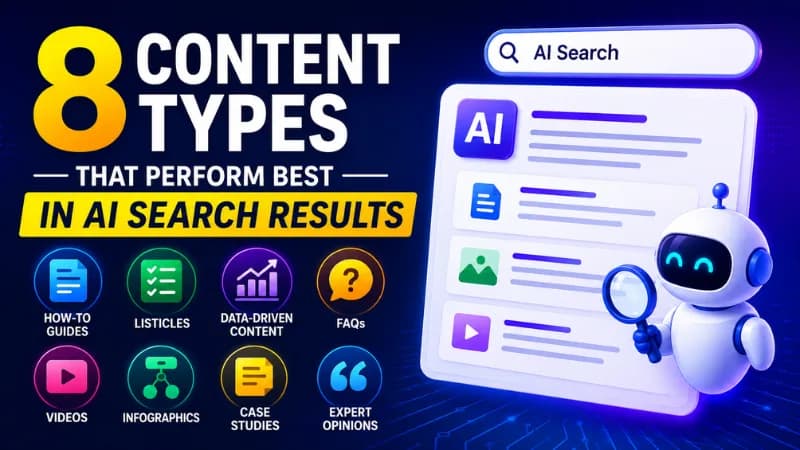
8 Content Types That Perform Best in AI Search Results

8 Content Types That Perform Best in AI Search Results

Pranali Shelar- May 12, 2026

Here is the part that stings: coMost content teams are optimizing for a search engine that is quietly being replaced. Not gone. Replaced. Google is still there. But the thing answering questions at the top of the page is no longer a list of ten blue links. It is a synthesized response, built from sources the AI deemed trustworthy enough to excerpt. And the bar for “trustworthy enough” looks nothing like the bar for ranking in 2019. ntent that took months to produce, that earned backlinks and ranked well for years, may not even appear in AI-generated responses. Not because it is bad. Because it was not built for this. It was built for humans to click through to. AI does not click through. It typically reads, extracts, and synthesizes without requiring click-throughs. So the question is not “how do I rank?” It is “what kind of content does AI actually cite?” Turns out, the answer is pretty specific. Why Format Is Now a Ranking Signald  Before, format was a UX decision. Headers made content skimmable. Bullet points helpeimpatient readers. Tables were optional. Formatting hasn’t changed, but its purpose has. We used to format so people would read; now we format so machines can think. In a search landscape dominated by AI Overviews, structured synthesis isn’t just a UX choice; it’s survival.  According to Search Engine Journal research, AI Overviews have seen a massive surge in 2026, now appearing in nearly 50% of all search queries. In high-intent sectors like B2B Tech and Education, that number climbs as high as 82%, making AI visibility the new baseline for informational content. The content competing for informational intent is no longer fighting for position three on a results page. It is fighting to be the one paragraph an AI decides to quote. AI systems assess three things above everything else: can this content be trusted, can it be understood cleanly, and can it be excerpted without distortion? Fail any one of those, and it gets skipped. Not penalized. Just skipped. The AI, GEO, and AEO strategic framework from Valasys is the right place to map out the full picture. But the eight content types below are where the strategy gets tactical. 1. Direct-Answer Content: Just Get to the Point AI models have no patience for preamble. Neither do users, honestly, but AI makes it structural. The format that performs best in AI search is the one that answers the question in the first two sentences and then explains itself. Not the other way around. Not three paragraphs of scene-setting before the actual answer arrives. Large Language Models (LLMs) are trained to find the best match for a query. If your answer is buried under six hundred words of “in today’s digital landscape,” the model has already moved on. What this looks like in practice: Element What to Do Question as H2 or H3 Match how people actually phrase the search Answer in the first two sentences No hedging, no windup Context and depth below Reward readers who want more FAQ or HowTo schema Tell the parser what it is looking at HubSpot proved this at scale. After Google’s AI integration started eating into organic traffic, they restructured their content strategy to lead with definitions and direct answers. The result was sustained ownership of featured real estate even as the traffic model around them changed. They did not create new content. They restructured what they had to lead with the answer. The takeaway is almost uncomfortably simple: earn your reader’s attention after you have answered their question, not before. 2. Schema-Optimized Content: Speak the Machine’s Language Direct-answer content is what AI reads. Schema markup is how it understands what it is reading. Without structured data, even excellent content gets misread. A step-by-step guide looks like a wall of text. An FAQ looks like a list. A product comparison looks like editorial opinion. Schema markup provides the label that tells the AI parser: this is a FAQ. This is a HowTo. This is an Article with a named author and a publication date. According to Semrush research, pages with comprehensive structured data show improved visibility in AI-generated summaries, though the exact impact varies by content type and query intent. This is not a marginal advantage; it is the baseline for being cited in a landscape where machine readability is the new authority.  The schema types with the most impact right now: FAQPage – directly feeds Q&A extraction into AI responses HowTo – procedural content AI can excerpt step by step Article / BlogPosting – signals editorial credibility Organization and Person – entity recognition, which matters more than most teams realize Start with FAQ schema on your highest-traffic informational content. It is low lift, high return, and one of the cleaner signals you can send to any AI system parsing your pages. 3. Original Research: Be the Source, Not the Citation AI models are wired to prefer primary sources. If the data lives on your page and nowhere else, the AI has to cite you. There is no alternative. This is why Gartner statistics appear in everything. It is not just brand authority. It is that Gartner data has no upstream source to defer to. The citation trail ends there, which makes it irreplaceable. The good news is that “original research” does not require a Forrester-sized budget. A survey of two hundred customers. An internal dataset from your product. An index you built by compiling and analyzing publicly available figures in a way no one else has bothered to do. All of it counts, as long as the methodology is clear and the presentation is rigorous. Drift, now part of Salesloft, built a serious chunk of their category authority through their annual State of Conversational Marketing report. Every year, the report generated thousands of citations across the web. In AI search, those original data points continue to surface in LLM responses years after publication, because the data still has no better upstream source. The

6 Reasons to Modernize Your Telecommunication Infrastructure

6 Reasons to Modernize Your Telecommunication Infrastructure

Guest Author- May 8, 2026

Running a massive telecommunications grid today often feels like pushing a river through a garden hose. Legacy infrastructure was built for predictable voice calls and basic internet traffic, not the massive stream of video and connected devices we see today. Engineers are stuck fighting fires, relying on manual fixes to keep old servers from failing. When hardware degrades, the setup simply breaks down, leading to dropped service. Maintaining this equipment drains budgets and leaves providers completely vulnerable to outages. Fixing this growing problem requires a complete shift away from static hardware toward an intelligent framework. Instead of waiting for a switch to fail, modern systems use an advanced network management solution to monitor the grid and adjust resources. This approach treats the infrastructure as a dynamic environment where software handles the heavy lifting, allowing providers to scale capacity. Embracing this shift toward smart networks and AI in telecom ensures that carriers can handle modern demands without constantly rebuilding their physical towers. Why Static Grids Can No Longer Keep Up Ten years ago, if a tower went offline, technicians traced the problem to a specific cable. Now, networks are highly virtualized and spread across multiple locations. A dropped connection might stem from a software error buried inside a remote server. A traditional network management solution just blinks a warning light when something fails, never explaining how to fix it. This creates a bottleneck. Manual oversight is impossible today, making automation in telecom a strict necessity rather than an optional upgrade. 6 Reasons to Modernize Your Telecommunication Infrastructure 1. Preventing Outages Before They Happen Manual checks rarely catch a failing router before it dies. Modernizing allows companies to move from reactive repairs to predictive maintenance. A smart network management solution constantly tests the hardware. If it notices a memory leak, it routes traffic away before the server crashes. This level of automation in telecom guarantees that the end user never experiences a drop in service, completely changing how daily operations function. 2. Defending Against Modern Cyber Threats As modern grids virtualize, entry points for hackers expand dramatically. Traditional firewalls cannot monitor millions of devices at once. Upgrading infrastructure means baking operational security directly into the software layer. If an anomaly appears, the system instantly quarantines affected nodes. This active defense mechanism turns operational security into a live, continuous process. Relying on an outdated network management solution means discovering a breach hours after it happens, which ruins client trust entirely. 3. Managing Unpredictable Traffic Spikes Bandwidth capacity costs a massive fortune to maintain. Leaving capacity idle in one neighborhood while a stadium struggles with a massive crowd makes no financial sense. Modern systems treat capacity like water, pushing it exactly where it is needed at any given second. This specific application of AI in telecom prevents grids from buckling under pressure. Telecom providers completely avoid buying expensive extra hardware just to survive rare traffic surges. 4. Scaling Up Edge Computing People want data processed closer to their devices. You cannot route every decision back to headquarters. The edge needs brains to function independently. Decentralized automation in telecom allows local nodes to make routing decisions on their own. This is where AI in telecom truly proves its worth, enabling ultra-fast response times for autonomous vehicles. Furthermore, local nodes must maintain strict operational security to ensure data processed at the edge remains locked down. 5. Freeing Up Human Engineers Talented IT staff should not spend sixty hours a week staring at charts or manually resetting routers. When a company deploys a modern network management solution, the software handles the repetitive checks. Deep automation in telecom takes the pressure off the human workforce. Engineers finally have time to design new revenue-generating services. This dynamic shows that AI in telecom acts as a financial driver rather than just a massive IT expense. 6. Creating a Self-Healing Ecosystem The ultimate goal of upgrading is resilience. A modernized grid fixes itself. If a physical line is cut during construction, the traffic instantly finds a new path. This self-healing nature relies heavily on AI in telecom to calculate alternative routes in milliseconds. It also relies on robust operational security to verify that the new routes are safe from interception. Without deep automation in telecom, a cut line means a whole city block goes dark until a truck arrives. Planning Your Technology Roadmap Clinging to older hardware is a guaranteed way to fall behind. The volume of data flowing through these pipes is only going to increase. Companies must pivot toward systems that think and defend themselves. Finding the right approach gives an organization a clear path out of technical debt. Look closely at the IT budget. If the vast majority of the money goes toward keeping old servers breathing, a structural change is absolutely necessary. Embracing a modern network management solution gives the business room to actually grow. When the backend works, new services have a real chance to succeed. By building a flexible foundation powered by automation in telecom, carriers ensure their grid survives heavy loads. It takes serious planning, but focusing on smart software and unbreakable operational security separates the winners from everyone else. The real magic of AI in telecom is turning a static pipe into an intelligent partner. Upgrade the core architecture today, prioritize operational security, and the business will be fully prepared for whatever shifts happen in the market next.

Entity-First SEO for B2B Brand Visibility

Entity-First SEO for B2B Brand Visibility

Pranali Shelar- April 23, 2026

Google does not rank keywords anymore. Not really. It ranks things. People, companies, products, and concepts. If your brand is not a recognized “thing” inside Google’s Knowledge Graph, you are essentially a ghost in the machine, producing content that no one asked a machine about. That is the core premise behind entity-first SEO, and it matters more than most marketing teams realize right now. For companies selling complex solutions with long sales cycles and big buying committees, being an entity that AI systems and search engines understand is the difference between being cited in a research summary and being skipped entirely. When a CTO asks an AI assistant which vendors solve a specific integration problem, the answer is shaped not by who ran the best PPC campaign last quarter, but by who is a recognized entity with structured, interconnected, and verifiable knowledge around them. This blog breaks down what entity SEO actually means in practice, why it is uniquely high-stakes for solution-sellers, and how to build a brand that search engines and AI alike treat as authoritative. What Is an Entity, and Why Should You Care? In semantic search, an entity is any real-world object or concept that is distinct, identifiable, and describable. A company can be an entity. A CEO may also qualify as one, and even a product category can function as an entity. Google’s Knowledge Graph maps the relationships between these entities to better understand how they connect in the real world. Traditional keyword SEO asked, “What words does my audience type?” Entity SEO asks, “What does the machine think I am, and how does it connect me to other known things?” Google’s documentation on the Knowledge Graph describes it as helping “understand the real world” by modeling entities and their relationships rather than matching strings of text. That shift has massive implications for how enterprise brands should structure their digital presence. The practical upside: when you are a recognized entity, your brand appears in AI-generated answers, knowledge panels, related entity carousels, and structured search features, even when someone does not search for you by name. How Entity SEO Differs from Traditional SEO Dimension Traditional Keyword SEO Entity-First SEO Core unit Keyword / phrase Entity + relationships What you optimize Pages and backlinks Brand signals, structured data, Knowledge Graph AI discoverability Minimal / Accidental Central / Intentional Best for Transactional, high-volume search Research-heavy, considered-purchase contexts Outcome Rankings for specific queries Authority across topic ecosystems The gap between these two approaches is widening fast because of generative AI. Large language models (LLMs) like those powering ChatGPT, Gemini, and Perplexity do not just crawl your meta descriptions. They use training data, citations, and entity disambiguation to decide what to say about your category and who to mention as a credible player in it. If you have been wondering how to get your content cited in AI-generated responses, understanding how generative engine optimization works is the foundation you need before anything else. It is not about stuffing keywords; it is about providing the context that LLMs crave. The Three Pillars of Entity-First SEO for Complex Sales Cycles 1. Entity Establishment: Becoming a Known “Thing” You cannot optimize your entity presence if the entity does not formally exist in the places that matter. This means: Google’s Knowledge Graph: The primary source of truth for entity recognition. Getting a Knowledge Panel is the clearest signal that Google considers you a real, distinct entity. The path there involves consistent NAP (Name, Address, Phone) data, Wikipedia or Wikidata presence, and structured data markup. Wikidata and Wikipedia: These are significant inputs into knowledge graph construction. A notable brand with verifiable, neutral sourcing can and should have a Wikidata entry. Wikidata is openly editable and often a faster first step than Wikipedia. Schema Markup: This is your website talking directly to machines. Properly implemented Organization, Person, Product, and Article schema tells search engines who you are and what you do.  2. Entity Authority: Being Referenced by Other Entities An entity in isolation carries little weight. Authority comes from being mentioned by, linked to, and associated with other credible entities. This is the semantic equivalent of traditional domain authority, but it operates at the entity level. Case Study: HubSpot’s Entity Ecosystem HubSpot is one of the clearest examples of entity SEO done at scale. According to Semrush’s analysis of HubSpot’s domain, the company’s knowledge base creates a dense internal entity network. Every blog post and tool connects to a broader topic ecosystem. HubSpot does not just rank for CRM keywords; it is the CRM entity that other entities refer to. When Gartner and Forbes consistently mention HubSpot in the context of marketing automation, Google receives layered, cross-verified entity signals. For solution sellers, the equivalent is getting your brand into industry analyst reports, earning coverage from trade publications, and creating assets like benchmarks that other recognized entities cite. Those citations are entity-to-entity votes of relevance. 3. Entity Clarity: Reducing Ambiguity Across Touchpoints Google’s entity disambiguation process tries to figure out which “Apex” or “Synergy” you are. If your brand name is common, you have an ambiguity problem. Consistent attributes: Your LinkedIn, Crunchbase, G2 listing, and website should describe your company in structurally consistent language. The category, founding year, and headquarters should match across every data source. Sitelinks and Knowledge Panel management: Once you have a Knowledge Panel, use the “Suggest an edit” feature to correct inaccuracies. According to Google Search Central documentation, the way you annotate your own data matters to how the engine disambiguates your brand. Named entities within content: Using the real names of your integrations, customers (with permission), and analysts helps clarify your positioning. Vague content referencing “leading platforms” is semantically weak; specific, named content is semantically rich. Entity SEO and the Rise of Zero-Click AI Answers Here is where entity SEO connects directly to Revops: Zero-click search is no longer a threat to manage; it is a format to win. When a procurement director researches “best supply chain software for mid-market,” they increasingly

WordPress AI Connectors: How WordPress 7 Is Building the Future of AI Websites

WordPress AI Connectors: How WordPress 7 Is Building the Future of AI Websites

Ajinkya Hanchate- March 4, 2026

Artificial Intelligence is slowly becoming part of everyday website development. From content generation to SEO suggestions, AI is changing how websites are built and managed. With WordPress 7, we are seeing the first real step toward native AI integration inside WordPress core. One of the most important additions in WordPress 7 Beta 2 is something called WordPress AI Connectors. If you noticed a new Settings → Connectors section in your dashboard and wondered what it does, this guide explains everything in simple language. What Are WordPress AI Connectors? WordPress AI Connectors are a new system introduced in WordPress 7 that allows you to connect AI providers like: OpenAI Claude Gemini You can add your API keys once, and WordPress stores them securely. It does not generate content automatically or create chatbots by default. Instead, it manages the connection between your website and external AI services. Think of it as a central control panel for AI services inside WordPress. Why WordPress Introduced AI Connectors Before WordPress 7, every AI plugin worked separately. If you installed multiple AI plugins, you had to: Enter the same API key multiple times Manage settings in different locations Use different integration methods There was no standard system. WordPress solved this by introducing a centralized structure. Now developers can use one unified AI Client system instead of building custom integrations every time. How WordPress AI Connectors Work Step 1: Add Your API Key Go to Dashboard → Settings → Connectors. Select a provider, install it, and paste your API key. Step 2: WordPress AI Client Handles Communication WordPress 7 includes an AI Client system that manages communication with AI providers using the credentials you stored. This makes development easier and more secure. Step 3: Plugins Use the System Here is the important part: AI Connectors alone do nothing. Plugins must support the WordPress AI Client system to use these connections. Once supported, plugins can: Generate blog content Create product descriptions Suggest SEO improvements Provide AI chat support Analyze user behavior For example, developers could build niche AI tools such as predictive analytics dashboards, personalized recommendation engines, or even specialized applications like a destiny matrix calculator that generates insights directly inside a WordPress website. What WordPress AI Connectors Do Not Do They do not automatically generate content. They do not replace AI plugins. They do not create built-in AI tools by default. They are infrastructure. Like wiring in a building, they prepare the system for future use. The Future of AI in WordPress WordPress powers over 40% of the web. Adding AI infrastructure into core is a major signal for the future. We can expect: AI-assisted content editing inside the block editor Smart layout suggestions in page builders Automated WooCommerce product content AI-driven SEO analysis Better personalization features This is not just a feature update. It is a foundation update. At Valasys Media, we see this as the beginning of a more intelligent WordPress ecosystem where AI becomes part of everyday workflows. Frequently Asked Questions What are WordPress AI Connectors? They are a new feature in WordPress 7 that allows you to store and manage API keys for AI providers in one central location. Do WordPress AI Connectors generate content automatically? No. You still need plugins that use the AI Client system to generate content. Is this available in the stable WordPress version? Currently, it is available in WordPress 7 Beta 2. Full release is expected in the stable version. Will page builders use WordPress AI Connectors? Most page builders have not yet integrated this system, but adoption is likely after the official release. Final Thoughts WordPress AI Connectors may not look exciting today. There is no flashy interface or automatic AI assistant. But this is how big changes begin. By building AI infrastructure directly into the core, WordPress is preparing for a future where AI is not optional — it is integrated into how websites operate. The real transformation will happen when developers and plugin creators start building on top of this system. And that transformation has already started.

Why Traditional Solutions Fall Short Need for CyberTransform

Why Traditional Solutions Fall Short: Need for CyberTransform

Guest Author- December 24, 2025

The rise of AI is changing the ways organizations work across industries. The increase in availability and necessity of various AI-powered systems serves to make them a greater target for attacks. Traditional security measures, such as firewalls, intrusion detection systems, and encryption, are needed to secure digital infrastructures, but do not provide enough protection against the threats and vulnerabilities of AI systems.  Attackers may now gain entry without sophisticated programs or breaking through firewalls, and this change has altered the security perimeter slightly. The idea that breaches are unavoidable and that defenders can only react. Organizations must adopt an all-encompassing AI-driven cybersecurity transformation for cyber risk management in order to adequately protect AI Models and applications from these ever-changing threats.  How AI Has Changed the Threat Landscape AI systems make judgments, process enormous volumes of data, and frequently function independently. The vulnerabilities are a major worry as AI gets more integrated into vital applications like financial trading, autonomous driving, and healthcare diagnostics. Even conventional predictive AI, which has been used for many years in various industries, is vulnerable and might have a significant negative effect on businesses if companies fail to adapt to cybertransform. The incidents of AI-specific vulnerabilities will emerge at varying points in the life cycle of AI. These include: Data Poisoning: AI Models are trained on enormously extensive datasets, and the efficiency and performance of such models may be negatively affected if the adversary is able to access or corrupt the data. Model Inversion: The invader can threaten privacy by utilizing outputs of the AI systems to reverse engineer the secret data that has been utilized in training the system used.  Adversarial Attacks: Adversarial instances are falsified inputs generated so as to delude the AI that they are giving appropriate outputs, while in reality, they inherently induce erroneous forecasts. Speech and image recognizing AI systems are the most susceptible to adversarial instances. Model Extraction: By frequently querying a machine learning model to deduce its underlying methods and parameters, cybercriminals can extract and steal intellectual property. Traditional cybersecurity advisory is unable to offer AI systems complete protection in light of these particular dangers.  Besides AI-driven cybersecurity attacks, there are also evolving trends in threats. These include: State-sponsored Attacks and Advanced Persistent Threats (APTs): These attacks, which are premeditated, frequently employ sophisticated methods of penetrating networks, stealing confidential information, and disrupting daily operations. The identification and reduction of such threats are frequently beyond the ambit of conventional cyber risk management methods, including firewalls and anti-virus software. Multi-Vector assaults: Phishing emails, malicious websites, and compromised IoT devices are just a few examples of the multi-vector assaults that cybercriminals are increasingly employing to target several access points at once. Traditional cybersecurity advisory that concentrates on a single point of defense may be overpowered by these attacks. Enhanced Ransomware Sophistication: Ransomware attacks now go far beyond primitive encryption and introduce data exfiltration and double extortion techniques. Limitations of Traditional Cybersecurity Approaches The standard security stack was created with the underlying assumption that all actions and modifications are authorized unless they are known to be malicious in order to identify and stop threats. This method enables attackers to create novel strategies and malicious programs that are unidentifiable and missing from any known risk. Below are some of the areas where traditional cybersecurity advisory falls short. Endpoint Protection  Signatures and behavioral analysis are used by endpoint protection systems, such as antivirus (AV) and endpoint detection and response (EDR), to identify harmful activity. However, modern attackers have learned to use advanced techniques, including polymorphic malware, attacks living off the land (LotL), and fileless malware, to defeat detection. These threats are difficult to identify in real time, even with next-generation cyber risk management solutions.   SIEM: Missed Signals and Data Overload SIEM technologies produce an excessive number of security events and warnings and gather enormous volumes of records. They still overwhelm security professionals, even after thorough tuning. Without an AI-driven cybersecurity transformation, it is simple for little indications of an attack to be overlooked due to the constant overload of alert fatigue.  Vulnerability Control: Patching Is Insufficient Organizations can use vulnerability scanners to find and fix “known” vulnerabilities. However, attackers take advantage of known and unpatched zero-day vulnerabilities. Many companies’ patching procedures are delayed, leaving systems vulnerable for weeks or months at a time.  A Reactive Approach to Threat Detection and Response Indicators of compromise (IOCs) and post-event investigations are the foundation of threat detection and response solutions like managed detection and response (MDR) and extended detection and response (XDR). An attacker may have already obtained permanent access to add, edit, or remove anything by the time a threat is discovered. Because of this reactive strategy, organizations are always catching up. Bottom Line With the commencement of cybertransform, which has now reached a critical stage with an adequate number of enterprises now undergoing the process, traditional forms of attack are no longer either sufficient or effective. Organizations must recreate their cyber risk management strategy to combat the new hazard, employing pre-emptive security measures, adopting precepts of the Zero Trust approach, and investing in genuine instruments of real-time integrity examination (monitoring). So that security professionals can react quickly and accurately. It is time to adopt an AI-driven cybersecurity transformation that streamlines operations, dismantles silos, and provides a wider perspective of the attack surface. 

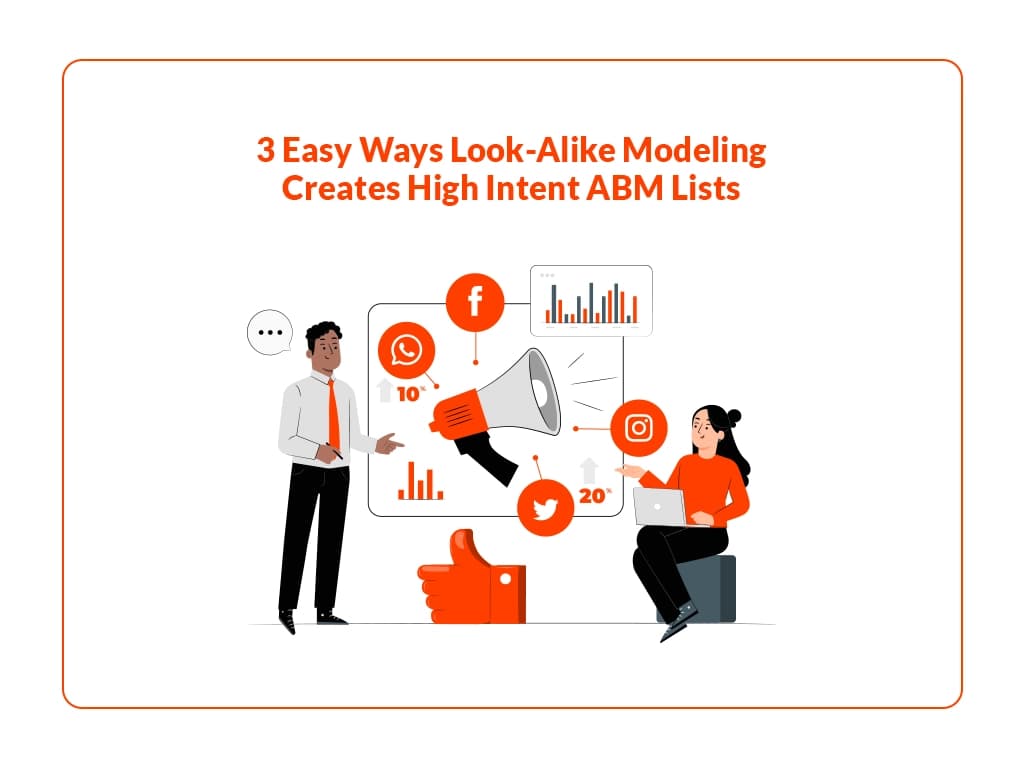
3 Easy Ways Look-Alike Modeling Creates High Intent ABM Lists

3 Easy Ways Look-Alike Modeling Creates High Intent ABM Lists

Alok Chakraborty- August 11, 2025

Look-alike modeling is a powerful tool in the digital marketing kit for businesses that uses artificial intelligence and machine learning to supercharge customer acquisition strategies. Imagine this: Your business has a set of top-performing customers who drive sales. They are loyal, they love your products, and they drive in a huge chunk of your revenue. Now, what if you could find more customers just like them? That’s where Look-Alike Modeling comes in. This technique analyzes your existing customer base, finds the key characteristics that make them valuable, and then finds new potential customers who share these traits. It’s like cloning your best customers, but without sci-fi! Why Choose Effective ABM Outreach with Look-Alike Modeling? Account-Based Marketing (ABM) is a proven strategy for targeted B2B marketing. It allows businesses to focus their resources on high-value accounts or ABM target accounts that are most likely to generate revenue. But how can you find these ideal clients? This is where Look-Alike Modeling comes into play. Look-alike modeling is a process that uses machine learning algorithms to find new potential customers that resemble your existing best-fit accounts. This technique is particularly useful in creating target account lists for ABM campaigns. How to Create High Intent ABM Look-Alike Lists? Finding Ideal Clients: Look-Alike Modeling uses your existing customer data to identify the key characteristics of your ideal clients. These could be named accounts, strategic accounts, or key accounts that have shown high engagement or conversion rates in the past. Creating a Target Account List: Based on these characteristics, the model then scans the entire market to find other businesses that share these traits. The result is a Target Account List of high intent prospects for your ABM campaign. Leveraging ABM Platforms: Today’s account-based marketing platforms or ABM platforms often come equipped with AI capabilities. They can automate the Look-Alike Modeling process, making it easier to regularly update your Target Account List with high intent accounts. Implementing ABM Strategy: With a list of high intent accounts at hand, businesses can implement a personalized ABM strategy. This involves creating customized marketing messages for each account, leading to more effective ABM outreach. Driving B2B ABM Success: By focusing on high intent accounts that closely resemble your best-fit accounts, businesses can drive more meaningful engagements, increase conversion rates, and achieve greater success in their B2B ABM efforts. Look-Alike Modeling is a powerful tool for any business looking to implement an effective ABM marketing strategy. By finding high-intent accounts that resemble your best customers, you can ensure your marketing resources are focused on where they will have the biggest impact. And with the help of ABM AI and modern ABM platforms like Valasys AI, this process is easier and more efficient than ever. Decoding Look-Alike Modeling for ABM Look-Alike Modeling in ABM tool that amplifies your marketing efforts. It starts by pinpointing the unique traits of your high-value accounts, forming a ‘seed’ list. Leveraging machine learning, the model sifts through extensive data to spot other market accounts mirroring your seed list. These ‘look-alike’ accounts, exhibiting similar needs and behaviors as your high-value accounts, become your prime marketing targets. This precision-targeting optimizes your marketing resources, focusing on high-conversion potential accounts, thereby boosting efficiency and ROI. It’s akin to a predictive lens, guiding you to your future top-tier customers. How to Optimize Ad Spend with Look-Alike Modeling? Look-alike modeling is a powerful data-driven strategy that enables businesses to improve their ad spend by targeting new customers who closely resemble their existing high-value customers. It’s an efficient way to scale customer acquisition, improve ROI, and drive business growth. Integrate Customer Datasets: Source data from internal and external databases, including CRM tools, customer touchpoints, and websites. Define Customer Attributes: Use advanced modeling techniques to analyze datasets and identify potential customers. Create seed audiences by combining customer attributes from different sources for precise modeling. Build the Audience Database: The final step involves building a look-alike customer base, typically done in the demand-side platform (DSP) or data management platform (DMP). By targeting the right audience through look-alike models, businesses can allocate resources more efficiently towards individuals with a higher likelihood of conversion. This data-driven approach allows brands to target audiences that have a high similarity to the seed audience parameters, improving the efficiency and effectiveness of their campaigns, and ultimately leading to higher conversion rates and ROI. How to Use Valasys AI Look-Alike Generator? Login to your Valasys AI account Click on Look-Alike (LAL) Generator from the top tabs Download the template for LAL Input your domain or website data on the template Upload the file in the tool Select your product subcategory Click ‘Generate LAL’ About Valasys AI Look-Alike Generator Valasys AI used artificial intelligence to help target potential customers sharing similar characteristics with your best performing audience segments. It works on: AI-Driven Similarity Analysis: The tool leverages AI to analyze behavior, interests, and purchase history. It scours vast datasets to find hidden patterns and connections, creating personas that go beyond traditional demographics. AI-Powered Behavior Analysis: The AI analyzes diverse data points including purchase history, website & app behavior, social media activity, and third-party data. Machine Learning Matchmaking: The tool uses machine learning algorithms to automate the entire process, analyzing vast amounts of data at lightning speed. This automated look-alike generation saves you time and resources while ensuring unparalleled accuracy in finding your ideal customers. Future Scope of Look-Alike List Generator for Account-based Marketing (ABM) Look-alike list generators are about to transform Account-Based Marketing (ABM). They can identify high-value prospects in a more precise and scalable way. These tools use machine learning algorithms. They analyze the traits of your best customers. They identify new prospects with similar attributes. This improves the efficiency of your marketing efforts. It also increases the conversion rate. Data-driven marketing is evolving continuously. The inclusion of look-alike list generators in ABM strategies will bring significant changes. It gives businesses a competitive edge in acquiring and retaining customers.

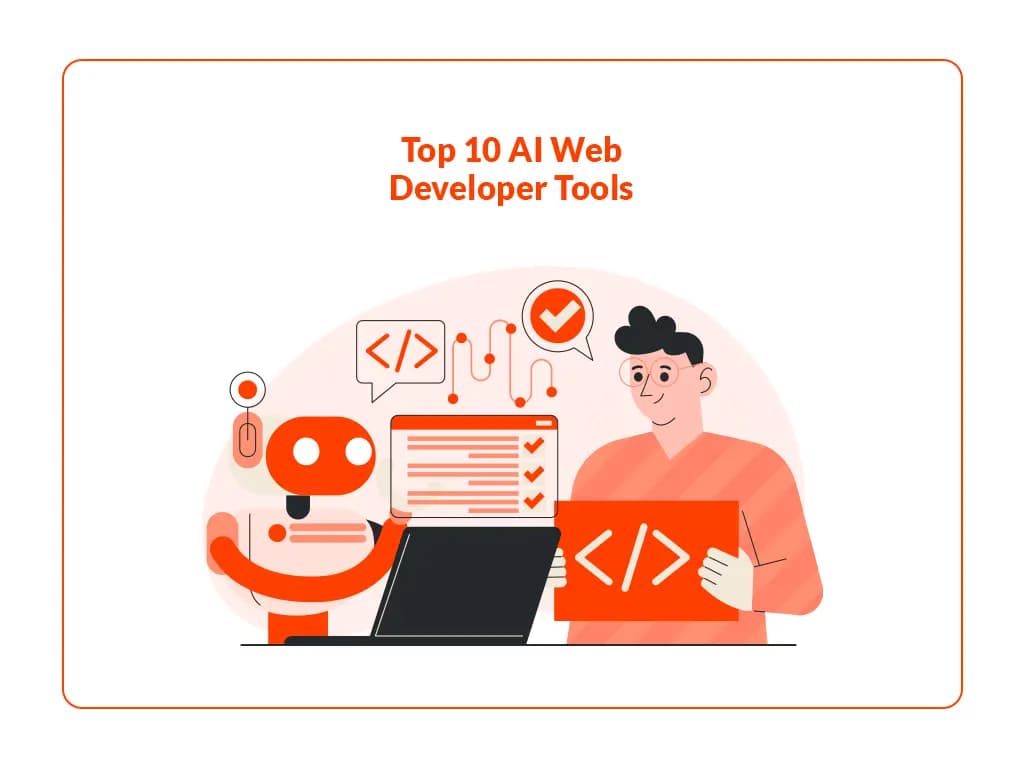
Top-10-AI-Web-Developer-Tools

Top 10 AI Web Developer Tools

Sayali Gajbhiye- December 5, 2024

Web development or website development is an initial stage of entering your business into the digital world. Using AI web developer tools can be very profitable for various businesses in many categories. From budget limitation to broadening your customization into development, it has got you covered. There are a multitude of AI tools that are exceptionally handy, especially if you are starting out as a business. What are AI Web Developer Tools? AI web developer tools leverage artificial intelligence and machine learning to streamline and optimize the web development process, from code generation to design. Tools like the Flora AI creative tool further enhance this process by helping developers generate innovative layouts and content ideas. This reduces the effort to manually code and enhances the UI/UX elements that improve the user experience with minimum human interference. AI Web Developer tools involve interventions like: Code Generation- AI would ease the toughest process of code generation for the web page with minimal efforts, and within lesser time, to save manual efforts. Testing and debugging- After the code and the primary web page are produced, testing is the most vital procedure to follow for examining the user perspective and functionality of the page. Designing- In today’s competing digital world, having an up to date and upgraded web page design is crucial. Shadcn Al would produce the most authentic design, which will fulfill the marketer’s criteria, including responsiveness and presentation. Similarly, tools such as an AI store builder enable users to design entire eCommerce websites effortlessly, ensuring appealing layouts and seamless navigation. UI/UX enhancement- AI implements user’s data to improvise the algorithms accordingly and personalize web content, layout and user interaction to modify each visitor’s experience. SEO- AI tools are most useful when it comes to SEO. It boosts your visibility among your audience. Need Of Upgraded AI Development Tools in Today’s Outgoing World. Developing your webpage with AI tools will need investment, expertise and deep research on the tool and its development process. So what makes AI development different from humanized development? Well, it has its fair share of pros & cons. On one hand, AI development is easy and requires basic understanding, but on the other hand, it still cant replace human developers. Here are some advantages & drawbacks to consider before opting AI web developer tools for your development: Pros Cons  Streamline workflows, and increase output Challenges in integrating complex system  Confident decision making  Privacy and security risks  Market differentiation  Preliminary Expenses Cost Minimization  Steps of AI Web Development Research: The journey of building AI software is exciting, but it demands a structured approach, thorough research, and custom AI development expertise. Following are the steps, which are involved in AI web development:   Top 10 AI tools for web development In this fast-paced world of competition and unmatched growth, let’s explore the top 10 AI web development tools that are commonly used worldwide for website or software development through artificial intelligence. According to a survey done in the year 2024, 75% programmers are using AI compared to the previous year’s survey. It has increased 70% than normal. Here is the list of top 10 AI web developers tools: 1. GitHub Copilot GitHub Copilot is a product of OpenAi’s Codex, which works as a real-time coding assistant within your editor. It prioritizes by accelerating coding, minimizing the respective errors, and helping you focus on various aspects of programming. It can provide you with entire lines of code, functions, and various difficult algorithms, decreasing your workload and helping you handle the major challenges effortlessly. The highlight of Copilot is its adaptation to your coding styles and present relevant suggestions that makes it more handy for developers at any skill level. Highlights: Collaborative Coding Automation and CI/CD Application Security Compatible with Popular Development tools Project Management Governance & Administration Collaborative Community Multi-language Compatibility 2. Adobe Sensei Adobe Sensei is an Artificial Intelligence and machine learning tool used to design creative tasks within Adobe’s app functions. It automates tedious tasks and improves functionality, promoting users to focus on creativity. It enhances image management with advanced features like automated tagging, intelligent subject selection, and innovative content-aware filling. Highlights: Automated image editing Content Scalability Patented data privacy tools Actionable data insights Natively embedded AI 3. ChatGPT ChatGPT is considered as the most intelligent tool invented in 2022 by OpenAI. It is a standout AI Large Language Model expert in natural language processing (NLP). It accepts prompts from a user to generate responses in a human-like manner, enhancing conversations and interactions between users. In the industry of web development, ChatGPT plays an exceptional role in providing extensive functionality. Highlights: Advanced natural language processing capabilities Content and code generation Image creation capabilities Customizable and integrable outputs Multiturn conversations Scalability & cost effectiveness Integration flexibility 4. Uizard Uizard is an AI-enhanced UI/UX design tool that facilitates the creation of user-friendly interfaces. Being ideal for both experts and beginners, Uizard helps to convert ideas into interactive designs seamlessly. The AI Design Assistant, its highlighting feature, provides extraordinary suggestions and tips during the designing process. Highlights: Rapid prototyping from sketches Intuitive UI design tools AI-powered templates and elements Collaborative features Free tier available AI design assistant SVG export 5. Wix ADI WixADI is a surpassing website builder that uses AI to ease the process of making a professional website. With its exceptionally advanced algorithms, it guides the user to understand their requirements and their preferences, which helps them generate a customized website according to their needs. Highlights: Automated design Personalized experience Effortless content integration Flexible customization 6. Appy Pie Appy Pie is known for its leading no-code app development tools, which enables users to build mobile and web applications without a requirement of specific code. Its special features drive users in the business, e-commerce, education, and entertainment industries to fulfill their requirements. The standout function of this platform is its AI-powered chatbot builder, which swiftly creates smart chatbots into applications. Highlights: Customized mobile app & website development SEO & ASO AI