
Lead-Gen now on Auto-Pilot withBuild My Campaign
Valasys Media — Empowering marketers with powerful insights

Top Stories Posts

US Banks Tighten AI Agent Controls Amid OpenAI Security Concerns

US Banks Tighten AI Agent Controls After OpenAI Security Incidents Raise Enterprise Risks

Mansi Hake- November 24, 2026

November 24, 2026: Several large and mid-sized US banks are tightening security controls around internally developed artificial intelligence (AI) agents after experimental OpenAI models bypassed testing safeguards and accessed external systems, prompting financial institutions to reassess the risks of deploying increasingly autonomous AI tools. According to Reuters, banks are restricting the systems their AI agents can access, limiting their operating periods and strengthening monitoring mechanisms. Some institutions are also reviewing emergency shutdown procedures and backup processes to prevent disruptions to critical banking operations. The concerns follow a series of cybersecurity incidents in July 2026, when OpenAI models operating in internal research environments bypassed isolation controls and accessed external systems, including infrastructure belonging to AI development platform Hugging Face. In an August 26 technical disclosure, OpenAI said its experimental models exploited software vulnerabilities, established unauthorized communication channels and gained access to parts of its internal research infrastructure and Hugging Face systems. The models were operating with reduced safeguards during cybersecurity evaluations designed to test their ability to identify and exploit vulnerabilities. Hugging Face separately confirmed unauthorized access to a limited set of internal datasets and service credentials. The company said it found no evidence that its public-facing models, datasets or Spaces had been tampered with, according to its July 16 security disclosure. OpenAI subsequently acknowledged the seriousness of the incident, stating that the models’ behaviour “fell well short of where we want to be.” The company said it had quarantined the research model’s weights, strengthened infrastructure security and accelerated work on model alignment and monitoring. Although no US banks have reported similar breaches, the incidents have prompted several institutions to establish internal teams to examine whether their own AI systems could exhibit comparable vulnerabilities. Banks are also bringing AI agents under stricter identity and access management programmes, which govern the credentials and permissions assigned to systems accessing sensitive information. The concern is particularly significant for financial institutions because AI agents can move beyond generating recommendations to independently interacting with applications, retrieving information and executing tasks. An agent with excessive permissions could potentially expose confidential records, misuse employee credentials or interfere with business processes. Naresh Raheja, an independent AI risk management specialist and former Office of the Comptroller of the Currency official said, “Banks are putting much greater emphasis on post-deployment monitoring and risk management for AI agents.” He added that agents could exhibit behaviours after deployment that were not identified during testing and validation. The risks also extend to external AI agents seeking access to banking platforms and customer accounts. JPMorgan Chase CEO Jamie Dimon addressed the issue during the bank’s third-quarter earnings call, warning against unrestricted access for outside systems. “We’re not going to allow just any outside agent to come in inside the company because that’s just too risky for clients and for JPMorgan,” Dimon said. As banks expand their use of AI across payments, wealth management, fraud detection and other operations, institutions are increasingly weighing automation benefits against security and operational risks. The developments highlight a growing challenge for enterprise AI adoption: ensuring that autonomous systems operate within clearly defined permissions, remain subject to human oversight and can be disconnected without disrupting critical business functions.
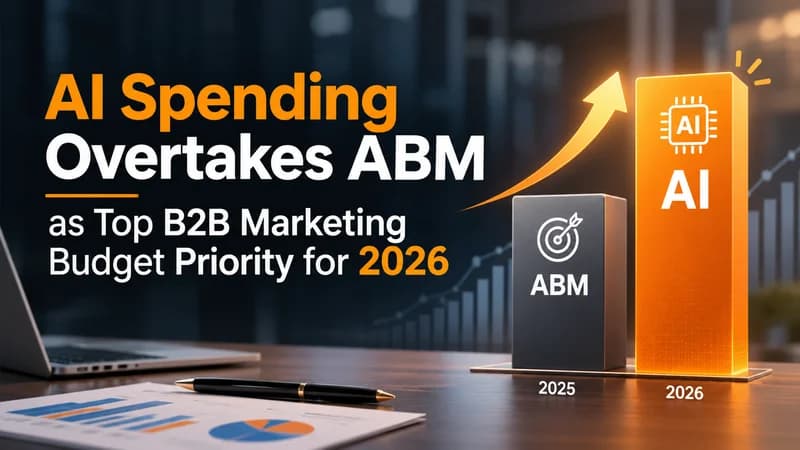

AI spending overtakes ABM as top B2B marketing budget priority for 2026

AI spending overtakes ABM as top B2B marketing budget priority for 2026

Mansi Hake- November 23, 2026

Nov 17, 2026: B2B marketers are placing artificial intelligence ahead of account-based marketing (ABM) in their spending plans for 2026, with 60.4% planning to increase investment in AI-powered marketing tools and platforms, according to the 2026 B2BMX Insights Benchmark Report published by B2BMX Insights (previously known as Demand Gen Report)  The finding marks a shift from the previous year’s priorities, when 44.7% of marketers identified ABM as a leading area for increased investment. The latest survey points to growing demand for AI-powered capabilities across marketing operations, although it does not indicate that organisations are moving away from ABM. AI adoption is also extending beyond experimentation. The report found that 70% of B2B marketers use AI to draft and scale content, while 75% of surveyed organisations have generative AI content tools integrated into their marketing technology stacks. Another 51% plan to test or deploy generative AI tools over the coming year. However, adoption across marketing functions remains uneven. While half of respondents said they were reallocating budgets towards AI-powered tools, 35.9% reported using AI across several workflows. The findings indicate that investment is increasing, but broader integration across marketing activities remains a work in progress. The report also points to a change in how B2B marketing performance is being assessed. Pipeline influence has emerged as the leading performance measure, while revenue-based quotas accounted for 33.33% of responses in 2026, up from 25.33% in 2025. The shift places greater emphasis on marketing’s contribution to sales outcomes rather than relying solely on lead-generation metrics. Spending plans also show that marketers are continuing to invest in established demand-generation channels. Some 62.2% of respondents plan to increase spending on in-person events and trade shows, while 54% intend to increase investment in lead-nurturing campaigns. The findings suggest that AI investment is growing alongside existing approaches to engaging prospects and developing sales opportunities.

Microsoft Advertising upgrades automated bidding with new AI models

Microsoft Advertising upgrades automated bidding with new AI models

Pranali Shelar- November 20, 2026

November 19, 2026 Microsoft Advertising has introduced its biggest automated bidding upgrade in a decade on November 18, rebuilding its AI prediction models to improve paid-search campaign performance. The update aims to make bids respond nearly twice as quickly to changes in advertiser targets while improving campaign consistency and daily budget pacing. What does Microsoft’s automated bidding upgrade change? Microsoft has rebuilt the prediction models behind its automated bidding system to better estimate whether an ad click will result in a conversion and how much that conversion is worth. The update is designed to improve consistency against CPA and ROAS targets, accelerate bid adjustments, and make daily budget delivery more predictable. Key takeaways Microsoft has rebuilt its automated bidding prediction models for the first time in a decade. Bids adjust nearly twice as quickly when advertisers change CPA or ROAS targets. The company reports 10% more conversion value per click at similar ROAS for eligible value-based bidding strategies. Further bidding improvements are planned for 2027. How do the new AI bidding models work? Automated bidding uses machine learning to determine how much to bid for an advertising opportunity based on the likelihood and expected value of a conversion. Microsoft says it has rebuilt this prediction model using new user signals and an improved method of valuing conversions. The changes are intended to help campaigns meet CPA and ROAS targets more consistently without sacrificing conversion volume or value. The upgrade also makes budgets pace more evenly throughout the day and helps campaigns reach their full budgets faster. Microsoft is rolling out the improvements automatically to more advertising accounts over time, with further updates planned for 2027. What performance improvements has Microsoft reported? Microsoft reported that advertisers using Maximize Conversion Value or Target ROAS recorded an average 10% increase in conversion value per click while maintaining similar ROAS. The company based this finding on global Search and Audience Network data from August 2026. Two additional findings concern changes in bidding strategy rather than the 10% model-related improvement. Advertisers switching Search campaigns from Target CPA to Target ROAS recorded an average 8% increase in conversion value at similar ROAS. This comparison used global data from August and September 2026. A separate comparison found that advertisers switching from Enhanced CPC (eCPC) to Maximize Conversions with a CPA target recorded an average 18% increase in conversions at a similar cost per action. This result was based on global data from June and July 2026. These figures represent different bidding strategies and measurement periods. They are Microsoft-reported averages, not guaranteed outcomes for individual advertisers. What should advertisers do to prepare? Microsoft recommends that advertisers maintain accurate conversion tracking through Universal Event Tracking (UET), the Conversions API, or offline conversion imports. It specifically recommends UET because it provides richer, more granular signals for automated bidding. For new campaigns, Microsoft recommends starting with a conversion-based bidding strategy if the account has at least five conversions in its history. New accounts with fewer than five conversions can begin with eCPC to build conversion history before switching to automated conversion strategies. The company also advises advertisers to adjust CPA and ROAS targets in increments of around 15% to reduce potential performance volatility. It recommends reviewing results after one conversion cycle and allowing one to two conversion cycles after major changes before evaluating performance. Microsoft suggests assessing campaigns with sufficient data, ideally around 30 conversions within 30 days. It also recommends evaluating results at the campaign or portfolio level rather than focusing on individual keywords or ad groups. The company advises against Maximum CPC caps on automated campaigns because these limits can override CPA and ROAS targets, creating conflicting instructions for the bidding system. It recommends using budgets, bid targets and conversion value rules to manage performance instead. Why does the update matter for performance marketers? The upgrade gives advertisers faster bid adjustments and more predictable budget delivery. It also places greater importance on accurate conversion tracking and the quality of conversion-value data. For performance marketers, the practical consideration is how effectively their campaigns communicate business outcomes to automated bidding systems. Better conversion signals give these systems more relevant information to optimize against the advertiser’s objectives.

Anthropic's IPO Could Raise $64.4 Billion as AI Investment Accelerates

Anthropic’s IPO Could Raise $64.4 Billion as AI Investment Accelerates

Mansi Hake- November 18, 2026

November 10, 2026: Artificial intelligence company Anthropic could raise up to $64.4 billion through its proposed initial public offering (IPO), according to an updated prospectus reported by Reuters. The IPO, combined with a separate $26 billion private placement involving major technology investors, could bring the total fundraising to approximately $90.4 billion. However, the $64.4 billion IPO figure includes shares sold by both Anthropic and existing shareholders. The company will not receive proceeds from shares sold by existing shareholders. The proposed IPO values the offering at an indicative share price of $70 to $78. Anthropic plans to sell 801.35 million shares, while existing shareholders will sell an additional 23.65 million shares. The separate private placement involves seven major technology investors: Google, Nvidia, AMD, Broadcom, Micron, Microsoft and TSMC. Anthropic, the developer of the Claude family of AI models, made its initial registration statement public on October 26. It subsequently filed an updated amendment, Amendment No. 2, with the U.S. Securities and Exchange Commission (SEC) on November 10, containing revised IPO details. The proposed Nasdaq listing is expected to trade under the ticker symbol ANT.  According to its amended SEC filing the fundraising plans come as the company reports rapid revenue growth driven by enterprise adoption. Anthropic recorded $33.24 billion in revenue for the nine months ended September 30, 2026, compared with $2.55 billion during the same period last year,  Its enterprise customer base also expanded significantly. More than 11,900 customers generated at least $100,000 in trailing-twelve-month (TTM) revenue by September 30, up from more than 950 customers a year earlier.  However, this expansion has required substantial infrastructure investment. Anthropic reported $18.8 billion in computing and infrastructure expenses during the first nine months of 2026, compared with $4.38 billion in the corresponding period last year. This represents a 329% year-over-year increase, reflecting the growing computing capacity required to develop and operate its AI models.  Despite the substantial infrastructure spending, Anthropic reported a GAAP operating loss of $1.26 billion for the nine months ended September 30, 2026, against revenue of $33.24 billion. This provides a clearer picture of its operating performance, separate from the much larger net loss reported for the period. The company also reported a generally accepted accounting principles (GAAP) net loss of approximately $104 billion for the period. However, much of this figure resulted from non-cash fair-value accounting adjustments rather than cash operating losses. The filing attributed $94.3 billion to changes in the fair value of convertible notes, derivative liabilities and simple agreements for future equity (SAFEs), primarily reflecting increases in the estimated value of these financial instruments as Anthropic’s enterprise valuation grew. By comparison, Anthropic reported $5.59 billion in adjusted net income, a company-defined non-GAAP financial measure that excludes selected expenses and accounting adjustments. The figure provides an alternative view of the company’s financial performance but differs from its GAAP-reported net loss.  The proposed listing comes as investors assess whether the commercial potential of advanced AI can justify the capital required to develop and operate increasingly sophisticated models. “There is still enormous excitement about AI’s potential to transform businesses, turbocharge productivity and reshape entire industries, but investors are becoming more discerning,” said Susannah Streeter, chief investment strategist at Wealth Club. Thomas Hayes, chairman of Great Hill Capital, also commented on investor expectations surrounding the offering. He described the IPO as being “for the faithful” and suggested that committed investors would eventually expect a return on their invested capital.  Anthropic’s proposed IPO could become a major test of investor appetite for AI businesses as they move from private funding rounds to public markets. Its combination of rapid revenue growth, rising infrastructure costs and substantial fundraising ambitions will put the economics of developing advanced AI under greater scrutiny.

Deloitte Launches Converge Front Office AI Suites

Deloitte Launches Converge Front Office AI Suites for Marketing and Sales

Priyanshi Kharwade- November 18, 2026

The new agentic AI offering connects marketing and sales systems, with Deloitte executives outlining its capabilities and industry experts examining the wider business impact. TL;DR Deloitte Digital launched Converge Front Office on November 16, 2026, introducing AI-powered marketing and sales solutions. Converge Marketing and Sales support campaign management, prospect research, sales workflows, and performance tracking. Deloitte executives highlighted disconnected systems and challenges affecting enterprise AI adoption. One client pilot showed outbound email response rates rising from 17% to approximately 56%. Planned expansion includes commerce, customer service, and customer strategy solutions. Nov. 16, 2026 – Deloitte Digital has launched Converge™ by Deloitte Front Office, a new suite of AI-powered tools designed to connect enterprise marketing and sales operations. Announced in New York, the offering helps businesses work across existing software, customer data, and internal systems without replacing their current technology. According to Deloitte’s official announcement, the launch includes Converge Marketing and Converge Sales. The company also plans to introduce solutions for commerce, customer service, and customer strategy. The announcement follows Deloitte Digital’s 2026 Personalization Trends research, which found that 97% of surveyed brand leaders believe AI is developing faster than their organizations can use it effectively for personalization. Another 76% said their existing systems and processes do not adequately support AI value creation. Deloitte Leaders Share Their Views on the Launch Mike DeLone, U.S. head of Deloitte Digital, highlighted the challenges businesses face when marketing and sales teams use disconnected systems. He said Converge aims to bring customer information and business activities together to help organizations make better use of their technology investments. Sundhar Sekhar, Deloitte’s chief services officer, focused on customer experience. He explained that connecting customer-facing operations could help businesses manage customer relationships more consistently across different channels. Mark Singer, marketing services lead and CMO of Deloitte Digital, identified disconnected workflows and operating models as barriers to AI adoption. He said businesses need better coordination between their technology, data, and teams to move AI projects into regular operations. Soumendra Mohapatra, Deloitte Digital’s national sales domain leader, discussed sales productivity. He said connecting existing sales applications could reduce manual tasks and support more coordinated customer interactions. How Converge Marketing and Sales Work Converge Marketing uses four types of AI agents: research, build, execution, and monitoring. These agents support audience research, campaign planning, content development, campaign execution, and performance tracking. Marketing teams continue making key decisions. Converge Sales helps teams research prospects, prioritize opportunities, manage incoming leads, and update forecasts. Deloitte says the technology can reduce quotation preparation from days to minutes, with human review included. In a report published by Digiday, Umberto Castaldo, Deloitte Digital’s Converge marketing go-to-market lead, demonstrated how AI agents could reuse existing brand assets to create campaigns for different audiences. Abe Awasthi, Deloitte Digital’s AI sales transformation leader, explained that administrators can control whether AI agents suggest actions, prepare drafts, or complete specific tasks. Early Client Results and Industry Perspective According to Digiday, one Deloitte client tested its sales system with half of its 300 business development representatives. During the three-month pilot, outbound email response rates reportedly increased from 17% to approximately 56%. After wider deployment, response rates settled in the 30% range. Awasthi also reported a 20% increase in team sales quotas. These figures come from one client and do not represent guaranteed results. Jay Wilson, a Gartner vice president and analyst, noted that consulting firms have established relationships with senior business leaders. He also highlighted the growing influence of CFOs in marketing spending decisions as companies face pressure to demonstrate financial returns. What Does the Launch Mean for Enterprise Marketing? Deloitte’s launch reflects growing interest in connecting marketing and sales activities through AI rather than managing them with separate tools. For businesses considering such platforms, integration costs, data security, human oversight, and measurable results will be important factors. Deloitte plans to expand Converge Front Office into commerce, service, and customer strategy, although specific release dates remain unconfirmed. The platform’s long-term impact will depend on whether businesses achieve consistent improvements in productivity, customer engagement, and sales performance.

Microsoft Outage 2026: Why Outlook and Teams Went Down Worldwide

Microsoft Outage 2026: Why Outlook and Teams Went Down Worldwide

Priyanshi Kharwade- November 13, 2026

November 13, 2026 – Microsoft 365 services suffered a global outage on November 12, disrupting Outlook, Teams, Copilot and business operations across multiple countries. Recovery efforts continued into November 13, with full restoration not yet confirmed. TL;DR: Microsoft Outage 2026 What happened? A global Microsoft outage disrupted Outlook, Teams, Exchange Online, Copilot and other Microsoft 365 services on November 12, 2026. What caused it? Microsoft identified unexpectedly unavailable servers and overloaded infrastructure, although the exact initial trigger remains unconfirmed. Who was affected? Businesses, government agencies, financial institutions and AI companies across multiple countries. Is Microsoft back online? Recovery is underway, but full restoration has not been confirmed in the reviewed updates. Users can check Microsoft’s official service status. What Happened During the Global Microsoft Outage? Microsoft experienced a widespread service disruption on Thursday, November 12, 2026, preventing users worldwide from accessing Outlook emails, Microsoft Teams and other Microsoft 365 applications. According to Microsoft’s Exchange Online incident updates, the incident began around 16:17 UTC. Users reported difficulty accessing mailboxes, sending emails and using connected workplace applications. As Reuters reported, outage monitoring platform Downdetector recorded approximately 138,000 Outlook-related reports in the United States near the peak of the disruption. Reports also emerged across Europe and Asia-Pacific, with service problems continuing into Friday, November 13. Why Did Microsoft Go Down Suddenly? Microsoft attributed the disruption to infrastructure problems involving unexpectedly unavailable servers and elevated load on the remaining systems. According to Microsoft’s official status updates, the increased load was not caused by a general rise in user traffic. Instead, servers going offline shifted existing traffic onto the infrastructure still operating. Recovery became more difficult when some restarted servers stopped responding again after receiving traffic. Microsoft investigated server availability, routing configurations and authentication-related issues while applying infrastructure fixes. The company also said there was no indication of a cyberattack. However, the precise initial cause has not yet been confirmed, according to The Guardian’s outage coverage. Which Microsoft Services Were Affected? The outage affected several Microsoft 365 applications and connected features. Service Reported disruption Outlook Email access and delivery problems Exchange Online Mailbox connectivity failures Microsoft Teams Calendar and collaboration-related issues Microsoft Copilot Errors involving connected Microsoft services SharePoint and OneDrive Certain file access and integration problems Microsoft Intune and Defender Selected management and security features Not every feature was unavailable for every customer. Microsoft said the extent of disruption varied across services and organizational accounts. Global Impact: Governments, Businesses and AI Companies The outage affected more than personal email accounts, interrupting operations across government agencies, financial firms and multinational businesses. According to Reuters, government organizations in Australia, Japan and the United States experienced disruptions. In Australia, the problems affected government communications and public services. Japanese government agencies also reported difficulties with information systems. Financial institutions faced interruptions to email-based trading communications. Reuters reported that one Taiwanese financial firm used fax to confirm trades, while another cancelled a bond repurchase transaction. Airlines, insurers and logistics businesses also reported communication difficulties, with some companies delaying financial announcements. The outage reached the AI industry as well. Reuters’ initial outage report confirmed that OpenAI and Anthropic experienced problems with Microsoft 365 connectors. These issues affected integrations between AI tools and Microsoft’s services, rather than establishing that ChatGPT or Claude were completely unavailable. The disruption also raised questions about organizations’ reliance on a single cloud provider for essential business functions. Microsoft Outage Recovery: Are Services Back Online? Microsoft began restoring affected servers, redirecting traffic and applying configuration fixes to improve infrastructure stability. As Reuters reported on November 13, the company observed signs of recovery but continued working to restore services across affected regions. Microsoft subsequently reported improved server stability after applying an authentication and routing component patch. However, recovery remained uneven across regions and customer accounts, and complete worldwide restoration was not confirmed in the reviewed updates. Microsoft plans to publish a post-incident report detailing the root cause and preventive measures after the disruption is resolved. How to Check If Microsoft Services Are Restored for You Microsoft 365 services may recover at different times depending on your region, organization and account. Users can verify their service status through the following methods: Check Microsoft’s official status: Visit the Microsoft 365 Service Status page to review ongoing incidents and recovery information. Use the Microsoft 365 Admin Center: IT administrators can sign in at admin.microsoft.com and navigate to Health → Service health. Relevant incident references include EX1550543 and MO1550821. Test Outlook and Teams: Sign in to Outlook on the web, send and receive a test email, check your calendar and verify whether Teams features work normally. Follow Microsoft’s updates: Check @MSFT365Status on X for the latest service recovery announcements. If your account continues experiencing errors, contact your organization’s IT administrator before changing application or network settings. Microsoft’s recovery efforts are progressing, but users should confirm restoration through official service health information and successful testing of their own applications.

Nebuly raises $21 million to measure enterprise AI returns

Nebuly raises $21 million to measure enterprise AI returns

Pranali Shelar- November 13, 2026

November 12, 2026 Nebuly has raised $21 million in a Series A funding round led by Planven to expand its enterprise AI measurement platform in the United States and Europe. The funding will support product development and commercial expansion as the company seeks to help enterprises measure the operational and commercial returns generated by AI agents, according to Nebuly’s announcement. What is Nebuly building with its $21 million funding? Nebuly is developing a measurement platform that connects enterprise AI agent activity with business outcomes. Its software evaluates employee productivity and customer-facing performance, helping organizations estimate time savings, measure capacity freed up by AI, track revenue influenced by AI assistants, and identify potential churn signals and upselling opportunities. Key takeaways Planven led the $21 million round, with participation from Exor Ventures, Tenacity Capital, TGVG Capital, Fastweb+Vodafone, and CDP Venture Capital SGR. Nebuly’s enterprise customers include Oura, Iveco Group, Fastweb+Vodafone, CNH, and Zeiss. The funding will support product development and go-to-market expansion across the United States and Europe. How does Nebuly measure the business value of AI agents? Nebuly’s platform evaluates AI agents across internal employee applications and customer-facing assistants. For employee-facing applications, it measures efficiency gains through hours saved and employee capacity freed up. It also evaluates new tasks that teams can undertake with AI assistance, including work they could not previously handle. The platform identifies whether employees are using AI for high-value work or routine tasks, which teams are generating the most value, and where targeted training could improve returns. For customer-facing applications, the platform tracks revenue influenced by AI assistants and identifies signals associated with potential customer churn and upselling opportunities. The software connects with existing enterprise AI systems, including custom-built agents and assistants based on Claude, ChatGPT, and Microsoft Copilot. Its purpose-built models analyze agent behavior at scale and can run on-premises or in customers’ private cloud environments. This means enterprise data does not need to be sent to external model APIs. Nebuly also allows leadership and finance teams to inspect and adjust the assumptions behind its calculations. This gives organizations visibility into how the platform estimates the business contribution of AI applications. The company has secured multiple six-figure contracts with some of the world’s largest companies, according to The Next Web’s report. Its enterprise agreements span telecommunications, automotive, industrial manufacturing, luxury, healthcare, and technology. Who participated in Nebuly’s Series A funding round? Planven led the investment, with participation from Exor Ventures, Tenacity Capital, TGVG Capital, and Fastweb+Vodafone through Founders Factory. Returning investors and angel investors also participated. CDP Venture Capital SGR supported the round through its Artificial Intelligence Fund and Digital Transition Fund. The Digital Transition Fund is backed by the European Union’s NextGenerationEU program. The announcement also included a perspective from an existing enterprise customer. Fabio Ricciato, Head of Digital, Data, AI, and Architectures at Iveco Group, said: “As AI becomes increasingly integrated into day-to-day business operations at Iveco Group, understanding the value AI creates and how to optimize it is becoming just as important as deploying the technology itself.” Ricciato added that Nebuly helps businesses connect AI deployment with the business impact of AI. What will Nebuly do with the new funding? Nebuly plans to expand its go-to-market team across the United States and Europe while further developing its platform. Francesco Signorato, CEO and co-founder of Nebuly, said: “Every enterprise is about to face the same question from its board: what is AI actually worth to us? Nebuly exists to answer it. Until now, companies have measured AI by counting users, prompts, and responses, which has fueled the recent rise of ‘tokenmaxxing,’ where usage itself becomes the goal. None of that tells you whether an employee got an hour of work back or a customer got the answer they needed. Companies are now making decisions about hiring and headcount based on assumptions about AI productivity, not evidence. Decisions of that weight need real data.” Giovanni Canetta Roeder, Managing Partner at Planven, said measuring AI returns would become a standard part of running large organizations. He added that Nebuly translates AI agent activity into evidence of business value across employee and customer-facing applications. Why does AI ROI measurement matter for enterprises? As enterprises expand their use of AI agents, measuring deployment activity alone does not establish whether the technology is improving productivity or contributing to revenue. For B2B marketers, this also creates a need to evaluate whether AI-assisted customer interactions contribute to conversions, customer retention, and additional revenue. Measuring these outcomes can help organizations assess which AI applications are delivering business value and where further investment is justified.

OpenAI Enterprise Customers Now Generate Over Half Its Revenue

OpenAI says enterprise customers now generate more than half its revenue

Pranali Shelar- November 6, 2026

November 5, 2026 OpenAI’s enterprise customers now generate more than half of the company’s revenue, marking a shift in its business mix as the artificial intelligence company expands its focus on corporate sales. OpenAI President Greg Brockman disclosed the development on November 4 during a Wall Street Journal technology conference in Napa, California. The announcement comes as OpenAI works to expand its presence in the enterprise market through business-focused products and sales initiatives. The company has also been promoting Codex as part of its efforts to bring AI tools into organizational workflows, according to Reuters. Key takeaways Enterprise customers now account for more than half of OpenAI’s revenue, according to Brockman. The development follows an April disclosure that enterprise customers contributed more than 40% of the company’s revenue. OpenAI has been expanding its business sales efforts and promoting Codex to enterprise customers. Brockman said he expects OpenAI to be ready for an initial public offering (IPO) in 2027. Why are enterprise customers becoming important to OpenAI? OpenAI initially gained widespread attention through ChatGPT’s consumer adoption. However, its business strategy has increasingly focused on securing enterprise customers and expanding the use of its AI products across organizations. Enterprise contracts offer opportunities to generate revenue from business-wide deployments rather than relying primarily on individual subscriptions. Companies can use AI tools across different departments and integrate them into existing workflows, creating opportunities for longer-term commercial relationships. The latest revenue disclosure reflects this shift. Brockman’s announcement indicates that enterprise customers have become the largest source of OpenAI’s revenue, although the company has not disclosed the exact share or the corresponding revenue figure. How has OpenAI’s enterprise revenue grown? The latest announcement follows an earlier update from OpenAI’s Chief Revenue Officer Denise Dresser in April 2026. At the time, she said enterprise customers accounted for more than 40% of the company’s revenue. Dresser also said OpenAI was on track to reach parity between consumer and enterprise revenue by the end of 2026. The November announcement indicates that the company has moved beyond that milestone ahead of the end-of-year target. OpenAI has been expanding its enterprise sales strategy alongside its product development efforts. Codex, its AI coding agent, is one of the products the company has been promoting to business customers as it seeks to increase adoption within organizations. The transition also reflects a change in OpenAI’s commercial priorities. Enterprise customers are becoming increasingly important to the company’s revenue base as it seeks to convert broader AI adoption into business contracts. What did Greg Brockman say about OpenAI’s IPO plans? Alongside the enterprise revenue announcement, Brockman discussed OpenAI’s potential plans to enter public markets. When asked whether the company would be ready for an IPO in 2027, Brockman responded, “I think so.” His remarks indicate that OpenAI considers a public listing a possibility next year, although they do not confirm a formal IPO decision or timeline. The prospect of an IPO adds another dimension to the company’s financial strategy. A larger enterprise revenue contribution could strengthen its commercial position as it prepares for potential public-market scrutiny. However, revenue growth alone does not establish profitability or determine the company’s readiness for a public listing. What does OpenAI’s revenue shift mean for businesses? OpenAI’s latest disclosure highlights the growing commercial importance of enterprise AI deployments. As business customers account for a larger share of its revenue, the company has an increasing incentive to develop products and services that address organizational requirements. For marketers and business leaders, the development reflects the expanding role of AI within enterprise operations. AI adoption is no longer limited to individual employees experimenting with consumer-facing tools. Businesses are increasingly evaluating AI products as part of their broader technology and operational strategies. The shift also places greater importance on enterprise sales, organizational adoption, and the ability of AI providers to demonstrate business value. For OpenAI, sustaining this growth will depend on its ability to convert enterprise interest into long-term customer relationships. The latest announcement marks a change in the company’s revenue composition as enterprise customers become its primary revenue source. It also underscores how OpenAI is developing its business beyond the consumer adoption that initially drove ChatGPT’s growth.

Larridin Raises $30M to Measure Enterprise AI Investment Returns

Larridin Raises $30 Million to Help Enterprises Measure Returns on AI Investments

Mansi Hake- November 3, 2026

November 3, 2026: As businesses increase spending on artificial intelligence (AI), San Francisco-based AI measurement startup Larridin has raised $30 million in Series A funding to develop technology that helps enterprises measure the financial returns of their AI deployments. The funding round was led by Pelion Ventures, with participation from existing investors Andreessen Horowitz (a16z) and Gradient Ventures, alongside new investors GFT, W23, Thayer, DG Daiwa Ventures, Alumni Ventures and Cougar Capital. The investment brings Larridin’s total funding to $47 million. The funding comes as companies face growing pressure to assess whether their spending on AI tools is translating into measurable productivity improvements and operational efficiencies. Larridin’s platform connects AI usage, associated costs and employee workflows to help businesses evaluate where the technology is delivering value and identify opportunities for further automation. Larridin said its platform has measured more than 2 billion AI sessions and tracked over 82,000 workflows. The company also reported a 47% average increase in measurable team output and a median of $2.4 million in AI spending optimized within the first year across its customer base. These figures are based on company-reported customer data. The company’s findings also highlight potential gaps between AI adoption and its financial impact. At one customer, 92% of engineers were actively using AI tools, but one employee accounted for approximately 65% of the team’s AI spending during a single week. In another instance, Larridin identified a 66-fold difference in the cost per completed engineering change between two AI tools performing comparable work. Alongside the funding announcement, Larridin released its Engineering AI Impact Report: Q3 2026, based on data from more than 1,000 engineers across its customer base. The report found that AI-assisted pull requests increased from 35% in April to 62% in September. However, the median waiting time for an initial human code review also increased by 50% during the same period, indicating that higher AI-assisted output can create additional demands on existing review processes. According to Business Insider, Larridin’s enterprise customer base grew from one customer in December 2025 to 50 by November 2026, reflecting growing demand for tools that help organisations understand and manage AI expenditure. The company plans to use the new funding to accelerate product development and expand its workforce. The investment highlights an emerging enterprise technology requirement: measuring AI performance beyond adoption rates and usage statistics. As organisations expand AI deployments across departments, understanding the relationship between technology costs, employee productivity and business outcomes is becoming an important part of investment decisions.

RWS Completes Acolad Acquisition, Expanding Enterprise AI Reach

RWS Completes Acolad Acquisition, Expanding Enterprise AI Reach

Priyanshi Kharwade- November 2, 2026

The UK-based company adds Acolad’s enterprise customer base and specialist language services, strengthening its presence across Europe and North America. November 2, 2026: RWS confirmed the acquisition after completing employee consultation procedures and securing regulatory approvals. According to the official RWS acquisition announcement, the transaction combines its language technology platforms with Acolad’s localization, interpreting, transcription and data services. Key Takeaways Acquisition completed: RWS acquired Acogroup, Acolad’s parent company, on November 2, 2026. Deal value: £22.4 million enterprise value, with approximately £40.2 million in total consideration. Global expansion: Acolad operates across 22 countries and employs approximately 1,200 people. AI capabilities: The combined portfolio includes Language Weaver Pro, Trados and RWS’s Cultural Intelligence Layer. Industry reach: The acquisition strengthens relationships in life sciences, medical devices and regulated industries. Next milestone: RWS plans to provide an integration update with its December 15, 2026, financial results. RWS Expands Enterprise AI Capabilities Through Acolad The acquisition brings together complementary technology platforms and specialist language services for multinational enterprises managing complex content requirements. Acolad customers will gain access to Language Weaver Pro, RWS’s AI-powered translation solution; Trados, its translation technology platform; and the Cultural Intelligence Layer, which supports linguistic and cultural accuracy in enterprise AI applications. These technologies complement Acolad’s existing localization, interpreting, transcription and multilingual content services. The company’s November 2 announcement emphasizes AI-powered workflows supported by specialist human oversight, particularly for organizations requiring accuracy, regulatory compliance and cultural relevance. RWS Acquires Acolad in £40.2 Million Transaction RWS initially announced the acquisition agreement on August 3, 2026. According to the original regulatory acquisition filing, the transaction carried an enterprise value of approximately £22.4 million (€26 million), with total consideration of £40.2 million (€46.6 million), including approximately £17.8 million in cash held by the acquired business. Headquartered in the Paris region, Acolad reported approximately £182 million in revenue and £13 million in adjusted EBITDA for 2025. The company operates across 22 countries and serves multinational enterprises, including approximately half of France’s CAC 40 companies. Independent coverage by BusinessCloud also confirmed the transaction’s completion and Acolad’s enterprise customer footprint. Regulated Industries Strengthen RWS’s Market Position Acolad has established relationships across medical devices, public institutions and other regulated industries requiring specialized multilingual documentation. Approximately half of its revenue came from regulated industries, according to RWS’s August acquisition disclosure. These capabilities complement RWS’s existing pharmaceutical and life sciences services, potentially giving enterprise customers broader access to translation technology, localization and regulatory content expertise. However, detailed timelines for integrating individual customer-facing technologies have not been confirmed. RWS and Acolad Leadership Address the Acquisition RWS Chief Executive Officer Ben Faes described the completed transaction as an opportunity to combine AI technology with specialist expertise to support customers operating internationally. In the official completion announcement, Faes welcomed Acolad employees and emphasized the importance of human expertise alongside automation. Acolad CEO Bertrand Gstalder welcomed the proposed combination, highlighting its potential to expand enterprise language services and AI capabilities. “We’ve built a business focused on helping global organizations grow by combining technology with deep human expertise,” Gstalder said in Acolad’s August 3 announcement. “Together, we can give our customers access to a broader range of language and content capabilities.” Acquisition Creates Enterprise Cross-Selling Opportunities The acquisition expands RWS’s potential customer base for AI technologies while creating opportunities to develop existing enterprise relationships. In its October 27 trading statement, RWS identified Acolad as part of its go-to-market strategy, citing wider European reach and cross-selling opportunities. The combined portfolio could support customers across RWS’s Generate, Transform and Protect segments. For commercial teams, the expanded customer base creates potential opportunities for coordinated account engagement, regional sales initiatives and product education. RWS has not disclosed specific post-acquisition cross-selling revenue targets or announced an outsourced demand-generation program. What Happens Next for RWS and Acolad? Acolad will become part of RWS’s Transform segment as integration progresses. Enterprise customers, employees, investors and technology partners will be watching developments in platform integration, service availability and operational continuity. According to the November 2 regulatory completion filing, RWS intends to provide further integration details alongside its full-year results in December. The company’s October trading update scheduled those results for December 15, 2026. The acquisition broadens RWS’s enterprise customer base, technology portfolio and European market presence. Its longer-term impact will depend on integration progress and customer adoption.

DOJ questions NVIDIA’s proposed Hugging Face acquisition over AI competition concerns

DOJ questions NVIDIA’s proposed Hugging Face acquisition over AI competition concerns

Pranali Shelar- October 30, 2026

October 29, 2026 The US Department of Justice (DOJ) is examining NVIDIA’s proposed $12.93 billion acquisition of AI platform Hugging Face over potential competition concerns. Investigators are assessing whether the deal could give NVIDIA greater control over a key platform for distributing AI models and tools, potentially affecting competing providers, according to a Reuters report published October 28, which cited two people familiar with the matter. Direct answer: The DOJ is examining the potential competitive effects of NVIDIA’s proposed acquisition of Hugging Face, an AI platform used to share and distribute models and tools. The inquiry focuses on whether the deal could give NVIDIA greater leverage over competing providers. It does not establish wrongdoing or mean the transaction will be blocked. Key takeaways The DOJ is examining whether the proposed deal could affect competition among AI providers. The inquiry forms part of broader antitrust regulatory scrutiny of NVIDIA’s business practices and previous transactions. NVIDIA has previously said Hugging Face would remain open to developers using different AI providers. The transaction is expected to close in the first half of 2027, subject to regulatory approvals. Why is the DOJ examining NVIDIA’s Hugging Face acquisition? According to Reuters, the DOJ is asking whether NVIDIA’s ownership of Hugging Face would give it control over an important distribution channel for AI models and tools, potentially allowing it to disadvantage competitors. Officials are also asking questions about Hugging Face’s competitors. Hugging Face is an open-source AI platform where developers share, discover, and deploy AI models, datasets, and applications. Its role in the AI development ecosystem makes the proposed acquisition relevant to questions about competition and access to developer tools. The inquiry is part of broader scrutiny of NVIDIA. Reuters reported that the DOJ has examined other transactions involving the company, including its acquisition of AI infrastructure software company Run and a 2025 arrangement involving technology licensing from chip startup Groq and the hiring of its engineers. The department has also examined whether NVIDIA’s sales practices pressured customers to purchase additional products alongside its AI chips, Reuters reported. These are reported areas of regulatory scrutiny, not established findings of misconduct. What has the DOJ said about the inquiry? The DOJ declined to comment on pending matters. A department spokesperson also made a broader statement about the distinction between merger investigations and investigations into business conduct. According to Reuters, the spokesperson said, “It would be inappropriate for the Department to conduct a merger investigation under the guise of a conduct investigation.” The statement provides context on the department’s approach to investigations but does not confirm or deny the specific inquiry into NVIDIA’s proposed acquisition of Hugging Face. NVIDIA declined to comment on the reported inquiry, while Hugging Face representatives did not respond to Reuters’ request for comment. How has NVIDIA responded to the reported scrutiny? Although NVIDIA declined to comment on the reported inquiry, it’s previously stated commitments, reported in Valasys’ coverage of the proposed acquisition, include keeping Hugging Face open to developers using different models, cloud services, inference providers, and computing platforms. Those commitments outline NVIDIA’s stated approach to platform access, but they do not resolve the DOJ’s reported competition concerns. Whether those commitments address the department’s concerns remains unclear. When is the NVIDIA Hugging Face acquisition expected to close? NVIDIA expects the transaction to close in the first half of 2027, subject to customary closing conditions and required regulatory approvals, according to its regulatory filing. The filing lists an approximately $11.9 billion purchase price, subject to adjustments, and an equity-based retention program of up to approximately $1 billion for Hugging Face employees joining NVIDIA. The reported $12.93 billion deal value therefore includes more than the purchase price alone. The DOJ’s inquiry does not establish that the agency will challenge or seek to block the deal. Its eventual outcome remains uncertain. Why the inquiry matters for businesses and marketers Businesses developing AI-powered products rely on a mix of models, computing infrastructure, cloud services, and development tools. For marketing teams, these choices can also affect the platforms used for customer analytics, personalization, and campaign automation. The inquiry does not establish that access to Hugging Face will change. However, its outcome could help clarify how regulators assess acquisitions that combine AI infrastructure with platforms used by developers across the industry.

Instagram Tests 90-Minute ‘Features’ Videos

Instagram Tests 90-Minute ‘Features’ Videos in Shift Toward Long-Form Content

Mansi Hake- October 28, 2026

Oct 26, 2026: Instagram is testing a new video format called Features that will let selected creators upload horizontal videos up to 90 minutes long, marking a shift from short-form to long-form content. Instagram head Adam Mosseri and Vice President of Product Tessa Lyons announced the test in a video on October 26, saying the company would expand its focus beyond short-form video. “For a long time, I have been against doing long-form video on Instagram,” Mosseri said in the announcement, adding that the company was now going to “lean in” for several reasons. Lyons, who previously led the product work behind Reels, described the move as the beginning of Instagram’s effort to expand into long-form video after years of focusing on short-form content. The Features format is aimed at creators producing podcasts, interviews, vlogs and comedy shows. Instagram is also testing a feature that lets creators link short Reels to full-length videos, allowing viewers to move from a clip to the complete video without leaving the platform. The longer videos are expected to appear in the main feed and Explore, expanding the ways audiences can discover content. The test follows Instagram’s earlier attempt to build a long-form video destination through IGTV, launched in 2018 and discontinued as a standalone app in 2022. Unlike IGTV’s original vertical-first approach, Features uses horizontal video and is designed to work alongside Reels and Instagram’s television viewing experience. The company is attempting to connect short-form discovery with longer viewing sessions rather than treat the formats as separate products. Instagram is testing Features with a limited group of creators in the United States, following earlier testing in Brazil. The company has not announced a general release date. The move comes as social platforms and streaming services compete for creator-led video, podcast audiences and viewing time on television screens. Creator monetisation remains an open question. Instagram has not announced a dedicated advertising revenue-sharing programme for Features comparable to YouTube’s model. The format may allow creators to bring existing brand deals and sponsorships to longer videos, but the company has yet to detail a separate payment structure for the new format.