Lead-Gen now on Auto-Pilot withBuild My Campaign
Valasys Media — Empowering marketers with powerful insights

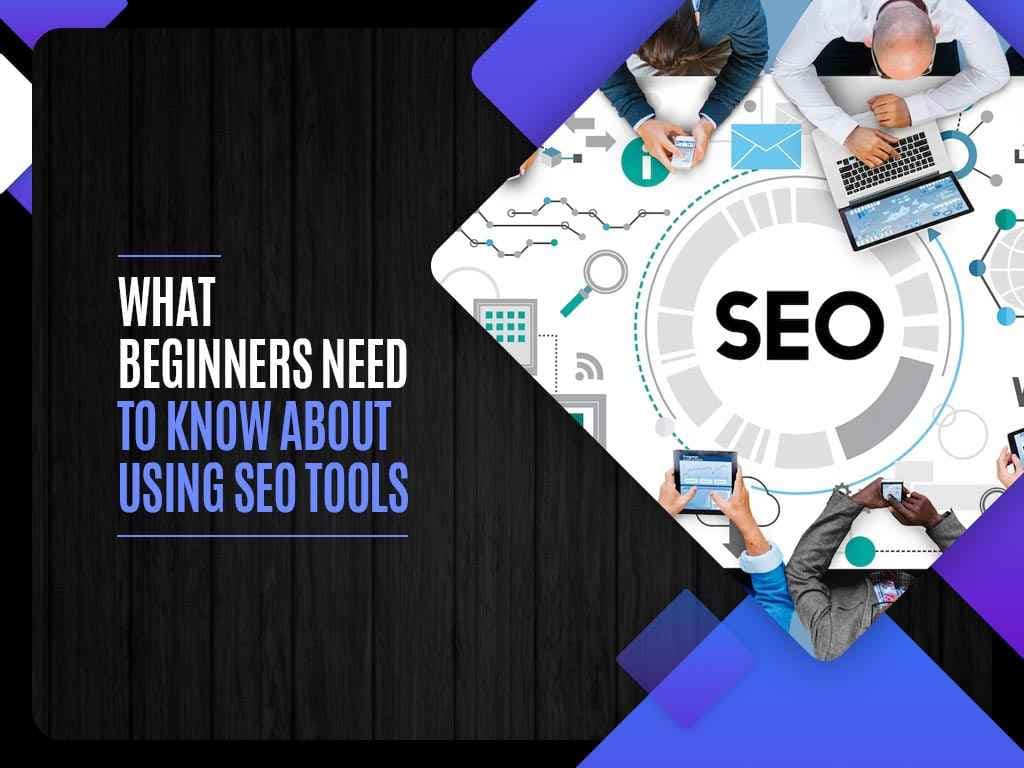
What Beginners Need To Know About Using SEO Tools

This article provides an overview of the basics of SEO tools and how they can be used to help beginners get started in optimizing the website

Guest Author
Guest Author
Last updated on: Apr 8, 2026
What Beginners Need To Know About Using SEO Tools

Are you a beginner in the world of digital marketing? Do terms like SEO, keywords, and backlinks confuse you? In today’s online marketplace, it’s crucial to have a strong online presence that can generate traffic and revenue. Search engine optimization (SEO) is one way to achieve this.

What Is SEO?

At its core, SEO is the process of optimizing your website for search engines like Google. The goal of optimization is to move your website up the search engine results page (SERP) rankings so that more people can find your site when searching for a product or service related to what you offer.

On-page optimization refers to improving the website content, making web pages more visually appealing by providing relevant information to users and prioritizing keyword searches, such as title tags and header tags, that help search engines better understand what the web page has a focus on. Improving site structure and creating an effective site map to enhance user experience with the site.

Off-page optimization focuses on improving your website’s online reputation through tactics such as gaining backlinks from other sites and leading traffic back to your platform, enhancing organic traffic indirectly.

One of the most effective strategies in this area is Monthly Link Building, which involves consistently acquiring high-quality backlinks each month to boost domain authority and search engine rankings over time.

Both techniques are essential for improving visibility and ranking on SERPs, but incorporating these strategies differs depending on their business’s goals, objectives, or functions.

It is always a good idea to diversify strategies between both approaches for businesses’ overall potential increase in visibility online, leading to significant growth opportunities eventually.

Why Is SEO Important?

Nowadays, most consumers begin their purchasing journey with an online search. For example, if someone is looking for running shoes or Italian restaurants in their area, they will type these keywords into Google. If your website does not show up on the first page of search results for those keywords, then chances are users won’t even know that you exist!

Optimizing your website with good quality content based on relevant keywords gives you an advantage over competitors who don’t engage in any form of SEO strategy at all. Additionally, it is said that through using effective methods like white-hat link-building strategies and sound technical implementations, one can get their site ranked higher on SERPs, which ultimately results in increased organic traffic to the site!

How Can You Use Online SEO Tools?

Online platforms help websites follow best practices and increase visibility among search engines. Here are the primary benefits of using SEO tools:

  1. Keyword Research: SEO Tools help you find relevant and popular keywords that you can incorporate into your site’s content to appear higher in SERP results.
  2. Site Auditing: Online platforms help with analyzing numerous aspects of a website, i.e., speed, crawlability, content quality, layout constructs, etc. This ensures the website meets search engine standards and makes any necessary improvements to improve ranking.
  3. Competitor Analysis: With SEO tools, one can track competitors’ online activities and analyze what works well for them, equipping one with data to replicate them ethically.
  4. Link Building: By finding linking opportunities through online tools (e.g., guest blogging) that could benefit both websites by generating referral traffic and improving ranking.

SEO Tools help you find relevant and popular keywords that you can incorporate into your site’s content to appear higher in SERP results, much like a denver seo agency would do for your business.

Benefits Of Using SEO App

SEO App is an all-in-one platform that helps users maximize their SEO efforts. Some of the top benefits of using the SEO App include:

  1. User-Friendly Interface: The platform uses a user-friendly interface that makes it easy to navigate through different features, even for beginners.
  2. Keyword Suggestions: With the help of its keyword planner, SEO App provides users with relevant keywords and search volumes for effective targeting.
  3. Competitor Analysis: By gathering data about competitors’ strategies and analyzing them, users can optimize their digital marketing plans better.
  4. Website Auditing: The platform also enables users with options to perform in-depth SEO online audit, which includes insights on crawl ability issues up to technical SEO aspects.
  5. Affordable Pricing Plans: One of the best parts about using an SEO App is its scalable subscription model suited to most businesses’ needs.

SEO is a crucial part of any digital marketing strategy- so rely on the best SEO online tools as you embark on your journey toward mastering optimization! Start by integrating online SEO tools into your strategies today.

Give SEO App A Try Today

Search engine optimization is essential if you want people to find your brand online, leading to an impact in better revenues and footfall rates eventually! Regardless of whether you have just started your website or have been running for years – investing in SEO can boost your online presence and generate measurable success. To make the most out of your presence, rely on an SEO App – perfect for beginners looking for affordable solutions to optimize their digital marketing strategy today!


Related Posts

Content Syndication Metrics That Actually Matter

Content Syndication Metrics That Actually Matter

Priyanshi Kharwade

What Are the Content Syndication Metrics That Matter Most? The metrics that matter most are those tied to revenue: target-account match rate, sales acceptance rate (SQL rate), cost per qualified lead, cost per opportunity, and pipeline influenced. Volume metrics like downloads and CTR only diagnose delivery. Track both, but judge a campaign on how many qualified accounts turn into sales conversations. Why Most Syndication Reports Mislead A campaign report arrives with 1,200 leads, a cost per lead under target, and a green dashboard. Two weeks later, sales says none of it is usable. Both statements are true. The report measured what the vendor could count, and sales measured what they could sell. The gap between the two is where the budget disappears. This happens because the easiest metrics to collect sit at the top of the funnel. Downloads, form fills, and CTR are logged automatically. Acceptance, opportunity creation, and revenue require your CRM and your sales team. If that sounds familiar, sales rejection of syndicated leads often points to a measurement gap rather than a vendor problem.  Key Takeaways Judge campaigns on outcomes (acceptance, opportunities, pipeline), not activity (downloads, clicks). Group metrics by the decision they support: buy, fix, scale, or stop. Cost per lead is a procurement metric. Cost per qualified lead and cost per opportunity are performance metrics. Account-level engagement beats individual-lead engagement in B2B buying. Set metric thresholds with sales before launch, not after delivery. Volume Metrics vs. Decision Metrics Volume metrics aren’t useless. They tell you whether delivery worked. They can’t tell you whether the leads are worth following up. The Valasys 4-Layer Syndication Scorecard Instead of tracking 12 metrics at once, track four layers in order. A failure in an earlier layer explains most failures in later ones. Layer 1: Fit Question: Did the right accounts and people respond? Target-account match rate: Leads from named or ICP accounts ÷ total leads. Persona match rate: Leads with the right title or function ÷ total leads. Validation pass rate: Leads passing your checks ÷ leads delivered. See the guide to validating syndication leads. Common mistake: Counting any lead from a “target industry” as a match. Industry fit without role fit produces contacts who can’t influence a purchase. Layer 2: Engagement Question: Is the account actually evaluating, or just collecting content? Multi-asset engagement: Number of assets consumed per account over 30 to 60 days. Buying group coverage: Distinct contacts engaged per target account. Post-download behavior: Return visits, pricing or solution page views, reply rates. Common mistake: Rewarding raw download counts. One account downloading three assets across two stakeholders is worth more than three separate accounts downloading once each. Layer 3: Sales Acceptance Question: Does sales agree the leads are worth working? Acceptance rate: Leads accepted by sales ÷ leads delivered. SQL rate: SQLs ÷ leads delivered. Time to first touch and meeting rate: Meetings booked ÷ leads worked. Common mistake: Treating rejection as noise. Capture rejection reasons (wrong role, no budget, bad contact data). They tell you exactly which layer to fix. Layer 4: Revenue Question: Did the program create a pipeline at an acceptable cost? Cost per qualified lead (CPQL): Total spend ÷ qualified leads. Cost per opportunity (CPO): Total spend ÷ opportunities created. Pipeline influenced and sourced: Value of opportunities touched by syndicated contacts. Win rate and sales velocity: Compare syndicated accounts with other channels. Common mistake: Reading revenue metrics too early. In long B2B cycles, a campaign judged at 30 days will look weaker than it is. Pair Layer 4 with Layer 3 as a leading indicator. Want to see how your current reporting maps to these four layers? Explore Valasys’ content syndication approach. How the Cost Metrics Differ Cost per lead hides what you are paying for. A $60 lead that sales accepts at 10% costs $600 per accepted lead. A $120 lead accepted at 40% costs $300. The pricier lead is the cheaper outcome. Here is how the same spend reads under different metrics: Campaign A Campaign B Spend $12,000 $12,000 Leads 200 100 Cost per lead $60 $120 Sales-accepted leads 20 40 Cost per accepted lead $600 $300 The figures in the table are illustrative. Campaign A looks better in a vendor report. Campaign B is the one you should renew. For the full trade-off, see lead volume vs. lead quality in content syndication. Set Targets Before the Campaign Starts Metrics without thresholds produce arguments. Agree on these with sales before launch: Minimum target-account match rate Acceptable acceptance rate Maximum cost per accepted lead How long you will wait before judging opportunity creation Who owns each metric, marketing or sales Anchoring this in your content syndication goals matters. A pipeline goal and an awareness goal need different scorecards. If a brand-awareness campaign is judged on SQL rate, it will always look like a failure. Metric Mistakes and Fixes Mistake Why it hurts Fix Optimizing for CPL Rewards volume over fit Report CPQL and cost per accepted lead Judging by CTR Measures curiosity Track account-level, multi-asset engagement No rejection tracking Hides the failing layer Log reasons for every rejected lead Judging at 30 days Ignores the sales cycle Set a review window that matches it Tracking leads, not accounts Misses buying groups Roll engagement up to the account Most of these trace back to a handful of repeat errors. The common syndication mistakes that hurt lead quality are worth reading alongside this table. Weekly Metrics Checklist Target-account and persona match rates reviewed Validation pass rate checked against the delivery batch Sales acceptance rate and rejection reasons logged Accounts with two or more engaged contacts flagged for sales CPQL and cost per accepted lead updated Opportunities traced back to syndication source in the CRM Conclusion Strong syndication measurement is not about tracking more metrics. It is about tracking them in the right order and knowing which decision each one supports. Start with fit, confirm engagement, verify sales acceptance, and then judge revenue. When a layer breaks, fix it there instead of buying more

BANT for Buying Committees: Qualify Multi-Stakeholder Deals

BANT for Buying Committees: How to Qualify Multi-Stakeholder Deals

Mansi Hake

How Do You Apply BANT to a Buying Committee? BANT for buying committees means verifying Budget, Authority, Need, and Timeline across the stakeholders and approval dependency that affects the purchase. One contact’s answers can start the assessment, but they do not establish the full buying situation until the relevant people or authoritative sources confirm each condition. Key Takeaways Treat each answer as a claim with a source. What one contact says is contact-level information until the person responsible for that condition confirms it. Separate the budget owner from expenditure approval. Knowing who controls funds does not confirm that this purchase is funded. Treat authority as an approval path. Sponsorship, evaluation, funding approval, and contracting may sit with one person or several. Label each answer Confirmed, Reported, Inferred, Disputed, or Unknown. Record the source, date, and next review. Handle disagreement as a dependency to resolve. Unresolved conflict calls for investigation, not automatic abandonment. Use engagement and intent signals to decide where to investigate first. They do not prove budget, authority, need, or timing. Why Individual BANT Answers Fail in Committee-Led Deals A single contact can describe their own priorities accurately and still misstate the purchasing conditions of the wider group. Contact-level information is what one person says. Opportunity-level buying conditions are what must be true for the purchase to proceed. The difference matters most when a claim is secondhand or inferred, such as a sponsor reporting that finance has approved funding. Not every B2B purchase involves a large committee, but where one exists, disagreement is common. Gartner’s survey of 632 B2B buyers found unhealthy conflict in 74% of buyer teams, and groups that reached consensus were 2.5 times more likely to report a high-quality deal. That is an association from one survey, not proof that any process improves outcomes. It does show why one confident contact is a thin basis for a forecast. Traditional BANT questions remain useful, but modern BANT qualification requires evidence behind each answer rather than four unchecked assumptions. How Do Engagement and Intent Signals Help Prioritize Accounts? Engagement and intent signals help sales teams identify accounts showing potential buying interest. Insights from account intelligence platforms like Valasys help surface relevant account activity, including product research, website engagement, and interest across multiple employees. These signals help sales teams prioritize outreach and identify accounts worth investigating. However, they do not confirm an approved budget, purchasing authority, an established business need, or a buying timeline. These conditions still require verification through BANT qualification. How to Apply BANT Across a Buying Committee BANT stands for Budget, Authority, Need, and Timeline.In committee-led purchases, answering these four questions requires looking beyond the primary contact to understand who controls funding, who influences the decision, whose requirements shape the solution, and who determines the purchase timeline.  Budget: Verify Who Controls Funding Ask which kind of funding exists: allocated (money set aside for this purchase), proposed (requested, not approved), conditional (dependent on another decision, such as a headcount plan), or unconfirmed. Then separate the budget owner, who controls the money, from expenditure approval, the decision that releases it for this purchase. A useful question is: “What needs to happen before funding for this purchase can be approved?” A strong opportunity without an allocated budget is not an automatic disqualification. It has a funding path that still needs verification. Authority: Establish the Required Approval Path The authority check links four responsibilities: sponsoring the purchase, evaluating the solution, approving funding, and contracting. They do not require four separate people, so confirm the real path instead of assuming a structure. Ask who must approve, who can stop the purchase, and what each person needs to see.  MEDDICC, a methodology provider, treats the champion and the economic buyer as distinct roles. A champion actively supports the solution internally, helps build consensus, and influences other stakeholders. The economic buyer, on the other hand, controls the financial decision and has the authority to approve the investment. A contact may act as a champion without having the final say over the budget.  For a deeper explanation of approval responsibilities, verifying authority in BANT helps distinguish buying influence from the power to approve a purchase. Need: Confirm Cross-Functional Agreement One group can acknowledge a problem while another questions its priority, technical requirements, or business impact.  Ask each function to describe the problem, the cost of leaving it unsolved, and what a workable solution must do. Record agreement only where it was stated, and record disagreement exactly as it was stated. An operations lead who calls the issue urgent and an IT lead who calls it low priority have not produced a shared need, however enthusiastic the sponsor sounds. Timeline: Validate Decision and Procurement Dependencies Separate five items: desired project start, internal decision milestone, required reviews, procurement and contracting, and realistic purchase timing. A project deadline is not automatically a purchase deadline. A team that wants to launch in March may still need security review, legal terms, and vendor onboarding first. Ask what must happen between a verbal decision and a signed contract, and who owns each step. How to Build a Committee-Level BANT Evidence Matrix An evidence matrix records each buying condition, who can confirm it, and how strong the evidence is. One criterion can involve several roles, so list every relevant function instead of forcing one person per letter.  BANT criterion Relevant stakeholder or function What must be verified Evidence status Unresolved question Next owner/action Budget Department leader; Finance Funding source and approval for this purchase Reported Has finance approved the amount? AE asks finance for approval steps Authority Department leader; CFO; Legal Who approves, signs, and can block Inferred Is executive sign-off required? AE requests introduction to approver Need Operations; IT Shared problem definition and requirements Disputed Does IT agree on scope and priority? Solutions engineer joins IT call Timeline Sponsor; Procurement Decision date, review steps, contract timing Unknown How long is procurement review? AE asks procurement for process Use these evidence statuses: Confirmed: Verified with the responsible stakeholder or an

Corporate Website Design in 2026: Best Practices & Examples

What makes corporate website design effective in 2026? Insights from Halo Lab

Guest Author

Prospects, investors, job candidates, and journalists often check a company’s website before they ever speak to anyone there. Within a minute, they decide whether the business looks credible, understandable, and worth contacting. Effective corporate website design turns that first visit into confidence by combining clear positioning, easy navigation, and visible proof of expertise. The principles below draw on Halo Lab’s work on more than 500 projects since 2013, including corporate sites for fintech, HR tech, healthcare, insurance, marketing companies, and other industries. What makes a corporate website effective? Visual polish draws attention, yet a corporate website becomes effective through less visible work: wording, structure, evidence, and technical quality. The following principles cover these layers. Clear messaging and brand identity The homepage headline should state what the company does and for whom in one plain sentence. Visual identity then reinforces that message through consistent color, type, and imagery across every page. Sometimes the gap runs deeper than copy. When Halo Lab worked with Stay, a Munich-based insurance brokerage for expats, the company’s former name, MW Expat, no longer matched the credibility it had built. The rebrand introduced speech-bubble elements as a symbol of open dialogue, and the website carried that motif straight into its hero section. Afterward, visitors could find the right type of coverage faster, and the brand looked the same across the website, client portals, and other channels. A useful check: if the logo were removed, would visitors still recognize the business from its tone and visuals? Simple navigation and user experience Navigation works when the menu mirrors how visitors think about the company rather than how its departments are organized. Five to seven top-level items usually cover the essentials, such as solutions, industries, customers, resources, and company information. Structure comes before screens. Experienced teams draft the sitemap and test it before any page gets designed: a short tree test with people from the target audience shows whether they can find pricing, a relevant case study, or open positions by labels alone. When a page proves hard to find, the wording of its label is often the cause, so renaming usually fixes more than moving items around. It also pays to treat navigation as a system rather than a single menu. The same pattern for product, industry, and company pages keeps the site predictable when new sections appear years after launch. Trust signals and relevant content Corporate buyers look for proof before they request a call. Signals that answer their doubts include: Client logos and case studies with measurable outcomes. Specific figures about scale, such as transaction volume or the number of integrations. Certifications, security standards, and compliance details. Named leadership and clear contact information. Placement matters as much as the proof itself. Teams experienced in website design services tend to put each signal next to the claim it supports: an integration count beside the product overview, a security badge beside the contact form, a short case result beside the related service. Proof gathered on a single About page rarely reaches visitors at the moment their doubts appear. Mobile experience, speed, and accessibility Many first visits happen on a phone, often after a link in an email or a LinkedIn post. A layout that works on small screens, loads fast, and stays readable for people with visual or motor impairments keeps those visitors from leaving early. Several benchmarks, three of them from Core Web Vitals, make these goals measurable: Largest Contentful Paint within 2.5 seconds, so the main content appears quickly. Interaction to Next Paint under 200 milliseconds. Taps and clicks get a fast response. Cumulative Layout Shift below 0.1, so elements stay in place while the page loads. Compliance with WCAG 2.2, covering contrast, keyboard navigation, and alt text. Animation needs special care on mobile. A practical rule is to keep the motion that orients visitors, such as a page-load effect or a menu transition, and drop decorative effects that make small screens heavier. Testing on a mid-range Android phone over a throttled connection, rather than on the team’s latest devices, shows how the site behaves for a large share of real visitors. That balance is typical of thoughtful corporate web design. Corporate website design ideas and examples No single visual style suits every company, so the right direction depends on the audience, the market, and how competitors already look. The corporate website examples below show approaches and the situations where each pays off. Minimalist and clean design Minimalism relies on generous white space, a restrained palette, and few elements per screen. It suits enterprise software, consulting, and financial services, where buyers value clarity and calm over spectacle. The business benefit lies in focus: with less competition for attention, the value proposition and calls to action stand out. Minimalism also demands discipline in the details, because flaws that a busy layout hides become obvious on an empty screen. Consistent spacing, a strict type scale of three or four sizes, and high-quality photography carry the visual weight that decoration would otherwise provide. The main risk is sameness. When most competitors use similar airy templates, minimalism stops setting a company apart, and a stronger visual voice becomes worth considering. Bold typography and visual identity Large, expressive types and strong accent colors help a company stand out in a crowded category. This approach fits creative agencies, consumer-facing brands, and challengers entering a market dominated by look-alike sites. Stone, a brand strategy studio from Colorado, faced exactly that problem. Before designing anything, Halo Lab’s team spent two days analyzing four competitors and found that most relied on minimalist layouts built around case-study imagery. To break from that pattern, the designers replaced Stone’s black-and-white palette with red accents for calls to action and paired a tall condensed headline font with the Neue Plak grotesque for body text. They also built an unusual grid that highlights key data, introduced a stone-shaped graphic language, and added transitions in which media shrinks into the text on scroll. Within three months, Stone received a launch-ready site