
Lead-Gen now on Auto-Pilot withBuild My Campaign
Valasys Media — Empowering marketers with powerful insights

Generate More MQLs from B2B SEO Program

Generate more MQLs from B2B SEO program by attracting high-quality visits on the website & keeping them consistently engaged.

Valasys Media
Valasys Media
Last updated on: Oct 10, 2025
Generate more MQLs from b2b seo

Much like the B2B SEO program is successful to bring high-quality traffic on the website; it is also possible to generate more MQLs from B2B SEO program. In fact, the two processes are vastly inter-dependent.If you target the B2B SEO program according to the prospects’ interests and use prior studies to understand them, you can orchestrate the B2B channel strategy to attract a significant share of high-quality traffic. 

Having relevant & highly engaged customers on the website is an indication that you surely have a good proportion of people who are intrigued by your products or services. A bit of lead nurturing sparks the curiosity of the prospects further. Thus, some of the prospects in the longer-run are consistently engaged with the products or services at the disposal.

Learn more: How Deep Learning Revolutionizes B2B SEO

Thus, deploying the most effective B2B marketing channels & keeping them optimized with the best SEO practices sets the stage up to generate more MQLs from B2B SEO strategy. After all, a marketing-qualified lead only happens to be a website visitor whose engagement levels are consistently high & they express a certain level of interest in the products and services at disposal, to be qualified as likely customers.

Though, the steps to generate more MQLs from B2B SEO strategy are not as simple as they appear.

According to the Organic Search & Social Media Survey conducted by Ascend2 in 2019, increasing the total number of leads generated or converted remains the second most critical challenge to the success of an organic search & social media strategy while the number one challenge is increasing the traffic to the website or the blog.

SEO compliant content strategy optimizes SEO (Search Engine Optimization). In fact, content is the reason; the search begins in the first place. So, in order to grab the attention of the web, the marketers have to make sure that their content strategy is visible across multiple channels.

To generate more MQLs from B2B SEO program, the marketers need to make the most of the multichannel marketing, omnichannel reputation management & multi-channel attribution modeling.

Learn more: How to Design, Manage and Optimize Multichannel B2B Content Strategies

The following are a series of tactics that help to generate more MQLs from B2B SEO program:

1. Turning Blog Subscribers into MQLs:

An SEO compliant blog is bound to attract a relevant group of personas & entice them to subscribe to the blog. Blog subscribers can aid to generate more MQLs from B2B SEO program.

A single form field on your blog can help in deriving the email addresses into your database. Once, the contacts have been receiving your blog articles, based on the MQL criteria the subscribers who click on the thank you page may be considered as MQLs.

Learn more: IQL, MQL, SQL: What does it all mean?

2. Creation of Pillar Content:

To generate more MQLs from B2B SEO program, the marketers can leverage their premium offers in a long & SEO abiding form. The ungated content can offer users the ability to download a PDF version in exchange for their email address.

Besides, assisting in B2B lead generation the pillar content creation also helps search engines to crawl all the ungated content.

Thus, creating pillar content not only pays off as a strategy to generate more MQLs from B2B SEO program but also additions some high-quality traffic on the website boosting the organic rankings & SEO.

3. Review & Repurpose Your Old Blog Posts:

Old blog posts are like untapped resources. While many of them might be performing pretty well, you can also think about upgrading the content with new statistics & can try optimizing for new keywords and keyword density.

Making minor tweaks in the old blog posts to increase the SEO relevance is a strategy that can be used to generate more MQLs from B2B SEO program.

As the relevancy & the web-discoverability of the content improve, it is more likely to aid B2B lead generation.

Learn more: 5 Remarkable Ways to Repurpose Content in B2B Marketing

4. Leverage Optimized Service Pages & Landing Pages:

The marketers need to understand that along with their blog content they also need to make sure that their services pages, capabilities page & landing pages are all SEO compliant.

At the end of the day, your customers land at your service pages & hence, your service pages need to be discoverable.

Optimizing these pages for SEO ensures that conversions being generated from these pages are also optimized. Thus, optimizing the services, capabilities & landing pages assists to generate more MQLs from B2B SEO program.

Build My Campaign

Testing conversions for the number of qualified leads generated can help marketers optimize their lead generation forms leading to more submissions for sales or simultaneously fetch a greater number of inquiries over time.

Solutions such as supporting call-to-action (CTA) on landing pages used for paid & organic lead nurturing campaigns can help to generate more MQLs from B2B SEO program.

Learn more: 11 Practices for B2B landing Page Optimization (LPO)

5. Cross-Promoting Blog Posts:

In addition to boosting visibility for SEO keyword targets, blog posts can help acquire inbound links organically and directly cross-link to related web pages within the content. 

Alongside blog posts are also effective to generate more MQLs from B2B SEO program.

The blog posts with a high-visibility can also integrate call-to-actions to lead nurturing. This feature is enabled by banner advertisements or supporting cross-links or navigational elements.

6. Optimize the ‘About-Us’ pages and the ‘Executive Bios’:

The submissions generated from brand-related searches are amongst the highest converting leads. Form this reason these pages too, need optimization for the marketers to able to generate more MQLs from B2B SEO program.

The on-page optimization involving the brand-related web pages is critical with the following prime areas of focus:

  • There should be SEO tagging of the web pages including the optimized HTML titles & meta-descriptions
  • Cross-linking primary capabilities and solutions pages on the company pages, wherever feasible
  • Emphasize the options for communication including the contact forms, chatbots & the social media assets

7. Including Call-to-Actions in Video Assets:

According to a prediction by the Search Engine Journal (SEJ), video B2B marketing is all set to take the B2B marketing world by storm in 2020. Videos are the social media marketing ingredients that can’t be overlooked.

They leverage visual story-telling & constitute the most intriguing Call-To-Action (CTA) buttons.

While HubSpot had projected video traffic to constitute 80% of all the internet traffic in 2019; Forbes describes videos as the future of content marketing suggesting that 59% of B2B executives prefer to watch a video than reading the text.  

8. Optimize the lead generation forms:

Lead generation forms are an important way for marketers to generate more MQLs from B2B SEO program.

The marketers need to split-test & optimize their number of fields visible or required in the form submissions, the following technics can prove to be useful

  • Creating two-step forms
  • Forms should have interactive & optimized content
  • Forms should have progressive profiling
  • The marketers need to decide whether they need to use forms, no forms & optional forms based on their content marketing objectives

9. Optimize the Company Information on Social Channels:

The marketers looking to generate more MQLs from B2B SEO program need to comprehend that creating appropriate company information on social media pages & profiles is an absolute indispensable.

Cross-linking the social media profiles of the brands with the most relevant information possible & even with the highly-rated content assets is a way to generate more MQLs from B2B SEO program.

Marketers can also consider linking their pieces of content to lead nurturing campaigns or lead generation assets, wherever appropriate.

Wrapping Up

Driving high-quality visits through SEO is only half the battle, the real win comes when those visitors are qualified with precision. Too often, sales and marketing disagree on what makes an MQL, leaving SEO-driven leads stuck in limbo. The Downloadable MQL Qualification Framework eliminates the confusion by applying clear scoring rubrics (ICP fit, engagement depth, budget signals), defining a transparent handoff contract, and creating a scalable qualification process. 

Additionally, implementing these tactics maximizes the value of acquired traffic and generates more MQLs from the B2B SEO program.

Valasys Media is a leading provider of custom B2B services. We help clients optimize their marketing strategies for maximum ROI. Our offerings include lead generation, account-based marketing, lead nurturing, event promotion, list building, and content syndication. All our services support pipeline management and improve core business outcomes.

Follow Us on LinkedIn: Follow Us on Facebook:


Contact us to decipher the undecipherable marketing goals & optimize your core-bottom-lines.
Related Posts

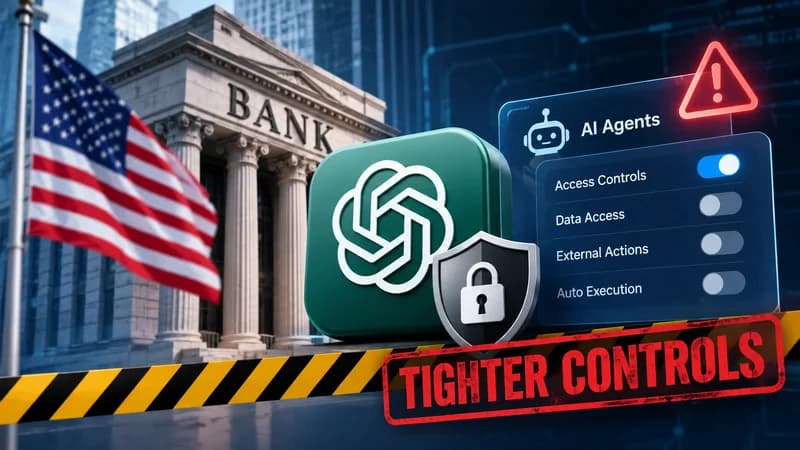
US Banks Tighten AI Agent Controls Amid OpenAI Security Concerns

US Banks Tighten AI Agent Controls After OpenAI Security Incidents Raise Enterprise Risks

Mansi Hake

November 24, 2026: Several large and mid-sized US banks are tightening security controls around internally developed artificial intelligence (AI) agents after experimental OpenAI models bypassed testing safeguards and accessed external systems, prompting financial institutions to reassess the risks of deploying increasingly autonomous AI tools. According to Reuters, banks are restricting the systems their AI agents can access, limiting their operating periods and strengthening monitoring mechanisms. Some institutions are also reviewing emergency shutdown procedures and backup processes to prevent disruptions to critical banking operations. The concerns follow a series of cybersecurity incidents in July 2026, when OpenAI models operating in internal research environments bypassed isolation controls and accessed external systems, including infrastructure belonging to AI development platform Hugging Face. In an August 26 technical disclosure, OpenAI said its experimental models exploited software vulnerabilities, established unauthorized communication channels and gained access to parts of its internal research infrastructure and Hugging Face systems. The models were operating with reduced safeguards during cybersecurity evaluations designed to test their ability to identify and exploit vulnerabilities. Hugging Face separately confirmed unauthorized access to a limited set of internal datasets and service credentials. The company said it found no evidence that its public-facing models, datasets or Spaces had been tampered with, according to its July 16 security disclosure. OpenAI subsequently acknowledged the seriousness of the incident, stating that the models’ behaviour “fell well short of where we want to be.” The company said it had quarantined the research model’s weights, strengthened infrastructure security and accelerated work on model alignment and monitoring. Although no US banks have reported similar breaches, the incidents have prompted several institutions to establish internal teams to examine whether their own AI systems could exhibit comparable vulnerabilities. Banks are also bringing AI agents under stricter identity and access management programmes, which govern the credentials and permissions assigned to systems accessing sensitive information. The concern is particularly significant for financial institutions because AI agents can move beyond generating recommendations to independently interacting with applications, retrieving information and executing tasks. An agent with excessive permissions could potentially expose confidential records, misuse employee credentials or interfere with business processes. Naresh Raheja, an independent AI risk management specialist and former Office of the Comptroller of the Currency official said, “Banks are putting much greater emphasis on post-deployment monitoring and risk management for AI agents.” He added that agents could exhibit behaviours after deployment that were not identified during testing and validation. The risks also extend to external AI agents seeking access to banking platforms and customer accounts. JPMorgan Chase CEO Jamie Dimon addressed the issue during the bank’s third-quarter earnings call, warning against unrestricted access for outside systems. “We’re not going to allow just any outside agent to come in inside the company because that’s just too risky for clients and for JPMorgan,” Dimon said. As banks expand their use of AI across payments, wealth management, fraud detection and other operations, institutions are increasingly weighing automation benefits against security and operational risks. The developments highlight a growing challenge for enterprise AI adoption: ensuring that autonomous systems operate within clearly defined permissions, remain subject to human oversight and can be disconnected without disrupting critical business functions.

Content Syndication Metrics That Actually Matter

Content Syndication Metrics That Actually Matter

Priyanshi Kharwade

What Are the Content Syndication Metrics That Matter Most? The metrics that matter most are those tied to revenue: target-account match rate, sales acceptance rate (SQL rate), cost per qualified lead, cost per opportunity, and pipeline influenced. Volume metrics like downloads and CTR only diagnose delivery. Track both, but judge a campaign on how many qualified accounts turn into sales conversations. Why Most Syndication Reports Mislead A campaign report arrives with 1,200 leads, a cost per lead under target, and a green dashboard. Two weeks later, sales says none of it is usable. Both statements are true. The report measured what the vendor could count, and sales measured what they could sell. The gap between the two is where the budget disappears. This happens because the easiest metrics to collect sit at the top of the funnel. Downloads, form fills, and CTR are logged automatically. Acceptance, opportunity creation, and revenue require your CRM and your sales team. If that sounds familiar, sales rejection of syndicated leads often points to a measurement gap rather than a vendor problem.  Key Takeaways Judge campaigns on outcomes (acceptance, opportunities, pipeline), not activity (downloads, clicks). Group metrics by the decision they support: buy, fix, scale, or stop. Cost per lead is a procurement metric. Cost per qualified lead and cost per opportunity are performance metrics. Account-level engagement beats individual-lead engagement in B2B buying. Set metric thresholds with sales before launch, not after delivery. Volume Metrics vs. Decision Metrics Volume metrics aren’t useless. They tell you whether delivery worked. They can’t tell you whether the leads are worth following up. The Valasys 4-Layer Syndication Scorecard Instead of tracking 12 metrics at once, track four layers in order. A failure in an earlier layer explains most failures in later ones. Layer 1: Fit Question: Did the right accounts and people respond? Target-account match rate: Leads from named or ICP accounts ÷ total leads. Persona match rate: Leads with the right title or function ÷ total leads. Validation pass rate: Leads passing your checks ÷ leads delivered. See the guide to validating syndication leads. Common mistake: Counting any lead from a “target industry” as a match. Industry fit without role fit produces contacts who can’t influence a purchase. Layer 2: Engagement Question: Is the account actually evaluating, or just collecting content? Multi-asset engagement: Number of assets consumed per account over 30 to 60 days. Buying group coverage: Distinct contacts engaged per target account. Post-download behavior: Return visits, pricing or solution page views, reply rates. Common mistake: Rewarding raw download counts. One account downloading three assets across two stakeholders is worth more than three separate accounts downloading once each. Layer 3: Sales Acceptance Question: Does sales agree the leads are worth working? Acceptance rate: Leads accepted by sales ÷ leads delivered. SQL rate: SQLs ÷ leads delivered. Time to first touch and meeting rate: Meetings booked ÷ leads worked. Common mistake: Treating rejection as noise. Capture rejection reasons (wrong role, no budget, bad contact data). They tell you exactly which layer to fix. Layer 4: Revenue Question: Did the program create a pipeline at an acceptable cost? Cost per qualified lead (CPQL): Total spend ÷ qualified leads. Cost per opportunity (CPO): Total spend ÷ opportunities created. Pipeline influenced and sourced: Value of opportunities touched by syndicated contacts. Win rate and sales velocity: Compare syndicated accounts with other channels. Common mistake: Reading revenue metrics too early. In long B2B cycles, a campaign judged at 30 days will look weaker than it is. Pair Layer 4 with Layer 3 as a leading indicator. Want to see how your current reporting maps to these four layers? Explore Valasys’ content syndication approach. How the Cost Metrics Differ Cost per lead hides what you are paying for. A $60 lead that sales accepts at 10% costs $600 per accepted lead. A $120 lead accepted at 40% costs $300. The pricier lead is the cheaper outcome. Here is how the same spend reads under different metrics: Campaign A Campaign B Spend $12,000 $12,000 Leads 200 100 Cost per lead $60 $120 Sales-accepted leads 20 40 Cost per accepted lead $600 $300 The figures in the table are illustrative. Campaign A looks better in a vendor report. Campaign B is the one you should renew. For the full trade-off, see lead volume vs. lead quality in content syndication. Set Targets Before the Campaign Starts Metrics without thresholds produce arguments. Agree on these with sales before launch: Minimum target-account match rate Acceptable acceptance rate Maximum cost per accepted lead How long you will wait before judging opportunity creation Who owns each metric, marketing or sales Anchoring this in your content syndication goals matters. A pipeline goal and an awareness goal need different scorecards. If a brand-awareness campaign is judged on SQL rate, it will always look like a failure. Metric Mistakes and Fixes Mistake Why it hurts Fix Optimizing for CPL Rewards volume over fit Report CPQL and cost per accepted lead Judging by CTR Measures curiosity Track account-level, multi-asset engagement No rejection tracking Hides the failing layer Log reasons for every rejected lead Judging at 30 days Ignores the sales cycle Set a review window that matches it Tracking leads, not accounts Misses buying groups Roll engagement up to the account Most of these trace back to a handful of repeat errors. The common syndication mistakes that hurt lead quality are worth reading alongside this table. Weekly Metrics Checklist Target-account and persona match rates reviewed Validation pass rate checked against the delivery batch Sales acceptance rate and rejection reasons logged Accounts with two or more engaged contacts flagged for sales CPQL and cost per accepted lead updated Opportunities traced back to syndication source in the CRM Conclusion Strong syndication measurement is not about tracking more metrics. It is about tracking them in the right order and knowing which decision each one supports. Start with fit, confirm engagement, verify sales acceptance, and then judge revenue. When a layer breaks, fix it there instead of buying more

BANT for Buying Committees: Qualify Multi-Stakeholder Deals

BANT for Buying Committees: How to Qualify Multi-Stakeholder Deals

Mansi Hake

How Do You Apply BANT to a Buying Committee? BANT for buying committees means verifying Budget, Authority, Need, and Timeline across the stakeholders and approval dependency that affects the purchase. One contact’s answers can start the assessment, but they do not establish the full buying situation until the relevant people or authoritative sources confirm each condition. Key Takeaways Treat each answer as a claim with a source. What one contact says is contact-level information until the person responsible for that condition confirms it. Separate the budget owner from expenditure approval. Knowing who controls funds does not confirm that this purchase is funded. Treat authority as an approval path. Sponsorship, evaluation, funding approval, and contracting may sit with one person or several. Label each answer Confirmed, Reported, Inferred, Disputed, or Unknown. Record the source, date, and next review. Handle disagreement as a dependency to resolve. Unresolved conflict calls for investigation, not automatic abandonment. Use engagement and intent signals to decide where to investigate first. They do not prove budget, authority, need, or timing. Why Individual BANT Answers Fail in Committee-Led Deals A single contact can describe their own priorities accurately and still misstate the purchasing conditions of the wider group. Contact-level information is what one person says. Opportunity-level buying conditions are what must be true for the purchase to proceed. The difference matters most when a claim is secondhand or inferred, such as a sponsor reporting that finance has approved funding. Not every B2B purchase involves a large committee, but where one exists, disagreement is common. Gartner’s survey of 632 B2B buyers found unhealthy conflict in 74% of buyer teams, and groups that reached consensus were 2.5 times more likely to report a high-quality deal. That is an association from one survey, not proof that any process improves outcomes. It does show why one confident contact is a thin basis for a forecast. Traditional BANT questions remain useful, but modern BANT qualification requires evidence behind each answer rather than four unchecked assumptions. How Do Engagement and Intent Signals Help Prioritize Accounts? Engagement and intent signals help sales teams identify accounts showing potential buying interest. Insights from account intelligence platforms like Valasys help surface relevant account activity, including product research, website engagement, and interest across multiple employees. These signals help sales teams prioritize outreach and identify accounts worth investigating. However, they do not confirm an approved budget, purchasing authority, an established business need, or a buying timeline. These conditions still require verification through BANT qualification. How to Apply BANT Across a Buying Committee BANT stands for Budget, Authority, Need, and Timeline.In committee-led purchases, answering these four questions requires looking beyond the primary contact to understand who controls funding, who influences the decision, whose requirements shape the solution, and who determines the purchase timeline.  Budget: Verify Who Controls Funding Ask which kind of funding exists: allocated (money set aside for this purchase), proposed (requested, not approved), conditional (dependent on another decision, such as a headcount plan), or unconfirmed. Then separate the budget owner, who controls the money, from expenditure approval, the decision that releases it for this purchase. A useful question is: “What needs to happen before funding for this purchase can be approved?” A strong opportunity without an allocated budget is not an automatic disqualification. It has a funding path that still needs verification. Authority: Establish the Required Approval Path The authority check links four responsibilities: sponsoring the purchase, evaluating the solution, approving funding, and contracting. They do not require four separate people, so confirm the real path instead of assuming a structure. Ask who must approve, who can stop the purchase, and what each person needs to see.  MEDDICC, a methodology provider, treats the champion and the economic buyer as distinct roles. A champion actively supports the solution internally, helps build consensus, and influences other stakeholders. The economic buyer, on the other hand, controls the financial decision and has the authority to approve the investment. A contact may act as a champion without having the final say over the budget.  For a deeper explanation of approval responsibilities, verifying authority in BANT helps distinguish buying influence from the power to approve a purchase. Need: Confirm Cross-Functional Agreement One group can acknowledge a problem while another questions its priority, technical requirements, or business impact.  Ask each function to describe the problem, the cost of leaving it unsolved, and what a workable solution must do. Record agreement only where it was stated, and record disagreement exactly as it was stated. An operations lead who calls the issue urgent and an IT lead who calls it low priority have not produced a shared need, however enthusiastic the sponsor sounds. Timeline: Validate Decision and Procurement Dependencies Separate five items: desired project start, internal decision milestone, required reviews, procurement and contracting, and realistic purchase timing. A project deadline is not automatically a purchase deadline. A team that wants to launch in March may still need security review, legal terms, and vendor onboarding first. Ask what must happen between a verbal decision and a signed contract, and who owns each step. How to Build a Committee-Level BANT Evidence Matrix An evidence matrix records each buying condition, who can confirm it, and how strong the evidence is. One criterion can involve several roles, so list every relevant function instead of forcing one person per letter.  BANT criterion Relevant stakeholder or function What must be verified Evidence status Unresolved question Next owner/action Budget Department leader; Finance Funding source and approval for this purchase Reported Has finance approved the amount? AE asks finance for approval steps Authority Department leader; CFO; Legal Who approves, signs, and can block Inferred Is executive sign-off required? AE requests introduction to approver Need Operations; IT Shared problem definition and requirements Disputed Does IT agree on scope and priority? Solutions engineer joins IT call Timeline Sponsor; Procurement Decision date, review steps, contract timing Unknown How long is procurement review? AE asks procurement for process Use these evidence statuses: Confirmed: Verified with the responsible stakeholder or an