Lead-Gen now on Auto-Pilot withBuild My Campaign
Valasys Media — Empowering marketers with powerful insights

How Lesser-Known Contacts Strengthen B2B Sales Strategy

Exploring the lesser known contacts strengthens all 4 networks of B2B sales strategy: prospecting, nurturing, maintaining & leading, enabling the bottom-lines.

Valasys Media
Valasys Media
Last updated on: Jul 24, 2025
Strengthen-b2b-sales-strategy

The B2B sales strategy focuses on building long-term relationships with the customers to attract customers who not just convert but also generate more business opportunities, rather than just generating one-off sales opportunities.

Exploring the lesser-known contacts strengthens all the four networks of B2B sales strategy including prospecting, nurturing, maintaining, and leading, and thus, helps the sales teams realize their business bottom-lines.

Pam Didner, renowned Sales Engagement Keynote Speaker, also the Founder and CEO of Relentless Pursuit explains that one needs to enable sales as a marketer:

“It turns out the scope of a salesperson’s job can be very broad: from inside sales to outside sales, from leads research, needs analysis, responses to requests for proposals (RFPs), down to customer services and billings. Salespeople have to cover a lot of ground, but they can’t do it all.”

Professional networking platforms such as LinkedIn are an important part of B2B sales strategy for startups, whether they operate in a physical or virtual environment. A proper understanding of the professional networks empowers sales professionals to work smarter and effectively in strengthening their relationships with the customers.

Let’s explore how lesser-known contacts strengthen B2B sales strategy by impacting the professional networks of four different sales roles and functions including the account executives who prospect leads, relationship managers who nurture customers, customer success managers who maintain relationships, and sales leaders who manage sales teams.

Exploring Lesser Familiar Contacts in the Account Executives (AE) Network

One of the most important principles in the science of networks is the concept of lesser familiar contacts.

Any network contact qualifies as either a strong or a weak tie. Strong ties are those with close affinity, such as family, schoolmates, or colleagues—people within tightly knit circles who likely know each other already. Conversely, lesser familiar contacts are your direct connections you don’t frequently interact with, including acquaintances met at meetings or events.

For account executives, uncovering new lead generation opportunities is critical. Successful prospecting means looking beyond strong ties and tapping into these lesser familiar contacts, who often represent untapped potential in unexpected places.

However, most sales teams underestimate their true network reach by focusing only on familiar contacts or existing segments.

This is where the Valasys TAM Calculator comes in. It helps you uncover the real size of your total addressable market—revealing how many high-fit, reachable leads lie beyond your strong ties. Ground your prospecting strategy in data, not assumptions.

Estimate your TAM

The Real-life network of Account Executives are Intertwined

Most of the real-life LinkedIn network of experienced account executives are interconnected with each other. Thus, there exists a strong tie of contacts that know each other too well to give fresh leads.

Therefore, in the real-world cultivating your lesser-known ties can help you unlock new sales opportunities. Approaching the people one has strong ties with maybe an ineffective technique when prospecting.

The lesser familiar contacts provide new potential windows of opportunities for modern selling by strengthening the B2B sales strategy.

Thus, marketers should explore their lesser familiar contacts to extend their reach to the new prospects who were previously beyond reach. Lesser-known contacts can produce unique opportunities for modern selling and amplify your modern selling approach by providing you with the unique customer databases that barely overlap.

Build My Campaign

The Lesser-Known Contacts Help in Preparing the Stronger Sales Network Required for a Strong B2B Sales Strategy

Often your lesser-known LinkedIn contacts are responsible for diversifying your network to establish you as a pro in the field of modern selling. Reflecting on your network can help you identify the lesser familiar connections that can be used to improve your modern selling approach.

The lesser-known contacts are the people the marketers may have met in conferences, alumni events, or trade shows and there may be untapped potential in these prospects.

Marketers should also join relevant groups on LinkedIn to stay abreast of the latest industrial developments in the field of modern selling and should accordingly define their B2B sales strategy.

The LinkedIn group activity has doubled in the past couple of years, and they are a great place to start when marketers are looking to diversify their network.

LinkedIn along with the LinkedIn Sales Navigator provides marketers with an ideal set-up to fuel their modern selling approaches by equipping them to find out the potential buyers and connect with them in a hassle-free manner.

By using carefully targeted InMails with LinkedIn Premium or LinkedIn Sales Navigator, marketers can drive higher engagement than traditional channels.

LinkedIn proclaims that InMail witnesses a 10-25% success rate when it comes to getting a response from the prospects and hence, can be used as an effective aid to modern selling techniques.

LinkedIn Sales Navigator also helps optimize your search leads by looking outside of your direct connections. Leveraging the Extended Network Access, the marketers can view the connections up to the third degree to optimize their lead generation opportunities to full potential.

LinkedIn has the Lead Recommendations tool that suggests the influencers and decision-makers from prospective companies to help marketers fuel their lead generation efforts.

Using the Teamlink feature of LinkedIn, marketers can be informed of the other connections in their network who can serve as a connection to the potential customers and thus can help the marketers enhance their modern selling approaches.

Furthermore, LinkedIn has other features such as Sales Navigator Alerts, Saved Leads, and the ‘Leads that follow your company’ to keep the marketers abreast of the activities of their prospects. By striking a timely and contextual conversation at the right time, marketers can optimize their modern selling techniques.

Exploring the lesser-known contacts also assists the nurturing part of the sales funnel. Relationship managers can utilize the power of their lesser-known contacts to strengthen their customer relationship management frameworks.

Let’s Wrap Up

Customer-centricity lies at the core of the modern B2B sales strategies and by exploring the lesser-known contacts you step an inch closer to hyper-prospecting and customer-centricity.

Once you have ample amounts of high-quality leads, to begin with, you can serve them with tailored pieces of content to nurse them further down the sales funnel. Once you understand the pain-points of your prospects and accordingly provide them with adequate insights, you make your B2B sales strategies more personalized to realize your business bottom-lines.

Valasys Media is a well-renowned name in providing hyper-tailored B2B services including lead generation, lead nurturing, account-based marketing, list building services, contact discovery services, content syndication services, event promotion, appointment setting, business intelligence, and CRM services, to help you acquire and nurture your leads until they convert into paying customers and thus optimize your pipeline opportunities.

Related Posts

credit-card-online-security-checklist

Securing Your Credit Card for Online Use: An Essential Checklist

Guest Author

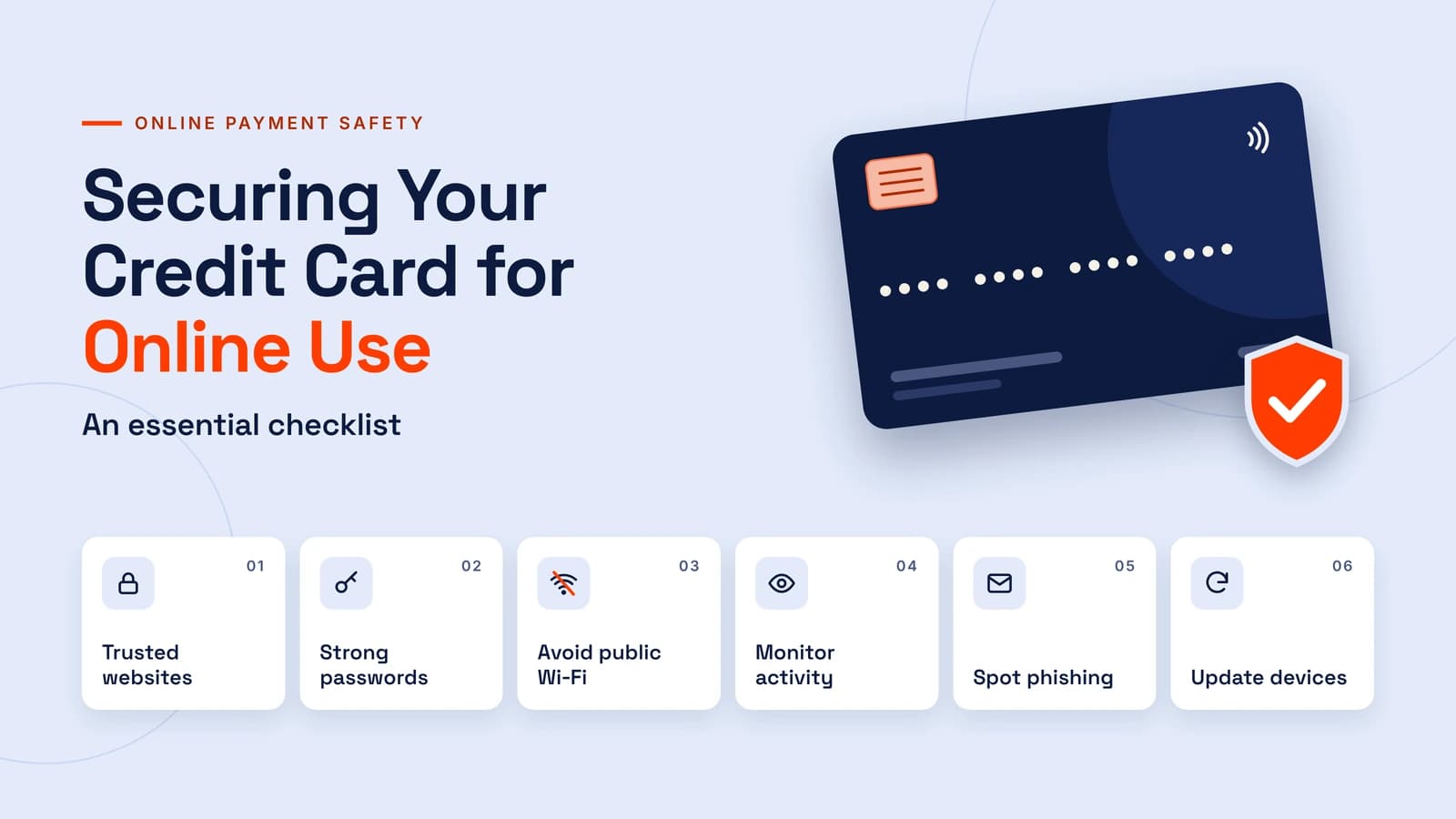
Our modern lifestyle increasingly relies on convenience and connectivity. This is reflected in nearly all aspects of living, including how we obtain goods and services. Today, e-commerce has evolved into a dominant force in daily life, allowing consumers to access everyday essentials and other products from the comfort of their homes. However, along with the rise of online transactions comes the growing risk of falling victim to cybersecurity threats. Because individuals often rely on credit cards to make electronic payments, it‘s essential to practice greater vigilance when using these financial tools online to prevent their personal and financial information from being compromised. To that end, here are some practical considerations that can help individuals secure their credit cards when making purchases online: 1) Use Secure and Trusted Websites for Online Purchases One of the most important steps in ensuring secure online credit card transactions is verifying that the website used for a purchase is legitimate and secure. Reputable websites typically use encrypted connections that protect the information entered by users. You can often confirm this protection by checking for “https” at the beginning of the website address or by viewing the security icon displayed by most web browsers. Also, take time to evaluate unfamiliar online stores before entering payment details. Fraudulent websites may imitate legitimate retailers in order to collect credit card information from unsuspecting users. Reviewing the website’s domain name, examining its contact information, and searching for independent customer feedback before you use your Maya credit card can help you determine whether the site is trustworthy. 2) Strengthen Account Protection with Strong Passwords Many e-commerce platforms store payment information within user accounts to simplify future purchases. While this feature adds convenience, it also risks exposing saved credit card details if an account is accessed without authorization. As such, individuals should use strong passwords for their shopping and payment accounts. A secure password usually contains a combination of letters and numbers and avoids easily guessed information such as names or birthdays. In addition, it’s helpful to use different passwords for different online services. When the same password is used across several websites, a single security breach may allow attackers to gain access to multiple accounts. A number of platforms also provide additional authentication steps that require a verification code during login attempts. These features add another layer of security that can help prevent unauthorized users from accessing accounts that contain stored payment information. 3) Avoid Public Wi-Fi When Entering Credit Card Information Public wireless networks, which are often available in cafes, airports, or hotels, may offer convenient internet access, but they may not provide the same level of security as private connections. Some public networks lack proper encryption, which can make it easier for cybercriminals to intercept information transmitted through the connection. Thus, entering credit card details while connected to an unsecured network may increase the risk of data exposure. When making online purchases, it’s safer to use a trusted private internet connection such as a home network or a secure mobile data connection. If you must complete a purchase while away from home, confirm that the website uses encryption and avoid connecting to unknown networks. 4) Monitor Credit Card Activity Regularly Regularly reviewing credit card activity can help you detect unauthorized transactions before they cause significant financial harm. Most financial institutions provide mobile banking applications or online platforms that allow cardholders to view their transaction history. You should also make it a point to check recent purchases on a routine basis so that there’s a better chance of you quickly identifying charges you don’t recognize. The most reputable credit card providers also offer SMS, email, or app notifications that alert cardholders when a transaction occurs. Prompt awareness of unusual activity allows consumers to report suspicious transactions to their financial institution without delay, which often helps prevent additional fraudulent charges. 5) Be Cautious of Phishing and Online Scams Phishing scams are designed to trick individuals into revealing personal or financial information through deceptive messages. These scams often appear as emails or text messages from senders pretending to be a bank, payment platform, or online retailer. The message may request urgent action, such as confirmation of account details, or direct the recipient to a fraudulent website that asks for credit card information. Individuals should approach unexpected payment requests or account warnings with caution. Before clicking links in suspicious messages, you’ll want to visit the company’s official website by typing the address directly into your browser to verify whether the message is from a trusted source. Legitimate institutions rarely ask customers to provide sensitive financial information through unsolicited messages. Being mindful of these tactics can help prevent the accidental disclosure of credit card details. 6) Keep Devices and Software Updated Computers, smartphones, and tablets rely on operating systems and applications that occasionally require updates. These updates often contain security improvements that address newly discovered vulnerabilities. It’s crucial to pay attention to these updates to prevent exposure to malware that could capture financial information. Keeping devices updated helps maintain a safer environment for online payments. By installing software updates promptly and using reputable security programs, you can reduce the likelihood of malicious software being installed on a device. Credit cards are valuable for enhancing convenience and flexibility in managing payments in today’s digital economy. While these financial tools come with protective features of their own, maintaining secure electronic transactions still largely depends on your credit card use habits and online practices. If you can leverage your card’s security features, stay aware of common cybersecurity threats, and maintain safe online behavior, you should be able to ensure that your personal and financial information remains secure. This approach not only limits online security risks but also allows you to enjoy the benefits of e-commerce with greater confidence and control.

The Role of a Security Operations Centre in Managing Cyber Risks

The Role of a Security Operations Centre in Managing Cyber Risks

Guest Author

Cyber risk is not managed by tools alone. Firewalls, endpoint agents and identity controls all generate signals, but somebody has to watch them, decide what matters and act before a minor intrusion becomes a reportable breach. That is what a security operations centre provides: a defined team, working to defined processes, responsible for noticing trouble and responding to it. Past a certain size, it is the difference between knowing an incident happened and hearing about it from a customer. What Is a Security Operation Centre? A security operations centre monitors an organisation’s systems for signs of attack and coordinates the response when something is found. It may be a staffed room, a distributed team working in shifts, a managed service, or a hybrid. The physical arrangement matters far less than the operating discipline. Understanding what a Security Operation Centre does is easier once separated from the technology it runs. Detection platforms, log correlation and automation tooling are instruments. The centre is the capability: defined roles, documented procedures, escalation paths that work at 2 a.m., and accountability for outcomes rather than dashboards. Core Functions of a Security Operation Centre Continuous Monitoring and Threat Detection Monitoring means collecting telemetry from endpoints, networks, cloud workloads and identity systems, then applying detection logic. The aim is not to see everything, but to see what indicates compromise: unusual authentication patterns, privilege escalation, unexpected outbound traffic, tampering with logging itself. Incident Response and Containment When a detection holds up, the centre moves to action: isolating hosts, disabling accounts, blocking infrastructure and preserving evidence. The quality of this stage depends on preparation. Teams that have rehearsed a ransomware scenario behave differently from those reading the plan for the first time. Threat Intelligence and Proactive Hunting Mature centres do not wait for alerts. They use intelligence about attacker techniques to hunt for activity the detection rules missed, then feed what they find back into new detections. This closes the gap between what is known publicly and what the organisation can see. How a Security Operation Centre Reduces Business Cyber Risk Risk reduction comes from compressing time. Most damaging incidents involve a period during which an attacker is inside the environment and nobody knows: establishing persistence, harvesting credentials, locating valuable data. Detection shortens that period, and every hour removed reduces what must be contained, reported and remediated. Four further contributions tend to matter to boards: Decision support. Someone can say whether an exposure affects the organisation, rather than forwarding an advisory. Regulatory readiness. Breach notification deadlines are short, and case records let the team meet them with evidence. Third-party assurance. Customers and insurers increasingly ask who monitors the environment and how. Prioritised remediation. Observed attacker behaviour shows which weaknesses matter most, which beats a severity list. In-House vs Outsourced Security Operation Centre Models Building internally gives the deepest business context. An internal analyst knows which server runs payroll and which odd login is the finance director travelling. The cost is substantial: round-the-clock coverage realistically needs eight to twelve people, plus tooling, training and the attention to retain them. Outsourcing to a managed provider buys coverage immediately and spreads cost across clients. The trade-off is context. External teams work from runbooks rather than familiarity, so escalations arrive with less interpretation and handover needs real attention. The hybrid arrangement is now the common choice for mid-sized organisations. The provider handles first-line triage and out-of-hours monitoring; an internal lead owns escalation, incident command and the relationship with the business. What makes it work is unambiguous ownership of decisions, written down before the first incident rather than negotiated during one. Security Operation Centre Roles and Team Structure A functioning centre has distinct roles rather than a pool of generalists. First-line analysts triage alerts against documented criteria. Second-line analysts investigate what survives triage and lead containment. Detection engineers build and tune the content that generates alerts. Intelligence specialists provide adversary context, and a manager owns process, metrics and executive reporting. Two structural points are consistently underrated. The first is authority: a centre that must request permission to isolate a machine during an active intrusion loses time it cannot recover, which is whypublished SOC design strategies place mandates alongside structure and staffing. The second is career progression. Triage work burns people out, and teams without a route upward lose trained analysts to employers who offer one. SOC Metrics That Show Cyber Risk Is Falling Alert counts measure activity, not effectiveness. Useful measures track the process: time to detect, time to triage, time to contain, and the proportion of incidents found internally rather than reported by a third party. That last ratio is the clearest indicator of whether monitoring works. Two further measures deserve attention. Detection coverage against known attacker techniques shows where visibility is missing. Alert quality, the share of escalations that prove genuine, shows whether analysts spend time on real work or noise. Metrics should also be reported in business terms. Executives respond to dwell time and containment of material systems, not volumes of events processed. Common Security Operation Centre Challenges The constraints are consistent across organisations.Annual security operations surveys repeatedly find that the obstacles teams cite most often are missing context around what they are seeing and a shortage of skilled staff, with limited enterprise-wide visibility close behind. The same research notes that most centres are small, commonly eleven to twenty-five people, relative to the volume they handle. Three responses help. Automate enrichment so analysts receive context rather than gathering it manually. Invest in asset inventory, because detection without knowing what a system does produces alerts nobody can judge. And tune aggressively: a quieter queue of higher-quality alerts beats comprehensive coverage nobody has time to review. Conclusion A security operations centre manages cyber risk by turning scattered signals into decisions and decisions into action, quickly enough to limit damage. The model matters less than the fundamentals: clear roles, documented processes, real authority to act, visibility into the systems that matter, and measurement showing whether detection and containment are improving. Organisations that treat it as a staffed capability with executive

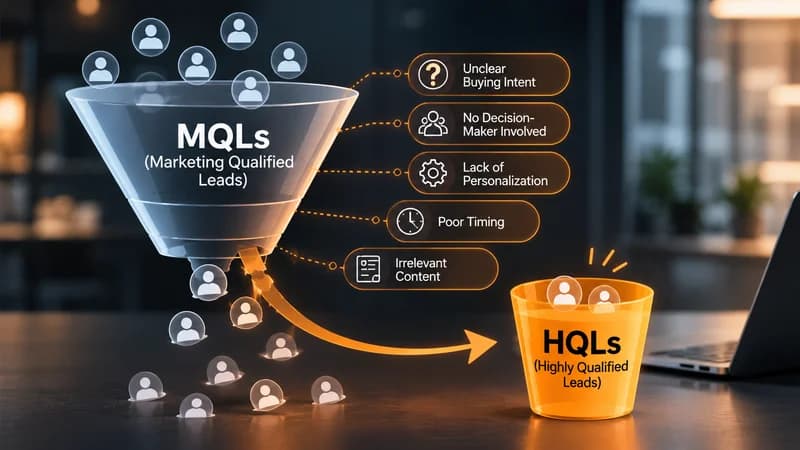
Why MQLs Do Not Become HQLs: 5 Common Reasons

Why MQLs Do Not Become HQLs: 5 Common Reasons

Pranali Shelar

Marketing reports 400 MQLs. Sales asks how many are worth calling. Suddenly, that impressive number needs a little explaining. The gap between lead volume and actual business impact raises a bigger question: are MQLs really reflecting revenue potential? You’re investing in demand generation, paying for lead delivery, and meeting campaign targets. But if Sales keeps rejecting the leads, what exactly is that investment producing? The problem may not be the qualification framework itself. It may be the lack of alignment between how marketing and sales interpret it. When both departments apply different definitions of what makes a lead qualified, the same MQL can meet Marketing’s expectations but fall short of Sales’ requirements.  MQLs do not become HQLs when the initial criteria used to capture and classify interest don’t match what Sales needs to consider a prospect qualified. Why Do MQLs Fail to Become HQLs? MQLs fail to become HQLs when they meet basic marketing criteria like engagement and demographic thresholds but lack additional evidence of buying interest, such as repeated website visits, longer sessions, or search propensity across search and generative engines, and fall short of the business requirements for further sales qualification. Common causes include audience mismatch, incomplete lead information, confusion between data verification and qualification, unclear delivery expectations, and inadequate sales feedback. 5 Reasons MQLs Do Not Become HQLs Several issues can prevent an MQL from progressing into an HQL. The following table summarizes the five common reasons, what each looks like in practice, and how it affects lead quality. Reason What it looks like Business impact The campaign attracts the wrong audience Responses come from people outside the intended audience Lower audience relevance Contact details don’t tell the whole story Lead records lack useful business context Sales cannot assess the prospect confidently Verification gets mistaken for qualification Valid contact details are treated as proof of qualification Unqualified contacts move forward Provider and buyer have different delivery expectations Both sides interpret lead requirements differently More delivery disputes and rejected leads Sales feedback doesn’t explain the rejection Rejection reasons are vague or missing The same problems continue across campaigns Let’s look at each reason more closely. 1. The Campaign Attracts Interest, but Not the Right Audience A campaign can generate plenty of engagement without reaching the people most likely to become customers. For example, a cybersecurity report may attract IT students, consultants, practitioners, and senior security decision-makers. All may download the asset, but not all belong to the intended buying audience. This often points to a mismatch between campaign targeting and the intended customer profile. A clearly defined ideal customer profile helps establish which market and audience the campaign should reach. 2. Contact Details Don’t Tell the Whole Story A lead record may contain a valid business email, company name, and job title. That makes the contact identifiable, but it doesn’t necessarily make the person a qualified prospect. Sales may still lack basic context about the person’s business requirements or relevance to the solution. In other words, a complete contact record isn’t automatically a useful qualification record. Agreed HQL criteria help clarify what information should support a qualification decision. Incomplete lead information is one reason an MQL may fail to progress. The broader process of converting MQLs into HQLs depends on more than a valid contact record.   3. Verification Gets Mistaken for Qualification A verified email address confirms that contact information meets a basic validity check. It does not establish whether the prospect meets the buyer’s qualification requirements. Verification goes beyond email validity or contact accuracy.  This distinction is easy to miss when lead delivery reports emphasize verified records and completion rates. But verification and qualification answer different questions: Verification: Does the lead information meet the agreed verification requirements?  Qualification: Does the prospect meet the agreed requirements for further sales engagement? Treating these as interchangeable can make a campaign look successful on paper while leaving Sales with leads that aren’t ready for consideration. This distinction is particularly important in content syndication lead validation. 4. The Provider and Buyer Have Different Definitions of Delivery A provider may deliver the agreed number of leads and consider the campaign complete. The buyer, however, may evaluate success based on whether those leads meet its qualification requirements. For example, a campaign delivers 500 leads against the agreed target. Yet Sales rejects a significant portion because the contacts don’t match the expected audience or qualification criteria. The issue isn’t necessarily the delivery volume. It’s the difference between what the provider considers a completed lead and what the buyer considers a usable HQL. Similar disagreements can arise when sales rejects delivered leads. Both sides need to agree on qualification requirements before the campaign begins. 5. Sales Feedback Doesn’t Explain the Rejection Sales marks a lead as “poor quality” in the CRM. Marketing sees the rejection but has no idea what went wrong. Was the contact outside the target audience? Was the information inaccurate? Did the prospect lack a relevant business requirement? Without specific rejection reasons, marketing and lead generation teams cannot identify recurring problems. The same issues can continue across campaigns because nobody has enough evidence to pinpoint them. This is one reason the HQL generation process needs clear visibility into why leads are accepted or rejected. Why These Problems Matter When Evaluating HQL Programs A campaign can meet its delivery target and still fail to support the sales pipeline. That’s why businesses should evaluate HQL programs on more than lead volume. Look at whether the delivered contacts meet the agreed audience and qualification requirements, whether lead information is usable, and whether rejection reasons are documented. The distinction between HQL, MQL, SQL, and BANT also matters when teams set expectations. These terms represent different qualification contexts, and treating them as interchangeable can create avoidable delivery disputes. Fix the Diagnosis Before Scaling Lead Volume When MQLs fail to become HQLs, generating more leads isn’t automatically the answer. The first step is identifying whether the problem lies in audience targeting, lead information, qualification standards, or the feedback