2016 Throwback: How B2B Should Respond in 2026
Explore why 2016 nostalgia is trending and how B2B brands should respond with smarter content, better formats, and real thought leadership.

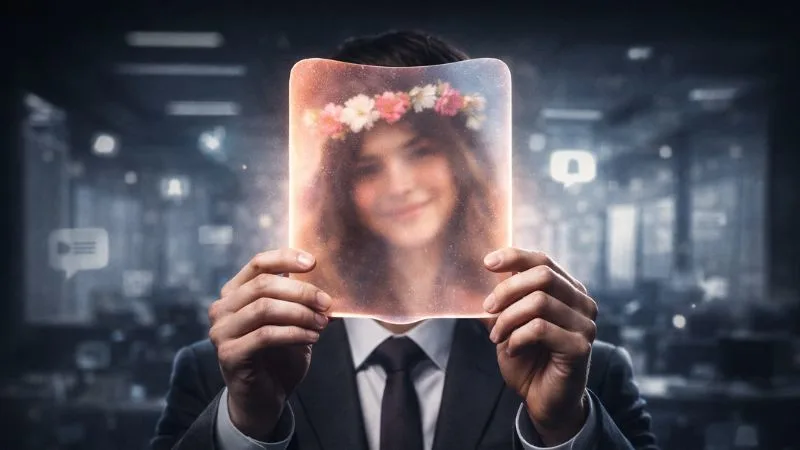
The internet is trying to crawl back into a Snapchat dog filter like it’s a weighted blanket.
I need to confess something before you start acting morally superior in the comments. I posted a 2016 photo. I did it. I’m guilty.
Not because I “miss the music” (okay, I miss the music). Not because skinny jeans were “actually iconic” (they weren’t, we were just dehydrated and cringe confident). I posted it because 2026 feels like waking up already behind.
The feed is flooded: grainy throwbacks, old filters. Millennials reposting their past selves with that haunted caption: you just had to be there.
Business Insider says people are posting decade-old photos because 2016 feels “easier” and “more authentic.” And you know what? Emotionally, it’s true. Factually? It’s messy. But emotional truth is what runs the internet now. Not facts. Not nuance. Vibes.
So yes, 2016 is trending in 2026. And The Guardian asked if the “2016 trend” is a cure for the new-year funk, while also reminding everyone that 2016 was not a spa day for humanity.
Which brings us to the real question:
Are we nostalgic for a year, or are we nostalgic for a version of ourselves who still believed the internet was a place you could breathe?
And if you’re in B2B, this matters for one reason: your buyers are just as overloaded as everyone else, but your content keeps pretending overload is solved by another carousel. 2016 isn’t a moodboard. It’s a signal. People want coherence, and coherence is what good thought leadership is supposed to deliver.
2016 IS BACK BECAUSE 2026 IS EXHAUSTING
The feed is optimized. Your brain is not.
You wake up and start scrolling before you’ve even brushed your teeth. Within minutes, you’ve consumed ten “hot takes.” Along the way, you absorb three catastrophes, two humblebrags, and one brand pretending to be your therapist. Somewhere in between, a carousel pops up titled “5 lessons I learned from failure,” written by someone who has never failed at anything except being quiet.
Then you wonder why your nervous system feels like a microwave.
So of course 2016 looks like a safe place. Of course it does. The photos are lower-res, so the problems feel lower-res too.
The point isn’t that those things were morally pure. The point is that they were collectively experienced. Shared. Less splintered. And that’s the keyword you keep avoiding: splintered.
Because 2026 is the era of fractured realities. Even Edelman’s trust data points to people increasingly living inside ideological micro-worlds, with fewer seeking info from those who disagree with them. So yeah. People run back to the last time the internet felt like one big room instead of 10 million locked closets.
But here’s the problem: When you romanticize 2016, you’re not time traveling. You’re coping.
Psychologists have been saying this for years: nostalgia isn’t just cringe, it’s social glue. The APA frames it as connectedness, and Clay Routledge calls it a defense mechanism when life feels uncertain. So when you post that 2016 selfie, it’s not the lighting. It’s that the future feels expensive, the present feels crowded, and your attention is getting strip-mined.
You’re not missing flower crowns. You’re missing coherence. Brands noticed.
BRANDS WANT YOU TO THINK THIS IS ABOUT AESTHETICS
“Remember 2016?” is also a checkout button.
Vogue in January 2026 warns brands: do not get addicted to nostalgia like it’s a drug. Because the moment you “reanimate past hits,” you commodify your legacy and dilute your equity.
Which is such a polite way of saying: if you keep selling the past, people will eventually realize you ran out of ideas.
But here’s what brands love about nostalgia. It’s cheap attention.
Nostalgia is a shortcut past skepticism. You don’t have to persuade me. You just have to remind me of myself. And I will do the marketing for you. I will repost the vibe. I’ll caption it like I discovered time travel. Then I’ll feel something and buy something.
This is where I’m supposed to say “we live in a society,” right? We do. Unfortunately. And that society runs on attention, consumption, and denial, in that order.
B2B DOESN’T GET TO COSPLAY
You are not a Tumblr teen, you sell enterprise software.
Some of you are looking at the 2016 throwbacks and thinking, “Cute. Let’s do a retro campaign.” No. Stop. Sit down. Because B2B doesn’t get to be lazy.
In B2B, that craving shows up as a demand for a point of view the committee can use. In B2B, coherence is not a filter. It’s a point of view buyers can borrow when the committee is stuck. That’s thought leadership.
Your buyers are not asking for Clarendon filters. They’re asking for decision support that reduces risk and speeds up internal alignment. They’re asking you to stop wasting their time with content that sounds like it was generated by a committee whose favorite spice is flour.
Here’s the inconvenient data you keep ignoring:
- Edelman and LinkedIn’s B2B research highlights that at any given moment, 95% of business clients say they are not actively seeking goods or services.
- Forrester reported that nearly 90% of global business buyers said their purchase process was stalled in 2023. That’s because the world is complex, budgets are tight, and information overload is real.
- Edelman’s top findings page states that 7 in 10 decision-makers trust thought leadership over marketing materials and product sheets.
Do you know what that means? Thought leadership is not opinions.
It’s decision support, it’s a language the buyer can repeat in a meeting, a framework they can defend, and an artifact they can forward. They want your convictions. They want you to say something that risks disagreement. And they want you to sound like a human who has been outside.
So if you’re “borrowing” 2016, don’t borrow the aesthetics. Borrow the emotional function. 2016 content worked because it felt like identity. It felt like belonging. It felt like culture. Not compliance.
YOUR CONTENT IS TOO SAFE, AND EVERYONE CAN TELL
You’re posting like you’re afraid of being screenshotted. Irony: you will be screenshotted anyway.
You’re doing “thought leadership” that is really just product positioning wearing a fake mustache. You post a carousel that says “3 trends shaping the future,” and the trends are: AI, AI, and AI. You write a blog titled “Why Trust Matters,” and it says absolutely nothing about what you did when trust was tested.
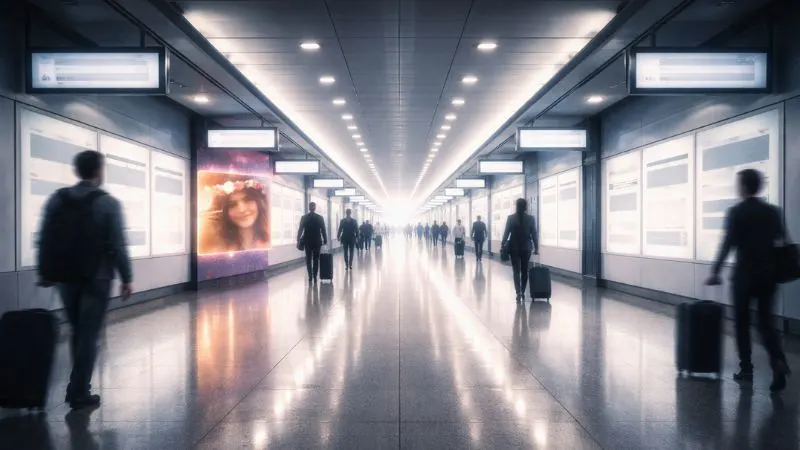
And then you wonder why people are nostalgic for 2016, when the internet felt less like a corporate hallway. Nostalgia is trending partly because the modern feed is engineered into lifelessness. Everything is optimized and templated. Everything is “best practices.” Congratulations, you have built a content ecosystem that feels like an airport.
Also, let’s be honest, the AI content flood isn’t helping. Gartner predicted that by 2026, traditional search engine volume will drop 25% as AI chatbots and virtual agents replace searches. Gartner’s analyst Alan Antin explicitly warns that companies will need to focus on unique, useful content as GenAI becomes a “substitute answer engine.”
Translation: the era of “more content” is over. It’s just that your leadership hasn’t accepted it yet because quantity feels measurable and courage feels scary.
So again, if you’re in B2B stop staring at 2016 trend like it’s a moodboard, you’re missing the point.
The point is hunger. People are hungry for sincerity and specificity. And you’ve been feeding them oatmeal.
WHAT B2B SHOULD ACTUALLY STEAL FROM 2016
Not the skinny jeans. The nerve.
B2B needs to stop hiding behind professionalism as an excuse for being bland. If nostalgia is a coping mechanism for audiences, then your job is not to cosplay the past. Your job is to give people something sturdier than coping. Something that helps them think. Helps them decide. And makes them feel less alone inside the complexity.

Because the real 2016 shift wasn’t “better creative.” It was structural.
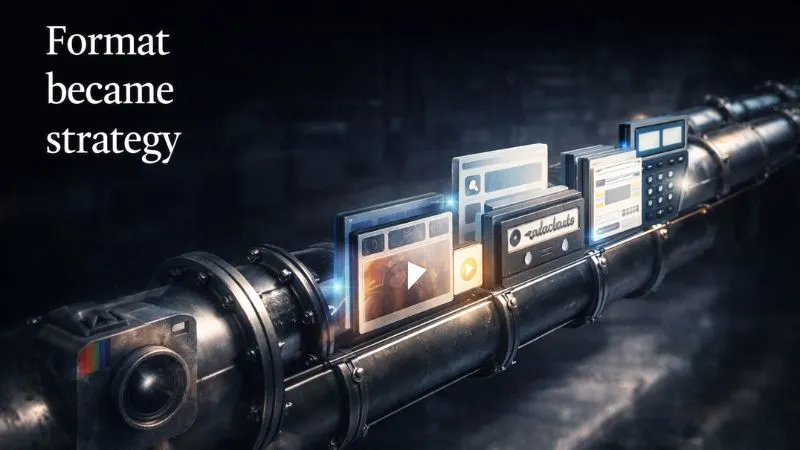
THE REAL 2016 SHIFT: FORMAT BECAME STRATEGY
The container stopped being packaging. It became the distribution engine.
Most marketers misremember 2016 as the year brands “finally learned storytelling.” Cute. But incomplete. 2016 was when format stopped being decoration and started being the strategy itself. When the format was engineered to travel, to be shared, to become a social object. Not just “content.” Not “messaging.” A thing people wanted to pass around like gossip.
LinkedIn’s Cannes Lions coverage in July 2016 basically admitted what B2B had spent years denying: B2B brands weren’t just capable of storytelling, they were leading in how stories got told across platforms.
Credibility became an excuse to be forgettable. So if you’re in B2B and you’re watching 2016 trend in 2026 and thinking “retro campaign,” stop. Sit down. Drink water. Your brain is trying to turn culture into a costume again.
The lesson is not “use throwback filters.” The lesson is “build formats that earn attention without begging.”
THE 2016 PLAYBOOK IN THREE CAMPAIGNS (AND WHY YOU STILL HAVEN’T LEARNED IT)
Your marketing is talking. These campaigns built objects.
This worked because it didn’t explain aerospace. It staged wonder. A yellow school bus became a moving “vehicle to Mars.” Designed as a shared, headset-free group experience. Social consumption baked into the design.
2026 translation: If your category is complex, stop over-explaining. Build a participatory format that makes complexity feel intuitive.
Developer audiences have a brutal cringe detector. You do not “position” your way into trust. You earn it by shipping something that respects the culture. Codeology is an open-source project that visualizes public GitHub repositories using GitHub’s public API.
2026 translation: For technical buyers, content is rarely the fastest path. Artifacts are. Tools. Sandboxes. Templates. Calculators. Give value before you ask for attention.
GE produced a sci-fi audio drama designed to be enjoyed, not endured. It hit No. 1 on iTunes because it didn’t sound like an ad. The brand behaved like a producer, not a narrator. Patron, not protagonist.
2026 translation: If your “storytelling” is just product messaging wearing an emotional hoodie, people can tell.
THE FOUR MECHANICS B2B STILL UNDERUSES
The reason your “thought leadership” dies in the group chat:
- Identity value: People share what makes them look early, smart, and plugged in. Not what makes them look marketed-to.
- Social consumption: Formats designed for groups multiply memory.
- Brand as patron: The story comes first, and the brand doesn’t interrupt its own experience.
- Format-first distribution: The format travels. The messaging document doesn’t.
WHY THIS MATTERS MORE IN 2026
Because the buying process is stalled and your content is pretending it’s 2019.
Forrester reported in 2023 that nearly 90% of global business buyers said their purchase process was stalled.
Translation: your buyer is stuck in committee politics, budget anxiety, and risk paralysis.
And the Ehrenberg-Bass Institute highlights the 95:5 reality: most buyers are not actively in-market at any given moment. So when you scream “Book a demo” at everyone, all the time, you’re not just being aggressive. You’re being forgettable.
Also, the buying committee is younger than many B2B teams want to admit. LinkedIn’s research cites 59% of business decision-makers as Millennials, with Gen Z’s influence rising. These are people raised on fast pattern recognition. They can smell template content instantly.
Today your brain does what spam filters do: delete first, consider later. People are clocking almost 7 hours a day on screens. That is not an invitation to “show up more.” It’s a warning.
The feed is a high-speed pattern shredder, and B2B keeps tossing in the same cardboard cutouts: the AI carousel, the “trust matters” sermon, the “3 trends” thread, the founder POV scrubbed clean of risk. When everything sounds identical, buyers don’t call it safe. They call it interchangeable. Sameness is not a tone problem. It’s a credibility leak. And the answer layer will eat anything that looks like a template.
Gartner predicted that by 2026, traditional search engine volume will drop 25% as AI chatbots and virtual agents replace searches. In plain terms: generic content gets swallowed by the answer layer. Unique formats and real artifacts survive.
THE UNCOMFORTABLE TRUTH: B2B IS DOING PERFORMATIVE SERIOUSNESS
You’re cosplaying rigor while feeding people oatmeal.
B2B loves to cosplay seriousness. It hides behind “enterprise tone” like that automatically means credibility. Meanwhile it publishes the same empty phrases with slightly different typography.
You know the content. You’ve posted it. We’ve posted it. “Trends shaping the future.” “AI will transform everything.” “Trust matters.”
Nothing wrong with those themes. Everything wrong with saying them in formats that nobody wants to carry forward. In 2026, you either build formats that people want to participate in, or you become background noise. That’s it.
CHECKLIST: BEFORE YOU POST ANYTHING
If you fail these, don’t publish. Fix the concept.
- Can someone explain your campaign in one sentence without jargon?
- Would a buyer forward it to their team even if they never buy from you?
- Is the format inherently interesting, or is it just “another post”?
- Does it reduce effort for the buyer, or just demand attention?
- Is the brand acting like a patron of value, or begging to be the main character?
RESPONSIBILITY OVER GUILT
You don’t need perfection. You need follow-through.
Look, you’re going to keep feeling nostalgic. The internet is exhausting and your brain wants a softer room to sit in. Fine. But you can’t build a 2026 strategy with a 2016 filter.
If you’re in B2B, steal the right lessons. Not the skinny jeans. The nerve. The discipline. The format-first thinking. The willingness to build something people actually want to carry.
- Publish less, mean more.
- Ship one artifact per quarter that your ICP can actually use.
- Build one participatory moment that makes your category feel intuitive.
- Stop measuring everything like it’s a lead form contest.
- Act like a producer of value, not a narrator begging for attention.
And you, yes you, about to close this tab and scroll again: when you see the next 2016 throwback, enjoy it. Then ask yourself the adult question: What is this trend signaling about how tired we are? And what would it look like to build something people don’t need to escape from?
Do that. On purpose. Starting this week. Stop performing relevance. Start taking a position.
FAQ’s
Why is 2016 trending again in 2026?
Because 2016 reads like lower-stakes internet: fewer scripts, more shared culture, less template fatigue. People aren’t time traveling. They’re looking for coherence.
What should B2B actually steal from the 2016 throwback wave?
Not the filters. The mechanics: formats built to travel, ideas with identity value, and moments people want to forward without being asked.
How does 2016 nostalgia connect to B2B buyer behavior right now?
The same reason it works on consumers: decision-makers feel overloaded, risk-averse, and stuck in committee paralysis. 2016 isn’t the solution, it’s the signal that your content needs to reduce cognitive load and increase conviction.
What does “format became strategy” mean for B2B in 2016 terms?
It means the container is the distribution engine. If your B2B insight only works as a blog post or a webinar, it’s already trapped. Build artifacts, tools, teardowns, diagnostics, and participatory moments that spread because they’re useful and socially shareable.
What’s the fastest way B2B can get the 2016 lesson wrong?
By doing a retro campaign and calling it culture. If your 2016 reference is decoration, you’re just cosplaying relevance. The real move is building something specific enough to be debated and practical enough to be shared.