
The Day Our CTO Said “I’m Taking PTO”: How We Built a Crisis-Proof Holiday Handoff
A CTO's vacation exposed critical single points of failure. Our 72-hour sprint built a Holiday Handoff Template, ensuring business resilience and letting all employees unplug.


It was December 12th when Marcus, our CTO, dropped the news in Slack. “Taking two weeks off starting Monday. See you in the new year.” Totally reasonable. Completely deserved. And it sent our entire marketing and development teams into a panic.
Why? Because Marcus was the only person who knew how to restart our production servers if they went down. He was the only one with admin access to three critical systems. He was the keeper of knowledge that existed nowhere except his brain. And he was about to board a plane to Costa Rica with spotty wifi. Our business continuity plan? It looked shaky.

The Single Point of Failure We Ignored
Here’s the embarrassing part: we knew this was a problem. We’d talked about documentation. We’d discussed knowledge sharing. We’d added “cross-train the team” to our quarterly goals. Twice.
But we never did it. Why? Because Marcus was always available. He’d answer Slack messages at 11pm. He’d hop on calls during vacations. He never said no. So we never felt the pain of his absence. Until December 12th, when he finally drew a boundary.
This isn’t just a tech problem. It’s everywhere in growing companies. Your top salesperson is the only one who knows how to pull accurate reports from Salesforce. Your marketing manager is the only one with the passwords to six critical accounts. Your finance director is the only person who understands your customer acquisition metrics. Single points of failure are invisible until the person takes time off. Then they become emergencies.
The 72-Hour Sprint
We had three days before Marcus left. Three days to document years of institutional knowledge. Three days to eliminate every single point of failure. It seemed impossible. So we got creative.
We canceled every meeting on the calendar. We ordered lunch for the team. And we locked ourselves in a conference room with one goal: build a handoff system that would let anyone on the team keep things running while Marcus unplugged.

- Day 1: The Emergency Audit
We started with the scariest question: What breaks if Marcus disappears tomorrow? We made Marcus walk through every system he touched. Every account he managed. Every process he owned. And we wrote it all down.
Production monitoring? Only Marcus had the admin credentials. Customer database? Marcus set up the automated backups but never documented where they went. API integrations for VAIS? Only Marcus knew which ones were critical versus nice-to-have. Payment processing alerts? Going to Marcus’s phone. - Day 2: The Knowledge Transfer
We spent day two documenting everything in the first category. Not pretty documentation. Not comprehensive guides. Just enough information for someone to handle an emergency. How do you restart the production server? Here’s the exact command, step by step. Where are the database backups? Here’s the folder path, here’s how to restore.
We used Google Docs. Nothing fancy. No complicated knowledge management system. Just one document per critical system with three sections: What this does, How to know if it’s broken, How to fix it. Each guide took 15-30 minutes to write. By the end of the day, we had 14 emergency runbooks. - Day 3: The Backup Plan
Day three was about eliminating single points of failure entirely. We gave two other engineers admin access to every critical system. We moved monitoring alerts from Marcus’s phone to a shared Slack channel. We set up a vendor contact sheet with phone numbers, account numbers, and escalation procedures.
By Friday afternoon, we’d eliminated 32 of our 37 single points of failure. The remaining five were low-priority items that could genuinely wait until January. Marcus left for Costa Rica that night. For the first time in company history, we weren’t held together by one person’s availability.
What Happened During the Blackout
On December 21st at 2:47am, our monitoring system threw an alert. Database connection pool exhausted. In the past, this would have meant waking Marcus up. This time, our on-call engineer opened the runbook, followed the steps, and had the system back up in 12 minutes. Marcus never knew it happened.
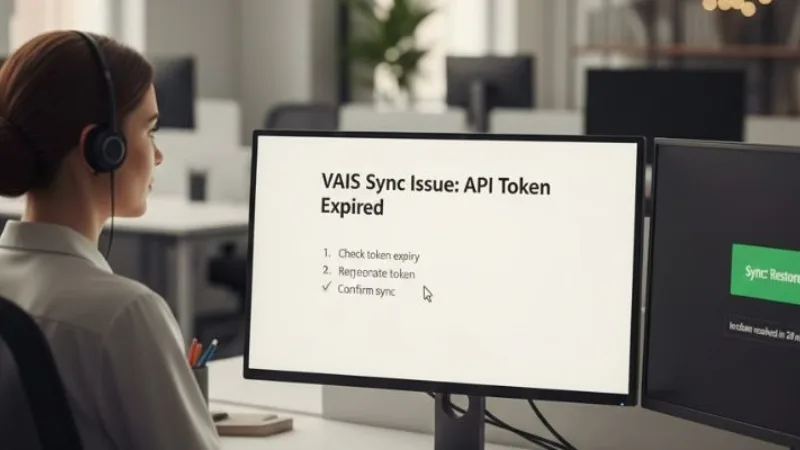
On December 27th, a customer reported that VAIS data wasn’t syncing. Our support team checked the runbook, identified the API token had expired, regenerated it, and fixed the issue in 20 minutes. Marcus never knew that happened either.
The Template We Still Use
That December crisis forced us to build something we should have had from day one: our Holiday Handoff Template. Now, before anyone takes extended time off, we run this checklist:
- The Critical Systems Audit: List every system the person touches. Rate each item: Critical (breaks business immediately), Important (survivable), or Routine (can wait). Focus documentation on Critical.
- The Emergency Runbook: Create a simple guide: Purpose (what it does), Red Flags (how to know it’s broken), Fix-It Steps (what to do). Assume the reader knows nothing.
- The Backup Person Assignment: Designate a backup. Give them access. Have them handle one real task before the primary person leaves to eliminate uncertainty.
- The Communication Protocol: Define how to reach the person for a true emergency, and define what qualifies as one. Set expectations on both sides.
- The Success Metrics: Define how you’ll know the handoff worked (e.g., zero critical incidents, or backup person handled issues independently).
The Unexpected Benefits
The holiday handoff process did more than just let Marcus take a vacation. It transformed how we operate year-round:
- People became better at their jobs. Documenting tasks often reveals inefficiencies. Marcus found three manual processes he could automate.
- Team members grew faster. Documentation levels up the whole team. Junior engineers handled issues that previously required a CTO.
- People actually took vacations. Once we proved the company wouldn’t break, everyone felt safe doing the same. Team morale shot up.
- New hires onboarded faster. Runbooks became onboarding documentation. New team members got up to speed in weeks instead of months.
The Real Crisis We Avoided
The December panic wasn’t really about Marcus taking PTO. It was about what would happen if Marcus left the company. You can’t scale knowledge that exists only in someone’s head. You can’t grow beyond your key person’s capacity to handle everything.
This holiday handoff process forced us to be resilient. Three months later, Marcus did get a job offer. He turned it down, but even if he’d accepted, we would have been fine.
Your Holiday Handoff Checklist
Don’t wait for a crisis to build your handoff process. Start now:
- Week 1: List critical responsibilities and daily tasks.
- Week 2: Create simple runbooks for each critical item.
- Week 3: Assign backups and give them access.
- Week 4: Test it with a long weekend and fix any gaps.
The real gift you give your team during the holidays isn’t just time off. It’s the confidence that the company will be fine while they’re gone. And it’s the best thing we built all year.