


AI Citation Checker Triage For Multilingual Draft Drop-Ins
Learn how AI citation checkers help review multilingual drafts, verify sources, improve accuracy, and maintain content quality.

Night shifts at a multilingual writing center do not fail because tutors lack style manuals. They fail because a student drops a mixed paste—English body, translated titles, one AI-polished reference block—and everyone in the room treats the first red flag as proof of cheating. That panic is how a useful AI Citation Checker gets misused as a courtroom instead of a triage desk.
I tutor drop-ins. I cannot grade. I can only send a student away with a cleaner next action or, in the worst case, walk them toward an integrity conversation with their instructor. My fear is the false misconduct referral: calling a line fabricated when the real problem was Invalid input, a transient Error, or an Unsure match that needed human eyes. CiteTrue helps only if the night desk learns to split those outcomes before anyone raises their voice.
Why “Not Found Equals Fake” Hurts Multilingual Writers
Undergraduates writing in a second language already carry format anxiety. Add AI drafting tools and the room fills with rumor: one missing match means the whole paper is poisoned. Old desk habits made that worse. We used to open Scholar in a hurry, fail to find a translated title on the first try, and talk as if the student had invented the source. Ten minutes later the same title appeared under a different romanization. The student left shaking. We lost an hour of goodwill for a search failure.
Existence checking still matters. Fabricated references are real. But the first red card only starts triage. It signals that the paste, the index, or the claim needs another look. If tutors collapse every bad signal into “fake,” multilingual writers stop asking for help, and the center becomes a place people visit only after a crisis email from faculty.
Split Invalid Error And Unsure Before You Accuse
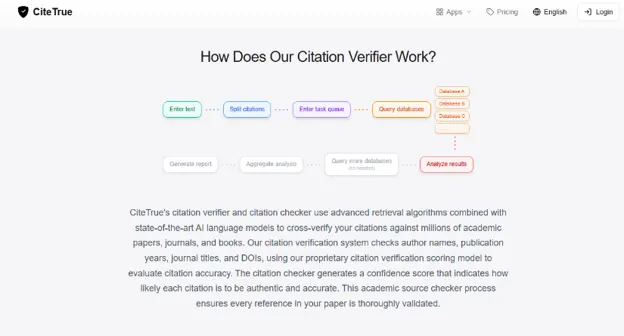
When I put a student’s reference block into CiteTrue, I read the Assessment labels before I craft any sentence about integrity. The product already separates outcomes that tutors often mash together. Fast Verify is the default first pass—one credit per citation—and that is enough for most drop-in cleans. Deep Verify stays behind a verbal gate because it costs five credits and should not become a mood upgrade.
| Card | What it usually means | Tutor move | Wrong move |
| Invalid | Text is not a citation | Ask student to paste real refs only | Call it fabrication |
| Error | Verifier or source hiccup | Retry once, note the time | Escalate integrity |
| Exceeded | Credits ran out mid-list | Pause; finish tomorrow’s free bucket | Half-list verdict |
| Unsure | Candidate found, details fight | Manual check of PDF/DOI | Auto-accuse |
| Inauthentic | No match after search | Check typos; then escalate carefully | Skip Deep Verify on hinge lines |
Invalid is the quiet trap on night shifts. Students paste “see chapter 3 for methodology” or a translated prose sentence into the reference box. The tool correctly refuses to search. That line is unfinished input, not a ghost paper. Error is the other trap. A transient failure looks scary in a quiet room. Retry usually resolves it. Exceeded just means the free daily credits stopped mid-paste; it is not evidence about the student’s character.
Dirty Paste Battery From Real Drop-Ins
In my testing I keep three dirty inputs beside a clean APA control from the same assignment sheet. I am training my own eye before I talk to a scared student, not staging a lab report.
- Clean control: five real course readings, pasted as a normal list. Expect mostly Authentic cards.
- Dirty mix: English titles plus one Chinese-character author line and a half-translated journal name. Expect Unsure or Authentic with Notice more than automatic Inauthentic.
- Garbage block: a prose sentence, a URL with no bibliographic fields, and one nonsense author string that looks AI-invented. Expect Invalid on the prose, and a hard Not Found path on the nonsense name.
When I opened the garbage block, the prose line came back Invalid and the nonsense author stayed Not Found even after a careful reread. That contrast matters. Invalid told me to clean the paste. Inauthentic told me to question the source. Mixing those two sentences in front of a student is how tutors create panic.
How Year Notices Differ From Ghost Names
Authentic with Notice is another calm signal tutors misread. A year mismatch on a real book is not the same as a fabricated author string. In one session the card matched the title and author, then flagged a year fight against the database record. The student had copied a secondary blog’s date. We fixed the year from the PDF copyright page and moved on. No integrity form. No raised voices. The observable result was a corrected field, not a confession.
What The Night Desk Says After The Cards Load
Language is the job. I do not say “the Citation Checker proved you cheated.” I say which card appeared and what action follows. Authentic with Notice means fix the year or author field before submit. Unsure means we open the PDF or DOI together if we have it. Inauthentic after typo checks means the student must replace the source or bring the original to office hours. Deep Verify costs five credits each and stays reserved for hinge references, not for every yellow mood.
Scripts That Keep The Room Calm
- “This line is Invalid—paste only bibliographic entries, then we re-run.”
- “This one Error’d—retry before we talk about integrity.”
- “This Unsure card needs the PDF, not a confession.”
- “This Inauthentic card survives typo checks—replace or document the source.”
Those lines sound mechanical because they have to. Night desks fill with adrenaline. A short script keeps me from improvising a moral lecture while the student is still translating my English in their head.
The Referral I Almost Made Too Early
I almost walked a student to an integrity form after a first-pass Not Found on a translated education article. The title looked odd in English. The moment I forced a second look, the Error on a neighboring line cleared on retry, and the disputed title resolved as Unsure with a near match under a different romanization. I deleted the draft referral note. If I had sent it, the cost would not have been “one false positive.” It would have been a student who never returned to the center.
What I Refuse To Verify During A Drop-In
I refuse whole-thesis dumps on a thirty-credit free day when the student only needs the five references the instructor circled. I also refuse to Deep Verify decorative citations that never appear in the argument. The desk’s job is to restore a submit-ready short list, not to perform a full audit that burns credits and dignity at the same time. If the course requires a complete check, we schedule a second visit instead of lying about what one panicked hour can finish.
End The Shift With A Triage Habit Not A Panic Story
Multilingual drop-ins need existence checking more than ever, especially when AI drafting invents tidy-looking references. CiteTrue is useful on that desk when tutors read Invalid, Error, Exceeded, Unsure, and Inauthentic as different jobs. Use the free daily credits for short cleans. Save heavier escalation for lines that would actually change a grade conversation. Leave the courtroom language for cases that survive triage.

