

Brand Marketing vs. Performance Marketing: Why Businesses Need Both
Explore brand marketing vs. performance marketing, their key differences, and how combining both strategies drives business growth.


Every business owner wants sales this month. But they also want customers who trust their brand next year. That’s the exact debate behind brand marketing vs. performance marketing. One builds recognition and preference over time. The other chases measurable actions like clicks, leads, and sales. But which matters more?
Gartner found that 54% of CMOs put performance first, while just 22% prioritize brand marketing. That gap can be risky. When you push too hard on immediate results, you can miss out on the long game. Next thing you know, ad costs are up because nobody remembers who you are anymore.
But you don’t have to pick a side. Brand marketing and performance marketing actually work best together. One earns the trust. The other collects the sale. Read on to learn more.
What Is Brand Marketing?
Brand marketing is what you do to promote your company’s entire identity rather than focusing on a single product or service.
The primary goals are simple:
- Make your business instantly recognizable
- Show what truly sets you apart
- Build real emotional connections and lasting loyalty
There are a lot of ways to market a brand. Typical examples are content marketing, PR, sponsorships, and organic social media posts, all of which make potential customers familiar with your business.
And there’s a good reason to invest in that familiarity. Investopedia notes that you have only about a 13% chance of landing a sale to a new prospect. With someone who has an existing relationship with your business, that jumps to 60% to 70%.
Familiarity doesn’t guarantee a sale, sure. But it gives you a real advantage in today’s highly competitive marketplace.
What Is Performance Marketing?

Performance marketing is more about action. It’s the ads, search campaigns, and affiliate deals designed to get someone to do something. Click. Sign up. Buy.
There are many ways to approach performance marketing, but you’ll typically find it in paid search, paid social, affiliate networks, and conversion-focused display ads.
Here’s the important point: performance marketing gives you feedback fast, but a cheap lead today doesn’t guarantee a loyal customer tomorrow. You need both.
Advertising effectiveness expert James Hurman puts it well in his January 19 LinkedIn post when he said that, “for a company to be truly great at performance marketing, they also need to be great at brand building”
Getting both sides right usually takes a creative marketing agency that understands brand and performance together. Curious about what that looks like in practice? Born & Bred’s client results give you a picture of how the agency approaches brand building and growth.
Brand Marketing vs. Performance Marketing: Key Differences
Let’s compare the two strategies side by side to show how they fill completely different roles in your growth engine.
| Factor | Brand Marketing | Performance Marketing |
| Primary Goal | Build awareness and trust | Drive measurable actions |
| Time Horizon | Usually long-term | Often short- to medium-term |
| Common Metrics | Brand awareness, recall, consideration | Conversions, CPA, ROAS |
| Audience Focus | Current and future potential customers | People more likely to act now |
| Typical Role | Build preference and demand | Capture and convert demand |
It might look like the lines that differentiate brand marketing from performance marketing are rigid, but they aren’t. Brand campaigns can also drive measurable results, while performance ads can build recognition, too. The best way to get good results? Splitting your budget reasonably between both.
Mehdi Rifai of the Flywheel Effect suggests 60% to brand marketing and 40% to performance. This isn’t a rule set in stone, so you can adjust as you go.
Why Businesses Need Both Approaches
Brand and performance marketing reinforce each other to create a complete growth cycle. Here are some reasons why:
Brand Makes Performance More Effective
First, brand marketing makes your performance campaigns much more effective. When people already recognize your name from helpful articles or social posts, they are far more likely to click your paid ad. That’s the kind of strong positioning that can be really advantageous in crowded advertising feeds.
Performance Turns Interest Into Revenue
Second, performance marketing pushes those individuals who have a warm interest in your business, based on what they heard or read, to take action when they need your products or services. The data collected through this process can help identify which groups respond well to certain types of messaging, making future efforts more effective.
How to Balance Brand and Performance Marketing
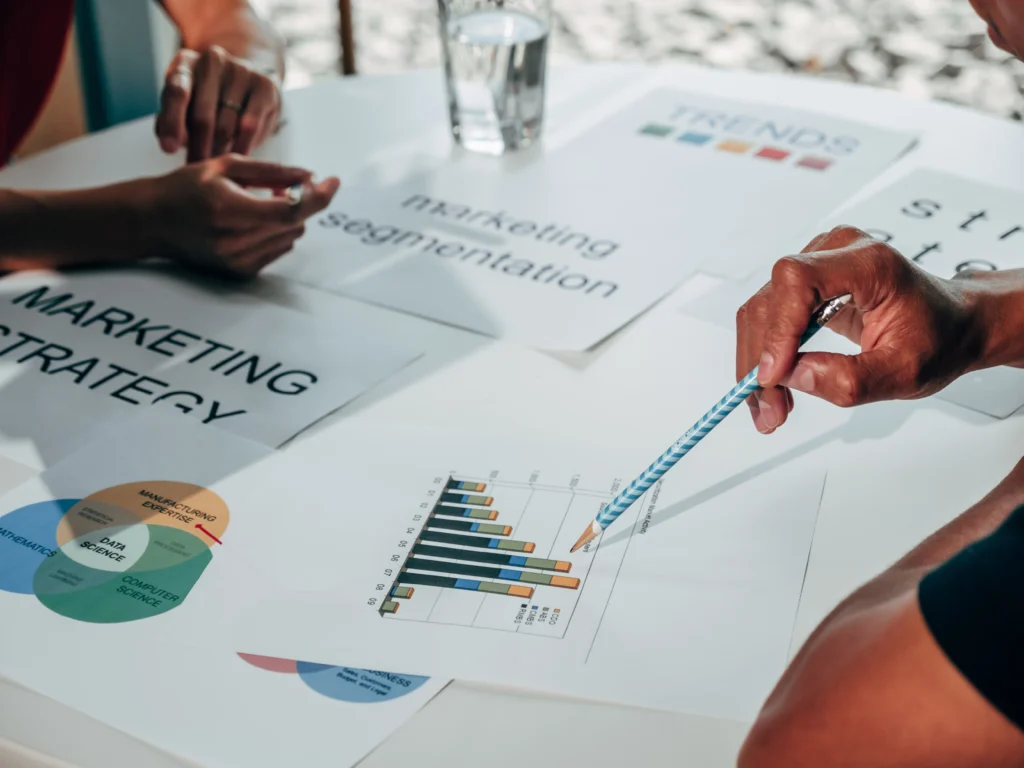
There’s no universal formula, but a few habits help.
Start with your actual goal. If cash flow is tight and you need leads this month, performance gets more weight. If you’re entering a new market and nobody knows your name, the brand needs fuel. There’s no universal split. But the research points in one direction.
Mehdi Rifai suggests that 60% to 40% is the sweet spot for sustainable growth. But James Hurman argues in B&T that 50/50 is best for overall ROI.
Whatever number you land on, protect it.
And monitor the effectiveness of your strategy. Track the relevant metrics. But also pay attention to brand mentions. Equally importantly, don’t fail to keep your messaging consistent across every touchpoint. If your brand campaign says one thing and your landing page says another, you may be wasting both budgets.
FAQs
Is brand marketing better than performance marketing?
No. One isn’t inherently better than the other. Brand marketing and performance marketing work best together. You can choose to split your budget 60/40, 50/50, or whatever formula works for you. Just make sure you combine both strategies.
Can small businesses afford brand marketing?
Absolutely. While big brands can do television campaigns and big-budget sponsorships, brand marketing doesn’t have to be expensive. As a small business, focus on sharing useful content on blogs, doing PR, and having an active social media presence. These activities pay off over time.
How long before brand marketing shows results?
It varies. Some brand campaigns see reasonable ROI within weeks. Others take months. The thing is to give it time and don’t be in a hurry to pull the plug because you think your efforts at brand marketing aren’t working.
Final Words
Brand marketing and performance marketing are two opposite sides of the same puzzle businesses solve almost every day. One helps customers recognize and trust your business. The other turns interest into measurable action. As this guide has shown, the best approach is to combine both thoughtfully.
The goal is to have a marketing strategy that delivers results today, but at the same time, gives your business more opportunities to grow tomorrow.