

Lead-Gen now on Auto-Pilot withBuild My Campaign
Valasys Media — Empowering marketers with powerful insights

How Business Process Outsourcing Helps B2B Companies Scale More Efficiently

Discover how business process outsourcing helps B2B companies reduce costs, improve efficiency, and scale operations effectively.

Guest Author
Guest Author
Last updated on: Oct 27, 2026
How Business Process Outsourcing Helps B2B Companies Scale More Efficiently

Growth creates new opportunities for B2B companies, but it brings operational challenges. As client numbers increase, administrative workloads, customer enquiries and internal coordination become more demanding. Processes that worked for a smaller organisation may struggle to accommodate expansion.

Recruiting additional employees is not always the most practical solution. Many organisations use BPO solutions for businesses to manage routine operations while allowing internal teams to concentrate on client relationships and business development.

Business Process Outsourcing (BPO) can help companies increase capacity, maintain service standards and support growth without expanding every internal department.

Why Scaling B2B Operations Creates New Challenges

Every new client introduces additional responsibilities, from processing orders and managing documentation to providing ongoing support. As client requirements become more varied, internal teams may struggle to maintain consistent service.

Recruitment can address staffing shortages, but hiring and training take time. Increasing headcount may also leave underlying inefficiencies unresolved.

Employees responsible for sales, account management or specialist services can find themselves spending more time on routine administration. If these pressures remain unchecked, response times and service quality may suffer.

Sustainable growth requires businesses to examine how work is organised rather than simply increasing employee numbers.

Which Business Processes Can B2B Companies Outsource?

Modern BPO covers numerous operational functions beyond traditional call centres.

Customer service and inbound enquiry management are common examples. External teams can answer calls, record enquiries, respond to routine requests and direct complex matters to internal employees.

Administrative functions such as data entry, document processing, database maintenance and order management can be outsourced where established procedures exist.

Finance support may include invoice processing, accounts payable administration and routine financial documentation. Technical support and other back-office activities can also be managed externally.

The suitability of each function depends on its complexity, information security requirements and the level of internal oversight needed. Strategic decisions and responsibilities requiring specialist client knowledge often remain within the business.

How BPO Helps Companies Increase Operational Capacity

B2B workloads rarely increase at a predictable rate. New contracts, seasonal demand and business expansion can create sudden pressure on existing teams.

Recruiting permanent employees to manage temporary increases may be expensive, particularly when workloads fluctuate.

Outsourcing arrangements can provide additional capacity without requiring equivalent growth in internal staffing. Depending on the agreement, businesses may adjust support levels as operational demands change.

This allows existing employees to concentrate on specialist responsibilities while external teams handle selected activities.

The objective is not simply to reduce staffing costs, but to manage increasing workloads while maintaining reliable service.

Improving Efficiency Through More Consistent Business Processes

Outsourcing does not automatically improve an inefficient process. Businesses first need to establish how work should be completed and who is responsible.

Documented workflows help standardise activities, reduce duplicated work and clarify how exceptions should be handled.

For example, a company processing customer orders through several channels may experience errors when employees follow different procedures. Establishing consistent methods for recording and checking information can improve accuracy.

Clear responsibilities and regular performance monitoring are equally valuable. Processing times, error rates and outstanding workloads can help management assess operational performance.

Effective outsourcing depends on defined expectations, reliable communication and consistent procedures.

Supporting Better Client Relationships as B2B Companies Grow

B2B relationships frequently involve ongoing contracts, repeat purchases and regular communication. Maintaining these relationships becomes more demanding as client numbers increase.

Account managers may struggle to balance new enquiries, administrative responsibilities and existing client requirements.

Reliable operational support can help enquiries reach the appropriate employees, reduce administrative delays and improve responsiveness.

Clear escalation procedures are particularly valuable when clients experience problems that could affect their own operations.

Outsourcing selected support activities allows internal teams to concentrate on commercial relationships while maintaining consistent communication and service standards.

What B2B Companies Should Consider Before Outsourcing

Businesses should begin by identifying processes that are repetitive, resource-intensive or governed by clearly defined procedures.

Provider experience, staff capabilities and the ability to accommodate changing workloads should be assessed carefully.

Data security requires particular attention when external teams handle confidential client information or financial records. Appropriate access controls and confidentiality arrangements should be established.

Clear reporting requirements, measurable service standards and regular performance reviews help businesses evaluate results.

Internal accountability must remain defined. Outsourcing transfers responsibility for completing selected tasks, but the company remains responsible for meeting its commitments to clients.

Building a More Scalable Business Through Smarter Resource Allocation

Sustainable growth depends on managing resources effectively, not simply increasing employee numbers.

Business Process Outsourcing can provide additional operational capacity, reduce pressure on internal teams and help organisations maintain consistent service as demand increases.

Successful arrangements require careful planning, documented procedures and ongoing performance monitoring.

By allocating routine activities appropriately, B2B companies can concentrate internal expertise on client relationships, specialist services and commercial development while building operations capable of supporting future growth.

Frequently Asked Questions

Q1: What is Business Process Outsourcing in a B2B environment?

BPO involves engaging an external provider to manage selected business functions, such as customer service, administration, finance support or data processing, while the company retains responsibility for its commercial operations.

Q2: Which B2B business processes are most suitable for outsourcing?

Processes with clearly defined procedures are often suitable, including inbound enquiry handling, data entry, document processing, routine administration and accounts payable support.

Q3: How does BPO help companies scale without significantly increasing headcount?

BPO provides additional operational capacity through external teams, allowing businesses to manage increasing workloads without recruiting permanent employees for every new responsibility.

Q4: Can outsourcing improve service quality for B2B clients?

Outsourcing can improve consistency and responsiveness when providers follow documented procedures, maintain accurate records and meet agreed service standards.

Q5: What should a B2B company evaluate before choosing a BPO provider?

Companies should assess relevant experience, service capabilities, data security, reporting procedures, operational flexibility and the provider’s ability to meet agreed performance standards.

Related Posts

Facing Construction Delays? Experienced Lawyers Help Address Contractual Disagreements Effectively

Facing Construction Delays? Experienced Lawyers Help Address Contractual Disagreements Effectively

Guest Author

Most delay disputes are lost on paper, before any hearing. A single missed notice can sink an otherwise strong claim. When schedules slip, both sides reach for the contract. A seasoned construction attorney treats that document as a recovery map. Clauses on extensions, damages and dispute procedure each carry weight. Excusable delays, notice rules and shared fault all shape outcomes. So does choosing the right forum for resolution. Field records, written months earlier, can carry the decisive proof. Paperwork, in short, decides who absorbs the cost of lost time. Delay Claims Start With Contract Wording Each agreement allocates the risk of lost time differently. Some grant extra days without extra money; others allow both. Liquidated damages clauses set a fixed daily charge for late completion. A lawyer studies these terms before anyone files a claim. That early review can reveal leverage a site team overlooks. Which Setbacks Justify a Time Extension? Not every holdup earns extra days. Courts and arbitrators separate excusable events from contractor-caused ones. Recognized grounds for relief include: Owner-directed design changes alter the original scope of work. Unforeseen site conditions differ sharply from the bid documents. Severe weather exceeds the averages the contract anticipated. Late owner approvals halt crews waiting on decisions. Missed Notice Deadlines Destroy Valid Claims Here, timing matters more than merit. Standard forms demand written notice shortly after a delay begins. Courts enforce those windows strictly, even against legitimate claims. A construction attorney builds a notice calendar at project kickoff. Each letter then cites the clause, cause and expected impact. Such discipline turns routine correspondence into admissible evidence. What If Both Parties Caused the Slippage? Concurrent delay is where disputes turn technical. Picture an owner releasing drawings late while crews sit short-staffed. Neither side can pin the whole period elsewhere. Experts run critical path analysis against the baseline schedule. Superintendent daily logs supply the raw evidence for that analysis. Counsel then apportions responsibility one day at a time. Why Try Mediation Before Filing Suit? Litigation can outlast the project it concerns. Mediation brings a quicker, confidential route: Work continues while talks proceed. Costs stay far below trial. Business relationships survive the dispute. Parties control the final terms. If talks collapse, arbitration remains available. Many contracts mandate this stepped sequence. A neutral mediator tests each side’s numbers privately. The Superintendent’s Logbook Settles More Disputes Delay disputes look like legal battles from the outside. In practice, the superintendent’s daily log decides most of them. Critical path experts and polished briefs rest on those entries. A crew count noted at dawn can outweigh testimony. Lawyers can argue only what someone recorded at the time. Sloppy logs leave sharp advocates with little to prove. So real protection begins long before counsel enters the room. FAQs When should a contractor contact a lawyer about delays? Before signing is best, while risky clauses remain negotiable. At minimum, call once the first schedule slip surfaces. Prompt advice protects notice rights with short expiry windows, and waiting costs leverage. Can an owner recover money for late completion? Yes, through liquidated damages or proven actual losses. The contract decides which route applies. Excused delays can reduce those charges, and penalty-style amounts may face court challenge. Does a no-damages-for-delay clause bar all compensation? Such a clause does not settle every case. Courts recognize exceptions for active interference or bad faith. Enforceability shifts between jurisdictions, making legal review essential before conceding anything. How long does a delay dispute take to resolve? Mediation can conclude in a few weeks of focused sessions. Arbitration and litigation can stretch across months or years. Schedule complexity and expert involvement drive that timeline.

Cloud-Based LinkedIn Prospecting Tools_ Features and Safety Compared

Cloud-Based LinkedIn Prospecting Tools: Features and Safety Compared

Guest Author

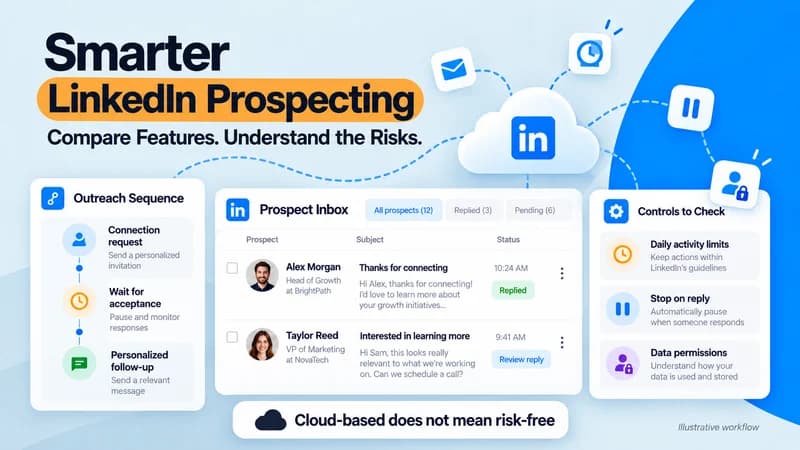
Follow-ups slip when your calendar fills up. Campaigns stop when your laptop sleeps. And every vendor page calls its tool “safe,” so no claim is easy to trust. The short answer: cloud-based tools keep sequences running without your device, but none removes account risk. Compare them on targeting, sequence logic, pacing controls, reply handling, and data practices. Below are the rules to know first, the features worth paying for, the safety settings to check, and a pilot test to run before you commit. Start with the rules, because they shape every safe setup. Know the Rules Before You Automate LinkedIn’s User Agreement prohibits bots and unauthorized automated activity, so every third-party tool carries some account risk. A vendor can reduce that risk through pacing and design, but cannot remove it. Privacy law matters too. Business contacts are still people, and these rules for business-to-business marketing explain when messaging them needs a lawful basis. Under UK data protection law, serious breaches can bring fines of up to £17.5 million or 4% of global annual turnover, whichever is higher. LinkedIn Message Automation: What It Does and What to Automate Managing connection requests, messages, and follow-ups takes time. With LinkedIn message automation, software handles these tasks based on rules you set. It does not pick your audience or write a strong offer for you. Teams use it to automate LinkedIn connection messages and set up automated LinkedIn follow-ups, helping them keep conversations moving after a request is accepted. Good candidates to automate: A short, truthful connection note, or no note A first message after acceptance One or two follow-ups with delays Stop-on-reply logic Keep these human: replies, objection handling, and anything that needs judgment. Cloud-Based vs. Desktop vs. Browser Extension Tools Where the software runs affects reliability and how your activity looks to LinkedIn. Cloud-based LinkedIn automation tools: run on vendor servers, so campaigns continue when your device is off. Ask how the vendor handles IP addresses and sessions. Desktop apps: run on your computer and usually need it on. Browser extensions: run inside your LinkedIn session and typically need the browser open. LinkedIn’s rules cover third-party software and extensions alike. Cloud deployment doesn’t make a tool safe. It only makes steady pacing easier to control. Features That Matter When You Compare Tools LinkedIn reports more than 1.3 billion members, so volume is never your constraint. Targeting is. Compare these features: Lead sourcing: LinkedIn search, Sales Navigator lists, CSV imports, or a built-in database Sequence logic: delays and if/else conditions that branch on acceptance or reply Personalization: variables you can verify, plus AI drafts you can edit Reply handling: a unified inbox, labeling, and stop-on-reply Multichannel flow: LinkedIn and email in one sequence, so the same prospect isn’t contacted twice Team controls: workspaces, permissions, and white-label options Integrations: CRM sync or API access, so replies reach your system of record Skylead, for example, runs LinkedIn messages, InMails, and email in one sequence with if/else conditions. It adds a B2B database, AI enrichment, and an AI SDR for replies. Safety Settings to Compare LinkedIn publishes no single universal message limit, so a tool’s controls matter more than any headline number. Look for: Adjustable daily limits per account A gradual ramp-up for new or inactive profiles Sending windows that match the prospect’s working hours Randomized delays between actions Automatic pause when LinkedIn shows warnings or actions fail Stop-on-reply on every follow-up Clear documentation on how sessions and IPs are handled A practical rule: the pattern to avoid is a sudden jump from no activity to full volume. Steady, gradual increases look far more like normal use. Treat any safety guarantee as a red flag. No vendor controls LinkedIn’s decisions. How Pricing Models Differ Prices change, so compare structure instead of numbers. Check whether you pay per seat, per LinkedIn account, flat for a team, or by usage credits for data and AI. Then ask what is included, such as email sending, enrichment, AI replies, extra accounts, and white-labeling. Model cost at the number of accounts you expect to run in 12 months. Which Setup Fits Your Team The right tool depends on who is sending. Solo founder or small sales team: choose simple 2 to 3 step sequences, warm segments, and strong pacing controls. Recruiting team: prioritize a shared inbox, permissions, and careful handling of candidate data. Agency: look for workspaces, per-client permissions, white-labeling, and pricing that doesn’t grow with every seat. Larger or regulated company: ask for written documentation on data handling before procurement review. The Pilot Test Most Comparisons Skip Feature lists don’t show how a tool behaves under real conditions. Before rolling out to a team, run a small pilot: Pick one warm, well-defined segment, such as people who engaged with a relevant post. Start below the vendor’s suggested limits and raise them gradually while watching acceptance and warnings. Reply to your own test campaign from a second account and confirm the sequence stops. Change one variable at a time, such as the first message or send time. Check export options, so your data can leave with you. Then score each tool from 1 to 5 on stability, control clarity, support response, and data export. Here is an illustrative example, not real results. Tool A scores 5, 4, 4, and 5, for 18 out of 20. Tool B scores 4, 3, 3, and 2, for 12. Tool A wins even if both tools had similar early replies. Data Privacy Rules for US Prospecting US teams face state privacy laws too. If you handle personal information about California residents, California privacy law requirements may apply to how you collect, store, and delete prospect data. Collect only what you need, honor deletion and opt-out requests, and confirm the details with legal counsel. Where to Start Pick one warm segment, shortlist two or three tools, and run one pilot. Confirm the safety controls work before you add volume. If running LinkedIn and email from one sequence is your gap, Skylead’s free trial is an

Exploring Montana MSB Insights and Future Potential Opportunities

Exploring Montana MSB Insights and Future Potential Opportunities

Guest Author

To maximize your experience with this innovative financial tool, familiarize yourself with its intuitive interface, which prioritizes user engagement. Its layout is designed for seamless navigation, enabling immediate access to various functionalities without unnecessary complexity. Take advantage of the real-time analytics functionalities available. These insights allow users to monitor transactions and assess performance metrics, providing a clear picture of financial standing and facilitating informed decision-making. The integration of advanced reporting tools can significantly enhance your ability to manage finances effectively. Consider utilizing the customizable features tailored to meet specific business needs. By adjusting parameters and options, users can align the system with their operational objectives, ensuring a personalized approach to transaction management and client relations. For optimal security, leverage the multi-layered protection protocols in place. This system employs cutting-edge encryption methods and regular security audits to safeguard personal and financial information, instilling confidence in users regarding data integrity. Engagement with available support channels is recommended for troubleshooting and maximizing the platform’s capabilities. Real-time assistance and extensive resource libraries can provide clarity and enhance overall functionality, ensuring users can navigate any challenges confidently. Understanding the User Interface of Montana MSB Begin with the dashboard, which acts as the central hub for navigation within the Montana MSB platform. Familiarize yourself with key sections such as transactions, reports, and user management that are easily accessible from the main menu. Utilize the search functionality for quick access to relevant data; this feature is particularly beneficial during high-traffic periods. Pay attention to customization options available in settings, allowing users to tailor notifications and preferences. Tooltips offer immediate guidance on various features, simplifying the learning curve. Regularly review updates to ensure you maximize the utility of modifications, as user feedback often leads to enhancements in layout and functionality. Integrating Payment Solutions within Montana MSB Choosing suitable payment gateways is critical for streamlined operations. Focus on integrating solutions that support multiple currencies and payment methods. Compatibility with popular options like credit cards, e-wallets, and bank transfers increases accessibility for users globally. API Integration Utilize robust APIs for seamless payment processing. This allows for real-time transaction handling, which enhances user experience and reduces waiting times. Ensure your development team is well-versed in API documentation to facilitate smooth integration. Security measures cannot be overlooked. Implement strong encryption protocols, such as SSL, to protect sensitive data during transactions. Regularly update security features to guard against potential threats and comply with industry standards. User Interface and Experience Design an intuitive user interface for payment processes. Simplifying the steps reduces cart abandonment rates. Consider features like one-click payments or saved payment methods to enhance user satisfaction. Monitoring transaction performance through analytics tools offers valuable insights into customer behavior. Analyze data to identify popular payment methods and adjust strategies accordingly. This ensures resources are allocated efficiently and user preferences are met. Collaboration with payment service providers is beneficial. Establish partnerships with reputable firms to access exclusive rates or services. This can give you an edge in competitive markets and enhance your offerings. Regular testing of payment systems is advisable to ensure compatibility and functionality. Conducting these tests post-integration will help identify any issues before they affect users. Continuous improvements keep the transaction process running smoothly. Security Protocols Implemented in Montana MSB Utilizing advanced encryption standards is critical to securing sensitive financial data. The encryption process converts information into a format that can only be read by authorized entities, thus preventing unauthorized access. Adopting AES-256, which is widely recognized for its robustness, ensures that data remains protected throughout transactions. Multi-Factor Authentication Incorporating multi-factor authentication (MFA) significantly enhances security layers. By requiring users to provide two or more verification factors, such as something they know (password) and something they have (a one-time code sent to their mobile device), the risk of unauthorized access diminishes. This method adds complexity to the login process, deterring potential breaches. Regular security audits are indispensable for identifying vulnerabilities. Conducting these assessments at predetermined intervals allows for timely updates to security protocols, ensuring alignment with current threats. The feedback from audits should inform continuous improvement in protection measures. Real-Time Monitoring Systems Implementing real-time monitoring systems allows for immediate detection of suspicious activities. These systems analyze user interactions and flag anomalies that could indicate fraud or cybersecurity threats. Quick response capabilities to detected issues minimize potential damage and ensure a prompt reaction to incidents. Analyzing Customer Support Options on Montana MSB To enhance user experience, consider utilizing live chat features for immediate assistance. This instant communication facilitates real-time problem resolution and can significantly boost user satisfaction. Support Channels Email Support: Allows for detailed inquiries and documentation. Response times can vary, so users should be prepared for potential delays. Phone Support: Ideal for urgent matters, offering direct contact with support agents. Check operating hours to maximize availability. FAQs: A well-structured FAQ section can address common concerns efficiently. Regular updates are key for accuracy. Evaluating response times is paramount. Generally, live chat offers the quickest turnaround, while email may require a longer wait, typically ranging from a few hours to a couple of days. Additional Resources Knowledge Base: Access to articles and guides can empower users to solve issues independently. Community Forums: Engaging with fellow users fosters knowledge sharing and may lead to quicker solutions. Feedback mechanisms play a vital role in service improvement. Encourage users to rate their support experiences and provide comments to refine offerings over time. Finally, comprehensive training for support staff is essential. Ensuring representatives are knowledgeable about the services and common issues can enhance the efficiency of assistance provided.