
Company Ownership: What Every Entrepreneur Should Check Before a Business Deal
Learn what to check about company ownership before a business deal, including shareholders, legal records, liabilities, and ownership.


The price is fine. The terms look fair. Both sides want to get going. And somewhere in the middle of that, nobody asks the obvious thing: who owns the company you’re about to sign with?
It’s easy to skip. The company name is right there on the proposal, so it feels like you already know who you’re dealing with. You don’t, not yet. Ownership shows who sits behind the business and who gets a say in what it does. Check it before you pick a supplier, take on an investor, or agree to a partnership.
Why Company Ownership Matters Before a Deal
A proposal gives you a name. It doesn’t give you people. Ownership records fill that gap. They show who holds the shares, how control is split, and whether other businesses are tied to the company.
With that in hand, you can judge a possible partner better. You can also decide how much more digging the deal needs.
Take a supplier with a slick website. It looks solid. But who legally owns it? Who runs it day to day? Ask now. Sorting it out later, after money has moved, hurts a lot more.
Five Things Entrepreneurs Should Check in
Go through these before you sign anything or send a large payment.
1. The Company’s Ownership Structure
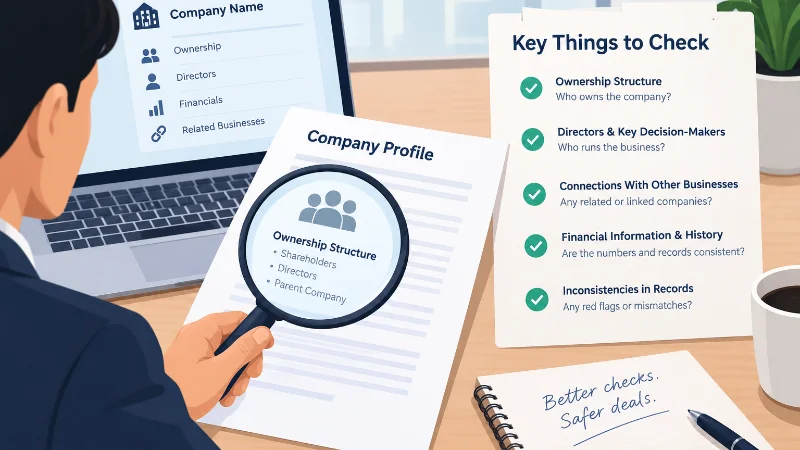
Start with the plain question: who owns this? It could be one person. It could be five shareholders. It could be another company entirely.
Compare what the records say with what you were told. If the two differ, you have your first question. If a parent company or another legal entity shows up, find out how it relates to the firm you’re dealing with.
This counts most in partnerships and investments, since ownership decides who gets the final word.
2. Directors and Key Decision-Makers
Owners and directors aren’t always the same people. Shareholders own the company. Directors run it and answer for how it’s run.
Look up the directors. Where have they worked before? What else are they involved in now? You’ll see who actually makes the calls, and whether their background fits your deal.
If the company brags about its leadership or experience, check that the records agree.
3. Connections With Other Businesses
Owners and directors often have ties to other firms, in the same industry or a different one. On its own, that tells you very little.
It starts to matter when the deal touches a competitor, a related supplier, or a business with overlapping interests. In that case, you’ll want to know.

Ask fair questions. Don’t treat every link like a secret.
4. Financial Information and Business History
Ownership details mean more when you read them next to the numbers. If you can find them, read the financial reports and filings. Look for changes in the registered details too, since they show how steady the business has been.
A young company isn’t shaky by default. Thin records don’t prove anything bad either. You may just need more paperwork before you decide.
5. Inconsistencies in Company Records
Watch for things that don’t match. A different registered name. An address that doesn’t line up. Two different answers about who represents the company.
Ask the other side to explain, and ask for documents that back it up. If a lot of money or legal responsibility is involved, get a qualified professional to read the records.
Do this before you sign. Fixing it afterward is much harder.
Where Can You Find Company Ownership Information?
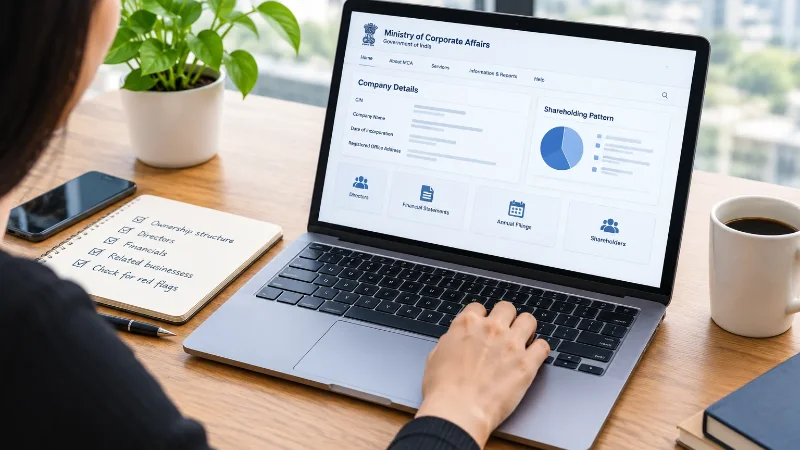
Official records come first. In India, the Ministry of Corporate Affairs (MCA) publishes company information and filings. Use them to verify registration details and read the documents on file.
Online research platforms can save you time. Company Ownership research on platforms like Tofler lets you view company profiles, director details, financial reports, and other corporate information in one place.
Think of them as a starting point. Then check the key details against the official records. What you can see depends on the type of company, and no platform shows every ownership detail.
Warning Signs That Deserve a Closer Look
Dig deeper before you go ahead if you notice any of these:
- The company can’t clearly explain its legal identity or who owns it.
- Key details change between contracts, invoices, and company records.
- The other party avoids fair questions about its background.
- You can’t verify what it says about its size, experience, or finances.
- You’re pushed to pay before the basic checks are done.
One warning sign doesn’t prove a business can’t be trusted. Ask whether the explanation makes sense, and whether the evidence backs it up.
Make Ownership Checks Part of Your Business Routine
Don’t wait for a deal that feels off. Check ownership for every supplier, investor, distributor, and possible partner.
Confirm who the company is. Then go through its owners, directors, business links, and financial records. If something doesn’t add up, ask before you commit.
A few hours of research before a deal can save you months of trouble after it. You can’t remove every risk. But you’ll make a better call when you know who you’re dealing with.