Get Cited by AI Platforms Like ChatGPT
Discover proven tactics to make AI systems reference your B2B content in responses.
 Lead-Gen now on Auto-Pilot with
Build My Campaign
Lead-Gen now on Auto-Pilot with
Build My Campaign

Get your B2B content cited by ChatGPT with proven SEO, authority-building, and content optimization strategies.

Get Cited by AI Platforms Like ChatGPT
Discover proven tactics to make AI systems reference your B2B content in responses.
You’re Ranking… But Are You in the Answer?
Your content ranks. Your dashboards look respectable. The SEO graph is doing that slow, satisfying climb, the kind you’d proudly show off during a quarterly board meeting in Midtown Manhattan. On paper, everything looks like it’s working.
But here’s the uncomfortable question that usually gets buried under the “impressive” slide decks: Ask the same query to ChatGPT… Do you show up?
If the answer is no, you’re not just missing visibility. You’re missing influence at the exact moment decisions are being shaped. In 2026, buyers are “researching” with AI-powered queries that provide consolidated answers. They’re outsourcing the heavy lifting to AI. One prompt, one response—and boom—a neatly packaged answer that feels authoritative enough to trust. No tabs. Gone are the rabbit holes. Second opinions only happen if something feels like a hallucination
The landscape is shifting from ‘ranking on page one’ to ‘being part of the answer itself’ as AI-powered search becomes more prevalent. This is the foundation of Generative Engine Optimization (GEO), the science of becoming the primary source for the world’s most powerful LLMs. If SEO was about getting the click, ChatGPT citations are about getting quoted by the machine that’s replacing the click. For any high-performing B2B organization, this isn’t a “nice-to-have” experiment. It’s pipeline physics.
Let’s clear something up. ChatGPT isn’t sitting there reading your 3,000-word skyscraper post like a thoughtful industry analyst. It’s scanning, slicing, and stitching together information at silicon speed.
This is the mechanics of LLM synthesis: the model isn’t summarizing your narrative; it’s deconstructing your data into high-utility fragments. While traditional SEO was a game of visibility, GEO is a game of “extractability.” The shift is measurable.
Get Cited by AI Platforms Like ChatGPT
Discover proven tactics to make AI systems reference your B2B content in responses.
Image Source: GEO vs SEO response compared
According to a landmark study by researchers at Princeton University, Georgia Tech, and the Allen Institute for AI, content optimized with authoritative citations and statistics can see up to a 40% increase in visibility within generative engine responses compared to standard text.
In its default mode, it leans on pre-trained knowledge. But the second you introduce browsing or Retrieval-Augmented Generation (RAG), the behavior shifts from “predicting words” to “fetching truths.” This is where your content gets deconstructed. A definition here, a stat there, a framework stitched into a sentence.
The Real-World Scenario: Think of it like a Netflix documentary. The director doesn’t feature the whole book; they pull the most punchy, verified quote that supports the narrative. If your content isn’t built for AI-led extraction, you’re basically invisible. Traditional SEO asked, “Can I rank?” Modern B2B lead generation asks, “Can I be lifted, trusted, and reused?”
AI doesn’t just look for answers. It looks for answers it feels safe repeating. If ChatGPT gives a mid-market SaaS company, regional consulting firm’s analyst a wrong answer, it loses its “seat at the table.” To prevent that, it looks for signals.
Here’s where things get tactical. AI systems don’t patiently read your introduction, admire your storytelling, and then arrive at your key point. They skim aggressively.
One of the most critical observations is that a significant portion of AI citations is drawn from the opening sections of a page. If your best insight is hiding halfway down, it’s basically playing hide-and-seek with a machine that doesn’t care enough to look.
To master GEO, you must:
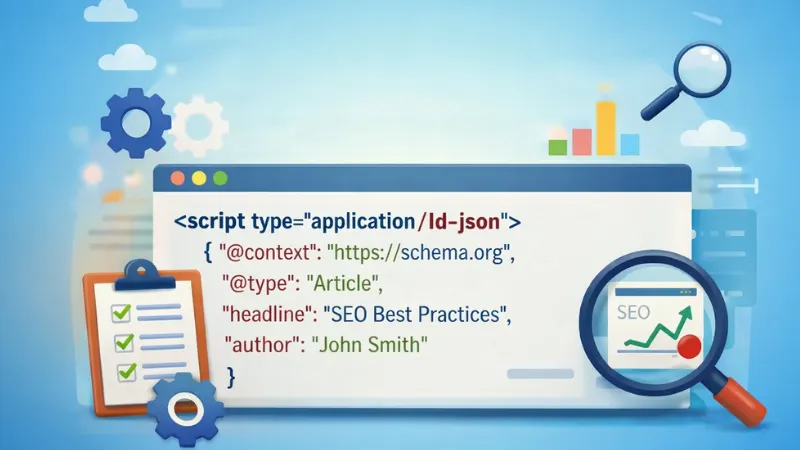
You can write the sharpest content in your category, but if your technical foundation is a mess, AI systems will struggle to interpret it. Schema markup is your translator. It tells machines exactly what they’re looking at; FAQ sections, articles, and organizations are all clearly labeled so there’s no ambiguity.
Then there’s performance. AI crawlers prefer fast, clean, server-rendered pages. If your site is slow or overly dependent on heavy tracking scripts, you’re creating friction. And friction, in this context, means fewer citations. It’s not glamorous, but this is where a lot of visibility quietly breaks.
Here’s the part most teams underestimate: AI doesn’t trust content because it’s “good.” It trusts content because it’s consistently validated.
This is where strategic content syndication steps in. Not as a distribution tactic, but as a credibility engine. When your insights appear across multiple reputable platforms, they start forming patterns. Repetition across trusted domains signals reliability. It tells the model, “This isn’t a one-off opinion; this is a reinforced idea.”
This is where our content syndication services become a strategic advantage. Instead of spraying content everywhere, it places your insights within relevant, high-intent B2B SaaS ecosystems. The result is reinforced authority that cross-domain AI systems recognize.
Here’s where things get slightly counterintuitive: You can be cited 100 times a day and see flat traffic. In many cases, a user may receive a complete answer from an AI system without ever clicking your link.
So the metrics must evolve. Key indicators now include the following:
Advanced teams use Generative AI Optimization (GAIO) to monitor these responses and refine their content pipelines. It’s less about chasing traffic spikes and more about owning mindshare before the click even happens.
ChatGPT citations are not just a content win. They’re a pipeline advantage. When AI systems generate answers about your category, they are shaping how buyers understand the problem and form initial trust.
In B2B SaaS, where buying cycles are long, this early influence is critical. If your brand shows up consistently, you are pre-conditioning the conversation. Buyers arrive with context already built and a bias toward the brand cited by the AI. When your brand is the default reference point, your BANT-qualified leads move through the funnel significantly faster.
Consider a security firm that published a massive guide on zero-trust architecture.
Overtime, ChatGPT identifies their “3-Layer Security Model” as a standard. When a decision-maker asks about security risks, the AI uses their model to answer. The brand is now the “source of truth,” and the competition is just a list of “other options.”
The shift is not subtle anymore. Ranking still matters, but it’s no longer the finish line. Being included in AI-generated answers is where real influence is building.
Earning ChatGPT citations means thinking beyond content creation and into authority systems. Brands that invest in clarity, structure, and distribution are the ones who will define their categories. Because in this new landscape, the winners aren’t those who publish the most; they’re the ones who become the default reference point when AI constructs the answer.
To move from “indexed” to “cited,” follow this tactical roadmap:
What are ChatGPT citations?
They are instances where AI systems use your content as a source when generating responses, often appearing as footnotes or direct mentions.
How can B2B SaaS companies improve ChatGPT citations?
By focusing on structured content, technical precision, and frequently asked question schemas.
Do ChatGPT citations increase traffic?
Not always directly, but they build the credibility required to close BANT-qualified leads and influence high-level procurement decisions.
Why is content syndication important for ChatGPT citations?
It builds the cross-domain validation needed for AI models to confidently reference your brand as a trusted authority.
Get Cited by AI Platforms Like ChatGPT
Discover proven tactics to make AI systems reference your B2B content in responses.