
The Importance of Tooling in B2B: 10 Ways the Right Tech Stack Drives Growth
Learn why B2B tooling matters for sales and marketing teams in the US and APAC, and how connected account intelligence supports growth.

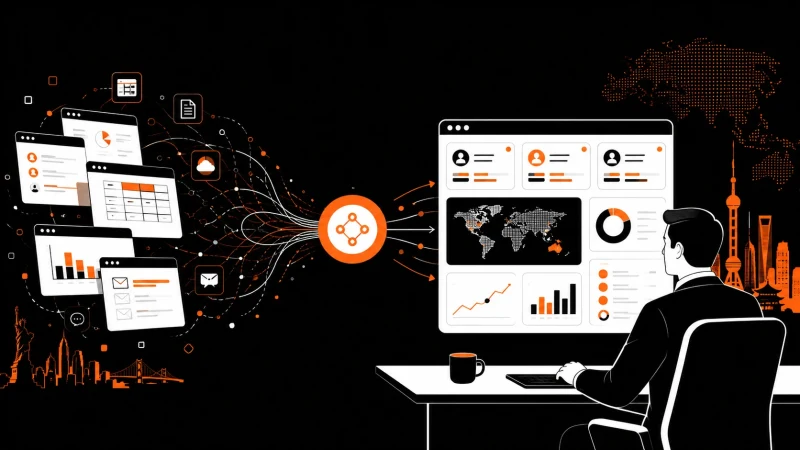
A salesperson should not need 12 browser tabs, three spreadsheets and a message to marketing just to understand one target company.
Yet this is how B2B work often happens.
Important company details sit in one database. Buyer activity appears in another. Campaign data lives somewhere else. The CRM may contain several versions of the same account, and nobody is completely sure which record is current.
Good tooling fixes this problem. It brings useful information closer to the people who need it and helps them decide what to do next.
Why is tooling important in B2B?
Tooling is important in B2B because it helps companies identify the right accounts, understand complex buying groups, reduce repetitive work, personalize outreach and measure revenue performance.
The value does not come from owning more software. It comes from giving teams accurate context at the right moment.
B2B teams often work across large account lists, several channels and buying committees with different priorities. The right tools make that complexity manageable.
What does B2B tooling include?
B2B tooling is the collection of software and data systems used to support marketing, sales and customer growth.
A typical stack may include:
- Customer relationship management software
- Account and sales intelligence
- Intent data
- Marketing automation
- Sales engagement platforms
- Customer data and enrichment tools
- Account-based marketing platforms
- Conversation intelligence
- Reporting and attribution
- Customer-success software
For example, Salesforce and HubSpot are widely used for customer relationship management. LinkedIn Sales Navigator and ZoomInfo support prospect and contact research, while platforms such as 6sense and Bombora help teams identify account intent. Outreach and Salesloft are commonly used to manage sales engagement.
These tools serve different stages of the revenue process. Their value increases when the information they produce can move easily between systems.
Each category solves a different problem. Trouble starts when those tools cannot exchange information or when teams do not know which system to trust.
Here are ten reasons tooling has become essential to modern B2B growth.
1. It turns account research into usable intelligence

Before a sales conversation, a rep may need to understand a company’s size, industry, products, market position and likely business needs. Finding that information manually takes time, and the quality of the research often varies from one salesperson to another.
Most B2B teams already use several tools. A CRM stores account history. Intent platforms reveal research activity. LinkedIn Sales Navigator and other sales intelligence tools help identify relevant decision-makers. The problem is that these insights often remain scattered across tabs, databases and company websites.
Account intelligence brings that context together and gives every salesperson a more consistent starting point.
Imagine entering a company domain and receiving an AI-generated sales research report that explains what the business may need, why it may need it, who to contact and what to say. For teams accustomed to piecing together this information manually, that small shift could make account research considerably faster.
The purpose is not to replace human judgement. It is to reduce the repetitive work that comes before it, giving salespeople more time to interpret the information, shape their approach and start better conversations.
A useful account intelligence tool should quickly answer four questions:
- What might this company need?
- Why might it need it now?
- Who should the sales team contact?
- What should the outreach say?
When those answers are easy to find, account research becomes sales action.
2. It helps teams focus on accounts that can actually buy
A large account list can create the appearance of opportunity. It does not always create a healthy pipeline.
Some accounts are too small. Others operate outside the target market. A few may be a strong fit but have no current need. Treating them all equally wastes time and budget.
B2B tools help teams compare accounts using signals such as:
- Industry and subindustry
- Employee count
- Revenue range
- Geography
- Technology environment
- Ideal customer profile fit
- Engagement history
- Buying intent
- Purchase readiness
This is especially useful for account-based marketing, where the quality of the target account list affects almost every step that follows.
The purpose of scoring is not to produce an impressive number on a dashboard. A score should help a team choose an action: engage now, nurture, research further or remove the account from active focus.
3. It gives salespeople more time to sell
Sales teams are frequently asked to grow revenue while also researching prospects, updating records, preparing reports and moving information between systems.
That administrative load adds up.
Salesforce’s 2026 State of Sales research found that the average seller spends only 40% of working time selling. The rest goes toward planning, research, data entry and other non-selling work. The study included more than 4,000 sales professionals across markets including the United States, Australia, India, Japan, New Zealand, Singapore and South Korea.
Automation can reduce that burden by handling tasks such as:
- Enriching company records
- Removing duplicate data
- Assigning leads
- Creating follow-up reminders
- Recording campaign activity
- Updating opportunity stages
- Generating account summaries
- Preparing routine reports
Automation should not make the customer experience feel mechanical. Its best use is behind the scenes, where it gives people more time for thoughtful conversations.
4. It helps teams understand the whole buying group

B2B purchases are rarely decided by one person.
A department head may identify the need. Finance reviews the cost. Procurement studies the contract. Information technology considers integration and security. Senior leadership looks at business impact.
LinkedIn has reported that a B2B buying group may include six to ten decision-makers, often working through different stages of the journey.
A contact-level view is therefore not enough.
B2B tools should help teams see the account as a group of connected people. This includes known contacts, likely decision-makers, influencers, users and possible blockers.
That broader view changes the campaign.
Instead of sending one generic message to everyone, marketing can address role-specific concerns. Sales can identify missing relationships. Customer-success teams can see whether adoption is limited to one department or spreading through the business.
The account is the customer. Contacts are the people moving the decision forward.
5. It makes personalization practical
Most people can recognise a mass-produced sales email in seconds.
Adding a first name or company name is not meaningful personalization. Relevance comes from understanding the account’s situation.
Useful B2B tooling can help a team personalize around:
- The company’s industry
- Its likely business model
- Current areas of interest
- Market conditions
- The recipient’s role
- The account’s buying stage
- Previous engagement
- Known operational challenges
Salesforce reports that 73% of B2B buyers actively avoid sellers who send irrelevant outreach.
That is why intent-based ABM is valuable. Intent signals can show which subjects an account is researching, helping teams choose a more relevant angle and better timing.
The message still needs a human touch. Tooling simply provides better raw material.
6. It keeps sales and marketing on the same page
Sales and marketing teams often disagree because they are working from different information.
Marketing may celebrate lead volume. Sales may question lead quality. One team tracks campaign engagement, while the other focuses on meetings and opportunities. Both views matter, but they need to connect.
A shared toolset can create common definitions for:
- Target accounts
- Qualified leads
- Account stages
- Intent thresholds
- Campaign engagement
- Sales acceptance
- Pipeline contribution
- Revenue attribution
When the systems are connected, marketing can see what happens after a lead is passed to sales. Sales can understand why an account was prioritized.
This also makes sales pipeline management more useful. A pipeline becomes easier to trust when its account data, engagement history and scoring logic are visible.

Alignment does not come from another meeting. It comes from shared information and clear ownership.
7. It supports the way B2B customers actually buy
B2B customers move between channels.
They may discover a company through an article, conduct independent research, attend a webinar, speak to a salesperson, share information internally and return to the website weeks later.
McKinsey’s B2B Pulse research found that buyers use an average of ten interaction channels during the buying journey. Preferences are divided among in-person contact, remote human interaction and digital self-service.
No single channel tells the full story.
Connected tooling helps teams follow the journey across:
- Website visits
- Email engagement
- Advertising
- Content downloads
- Webinars and events
- Sales conversations
- Product demonstrations
- CRM activity
- Customer-support interactions
This is also where services such as B2B content syndication become more valuable. Distribution creates reach, but connected data helps a team understand which accounts engaged and what should happen afterward.
8. It makes regional growth more manageable
Selling across the US and APAC is not a matter of copying one campaign and changing the time zone.
The US is a large market, but industries, company sizes and buying expectations still vary considerably. APAC contains several distinct markets, languages, commercial norms and levels of digital maturity.
A campaign aimed at a technology company in California may need a different account profile, message and channel mix from one targeting a manufacturer in Japan or a financial-services firm in Singapore.
Regional tooling helps teams:
- Segment accounts by country and market
- Apply local ideal customer profiles
- Manage currencies and time zones
- Route leads to the correct regional owner
- Adapt messages to local context
- Track performance by market
- Maintain regional data rules and permissions
The need for connected systems is particularly visible in APAC. Salesforce reported that 64% of surveyed Singapore sales leaders using AI said disconnected systems were slowing their AI initiatives. In response, 85% of Singapore sales professionals said they were focusing on data cleansing.
A global stack needs a shared foundation, but it should leave room for local execution.
9. It improves data quality and accountability
A B2B tool is only as reliable as the information inside it.
Duplicate accounts, outdated employee numbers, incorrect industries and missing contact details can lead to poor targeting. They also reduce confidence. Once users stop trusting a system, they create personal spreadsheets and disconnected workflows.
That makes the problem worse.
Strong data tooling helps teams:
- Standardize company records
- Merge duplicates
- Validate domains
- Enrich missing fields
- Track data sources
- Control access
- Maintain consent records
- Monitor update dates
- Create clear audit trails
Valasys Data Solutions focuses on turning raw B2B data into information that can support targeting and revenue activity.
Clean data is not glamorous. It is still one of the most important parts of a working revenue stack.
10. It makes growth easier to measure

Without good tooling, teams often measure activity instead of progress.
They count emails, leads, impressions and meetings. These figures may be useful, but they do not automatically explain whether the business is reaching the right accounts or creating revenue.
A connected stack can help answer better questions:
- Which accounts are moving forward?
- Which signals appear before a meeting?
- Which campaigns influence qualified pipeline?
- Which industries convert most consistently?
- How long do accounts remain at each stage?
- Where are deals slowing down?
- Which tools are actually being used?
- What should the company stop paying for?
This changes tooling from an expense into an operating system for decision-making.
The best measurement is not the dashboard with the most charts. It is the one that helps a team make a better choice.
A well-designed B2B stack may include a CRM such as Salesforce or HubSpot, a prospecting platform such as LinkedIn Sales Navigator, an intent solution such as Bombora or 6sense, and a sales engagement platform such as Outreach or Salesloft. An account intelligence solution can add another layer by turning scattered company information into practical research for sales teams.
However, every additional platform creates another integration, login and source of data to manage. The goal should not be to collect more tools. It should be to build a connected system that helps people work faster and make better decisions.
More tools can create more problems
There is a limit to the value of adding software.
Too many systems can produce overlapping features, repeated data, confusing workflows and constant switching. Salesforce’s current State of Sales page notes that 66% of sales representatives feel overwhelmed by having too many tools.
The answer is not to abandon tooling. It is to become more selective.
Before adding a platform, ask:
- What clear problem does it solve?
- Who will use it every week?
- Which system will provide its data?
- Where will its output appear?
- What action should follow the insight?
- How will the business measure adoption?
- Does an existing tool already perform the same job?
We have explored this issue in our guide to fixing ABM software adoption. A simple model that people understand and use is often more valuable than a sophisticated platform that sits unopened.
What should a practical B2B technology stack contain?

Most B2B teams need four connected layers.
1. A reliable data foundation
This includes company records, contacts, customer activity and consistent definitions.
2. An intelligence layer
This helps the team understand account fit, buying signals, market context and next-best actions.
3. An engagement layer
This supports email, sales outreach, advertising, content, webinars and other customer interactions.
4. A measurement layer
This connects activity to account movement, pipeline and revenue.
These layers do not always need to come from one vendor. They do need to communicate.
Final thoughts
The importance of tooling in B2B is not really about software.
It is about making complex work simpler.
The right tools help a marketer understand which accounts deserve attention. They help a salesperson prepare without spending an hour on research. They give leaders a clearer view of the pipeline and help regional teams work from shared information without losing local context.
Most importantly, tooling helps a company move from scattered data to useful account knowledge.
Sometimes that journey can begin with something as simple as a domain.
To explore how Valasys helps B2B teams identify, prioritize and engage the right accounts, contact the Valasys Media team.
Frequently asked questions
1. Why are tools important in B2B sales?
B2B sales tools help teams research accounts, maintain accurate records, prioritize opportunities, automate administrative work and track deals. This gives salespeople more time to work with customers and makes pipeline activity easier to measure.
2. What is B2B account intelligence?
B2B account intelligence is organized information about a target company. It may include company characteristics, market context, buying signals, engagement data and other insights that help sales and marketing teams understand whether and how to approach the account.
3. How is account intelligence different from a CRM?
A CRM mainly records known contacts, past interactions and active opportunities. Account intelligence adds external company context and signals that can help a team discover, evaluate and prioritize accounts before or during the sales process.
4. What are the most important tools for a B2B company?
The right mix depends on the company’s size and sales process. Most B2B businesses need reliable customer data, a CRM, account intelligence, engagement tools and performance reporting. Specialized ABM, intent and automation platforms can be added when there is a clear use case.
5. How can businesses avoid having too many tools?
Start with the workflow rather than the software. Define the problem, owner, required data, expected action and success metric before purchasing a new platform. Review usage regularly and remove tools that duplicate existing capabilities.
6. Does B2B tooling need to differ between the US and APAC?
The foundation can remain consistent, but account models, messages, workflows and channel choices may need regional adjustments. APAC should be treated as a collection of distinct markets rather than one uniform audience.