

7 Reasons B2B ABM Efforts Lose Key Account Engagement
ABM fails when teams track company activity instead of buying-committee readiness. Learn why engagement drops and how to fix it.


So, you did everything the playbook said. Built the target account list, got sales and marketing in one Slack channel, bought the ABM platform with the nice dashboard. Six months later, your “high-value accounts” are about as engaged as a houseplant in a basement.
Most ABM programs don’t fail because the strategy is wrong. They fail because somewhere between the whiteboard and the buyer’s inbox, the plan stopped being about the account and started being about the campaign. Small shift. Whole ballgame.
B2B ABM efforts lose key account engagement when teams focus on account-level activity instead of buying-committee readiness. By definition, key account engagement is the level and quality of interaction from high-value target stakeholders, including decision-makers, influencers, budget owners, and technical evaluators. Similarly, buying-committee engagement requires the collective alignment of this entire internal decision group, rather than a single isolated user. When this alignment drops, it usually stems from familiar causes: outdated target lists, weak stakeholder mapping, shallow personalization, misaligned metrics, unactivated intent signals, stage-mismatched content, or generic sales follow-up. To fix this, revenue teams use Valasys AI Score (VAIS) to measure interaction quality, refresh data, and route buying signals directly to sales action.
Here are seven specific reasons key accounts go cold and what actually fixes each one.
Quick Reference Table
| Reason ABM engagement drops | What it means | Fix |
| Targeting accounts, not committees | Activity comes from people without buying influence | Map stakeholders by role and buying power |
| Static account lists | Job changes and org shifts make data stale | Refresh account and contact data monthly |
| Shallow personalization | Messages do not reflect account-specific needs | Use intent and role-based messaging |
| Misaligned metrics | Marketing celebrates activity while sales sees no movement | Use shared pipeline and engagement metrics |
| Intent signals aren’t connected to action | Intent data becomes reporting instead of execution | Trigger sales, content, and account prioritization from intent signals |
| Stage-mismatched content | Accounts receive the wrong message at the wrong time | Trigger content by buying stage |
| Generic sales follow-up | Outreach ignores prior engagement | Give sales account-level and contact-level context |
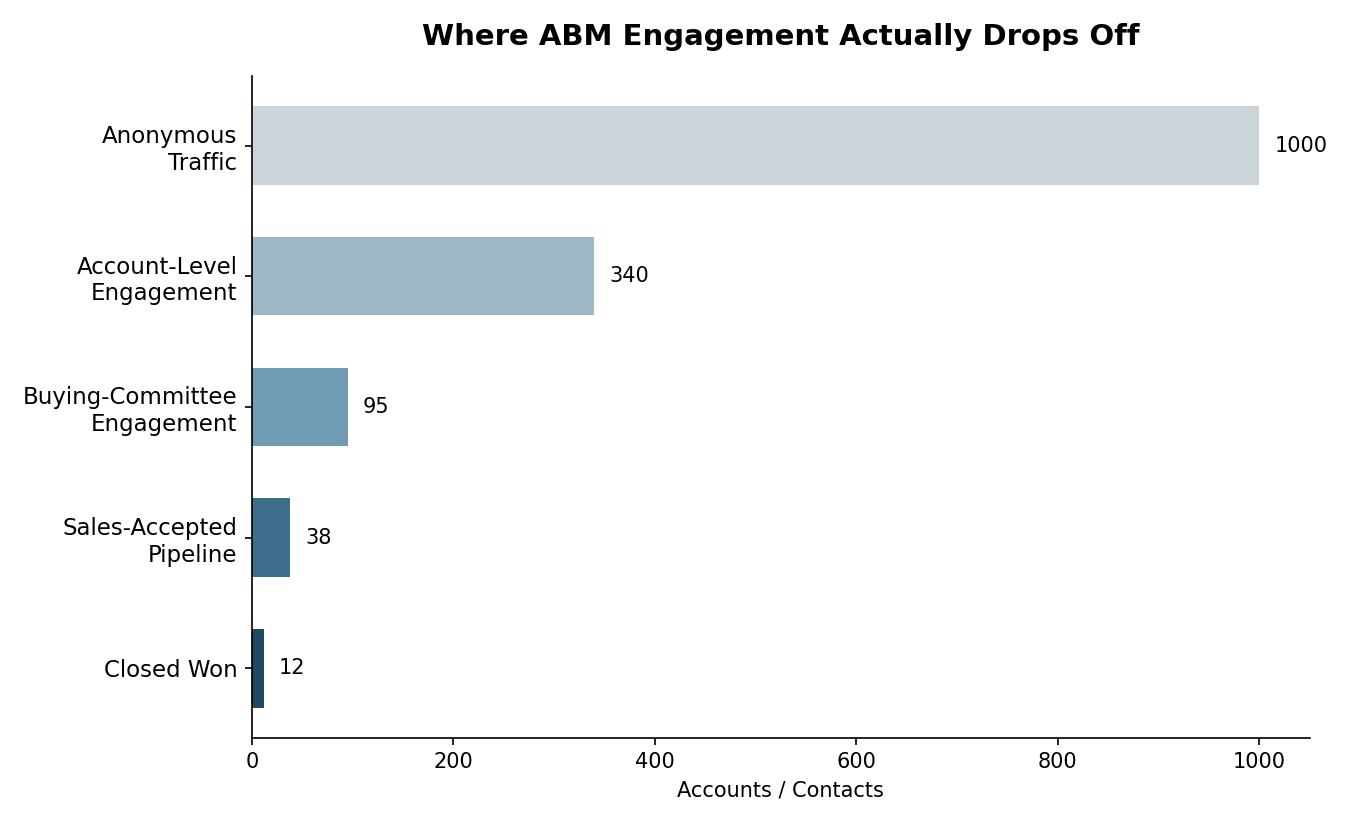
Figure 1. Illustrative example only. Values are not based on industry benchmark data.
One of the biggest gaps isn’t between traffic and leads. It’s between account-level engagement and genuine buying-committee engagement. Most dashboards never look past “account-level,” so they never catch this gap.
1. You’re Targeting Accounts, Not the People Who Buy
A target account list looks great on a spreadsheet: big logos and solid firmographic fit. But accounts don’t open emails or click ads. People do. If targeting stops at the company level instead of mapping who’s actually on the buying committee, you generate engagement from the wrong humans: an analyst who’ll never see the budget conversation, or someone who left the company last quarter.
This creates engagement without leverage where you see real activity but zero deal impact. Industry data indicates that one in three marketers lacks the technology to target key accounts at the contact level, so this often goes completely undetected until a deal stalls for no clear reason.
- Example: A 200-employee SaaS account gets flagged “highly engaged” for two months. Dig in, and it’s one IT support specialist who found your blog through a Google search, nowhere near the budget conversation. Marketing counts it as a win. Sales calls it noise. Both are right.
- The fix: Build real buying-committee maps and target content by role, not by company. Enterprise orchestration platforms like 6sense and Demandbase offer predictive revenue intelligence that surfaces hidden buyer signals and maps the full funnel. For mid-market teams building their first committee maps, accessible contact-level tools like RollWorks and HubSpot ABM scale targeting smoothly without overcomplicating operations.
2. Your Static List Doesn’t Know the Deal Has Changed
Most teams build the target account list once and run it all year, assuming the cast of characters stays put. It doesn’t. Benchmarks mapping the B2B buying journey show that a complex purchase involves an average of 6 to 10 decision-makers collaborating simultaneously. Any one of them can leave or get reassigned mid-cycle, taking months of built-up context with them.
Buying committee changes can erase shared context, forcing teams to rebuild relationships and re-establish momentum. Your campaign keeps running. The person reading it might not even work there anymore.
- The fix: Monthly, not quarterly, refreshes that flag job changes and new stakeholders immediately. Lead-intelligence providers like Cognism and Dealfront handle complex contact accuracy for regional and global data requirements, while ZoomInfo MarketingOS manages go-to-market data coverage at scale for broader enterprise markets, ensuring a shared, current data source across marketing, sales, and operations.
3. Personalization That’s Too Shallow to Notice
Nearly every ABM article says “personalize.” Few explain what shallow personalization actually looks like in practice. Swapping in a first name isn’t personalization. It’s a fancier form letter, and professional buyers clock it instantly.
Real personalization means knowing what’s keeping a specific buying committee up at night this quarter, not generically across the industry, but at that company, given whatever’s happening with their budget, their leadership, and their competitors right now. Focusing on authentic B2B personalization efforts helps ensure target stakeholders feel genuinely understood rather than processed like a standard lead template.
- The fix: Use intent data networks like Bombora Company Surge to identify target accounts actively researching relevant topics across the B2B web. If an account spikes on intent topics like “vendor consolidation,” lead with that angle, not a generic product overview. For execution, dynamic personalization tools like Mutiny or Folloze swap web experiences by account, while person-level ad platforms like Influ2 serve tailored ads to specific buying-committee members by name rather than company IP.
4. Sales and Marketing Are Solving Different Problems
The usual fix, “get sales and marketing talking more,” undersells the real issue. The two teams are optimizing for entirely different definitions of success. Marketing chases engagement scores and MQLs. Sales watches actual deals move (or not) in real time. Without shared metrics, ABM quietly becomes targeted demand gen wearing an ABM costume.
As one agency put it, marketing running campaigns with no real input from sales conversations isn’t really ABM at all. It just looks like it from a distance.
The disconnect often extends to measurement. Marketing teams may celebrate clicks, form fills, and MQLs, while sales focuses on opportunities that actually progress through the pipeline. When each team defines engagement differently, account activity can appear healthy even as buying momentum stalls. Shared metrics such as buying committee engagement, sales-accepted opportunities, pipeline progression, and revenue influence provide a more accurate view of whether an ABM program is moving accounts toward a purchase.
- The fix: One shared scorecard (engagement score, pipeline velocity, deal stage) that both teams own. Add a sales acceptance checkpoint before anything counts as pipeline: a step where sales actively confirms an account is genuinely ready. Apollo.io is strong on the execution side, helping teams build prospect lists, launch sequences, and move fast from prospecting to engagement. It gives sales direct visibility into which contacts have been touched and how, so follow-up feels like a continuation rather than a cold start.
5. Intent Signals Aren’t Connected to Action
Buying intent creates value only when it influences what happens next. Many ABM teams invest in intent data but continue running the same outreach, nurture sequences, and content regardless of what those signals reveal. The result is a familiar pattern: dashboards show growing account activity while sales conversations remain unchanged. Intent becomes another reporting metric instead of a trigger for action.
| Intent Signal | Typical Response | ABM-Aligned Response |
| Account surges on relevant topic | Added to dashboard | Notify sales and reprioritize account |
| Buying committee visits pricing | Logged as page views | Trigger evaluation-stage content |
| Multiple stakeholders engage | Count clicks | Increase account priority |
| Intent declines | No action | Reduce cadence and monitor |
Ultimately, the goal isn’t to generate more engagement signals. It’s to improve pipeline quality by ensuring those signals come from the right stakeholders and lead to meaningful sales activity.
- The fix: Treat intent as the starting point for execution rather than the final insight. When buying signals increase, they should trigger automated downstream steps: updating account priority, recommending stage-appropriate content, notifying sales, or adjusting campaign messaging. Using centralized account scoring models links intent to account prioritization so that behavioral data triggers real action.
6. Content That Matches the Account, Not the Buying Stage
Even teams that nail personalization often miss this: matching content to where the account actually sits in its decision journey. A buying committee just realizing they have a problem needs something completely different from one three vendors deep into evaluation. Sending the wrong stage content, even with sharp messaging, reads as tone-deaf.
Campaigns often launch strong then flatten because there is no consistent nurture path mapped to the buying cycle, and no system catching that and adjusting.

- The fix: Map content to buying stage per account, not just per persona. Use behavioral intent signals to trigger the next piece automatically when an account shows it is ready to move, instead of running every account through the same fixed sequence. Content experience platforms like Folloze help teams deploy these dynamic content paths that adapt seamlessly to real-time account behavior.
7. Sales Follow-up Is Too Generic
Marketing may identify the right account at exactly the right time, but generic follow-up often breaks the momentum. Buyers who have already engaged with content or shown intent rarely benefit from receiving the same introductory email as every other prospect. When outreach ignores previous interactions, it feels disconnected rather than helpful.
- The fix: Equip sales with context before every conversation. Intent topics, recently viewed content, buying stage, and stakeholder activity should inform outreach so that follow-up continues the conversation instead of restarting it. Personalized sales engagement doesn’t require writing every email from scratch, but it must reflect what the account has already shared through its digital behavior.
Industry Example: Aligning Intent Signals with Account Prioritization
ScienceLogic shifted its account-based marketing strategy toward predictive account intelligence, giving revenue teams greater visibility into which accounts were actively moving through the buying journey rather than relying on isolated engagement metrics. By combining account insights with AI-driven prioritization, sales and marketing focused on accounts showing stronger buying signals instead of treating every engaged account equally.
According to the published customer case study, the company reported a 50% increase in account engagement, a 4x improvement in sales velocity, and $17 million in new pipeline after adopting this approach. While every organization’s results will differ, the example highlights a broader lesson: meaningful ABM outcomes often come from prioritizing buying readiness and cross-functional alignment over engagement volume alone.
How AI-Powered ABM Platforms Support Engagement
AI doesn’t improve account engagement simply because it automates more work. Its value comes from connecting activities that often exist in separate systems. AI helps identify high-fit accounts, detect buying intent, prioritize outreach, surface changes within buying committees, recommend relevant content, and give sales teams greater context before conversations begin.
Different platforms emphasize different core capabilities:
- Predictive Account Intelligence: Surfaces hidden buyer patterns and tracks pipeline momentum.
- Intent Data & Contact Intelligence: Refreshes data dynamically to avoid data drift.
- Orchestration & Personalization: Changes content experiences based on real-time activity.
Understanding how these capabilities come together across modern AI ABM software can help organizations choose an approach that fits their sales process and account maturity rather than focusing on individual features alone.
Valasys AI Score reflects this broader approach by bringing together AI-led account scoring, buying intent, campaign intelligence, and demand insights within a single platform. Rather than treating engagement as a standalone metric, it supports revenue teams in prioritizing accounts based on multiple indicators of buying readiness.
The Pattern Underneath All Seven
Engagement doesn’t die from one big mistake. It dies from small disconnects: between who you’re targeting and who actually decides, between the message and the moment, between what marketing tracks and what’s happening in the deal. Fix the disconnects, not just the tactics, and engagement becomes predictable.
ABM engagement improves when teams stop measuring activity alone and start measuring buying readiness. Valasys AI Score helps revenue teams prioritize accounts using intent signals, buying-committee activity, campaign intelligence, and demand indicators, so sales and marketing can focus on accounts most likely to move through the pipeline.
Ready to fix the engagement gaps in your ABM program? Contact us today to see how our data-driven approach can transform your key account relationships into predictable revenue growth.
Frequently Asked Questions (FAQs)
1. Why does ABM engagement drop even when target accounts are a perfect fit?
ABM engagement drops when activity comes from the wrong people inside a target account. A company may match your ideal customer profile, but if decision-makers, influencers, and budget owners are not engaging, account-level activity will not translate into pipeline. Strong ABM measures buying-committee engagement, not just total account interactions.
2. What’s the biggest difference between ABM and traditional lead generation?
Traditional lead generation optimizes for individual lead volume across a broad audience. Account-based marketing concentrates sales and marketing efforts on a defined group of high-value accounts. ABM prioritizes meaningful buying-committee relationships, stakeholder alignment, and measurable pipeline progression over raw contact numbers.
3. How long should a B2B company wait before judging if ABM is working?
B2B organizations should evaluate ABM over at least two to three quarters. Enterprise buying cycles involve multiple stakeholders, internal approvals, and extended evaluation periods. Early engagement signals are useful indicators, but long-term success is measured through pipeline velocity, opportunity progression, and revenue influence.
4. How do you measure the success of an ABM campaign?
ABM success is measured by commercial outcomes rather than marketing activity alone. Key metrics include buying-committee engagement quality, sales-accepted opportunities, pipeline velocity, and revenue influence. Clicks and impressions provide helpful operational context but do not show if an account is moving closer to a purchase decision.
5. Why is sales and marketing alignment important in account-based marketing?
ABM relies on sales and marketing working toward identical account goals with consistent messaging. When teams use conflicting metrics or operate in silos, prospects receive a disconnected experience that stalls buying decisions. Shared account insights and unified metrics ensure every interaction supports the same buying journey.
6. Should every buying committee member receive different content?
Not completely unique assets, but content must reflect each stakeholder’s professional priorities. Technical evaluators, financial buyers, and executive sponsors care about different aspects of a solution. Tailoring messaging to address those specific role concerns makes content highly relevant without requiring manual asset creation for every individual.
7. What happens when a key decision-maker leaves a target account during an ABM campaign?
When a stakeholder leaves, buying momentum slows because relationships and context must be rebuilt. This is why successful ABM programs monitor buying committees continuously instead of using static lists. Keeping account data current allows revenue teams to identify new stakeholders quickly and protect deal momentum.
8. Is personalization at scale realistic for account-based marketing?
Yes. Modern ABM combines intent signals, firmographic data, and behavioral tracking to scale personalization programmatically. Automation tools tailor ad messaging, web content, and email sequences based on a stakeholder’s specific role and buying stage, delivering relevant experiences across hundreds of accounts without manual overhead.
9. Why do strong ABM campaigns lose momentum after a few months?
ABM campaigns lose momentum when content and outreach fail to evolve alongside the account’s decision journey. Early awareness messaging works initially, but engagement fades if follow-up content does not adapt to specific buying intent or changing stakeholder needs. Progress requires continuous account monitoring and stage-specific content.
10. What’s the most common reason ABM programs get shut down internally?
Most ABM initiatives fail internally because they are judged using short-term, traditional lead generation expectations. ABM is built for complex, multi-quarter B2B sales cycles. Organizations that measure performance using pipeline quality, account progression, and long-term revenue impact retain executive support far better than those chasing immediate lead volume.