Downloadable MQL Scoring Framework
Turn unqualified leads into sales-ready opportunities.
 Lead-Gen now on Auto-Pilot with
Build My Campaign
Lead-Gen now on Auto-Pilot with
Build My Campaign

Learn how to use a lead count calculator to forecast campaign results, estimate leads, and plan marketing performance more effectively.

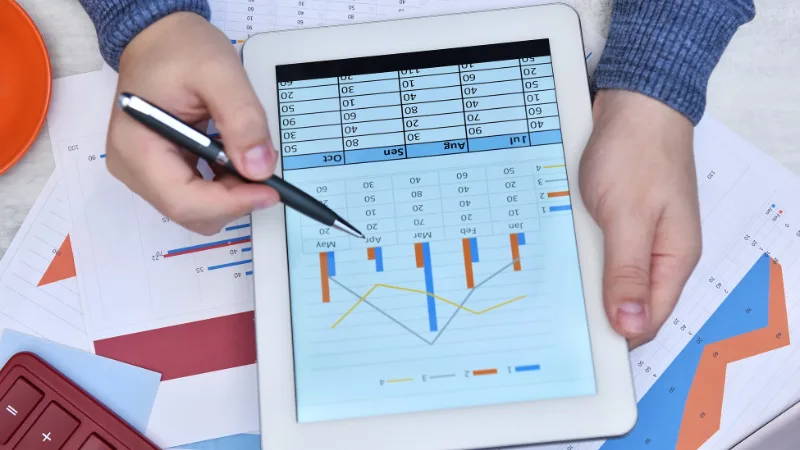
Let’s be honest. Most campaign forecasts don’t miss because the tools are bad. They miss because forecasts rely on optimistic assumptions carried over from last quarter, and everyone quietly hopes demand will somehow scale itself.
On slides, forecasting looks tidy. A lead target, conversion rate, and revenue number boxed in confidence.
But in reality, those numbers decide which budgets get approved, how much pressure Sales carries into the quarter, and whether leadership trusts the plan or ‘side-eyes’ it.
When forecasts miss, it’s not a spreadsheet issue. It’s a credibility issue.
Forecasting isn’t about predicting the future. It’s about alignment across Marketing, Sales, and leadership. Every campaign is an investment on demand, conversion, and execution. A lead count calculator helps you place that investment with clarity by showing how many leads you actually need, where they’re likely to drop, and whether your funnel can support the revenue you’re committing to.
In this blog, we’ll break down how to forecast campaigns grounded in reality, not vanity metrics, and how Valasys’ Lead Count Calculator, paired with VAIS, helps teams move from reactive guessing to confident planning.
Forecasting often gets parked under Marketing, but the blast radius hits leadership first.
When forecasts are off:
The root issue is rarely effort. It’s assumptions.
Marketing assumes lead volume will behave like last quarter.
Sales assumes most MQLs will be workable.
Leadership assumes the forecast reflects reality.
Individually, these assumptions are logical. Together, they create forecasts that look great in decks and fall apart in execution.
A lead count calculator forces shared visibility. Conversion rates are explicit. Funnel stages are defined. Gaps surface before campaigns launch, not after performance dips. Forecasting shifts from optimism to decision making.
If you want alignment, you need shared numbers, not shared hope.
Forecasts rarely collapse overnight. They erode.
It usually starts with top-of-funnel optimism followed by downstream blind spots. Teams track lead volume obsessively, then lose visibility once leads move into qualification, especially at the MQL stage.
This is where things get fuzzy:
A major contributor is inconsistent understanding of lead stages. If Marketing and Sales aren’t aligned on definitions, forecasting becomes narrative-driven instead of data-driven.
To eliminate this ambiguity, teams can use a clearly defined MQL framework that standardizes lead qualification criteria and aligns Marketing and Sales on what actually counts as an MQL.
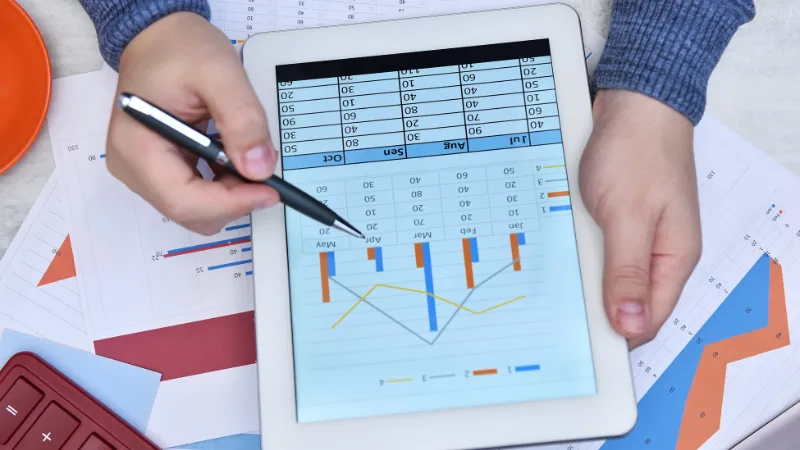
Downloadable MQL Scoring Framework
Turn unqualified leads into sales-ready opportunities.
With clear understanding of lead qualification stages (IQL, MQL, SQL) helps teams align expectations, reduce downstream friction, and strengthen forecast reliability.
Reliable forecasting isn’t conservative forecasting. It’s honest forecasting.
A strong forecast tells a story:
High lead volume looks good in reports, but flow is what matters. How fast leads move. Where they stall. Where they drop completely.
Mapping traffic → lead → MQL → SQL → opportunity, turns forecasting into a diagnostic tool instead of a scoreboard. You stop asking “Did we hit the number?” and start asking “Where did momentum break?”
Shared definitions between Marketing and Sales reduce friction, clarify accountability, and surface assumptions. A forecast you can explain under pressure is a forecast leadership can trust.
A lead count calculator doesn’t replace strategy. It sharpens it.

To start, focus on revenue rather than leads.
Instead of asking “How many leads can we generate?” ask:
What revenue are we responsible for?
Example:
Now work backward:
Opportunity → SQL → MQL → Lead → Traffic
This reverse funnel planning exposes reality fast. You see where scale is required and where efficiency matters more than volume. If MQL to SQL conversion is weak, pouring more traffic in won’t fix it.
You can model these scenarios directly using Valasys Lead Count Calculator to pressure-test assumptions before campaigns go live.
Good forecasting doesn’t predict outcomes. It prepares you for variability.
Forecasts shouldn’t live in spreadsheets. They should shape execution.
When forecasts are grounded:
If your forecast shows that hitting a target requires a late-quarter MQL spike, you can course-correct early. Rebalance spend. Shift campaign timing. Reset expectations before trust erodes.
This is how forecasting reduces internal friction. Everyone sees the operating assumptions. Decisions feel intentional, not reactive.
Static forecasts don’t survive growth.
As campaigns scale, rolling forecasts matter more than quarterly guesses. Tracking actuals against projections surfaces issues early, while there’s still time to act.
Scenario modeling and funnel visibility let teams reallocate budget, refine messaging, and double down on channels showing real traction. Scaling becomes controlled instead of chaotic.
At this stage, forecasting stops being a planning exercise and starts functioning like an operating system.
Lead count calculators provide structure. VAIS adds foresight.
VAIS analyzes historical campaign and sales data to update forecasts as buyer behavior changes. Instead of assuming all MQLs are equal, it highlights which leads are most likely to convert and where Sales should focus effort.
That means:
By adding predictive pipeline insights through VAIS, forecasting evolves from static metrics into a dynamic decision-support system.
Even experienced teams slip under growth pressure. The most common mistakes:
These missteps compound quietly, leading to rushed decisions, reactive spending, and internal tension. Strong forecasting relies on discipline, visibility, and early action.
Forecasting isn’t about hitting a number. It’s about building trust.
When forecasts are clear:
Using a lead count calculator alongside VAIS makes funnel dynamics visible, aligns expectations across teams, and replaces guesswork with clarity.
Start building campaigns with confidence by using Valasys’ free Lead Count Calculator and deepen your forecasting strategy with VAIS’ predictive insights.
Because hope isn’t a strategy, clarity is.