Most SaaS link-building providers sell cheap, low-quality backlinks that waste your marketing budget and risk search engine penalties. Buying bulk placements from generic vendors rarely moves keyword rankings or drives prospective software buyers to your site. Sustainable SaaS growth requires earning contextual backlinks from reputable software publications, industry blogs, and high-authority domains.
We evaluated dozens of SaaS link-building vendors to help you avoid spammy link networks and find a trustworthy partner. In this guide, we break down the top 20 SaaS link-building agencies worth adding to your shortlist.
B2BSEO.io
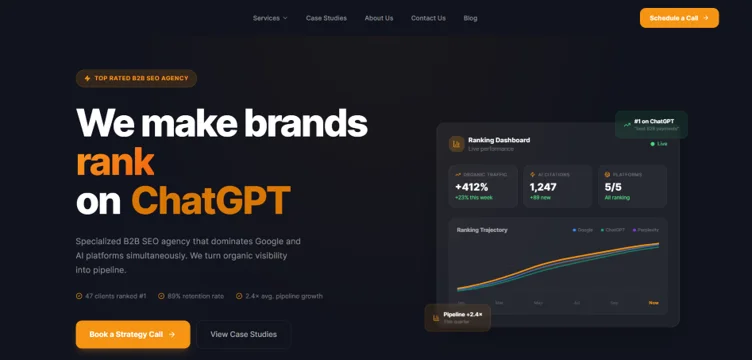
B2BSEO.io is a B2B-focused SEO agency that helps SaaS companies earn the visibility and authority they need to compete for high-intent search traffic. The agency’s SaaS link-building work is built around a simple idea: a backlink should make sense for the page, the audience, and the business, not just add another number to a report.
The agency combines link acquisition with broader SEO strategy, so placements can support priority service pages, product-led content, and the topics buyers research before choosing a solution.
It makes B2BSEO.io a fit for SaaS teams looking for more than a steady stream of links: they have a team that understands where those links should point and what they should help achieve.
Led by founder Ashot Nanayan, B2BSEO.io brings experience across SaaS, B2B SaaS, and other complex B2B markets. Its approach emphasizes relevant publishers, careful prospect review, and clear reporting on placements and progress.
Agency Profile
Best fit: SaaS companies that want a hands-on link-building partner with broader B2B SEO experience, especially those working to build authority around commercial pages and competitive topics.
SaaS experience: B2BSEO.io has worked with SaaS brands including TrackDesk, MConverter, and CapCut. Its case studies highlight commercial keyword growth, stronger search visibility, and AI search visibility as part of broader SEO programs. Prospective clients can review the agency’s case studies to assess the work and results most relevant to their goals.
Link-building team: The team combines publisher outreach with SEO research and evaluation of link prospects. It reviews topical fit, site quality, traffic trends, outbound link patterns, and whether a placement is likely to reach a relevant audience.
Campaigns can include guest posts, HARO, editorial mentions, and link insertions, with link targets planned around the client’s wider SEO priorities.
Engagement model: Work typically begins with an assessment of the site, competitors, and target pages. From there, B2BSEO.io develops a campaign plan and manages prospecting, outreach, placement coordination, and reporting.
Link building is delivered as part of a broader SEO retainer or scoped around a specific campaign.
Typical investment: Pricing depends on the campaign scope, target pages, publisher requirements, and whether content or wider SEO work is included. B2BSEO.io provides custom proposals after reviewing the site and goals; ask the agency for current minimums and placement budgets before starting.
uSERP
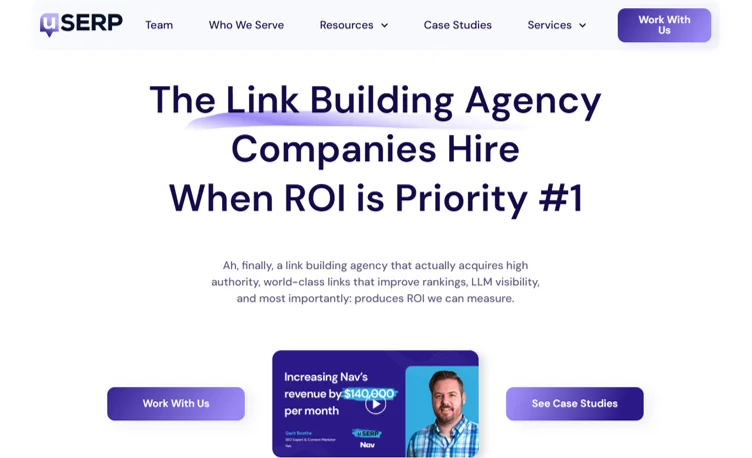
uSERP is a specialist link-building and SEO agency for competitive SaaS, fintech, and enterprise software markets. Their campaigns combine editorial outreach, guest contributions, contextual insertions, digital PR, unlinked brand mentions, and linkable assets.
They focus on securing contextual placements within Tier-1 publications like Monday.com, Freshworks, and Hotjar.
Agency Profile
Best fit:
Funded and enterprise SaaS companies competing for difficult commercial keywords. uSERP suits teams that want high link velocity and have enough budget to target established publications.
SaaS experience:
Their client list includes monday.com, ActiveCampaign, Freshworks, Hightouch, and hundreds of other technology companies. uSERP reports that their work for monday.com nearly doubled organic traffic.
Link-building team:
uSERP has around 45 team members. Their public team breakdown includes 11 outreach and partnership specialists, 11 content and PR writers, five researchers, and nine account professionals.
Engagement model:
Custom monthly retainer model structured around minimum Domain Rating (DR) thresholds, placement quality criteria, and total link volume guarantees.
Typical investment:
The Launch plan costs $5,500 per month. The Dominate plan costs $15,000 per month.
Also read: eCommerce SEO Strategies
NEWMEDIA.COM
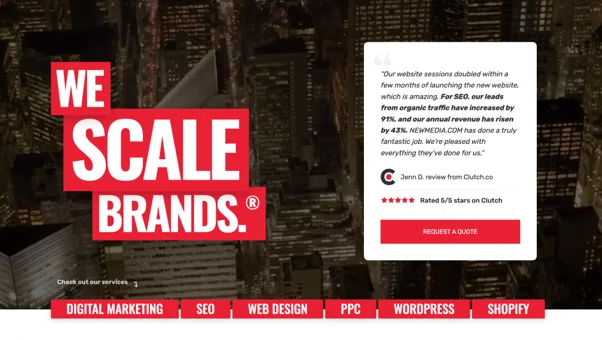
NEWMEDIA.COM is a digital agency with a broad service offering that includes SEO, web design, development, and digital marketing. For SaaS companies, that breadth can be useful when link-building is part of a larger effort to improve the website, strengthen organic visibility, and turn more visits into business opportunities.
Rather than treating links as a standalone metric, NEWMEDIA.COM can bring SEO into the same conversation as site structure, content, and user experience.
It can help SaaS teams coordinate technical improvements and authority building under one agency relationship. Companies should confirm how much of the work is dedicated to link acquisition and how the proposed campaign will support their specific growth goals.
Agency Profile
Best fit: SaaS companies looking for a full-service digital agency that can connect SaaS SEO and link-building with website design, development, and broader marketing work.
SaaS experience: NEWMEDIA.COM serves clients across several industries and offers services relevant to SaaS growth, including SEO, web design, and digital marketing. Ask the agency for SaaS-specific case studies, the results achieved, and examples of link-building campaigns for companies at a similar stage.
Link-building team: The agency offers SaaS link-building as part of its broader SEO services. Before hiring, ask who will manage outreach, what types of publishers they target, how they assess site quality and relevance, and whether links are earned through original content, editorial outreach, or other methods.
Engagement model: NEWMEDIA.COM offers a full-service agency model, with SEO available alongside web design, development, and digital marketing. The exact scope, team structure, reporting, and link-building deliverables should be confirmed in the proposal.
Typical investment: Pricing depends on the services included, campaign scope, and level of ongoing support. Request a proposal that separates SEO strategy, link-building work, content, and any web or development services so you can compare the investment clearly.
Skale
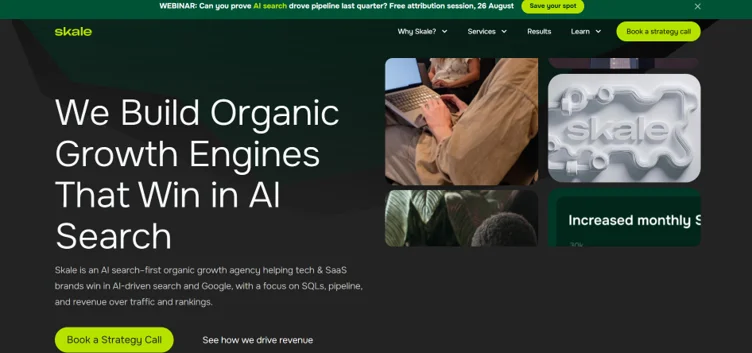
Skale builds links specifically for B2B SaaS and technology companies. Their team integrates link building into a broader search strategy, prioritizing contextual link insertions on relevant B2B blogs and product roundups.
Each backlink Skale builds sits on a page tied to your conversion path, not just a high-authority domain picked at random.
Agency Profile
Best fit:
Growth-stage B2B SaaS companies that want link building connected to a wider SEO strategy. Skale makes sense when the goal is product sign-ups, demos, or recurring revenue rather than a higher domain rating.
SaaS experience:
Skale reports working with more than 60 SaaS brands. Their client history includes Happy Scribe, Attest, Aircall, TravelPerk, HubSpot, Flodesk, and Piktochart.
Link-building team:
Their off-page team includes specialist outreach professionals led by a Head of Off-Page SEO. Co-founder Jake Stainer previously built Typeform’s SEO channel from zero to more than 30,000 monthly sign-ups.
Engagement model:
Fully managed monthly SEO retainer incorporating keyword strategy, content creation, and targeted link placement.
Typical investment:
Custom pricing. Broader SEO engagements start at £4,000 per month.
Editorial.Link
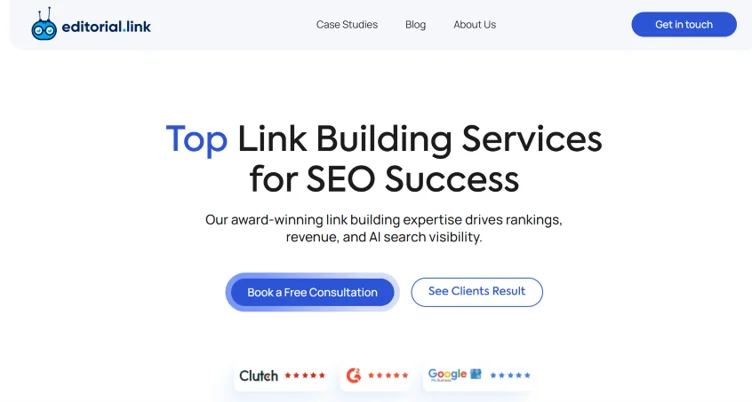
Editorial.Link provides a curated, pre-approval link building platform designed for software companies that require total control over their backlink profile. The agency earns dofollow editorial links directly inside contextual content on authoritative tech domains like Canva and HubSpot.
Editorial.Link allows clients to review and approve every target publication, DR metric, and traffic profile before launching outreach, eliminating the risk of acquiring toxic links.
Agency Profile
Best fit:
SaaS marketing leads and in-house SEO teams looking for transparent, high-authority editorial placements without committing to rigid agency retainers.
SaaS experience:
Their software clients include PeopleForce, PandaDoc, Intellectsoft, Intellias, and Relevant Software. Editorial.Link reports building 120 links for PeopleForce over 29 months.
Link-building team:
Editorial.Link has 28 team members. Co-founder Dmytro Sokhach leads the agency, supported by account managers, outreach leads, and dedicated link builders.
Engagement model:
Flexible package pricing or managed bespoke retainers, offering fixed per-link pricing models with replacement guarantees.
Typical investment:
The base rate is $375 per link. Five-link packages cost $1,750, while 20-link packages cost $6,000. Bespoke campaigns use custom pricing.
dofollow.com
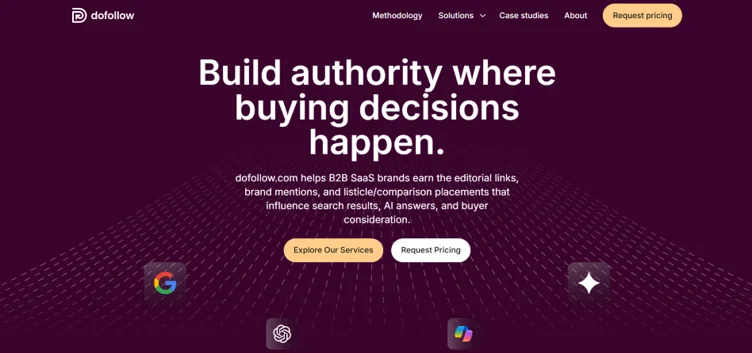
dofollow.com focuses exclusively on manual, white-hat link acquisition for B2B SaaS companies seeking stronger organic search and AI answer engine authority. The agency rejects pre-built link networks and broker marketplaces, choosing instead to run bespoke outreach campaigns targeting genuine industry publications.
Their process secures high-DR contextual links, unlinked brand mentions, and software listicle inclusions that boost domain ratings while driving qualified buyer traffic.
Agency Profile
Best fit:
B2B SaaS brands seeking transparent, pay-for-performance link acquisition that supports both traditional search and AI search engine visibility.
SaaS experience:
dofollow.com reports helping more than 300 SaaS teams over nine years. Their work for NectarHR generated more than 280 links and helped organic search grow from zero demos to more than 50 monthly demos.
Link-building team:
Founders Eric Carrell and Sebastian Schäffer lead a specialist team that includes an SEO and AEO lead, an operations lead, growth professionals, and several customer-success strategists.
Engagement model:
Performance-based monthly outreach campaigns with clear, transparent costs split between management and live publisher placements.
Typical investment:
Custom monthly pricing based on the selected budget and scope.
SAASY LINKS
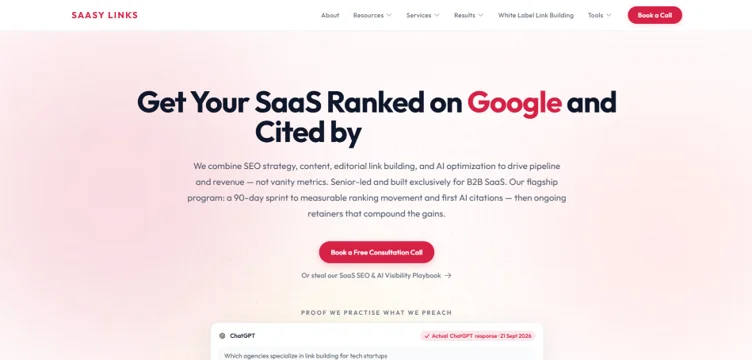
SAASY LINKS delivers off-page campaigns built specifically for growing B2B SaaS companies. They acquire contextual link insertions and editorial placements directly inside relevant B2B tech content.
Their team checks page authority on every domain before pitching it, so links land on pages that can move your target keywords.
Agency Profile
Best fit:
B2B SaaS companies that want a fixed monthly volume of editorial dofollow links.
SaaS experience:
SAASY LINKS reports working with more than 100 SaaS clients. Their client list includes HeyReach, Elementor, Modash, Encharge, and Uniqode.
Link-building team:
Founder Vikas Kalwani remains involved in strategy and quality control. The agency reports having more than 10 team members and 3,500 editorial partners.
Engagement model:
Fixed monthly packages based on guaranteed link counts and DR thresholds, alongside flexible pay-per-link options
Typical investment:
Packages start at $1,250 per month and reach $5,250 per month.
Growthner
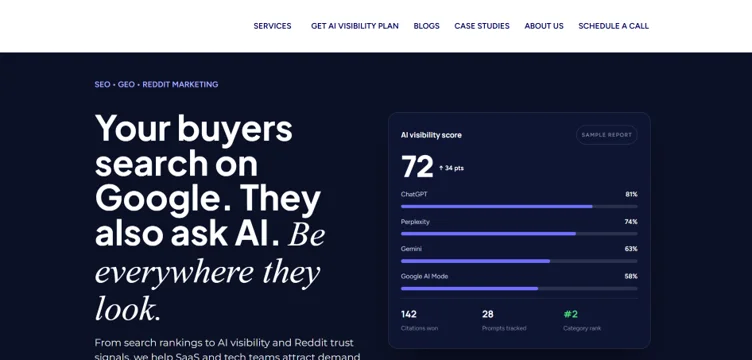
Growthner builds custom link acquisition and digital PR strategies engineered for B2B software platforms and AI products. The agency emphasizes relevance-first outreach, targeting high-authority review portals, industry blogs, and technical publications.
By optimizing anchor text distribution and securing placements across high-intent comparison articles, Growthner helps clients build domain trust while earning citations that modern AI search engines use to generate answer summaries.
Agency Profile
Best fit:
B2B SaaS and technology companies that want link building managed alongside SEO and GEO.
SaaS experience:
Growthner reports working with more than 50 SaaS clients and generating over $2 million in pipeline. The agency covers Google, ChatGPT, Perplexity, Gemini, and Reddit visibility.
Link-building team:
Founder Amit Kakkar has more than a decade of SEO experience. He works with a specialist team covering SaaS SEO, content, link acquisition, and AI search.
Engagement model:
Managed monthly SEO and link-building retainers structured around target authority benchmarks and link velocity.
Typical investment:
Custom.
Outreach Desk
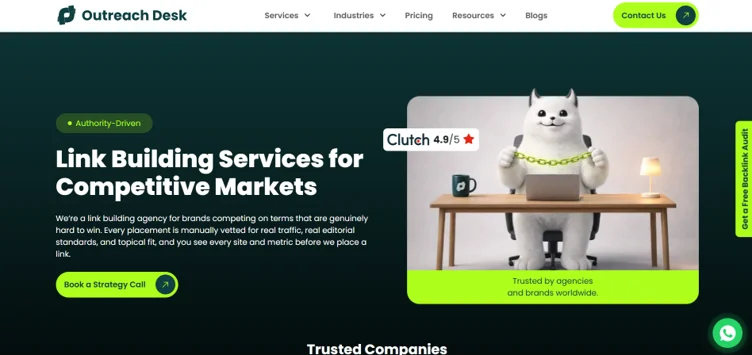
Outreach Desk offers several link-acquisition models for SaaS companies. These include guest posts, contextual links, link insertions, listicle placements, unlinked mention reclamation, and digital PR.
Their process covers backlink auditing, competitor-gap analysis, target-page selection, anchor review, prospect scoring, and manual outreach. Clients can review the proposed websites and metrics before a placement goes live.
Agency Profile
Best fit:
SaaS companies that want manual outreach with several placement options.
SaaS experience:
Named software clients include CloudTalk, Chargebee, Snov.io, Flatirons Development, and factoHR. Outreach Desk reports that 270 placements helped CloudTalk grow monthly organic traffic from 2,000 to 35,000.
Link-building team:
The agency reports having 15 team members. Their team handles prospecting, content, outreach, placement checks, and link monitoring.
Engagement model:
Fully managed monthly campaigns and one-time placements.
Typical investment:
Managed campaigns range from $3,000 to $7,000 per month.
Page One Power
Page One Power is a link building agency that develops custom outreach campaigns from scratch. Their team conducts manual outreach to secure white-hat editorial placements and linkable asset mentions.
Their link building follows the same roadmap as the technical and keyword work, not a separate track running on its own.
Agency Profile
Best fit:
Established SaaS companies that need custom link acquisition and supporting content.
SaaS experience:
For Atera, Page One Power built 29 links in six months and created six linkable assets. Priority transactional keywords improved by an average of 18 positions.
Link-building team:
Page One Power uses in-house link builders, content specialists, and dedicated project managers. Their team documents the work and reports against agreed deliverables and KPIs.
Engagement model:
Custom campaigns with an initial six-month contract. The agreement can move to a month-to-month basis afterward.
Typical investment:
Campaigns start at $3,700 per month.
FATJOE
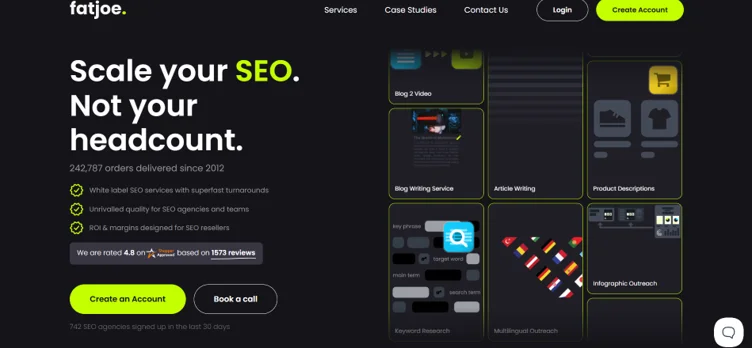
FATJOE operates as an order-based, white-label SEO and link-building service heavily utilized by digital marketing agencies and internal growth teams. They manage large-scale blogger outreach and niche edits by placing contextual links on independent blogs with verified domain authority and real search traffic.
Agency Profile
Best fit:
In-house marketing teams and digital agencies needing on-demand, scalable backlink ordering to support targeted campaigns or high-volume off-page SEO.
SaaS experience:
Broad experience placing links for B2B and B2C software products across general technology, productivity, and marketing software categories.
Link-building team:
CEO Joe Davies leads the company alongside Director of Business Operations Emily Bradley. FATJOE doesn’t assign traditional account managers. Their fulfillment and customer success teams manage orders through the platform.
Engagement model:
Pay-as-you-go ordering platform based on target Domain Rating (DR) ranges, minimum traffic requirements, and content word counts. Grow packages include a dedicated concierge but don’t constitute fully managed SEO.
Typical investment:
Blogger outreach costs approximately $72 to $456 per placement. Grow packages range from approximately $600 to $4,800 per campaign.
Rock The Rankings
Rock The Rankings is a specialized B2B SaaS SEO agency that integrates custom link acquisition directly into revenue-focused search campaigns. They reject low-quality vendor lists, opting instead for manual outreach targeting contextual placements within software reviews, comparison guides, and high-converting B2B blogs.
Agency Profile
Best fit:
Funded B2B SaaS companies that want link acquisition tied to SEO, AI citations, and qualified pipeline.
SaaS experience:
Rock The Rankings has worked with SaaS and technology brands such as Rasa, Keragon, Toast, MoonPay, and Lendbuzz.
Link-building team:
Founder Justin Berg remains involved in strategy. The wider team covers SEO, content, digital PR, link analysis, and AI search measurement.
Engagement model:
Founder-led monthly, 90-day, or annual programs. Link building forms part of the wider SEO and GEO engagement.
Typical investment:
Done-for-You programs start at $7,650 per month on a 90-day term. Most engagements cost more than $10,000 per month.
Growfusely
Growfusely uses content to create reasons for publishers to link. Their SaaS campaigns can include backlink audits, competitor analysis, anchor-distribution reviews, digital PR, thought leadership, and manual outreach.
Their approach suits technical SaaS companies that need original assets and expert commentary. It makes less sense for teams that only want a monthly spreadsheet of placements.
Agency Profile
Best fit:
B2B SaaS and technology companies that want content-led link acquisition and digital PR.
SaaS experience:
Growfusely reports building more than 250 high-authority links for Whatfix. Their SaaS client work also includes JetOctopus, Sprinto, and WotNot.
Link-building team:
Founder Pratik Dholakiya has more than 15 years of search experience. Their team includes B2B SEO practitioners, content strategists, technical specialists, editors, and citation-building experts.
Engagement model:
Monthly retainers combining content production, digital PR outreach, and editorial link placements.
Typical investment:
Custom.
The HOTH
The HOTH offers eight link-building products rather than one standard campaign. SaaS companies can buy manual outreach, existing-content insertions, editorial media links, digital PR, or a managed HOTH X program.
The range works well for teams that understand what they need. Less experienced buyers should use the managed option because choosing links by Domain Rating alone can produce an unbalanced backlink profile.
Agency Profile
Best fit:
SaaS companies and agencies that want flexible à la carte links or a managed SEO program.
SaaS experience:
The HOTH publishes an anonymized SaaS case study where traffic increased fivefold and estimated organic traffic value exceeded $10,000 per month. The agency has SaaS experience, but their public evidence isn’t as detailed as the work published by specialist SaaS agencies.
Link-building team:
The HOTH has operated since 2010 and reports serving more than 200,000 businesses. HOTH X clients receive a dedicated SEO manager with access to link-building, content, and technical resources.
Engagement model:
À la carte link orders or recurring managed SEO through HOTH X.
Typical investment:
Manual outreach links cost $175 to $405 each. HOTH X starts at $1,000 per month.
Stellar SEO
Stellar SEO builds links through their Entity-Driven Link Building System. The framework connects external placements with brand signals, topical relevance, content structure, and internal authority flow.
Their team begins with business goals and competitor-link analysis before developing the outreach plan.
Agency Profile
Best fit:
Established SaaS companies competing for difficult commercial keywords in crowded search categories.
SaaS experience:
For a global project-management SaaS platform, Stellar SEO reports building 719 links over 30 months. Monthly organic traffic increased from 12,482 to 74,903 during the campaign.
Link-building team:
Founder Travis Bliffen launched Stellar SEO in 2012 and still guides client strategy. Their specialists handle competitor research, content alignment, manual outreach, quality checks, and reporting.
Engagement model:
Monthly packages, custom outreach campaigns, consulting, and white-label delivery.
Typical investment:
Monthly packages start at $2,500 for eight links. The 16-link package costs $5,000 per month.
Sure Oak
Sure Oak offers fixed monthly link-building packages alongside broader SEO and AI search services. Their editorial process focuses on contextual placements from websites with a minimum Domain Authority of 30.
Clients receive a natural mix of authority levels rather than selecting every publication in advance. This model gives SaaS companies predictable link volume, although teams with strict compliance or publisher requirements will need a custom campaign.
Agency Profile
Best fit:
SaaS companies that need a consistent monthly volume of editorial backlinks.
SaaS experience:
Sure Oak works with venture-backed SaaS companies across fintech, insurtech, healthcare IT, and cybersecurity. Their SaaS link-building work for an SMS marketing platform reportedly increased organic pageviews by 126% within one year.
Link-building team:
Director of Off-Page Kimberley McConnery leads a dedicated team of link-building strategists, managers, and specialists.
Engagement model:
Fixed monthly packages or custom campaigns for clients with specific publisher and authority requirements.
Typical investment:
Plans start at $3,500 per month for nine links. Professional plans cost $5,000 for 14 links, while Enterprise costs $10,000 for 28 links.
Fractl
Fractl earns links through digital PR rather than standard guest-post outreach. Their team develops original surveys, data studies, interactive assets, and newsworthy reports before pitching journalists. This approach can generate hundreds of referring domains from one strong campaign.
Agency Profile
Best fit:
Established SaaS and technology companies that want earned media coverage and high-authority links.
SaaS experience:
Fractl’s SaaS and technology work has secured coverage from CNET, TechRadar, VentureBeat, Fast Company, and Investopedia. Their published results include more than 1,650 links across the featured campaigns.
Link-building team:
Their team includes data journalists, researchers, designers, developers, content editors, and digital PR specialists. Co-founder Kelsey Libert remains a prominent voice in the agency’s digital PR research.
Engagement model:
Custom digital PR retainers and campaign-based projects.
Typical investment:
Custom.
Omniscient Digital
Omniscient Digital treats link building as part of an organic growth system for B2B SaaS companies. Their programs connect content production with editorial outreach, digital PR, and AI search authority.
Placements must come from relevant websites with a minimum Domain Rating of 50. Reporting includes the referring page, target URL, anchor text, and Domain Rating.
Agency Profile
Best fit:
Growth-stage and enterprise B2B SaaS companies that need content, SEO, digital PR, and link acquisition managed together.
SaaS experience:
For Shipyard, Omniscient Digital produced four articles and four backlinks per month. The combined content and authority program increased monthly organic blog pageviews by 735% and trial-account creation by 771%.
Link-building team:
Omniscient Digital has an in-house digital PR and outreach department. Their team includes a Director of Digital PR, an Outreach Manager, a Digital PR Strategist, and dedicated outreach specialists.
Engagement model:
Custom link-building programs or full-service organic growth retainers.
Typical investment:
Link-building-only pricing is custom. Full-service engagements start at $10,000 per month.
TripleDart
TripleDart combines human strategy with AI-assisted prospecting for B2B SaaS link building. Their Slate system identifies websites and contacts, tracks outreach, and monitors referring domains and link velocity.
Senior operators control the strategy and prioritize commercial pages before outreach starts. Clients approve proposed domains before placement. Campaigns can include guest posts, niche edits, listicle placements, digital PR, and brand mentions for AI search.
Agency Profile
Best fit:
B2B SaaS companies that need link building connected to commercial rankings and AI citation growth.
SaaS experience:
TripleDart reports that their senior strategists have worked across more than 300 SaaS companies. Their main categories include fintech, martech, SEO tools, HR technology, cybersecurity, and sales software.
Link-building team:
Each account receives senior SEO and GEO strategists. A separate outreach team handles execution with support from TripleDart’s AI prospecting and monitoring system.
Engagement model:
Most link-building engagements begin with a six-month term and continue month to month afterward.
Typical investment:
Plans start at $5,000 per month.
Nine Peaks Media
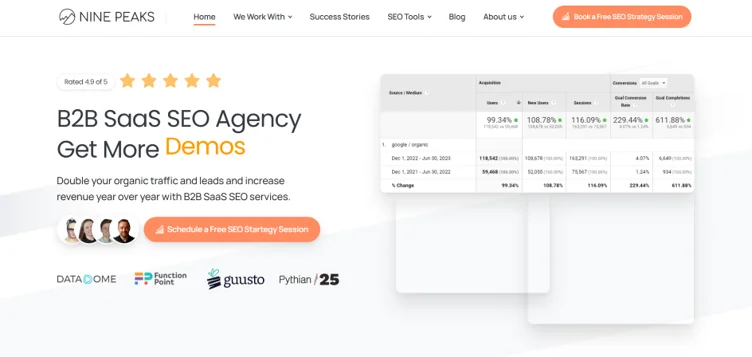
Nine Peaks Media provides link building as part of a wider SEO program for B2B SaaS and technology companies. Their team starts with technical analysis, keyword research, and a backlink audit. They then build links alongside content and on-page work.
However, SaaS companies looking for links without the wider SEO retainer may find the model too broad.
Agency Profile
Best fit:
B2B SaaS, software, IT, and cybersecurity companies that want full-service SEO with ongoing link acquisition.
SaaS experience:
Nine Peaks Media reports helping more than 60 SaaS and technology brands reach the first page. Named clients include Moosend, MobLab, Deepwatch, and Exact Payments.
Link-building team:
Founder Mike Khorev leads the agency. Their team includes SEO managers, content specialists, a partnership director, and an outreach manager.
Engagement model:
A two-month opening agreement followed by a six-month rolling engagement.
Typical investment:
SEO retainers range from $3,500 to $10,000 per month and include link building, content, and tools.
The Bottom Line
The right SaaS link-building agency should do more than deliver a monthly link count. It should understand your market, choose placements that make sense for your brand, and connect link building to the pages and search goals that matter to your business.
The agencies in this list bring different strengths, from focused outreach to broader SEO and digital marketing support.
Before choosing one, ask to see relevant campaign examples, clarify how publishers are vetted, and find out exactly what your investment covers. A strong partner should be able to explain not only what it plans to build, but why each part of the campaign fits your growth goals.