


How SEO Strategy Funnel Helps Turn Organic Traffic Growth?
Learn how an SEO strategy funnel turns organic traffic into qualified leads with proven tactics to improve rankings, conversions, and growth.


Your website’s ranking has improved, and your organic traffic is growing. But, it’s frustrating when visitors come and go without taking action. They look around but don’t stay.
Many businesses spend a lot to get people to their site. But, these visitors often leave without doing anything. It’s like planting seeds and hoping they grow without care.
Turning random clicks into real business results is an art and a science. We’ll show you how a funnel-based approach can make it happen.
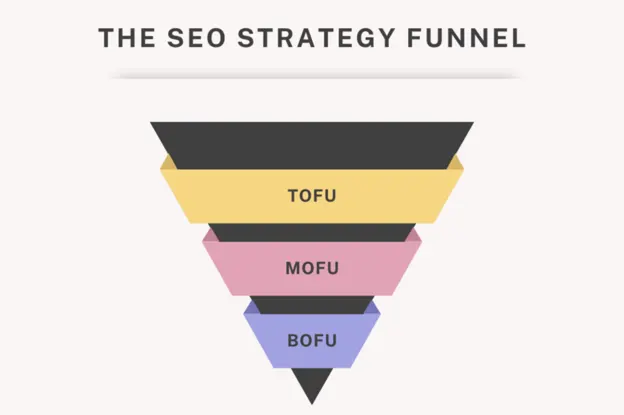
What is SEO Strategy Funnel?
An SEO Strategy Funnel changes how we optimize for business growth. It focuses on the buyer’s journey, not just rankings and traffic. It knows that searchers have different needs at different times.
The SEO Strategy Funnel definition maps content to user intent stages. Someone looking for a problem is different from someone ready to buy. Traditional SEO often overlooks this.
An SEO marketing funnel is like a guided path, not a wide net. Each piece of content aims to move visitors closer to buying. This changes how we build websites and plan content.
For example, “what is content marketing” and “best content marketing agency in Los Angeles” are different searches. The first is for learning, the second for buying. Your SEO should match these needs with the right content.
Instead of hoping random traffic converts, an SEO Strategy Funnel creates intentional pathways that match what users actually need at each stage. This structured approach acknowledges that the journey from awareness to decision requires different types of engagement at every step.
What Are The Factors That Influence Organic Traffic Growth?
Let’s explore the three fundamental pillars that drive sustainable traffic growth and prepare your website for strategic funnel optimization.
Creating Relevant Content
Content relevance is more than just keyword targeting. It’s about understanding the questions your audience asks and delivering answers that help them. We’ve seen websites filled with search terms but missing what visitors actually need.
The key is aligning your content with search intent at every stage of the user journey. Someone searching “how to improve website speed” needs educational content with actionable steps and clear explanations. They’re learning and exploring options. But someone searching “hire website performance consultant” needs service-oriented content with clear conversion pathways and credibility markers.
Your content must speak directly to where people are in their decision process. Educational blog posts serve exploratory searchers. Detailed comparison guides help evaluators. Case studies and testimonials convert decision-makers.
We recommend mapping each piece of content to a specific search intent category. This strategic approach ensures you’re not just creating content—you’re creating the right content for the right audience at the right time.
Maintaining a Strong Technical Foundation
Think of technical SEO as the roots of a tree—invisible to most observers but essential for supporting everything that grows above ground. Even the most brilliant content won’t drive traffic if search engines can’t properly crawl, index, and understand your site.
Site performance directly impacts both user experience and search rankings. Google’s algorithms prioritize websites that load quickly, specially on mobile devices. We’ve watched businesses lose customers because their pages took too long to load.
Critical technical elements include page speed optimization, mobile responsiveness, clean URL structure, and proper schema markup. Each element signals to search engines that your site deserves higher visibility. When your technical foundation is solid, your content gets the platform it needs to perform.
Security matters too. HTTPS encryption isn’t optional anymore—it’s a ranking signal that builds trust with both search engines and visitors. A strong technical foundation means your website is fast, secure, accessible, and easy for search engines to understand.
Building Visibility Across Multiple Platforms
Organic growth extends beyond your website into the broader digital ecosystem. Multi-platform visibility means establishing your presence wherever your audience searches, discusses, and makes decisions.
Start with Google Business Profile optimization if you serve local customers. This free tool dramatically improves your visibility in local search results and Google Maps. Consistent NAP information—Name, Address, Phone number—across all platforms reinforces your credibility.
Backlinks from authoritative websites act as votes of confidence in your content. When respected industry sites link to your resources, search engines interpret this as validation of your expertise. We focus on earning quality links through genuinely helpful content, not quantity.
Social media presence, while not a direct ranking factor, amplifies your content’s reach and drives referral traffic. Industry forums, review sites, and business directories all contribute to your overall digital footprint. Each platform where you maintain an accurate, active presence creates another pathway for customers to discover you.
The businesses that dominate search rankings aren’t just good at one thing—they excel at creating relevant content, maintaining technical excellence, and building visibility across the entire digital landscape. These organic traffic factors work exponentially better when aligned through a strategic approach.
In the next section, we’ll introduce the three-stage SEO funnel framework that transforms these foundational elements into a systematic growth engine for your website.
3 Stages of SEO Funnel
Every successful SEO strategy knows that visitors go through stages before becoming customers. The SEO funnel stages mirror the natural decision-making process people follow online. We don’t expect someone to buy from us the first time they land on our website, and that’s exactly why understanding TOFU MOFU BOFU becomes essential for sustainable growth.
TOFU: Attracting New Visitors
The top of funnel SEO stage focuses entirely on visibility and awareness. At this point, people may not even understand their problem, let alone know that your solution exists. We’re casting a wide net to attract people who are just beginning their research journey.
TOFU content targets informational keywords—the “what,” “why,” and “how” questions that indicate early-stage curiosity. A software company might create content like “What is Project Management?” or “Why Do Teams Miss Deadlines?” These topics address broad pain points without pushing any specific solution.
The goal here isn’t conversion. We’re opening the door to a relationship by providing genuine value without asking for anything in return.
Think of blog posts, beginner guides, educational videos, and infographics. This content establishes your brand as a helpful resource and introduces your expertise to people who’ve never heard of you. When done right, top of funnel SEO dramatically expands your reach and builds brand awareness across your target market.
The traffic from this stage tends to be high in volume but lower in immediate conversion intent. That’s perfectly fine because we’re planting seeds for future relationships. Many of these visitors will remember your brand when they’re ready to evaluate solutions later.
MOFU: Educating and Building Trust
The middle of funnel stage serves visitors who’ve defined their problem and are now evaluating solutions. They’re no longer asking “what is” questions but instead researching “how to choose” and “what’s the best” options available. This is where trust gets built through demonstrating deep expertise.
MOFU content includes comparison guides, detailed how-to articles, case studies, webinars, and educational email sequences. A marketing agency might create “Best Practices for SEO Strategy” or “How to Choose the Right Digital Marketing Partner.” These pieces address specific concerns while showing your methodology and approach.
The customer journey stages become more defined here. People spend more time on your site, consume multiple pieces of content, and begin forming opinions about whether your approach aligns with their needs.
We’re not pushing for the sale yet. Instead, we’re answering the questions that help prospects make informed decisions. This educational approach positions your brand as trustworthy and knowledgeable—qualities that matter immensely when people are comparing options.
Keywords at this stage become more specific and show clearer intent. Search volume drops compared to TOFU keywords, but the quality of traffic improves significantly. These visitors are closer to making decisions and more likely to engage with your brand beyond casual browsing.
BOFU: Converting Visitors into Leads or Customers
The bottom of funnel stage captures visitors who are ready to take action. They’ve done their research, evaluated options, and now need a final push to make a decision. After we’ve attracted attention and built trust, this is where we make it easy for qualified prospects to take the next step.
BOFU content includes service pages, product descriptions, pricing information, detailed specifications, customer testimonials, and clear calls-to-action. The focus shifts entirely to conversion optimization by removing friction and addressing final objections. A consulting firm might optimize pages like “Schedule SEO Audit” or “Enterprise SEO Services Pricing.”
Keywords become transactional at this stage: “hire SEO consultant,” “buy project management software,” or “schedule free consultation.” These search terms indicate strong purchase intent and typically convert at much higher rates than earlier-stage keywords.
Why Should We Implement SEO Strategy Funnel
Why change your SEO to a funnel model instead of just making more content and links? It’s about being efficient, improving marketing ROI, and growing in a way that’s hard for others to follow.
An SEO Strategy Funnel helps you get more value from the traffic you already have. It makes sure visitors see the right content at the right time. This boosts conversion rates without needing more visitors. Think of it like a store in a busy area, but with a better layout to guide shoppers.
One big SEO funnel benefit is better tracking and measurement. You can see how visitors move through the funnel and where they drop off. This lets you make data-driven improvements that traditional SEO can’t.
For businesses with small budgets or teams, being efficient is key. Conversion-focused SEO means every piece of content has a purpose. You’re working smarter, not just harder.
This is important for making every effort count. Each piece of content is a step in the customer journey, not just random content hoping to rank.
There’s also a big competitive advantage to consider. While others focus on getting more visitors, a strategic funnel helps you win customers with a better user experience. You’re playing a different game.
Businesses that get this shift are taking market share. They’re not just getting more visitors. They’re converting a higher percentage of the visitors they do get.
We see strategic SEO implementation as an evolutionary step. In a world where just showing up isn’t enough, businesses that design intentional paths to conversion thrive. The funnel approach is key to survival.
The marketing ROI impact is clear when comparing two scenarios. Company A gets 10,000 visitors with a 1% conversion rate, getting 100 leads. Company B gets the same visitors but uses a funnel to double conversion to 2%, getting 200 leads without spending more.
This isn’t just theory. Businesses using funnel-based SEO strategies see conversion rates improve by 50-150% in the first year. The competitive advantage grows as your funnel gets better.
Perhaps most importantly, the funnel approach makes things predictable. You know which content works best at each stage. This turns SEO into a system for growth, not guesswork.
How to Build SEO Strategy Funnel to Our Website
Let’s break down the essential steps to make your website a conversion machine.
Define Your Target Audience and Search Intent
Everything starts with knowing who you’re serving and what they need at each stage. Without this, your funnel won’t work.
Create detailed audience profiles that go beyond basic demographics. Understand the questions they ask, their concerns, and the information they seek as they move from problem awareness to solution evaluation.
Interview your current customers about their pre-purchase research process. What did they search for first? What information helped them narrow their options? What convinced them to choose you?
Analyze your search query reports to identify patterns in how people discover your content. These patterns reveal the natural progression of questions and concerns that define each stage of the buyer’s journey.
User intent optimization begins with mapping these insights to specific content opportunities. When you know what someone needs to learn at each stage, you can create content that serves them perfectly.
Map Keywords to Each Funnel Stage
Once you understand your audience’s journey, it’s time to identify the specific search terms they use at each stage. This is where strategic keyword mapping transforms abstract concepts into concrete action.
TOFU keywords are typically high-volume, informational queries. These are broad terms that indicate someone is just beginning to explore a topic or problem.
Compare “what is SEO” (TOFU) with “SEO vs PPC comparison” (MOFU) and “hire SEO agency Chicago” (BOFU). Notice how the intent evolves from learning to evaluating to buying?
MOFU keywords show comparison or evaluation intent. People using these terms are actively considering different approaches or solutions.
BOFU keywords indicate transactional readiness. These searchers know what they want and are ready to take action.
Create a keyword mapping matrix that explicitly assigns target terms to funnel stages. This ensures you’re not leaving gaps in your coverage or creating content that doesn’t match search intent.
Your matrix should include search volume, competition level, and current ranking position for each term. This helps you prioritize which keywords to target first based on opportunity and effort required.
Create Content That Matches the User Journey
Having the right keywords means nothing if your content doesn’t deliver what searchers actually need. Your content strategy must align format, depth, and conversion goals with funnel position.
TOFU content should be accessible and educational. Think blog posts, guides, and explainer videos that answer basic questions without requiring any commitment. Keep it lightly gated, if at all—the goal is maximum reach and brand awareness.
MOFU content can dig deeper into comparisons, case studies, and detailed how-to resources. This is where you can offer downloadable templates, whitepapers, or webinar recordings in exchange for email addresses.
BOFU content should be conversion-focused with clear calls-to-action. Product pages, pricing information, free trials, and consultation requests belong here. Remove friction and make the next step obvious.
Match your content format to how people consume information at each stage. Early-stage content works well as quick-read articles or engaging videos. Mid-stage content benefits from deeper formats like guides or interactive tools. Late-stage content should be scannable and action-oriented.
Track Performance and Improve Based on Data
Building the funnel is just the beginning. The real magic happens when you implement systematic performance tracking and use those insights to optimize every stage.
TOFU success gets measured by traffic volume, bounce rate, and engagement metrics like time on page and scroll depth. Are people finding your content? Are they staying to read it?
MOFU metrics focus on deeper engagement: pages per session, return visitor rate, and email capture rates. You want to see people consuming multiple pieces of content and willingly joining your email list.
BOFU performance comes down to conversion rates and qualified lead generation. How many visitors are requesting demos, starting trials, or making purchases? What’s the quality of those leads?
Set up proper analytics including goal tracking, funnel visualization, and attribution modeling. Google Analytics 4 offers excellent funnel reports, but you might also need specialized tools for deeper conversion tracking.
Create a monthly review process where you analyze performance tracking data for each funnel stage. Look for bottlenecks where visitors drop off or stages that aren’t attracting enough traffic.
Test different approaches systematically. Try new content formats, adjust your calls-to-action, or refine your keyword targeting based on what the data reveals.
Your SEO funnel implementation should include scheduled optimization cycles. Set quarterly goals for improving specific metrics at each stage, and track your progress toward those benchmarks.
What if organic traffic doesn’t grow?
Think of it like fixing a car that won’t start. The problem isn’t the whole car, it’s one part that’s not working. Let’s find and fix those parts in your SEO strategy.
Recheck Your Keyword Targeting
Your keyword selection might be working against you without you realizing it. Sometimes, the terms we think are valuable don’t match how our audience searches.
Start by checking if your target keywords have real search volume. Tools like Google Keyword Planner or SEMrush can show if people are actually searching for your chosen terms. You might find you’ve been optimizing for keywords with almost no searches.
Next, look at the ranking ability for your current domain authority. If you’re targeting very competitive terms, you’re facing a tough battle. Consider using long-tail variations, location-based keywords such as SEO in Bali, or less competitive terms that are more achievable.
Also, make sure your keywords match your business goals. A keyword might have high volume and manageable competition, but if it doesn’t attract your ideal customers, it won’t lead to meaningful results.
Audit Your Content Quality and Search Intent
Well-written content can fail if it doesn’t match what searchers want. This mismatch is a common reason for stalled organic growth.
Compare your content to what’s ranking for your target keywords. Search for your main terms in an incognito browser and analyze the top results. What format do they use?
If your blog post about “SEO strategy” is competing against guides with examples, templates, and case studies, just having more words won’t be enough. You need to offer equal or greater value in the format users prefer. Look for gaps in depth, practical application, or visual elements that successful competitors include.
Search intent falls into categories: informational, navigational, commercial, and transactional. Make sure your content matches the intent behind each keyword in your funnel stages.
Review Technical SEO Issues
Technical problems are like roadblocks on an SEO path—remove them and traffic can flow freely. Even brilliant content and perfect keywords won’t drive growth if technical issues prevent search engines from properly crawling, indexing, or ranking your pages.
Start a thorough technical SEO audit with Google Search Console. Look for crawl errors that prevent search engines from accessing your content. Check your page speed using Google PageSpeed Insights—slow loading times directly impact both rankings and user experience.
Mobile usability problems affect rankings because Google uses mobile-first indexing. Test your site on various devices to ensure responsive design works properly. Identify duplicate content issues that dilute your ranking by splitting signals across multiple URLs.
Review your indexing status to confirm Google can find and catalog your important pages. Sometimes, simple robots.txt mistakes or incorrect noindex tags block content from appearing in search results. Systematic SEO troubleshooting through these technical elements often reveals the barriers suppressing your organic visibility.
Use Paid Search to Support Pages That Need Faster Results
While organic SEO builds sustainable long-term results, sometimes using google ads service makes sense. This isn’t admitting SEO defeat—it’s about using all tools strategically to achieve business goals while your organic efforts grow.
Paid search integration works well for high-value BOFU keywords where you need fast visibility. If you’re targeting competitive commercial terms that will take months to rank organically, paid ads can capture those conversions now while building your organic authority.
Use paid search as a testing ground before investing heavily in organic optimization. Run ads to different landing pages with varying approaches to see which messages and formats convert best. This data informs your content strategy, reducing the risk of creating organic content that doesn’t perform.
The most effective approach combines both channels strategically. Paid search delivers immediate results and valuable performance data, while organic SEO builds a sustainable foundation that reduces your cost per acquisition over time. Together, they create a complete visibility strategy that addresses both short-term needs and long-term growth.
Last Words
Building a strong SEO strategy takes time, not a quick fix. It’s about making sure your content and tech match how customers search. This way, you grow steadily because you’re willing to put in the effort.
SEO Strategy Funnels turn organic traffic into a real business asset. It’s not just about ranking higher. It’s about creating paths that meet user needs at every step. This is what strategic marketing is all about.
A successful SEO funnel grows over time. Each part works together and changes with the market. Your efforts to improve conversion get better as you learn about your visitors. Your content gets more focused as you understand their journey.
Learn More
How long does it take to see results from implementing an SEO Strategy Funnel?
The timeline varies based on your starting point. Most businesses see improvements in conversion rates within 60-90 days, even before traffic increases significantly. This is one of the strategic advantages. Top-of-funnel content might take 3-6 months to gain traction in search results.
Can small businesses with limited budgets implement an SEO Strategy Funnel effectively?
Absolutely, the funnel approach is valuable for businesses with limited resources. It ensures every piece of content and every optimization effort serves a strategic purpose. Instead of creating random content and hoping something works, you’re focusing your limited time and budget on content that directly supports your business goals.
What if my organic traffic is growing but conversions aren’t improving?
Start by analyzing which pages are receiving traffic.If most visits land on TOFU content but you don’t have strong MOFU and BOFU content to guide people forward, you’re leaving conversions to chance. Review your internal linking strategy to ensure visitors can easily discover next-step content. Check that your bottom-of-funnel pages target transactional keywords and include clear calls-to-action. Sometimes the issue isn’t traffic quality but pathway design. Visitors want to convert but can’t find the way forward.
What’s the biggest mistake businesses make when implementing an SEO Strategy Funnel?
The most common mistake is creating content for only one or two funnel stages—usually top-of-funnel because it’s easier to brainstorm educational topics—while neglecting the other stages. This creates a leaky funnel where you attract visitors but have no pathway to guide them toward conversion. Another frequent error is mismatching content with intent: creating sales-focused content for informational keywords or overly general content for bottom-funnel searches.

