5 Best Qualtrics Alternatives for Survey and Experience Management Platforms
Discover 5 emerging trends shaping the pre-settlement funding market, from tech-driven approvals to evolving regulations and smarter risk.


Qualtrics is powerful. Nobody’s arguing that.
But powerful doesn’t always mean practical. If you’ve been through a Qualtrics renewal cycle, you already know the frustration. Costs climb. Contract scope expands. Features you never asked for get bundled in, and suddenly you’re paying significantly more than what you signed up for.
You’re not alone in questioning whether there’s a better fit. Plenty of teams are actively exploring their options, not because Qualtrics is bad, but because the value equation no longer adds up.
This guide compares the top alternatives side by side. We’ll cover what each platform does well, where it falls short, and which teams it’s best suited for. If you’re weighing your options ahead of a renewal or a fresh purchase, this is the breakdown you need.
Why Teams Are Moving Away From Qualtrics
Before jumping into alternatives, it’s worth understanding the common pain points that push teams to look elsewhere.
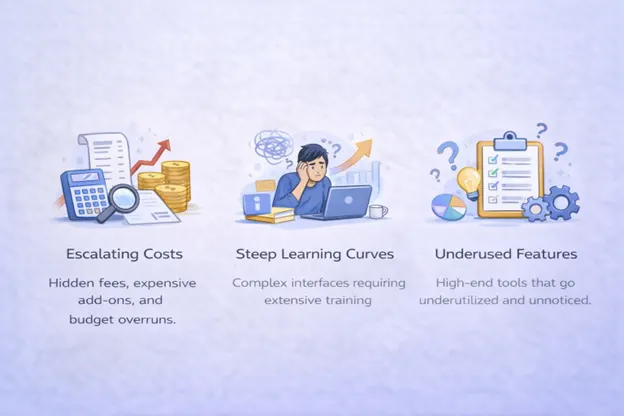
Pricing that escalates. Qualtrics often start reasonably. The problem hits at renewal. Contract scope expands, new modules get added, and the price jumps in ways that are hard to predict or budget for. For teams that signed on expecting stable costs, this creates real tension.
Complexity that slows teams down. Qualtrics packs in a massive feature set. But more features also means more complexity. Teams without dedicated administrators or research specialists often find themselves using only a fraction of what they’re paying for.
Overkill for focused needs. Not every team needs advanced conjoint analysis, complex branching logic, or enterprise scale data processing. If your primary goal is collecting feedback and acting on it efficiently, a simpler tool can get you there faster.
Support gaps. At the enterprise tier, Qualtrics support is solid. But teams on lower plans sometimes report slower response times and less hands-on guidance when they need it most.
None of this makes Qualtrics a bad product. It makes it a product that doesn’t fit every team equally. And recognizing that mismatch early saves you time, money, and frustration.
Top Qualtrics Alternatives Worth Evaluating
1. Sogolytics
Standout strength: Enterprise features at a fraction of the cost, with pricing that stays predictable.
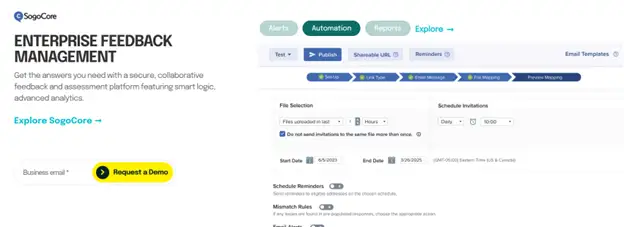
Sogolytics is one of the strongest options for teams that want serious survey and experience management capabilities without the enterprise sticker shock.
The platform covers everything most teams actually need. Advanced survey logic, CX dashboards, NPS tracking, employee experience tools, and robust reporting. It’s built for depth, but the interface stays clean and approachable.
Three things set Sogolytics apart from Qualtrics in a meaningful way.
It’s genuinely easier to use. You don’t need a dedicated admin to run it. Most teams are up and collecting insights within days. The learning curve is minimal, which means faster time to value and less internal friction during rollout.
It’s significantly cheaper. Not just on day one, but over time. Where Qualtrics often introduces cost creep through expanded contract scope at renewal, Sogolytics keeps things transparent. What you sign up for is what you continue paying for. No surprise expansions in the second contract cycle.
Support is available 24/7. Real humans. Not tiered ticket queues. When something breaks or your team has a question, you get help fast. That alone is a differentiator many teams underestimate until they’ve experienced the alternative.
If you’re actively evaluating a Qualtrics alternative that matches the feature depth without the budget headaches, Sogolytics deserves a close look.
Best for: Mid sized teams, growing organizations, and any business tired of paying for features they don’t use.
2. SurveyMonkey
Standout strength: Simplicity and brand recognition.
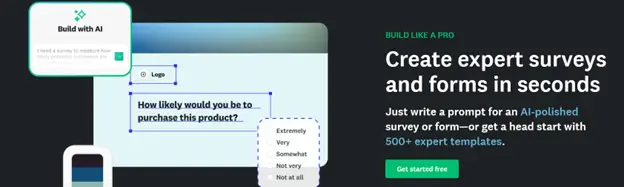
SurveyMonkey is one of the most widely known survey tools available. It’s fast to set up, easy to navigate, and works well for straightforward feedback collection.
The template library is extensive. If you need a quick pulse survey, a customer satisfaction check, or an event feedback form, you can have it live in minutes.
Where it falls short: SurveyMonkey wasn’t built as a full experience management platform. Advanced analytics, journey mapping, and multi touchpoint CX tracking are limited. If you’re moving away from Qualtrics because you need robust experience management, SurveyMonkey may feel like a step backward in capability.
Pricing note: The per user pricing model can add up fast for larger teams. What looks affordable for five users becomes a different conversation at fifty.
Best for: Small teams with simple survey needs. Less suited for organizations that need comprehensive CX or EX management.
3. Typeform
Standout strength: Beautiful, conversational survey design.
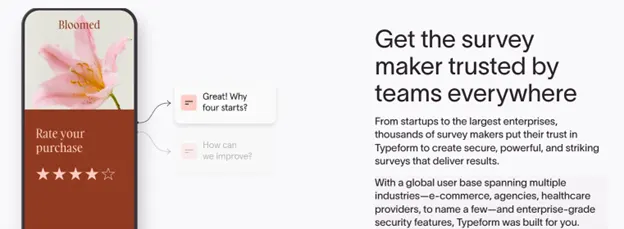
Typeform made its name on aesthetics. Surveys feel more like conversations, with one question appearing at a time in a visually polished format. Completion rates tend to be higher because respondents enjoy the experience.
For brand conscious teams that care about how their surveys look and feel, Typeform delivers on presentation.
Where it falls short: The focus on design comes at the expense of analytical depth. Reporting is basic. Advanced logic, CX dashboards, and enterprise grade analytics are limited. If your priority is insight over aesthetics, Typeform may leave you wanting more.
Pricing note: Costs scale quickly with response volume. High traffic surveys can push you into higher tiers fast.
Best for: Marketing teams and brand focused organizations that prioritize respondent experience and visual design over deep analytics.
4. Medallia
Standout strength: Omnichannel feedback capture at massive scale.
Medallia is built for enterprise organizations managing millions of customer interactions across channels. It pulls signals from social media, call centers, email, web behavior, and in person touchpoints.
The AI driven analytics are designed to surface patterns across enormous datasets. If you need to process high volume, multi channel feedback, Medallia has the infrastructure.
Where it falls short: This is not a tool for lean teams. Implementation is lengthy. The platform requires dedicated resources to manage effectively. And the price point sits firmly in enterprise territory.
If you left Qualtrics because of cost and complexity, Medallia may present similar challenges.
Best for: Large enterprises with dedicated CX teams, big budgets, and complex omnichannel operations.
5. Alchemer (formerly SurveyGizmo)
Standout strength: Flexibility and customization for research focused teams.
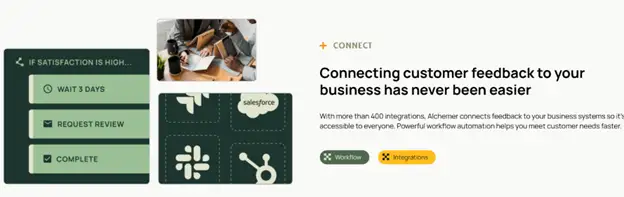
Alchemer sits in an interesting middle ground. It’s more capable than basic survey tools but less bloated than full enterprise suites. The platform offers strong survey logic, workflow automation, and integration options.
For teams that want granular control over survey design and data routing, Alchemer provides solid customization without overwhelming complexity.
Where it falls short: The interface isn’t as polished as newer competitors. Some teams report that the initial setup takes more effort than expected. CX specific features like journey mapping and real time dashboards are less developed compared to dedicated experience platforms.
Best for: Research teams and data driven organizations that need customization and flexibility in their survey workflows.
What to Prioritize When Choosing Your Platform
With options on the table, narrowing down comes to a few critical questions.
How predictable is the pricing? This is the factor most teams underweight. A platform that looks affordable on day one but expands contract scope at renewal can blow your budget. Ask vendors directly: will my costs change in the second contract cycle? Transparent pricing isn’t a perk. It’s a requirement.
How fast can your team get value? A platform that takes months to implement and requires extensive training is costing you insight every day it sits half deployed. Prioritize tools that get your team collecting and acting on feedback quickly.
Does it match your actual needs? Enterprise platforms pack in features that look impressive on a comparison chart. But if your team only uses 30% of those features, you’re overpaying for complexity. Be honest about what you need today and what you’ll realistically need in the next few contract cycles.
What does support actually look like? Ask about response times. Ask whether support is available around the clock. Ask whether you’ll get a dedicated contact or a general queue. The quality of support becomes critical the moment something goes wrong, and something always goes wrong eventually.
Can it grow with you? Your needs will evolve. Choose a platform that scales without forcing you into an entirely new tool or dramatically different pricing structure.
How the Top Options Compare at a Glance
For enterprise depth at a fair price: Sogolytics stands out. It matches the core capabilities of Qualtrics and Medallia while keeping costs transparent and predictable. No contract expansion surprises.
For simple surveys: SurveyMonkey works if your needs are basic and your team is small.
For visual appeal: Typeform wins on design but lacks analytical depth.
For massive scale: Medallia handles high volume omnichannel feedback, but the price and complexity reflect that.
For customization: Alchemer offers flexibility for research focused teams that want granular control.
Making the Switch Without the Headaches
Changing platforms feels daunting. It doesn’t have to be.
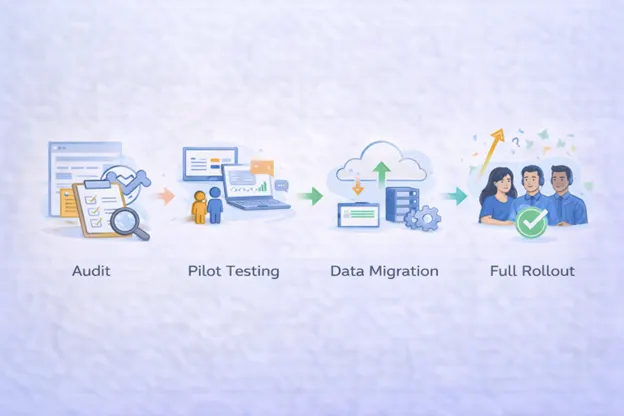
Start by auditing what you actually use in your current tool. Most teams discover they rely on a core set of features and ignore the rest. That clarity makes it much easier to evaluate alternatives based on real needs, not theoretical ones.
Export your critical data and templates before transitioning. Most modern platforms support standard data formats and offer migration support.
Run a pilot. Get your team into the new platform with a real project, not just a sandbox test. You’ll learn more about fit in one live survey than in ten demo calls.
Set clear success metrics before switching. Know what “better” looks like for your team so you can measure it objectively.
The right platform shouldn’t just replace your current tool. It should make your team faster, your insights clearer, and your budget more predictable.
That’s worth the switch.