
5 Features Nonprofits Should Look for in Auction Software
5 essential features nonprofits should look for in auction software to boost fundraising, streamline events, and maximize donor engagement.


Fundraising auctions remain one of the most effective ways for nonprofit organizations to generate revenue and engage supporters. However, managing these events manually or with outdated tools often leads to disorganized bidding, lost donor data, and missed revenue opportunities. A lot of nonprofit teams spend hours on spreadsheets and paper-based tracking, only to discover errors that could have been avoided with a proper digital solution.
Here’s when dedicated auction software for nonprofits can enter the game. Purpose-built platforms streamline the entire auction lifecycle — from item cataloging and donor registration to real-time bidding and post-event reporting. Thanks to this, organizations can focus on building relationships with supporters, without worrying about logistical bottlenecks that drain both time and resources.
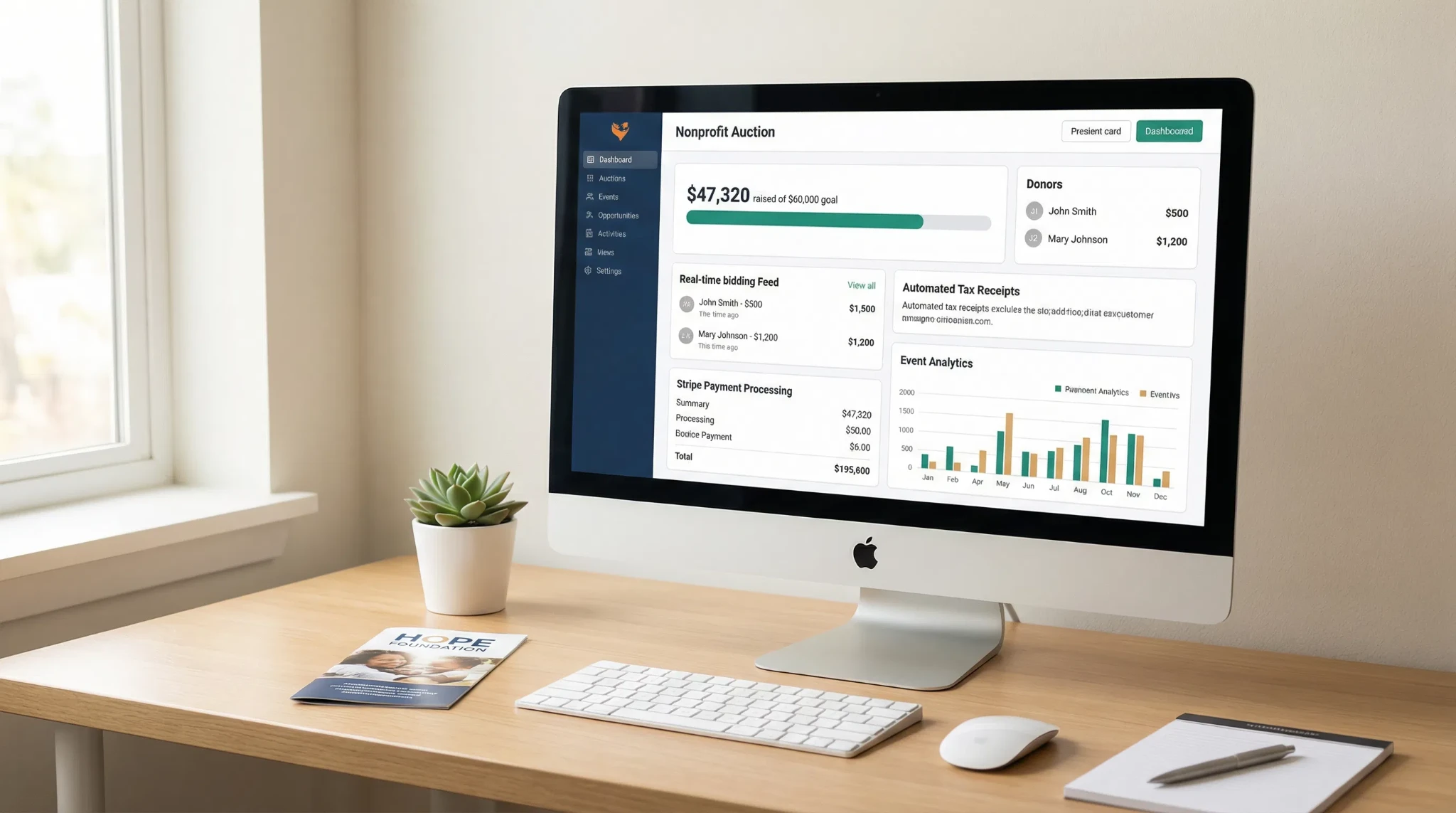
Given this, selecting the right platform becomes a strategic decision rather than a simple software purchase. The features a platform offers will directly influence how much revenue an auction generates, how engaged bidders remain, and how efficiently the team operates. That’s why understanding what to look for is essential before committing to any particular solution.
What Is Nonprofit Auction Software?
Nonprofit auction software is a specialized digital platform designed to help charitable organizations plan, execute, and manage fundraising auctions. Unlike generic e-commerce or bidding tools, these solutions are built with the unique needs of nonprofits in mind, including donor management, tax-deductible receipt generation, and integration with existing fundraising ecosystems.
In other words, it is a centralized hub where all auction-related activities converge. The platform typically handles item listing, bidder registration, payment processing, and post-auction analytics. What is also important here is that a lot of modern solutions support multiple auction formats within a single interface.
When Does It Make Sense to Use Auction Software?
Not every fundraising event requires a dedicated platform, but there are clear scenarios where investing in auction software becomes a practical necessity. Understanding these situations can help organizations allocate their budgets more wisely.
The most common use cases include:
- Annual galas and charity dinners where silent or live auctions are a primary revenue driver.
- Online-only fundraising campaigns designed to reach supporters beyond a geographic area.
- Hybrid events combining in-person attendance with virtual bidding for remote participants.
- School and community fundraisers that need a simple, accessible bidding interface.
- Multi-event organizations running several auctions throughout the year and needing centralized donor data.
If an organization runs more than one auction per year or handles over 50 items per event, a dedicated platform could significantly enhance both operational efficiency and fundraising outcomes. From a financial perspective, the time saved on manual processes alone often justifies the investment.
5 Key Features Nonprofits Should Prioritize
When evaluating auction platforms, nonprofit teams should attentively analyze whether a solution addresses their core operational needs. The following five features represent the most highly demanded capabilities that separate effective tools from generic alternatives.
1. Mobile-Friendly Bidding Experience
The majority of auction participants today interact with bidding platforms through their smartphones. A mobile-optimized interface enables supporters to place bids, browse items, and receive outbid notifications in real time — regardless of whether they are physically present at an event.
You should look for platforms that offer responsive design or dedicated mobile applications rather than simply scaling down a desktop layout. These mechanics boost bidder engagement and could lead to higher final bid amounts, as participants can stay active throughout the entire event without being tied to a specific location.
2. Integrated Payment Processing
Seamless payment processing is one of the most critical components of any auction platform. When a bidder wins an item, the checkout experience should be frictionless. Delays or complicated payment workflows may result in abandoned transactions and lost revenue.
Pay attention to solutions that support multiple payment methods, including credit cards, digital wallets, and ACH transfers. Apart from this, the platform should be able to generate tax-deductible receipts automatically, reducing the administrative burden on staff after the event concludes.
3. Real-Time Analytics and Reporting
Data-driven decision making can transform how nonprofits approach fundraising. Real-time dashboards allow event organizers to monitor bidding activity, identify top-performing items, and adjust strategies on the fly. This positively affects both immediate revenue and long-term planning.
What reliable reporting should have:
- Live bid tracking with item-level performance metrics.
- Post-event summaries showing total revenue, average bid values, and donor participation rates.
- Exportable reports compatible with accounting and CRM platforms.
- Historical comparisons across multiple events for trend analysis.
Thanks to this level of visibility, organizations can refine their auction strategy year over year, focusing on item categories and price ranges that consistently attract the most attention.
4. CRM and Fundraising Tool Integrations
Auction software should not operate in isolation. The ability to connect with existing donor management systems, email marketing platforms, and accounting tools is essential for maintaining a unified view of supporter relationships.
Typical integrations include:
- CRM platforms such as Salesforce, Bloomerang, or DonorPerfect.
- Email marketing tools for pre-event promotion and post-event follow-up.
- Accounting software for streamlined financial reconciliation.
- Event management platforms for unified attendee registration.
When these systems communicate with each other, staff can avoid duplicate data entry and maintain cleaner, more actionable donor records. This approach drastically reduces post-event administrative workload.
5. Multi-Format Auction Support
Nonprofits rarely rely on a single auction format. A strong platform should offer support for silent auctions, live auctions, and online-only events — ideally within the same system. This flexibility enables organizations to adapt to different event types without switching between tools.
We recommend looking for solutions that also support hybrid auction models, where in-person and remote bidders participate simultaneously. More engaged users create more competition, and more competition generally translates to higher final bid amounts. If an organization wants to maximize reach, it needs a platform that accommodates both physical and virtual audiences within a single event.
How to Choose the Right Auction Platform
Selecting the right tool requires more than comparing feature lists. It will be helpful to evaluate platforms within the context of specific organizational needs, budget constraints, and long-term fundraising goals.
When you are considering a platform, pay attention to the following steps:
- Define event requirements. Map out the auction formats, expected bidder count, and item volume before evaluating any tools. This ensures the selected platform aligns with actual operational demands.
- Request a demo with real scenarios. Rather than relying on marketing materials, test the platform using realistic conditions. Upload sample items, simulate bidding, and evaluate the checkout experience firsthand.
- Evaluate pricing transparency. A lot of nonprofit auction platforms use tiered pricing or charge per-transaction fees. Understanding the total cost of ownership is crucial before signing a contract.
- Check support and onboarding. Nonprofits often work with lean teams. You should look for vendors that provide dedicated onboarding, training materials, and responsive customer support, especially around peak event dates.
- Assess scalability. If the organization plans to grow its auction program, the platform should be able to accommodate increasing item counts, bidder volumes, and event frequency without requiring a migration to a different solution.
Final Word
Choosing the right auction platform is a decision that directly impacts fundraising performance. The five features outlined above represent the foundation of what any capable nonprofit auction solution should deliver. Together, they enable organizations to run professional, engaging auctions that maximize both donor participation and revenue.
Ultimately, the best platform is one that fits the organization’s current needs while offering room to grow. By carefully evaluating each feature against specific operational requirements, nonprofit teams can invest in a tool that serves them well for years to come — turning every auction into a more efficient, data-informed, and rewarding fundraising experience.