

Cyber risks that digital marketers face in today’s AI-flooded world
Explore the cyber risks digital marketers encounter in an AI-driven world, including data breaches, over-reliance, phishing attacks, deepfakes, and ad fraud. Learn essential safeguarding practices to protect your marketing efforts.

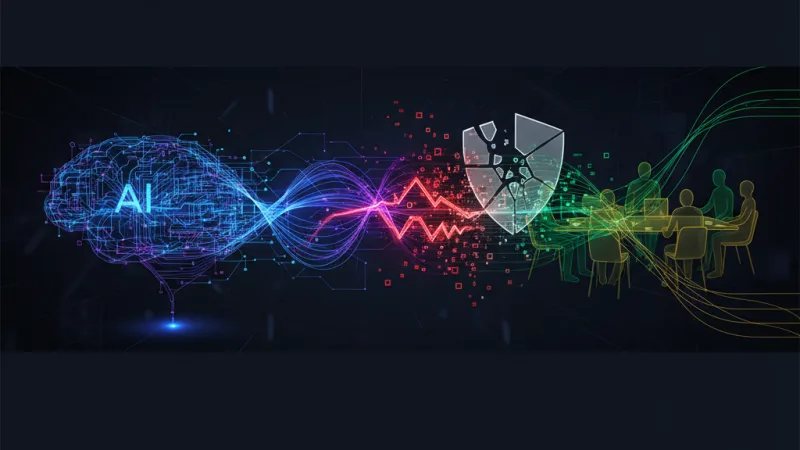
Artificial intelligence (AI) has pervaded all aspects of life with its potential to, as the name suggests, replicate intelligence in an artificial, non-human way – though the whole concept is designed by humans. The most definitive thing about it is its capacity to auto-feed its algorithms, thus building and rebuilding on the pieces of knowledge it emerged packed with. Now, for those working in the vast domain of digital marketing, it can be both a blessing and a curse. We’re mainly accommodated with the greatest parts: AI can help customize experiences via tailored services, emails, ads, product recommendations, and so on. It can automate all sorts of tasks that used to consume a lot of operational time until not long ago, such as social media posting, content development, or customer service. The results of prompts are faster and smarter, and even if they lack a human touch, they can still create efficient marketing campaign assets. It takes time and dedication to train the bot accordingly to see the lauded merits.
Businesses that rely on AI and inhuman decision-making are naively trading some share of their security and protection in exchange for the efficiency of simulated human intelligence. They’re speeding up tasks like planning, problem-solving, and reasoning, but they’re also providing cybercriminals with faster, more sophisticated pathways to exploit vulnerabilities. Cyber threats are anything but new – AI has just inflated their scale and power. Hackers are no longer confined to traditional, manual hacking methods, since AI has laid the foundation for more sophisticated attack strategies. Some key risks, as well as security tips, include the following:

Best safeguarding practices to stick to
We’re beginning this quest by emphasizing that digital marketers have a set of safeguards to avoid cybercriminal attacks and reduce exposure to threats. One of the best ways to do so is by protecting one of the most appealing elements of hackers: their email addresses. Thousands of email addresses are attacked daily, and those with weak passwords or not protected by a business email provider are the most susceptible to hacking. There are numerous steps you can take to secure your email; you can even employ a custom email domain solution that offers benefits similar to premium packages. Just please take matters into your hands as early as possible if your account possesses sensitive info you need to keep concealed.
Another precaution is to keep all marketing plugins and tools updated, receiving the latest patches in terms of security features. MFA requests for access to platforms like Google Ads or email marketing apps are also a helpful safeguard that will significantly reduce unlawful access.
With these in mind, let’s familiarize ourselves with some common threats you, as a digital marketer, might encounter someday.
Data breaches
Digital marketing relies on customer data, as do AI tools. Both need massive datasets with personal data, purchase histories, browsing habits, and so on, helping better foresee future customer trends and thus respond to coming preferences. However, AI is way more reliant on customer data, and if the databases accessed are compromised, businesses face more than reputational damage; they might incur regulatory fines under laws such as the GDPR.
To help you get an idea, there’s an ongoing debate around the lawsuit filed by The New York Times against Microsoft and OpenAI in late 2023. The news publication claims its news and information are used to shape AI systems unlawfully and demands that the system preserve all conversation logs, deleted or not, indefinitely. This feels like a violation of user rights for many since chatbots like ChatGPT have become some of users’ closest and most reliable allies, thus appropriating their deepest thoughts, worries, secrets, desires, and so on. From a data breach’s point of view, the situation is just as terrible. Those who have entrusted their AI bots with professional, sensitive data associated with their companies may now experience fear of seeing that info leaking, unless they’re legally covered.
Over-reliance
Overdependence on AI is a serious threat, and the symptoms can involve stifled creativity, potential bias, an increasing tendency to make homogenized marketing campaigns, and, highly importantly, lost authenticity and originality. Using AI too much can simply disrupt how one perceives digital content – maybe to the point where they become incapable of coming up with solutions individually. Limited intuition and imagination aren’t the only real risks; ethical considerations also weigh a lot.
Since we’re here, we’re drawing attention to the fact that anyone who reaches out to AI chatbots, or any type of inhuman support, is getting algorithm-crafted content that’s not to be taken as financial, medical, ethical, or other type of advice. Check with professionals if you’re dealing with any issue or concern. AI poses a particularly big threat to vulnerable individuals: an increasing body of studies is probing with growing concern about how AI chatbots may erode children’s innocence by encouraging them to engage in dangerous, even life-threatening activities. It’s safe to say that taking AI chatbots’ advice by heart and swapping creating digital marketing campaigns by yourself with taking generated content ad litteram is the shortcut to failure. You want success, so don’t fall into the trap of relying too heavily on AI technology.
3 other risks to keep at bay
AI-helped phishing attacks
Phishing emails have been around for decades, but it’s only since AI broke out that they’ve become a more effective way for cybercriminals to craft messages that are difficult to detect. Hackers can now mimic a brand’s design, tone, and even language patterns and trick users into believing they’re interacting with the real company in order to steal important information.
Deepfakes
AI-made deepfake videos and voices are used by cybercriminals to impersonate authoritative individuals like company leaders or spokespeople. Think about it: a fake CEO video teaches employees how to send money to a shady source, or a fake ad campaign manages to ruin a brand’s reputation and eliminate competitors on another company’s behalf.
Ad fraud
AI is increasingly used to manipulate online advertising spaces, with fraudsters creating bots that can replicate human behavior, post fake impressions, click ads, etc. All these deplete marketing budgets and make it harder to distinguish real from fake users.
AI is a double-edged sword. If you’re operating in the digital marketing field, ensure you’re vigilant and attentive every step you take. Prevention is better than cure.

