


Accepting cryptocurrency payments – the merchant’s edge 2026
Learn how to accept cryptocurrency payments, from decentralized gateways to stablecoin settlement, cutting out the middleman and reduce fees.

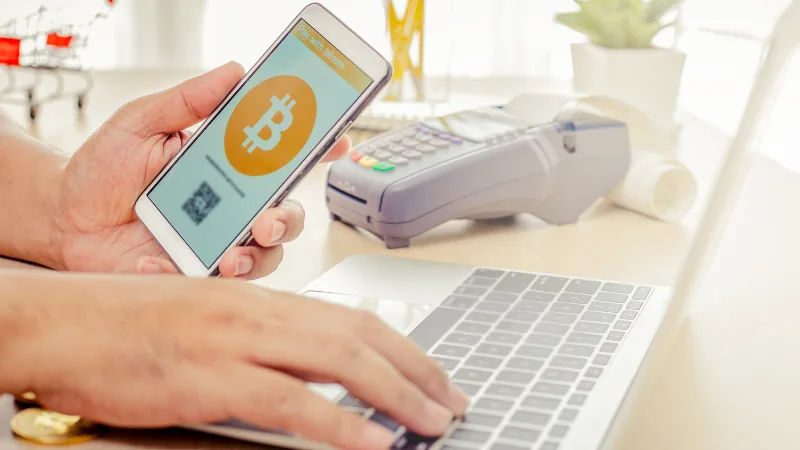
The legacy payment stack is a relic. Every time a customer swipes a credit card, a conglomerate of intermediaries – issuing banks, acquiring banks, and card networks – extracts a toll from the gross margin. Settlement drags on for days, and the threat of chargebacks leaves merchants vulnerable to fraud long after the product has left the shelf.
Transitioning to crypto rails is not merely a marketing play to attract tech-savvy clientele; it is an optimization of capital flow. It effectively removes the rent-seekers from the transaction. By setting up the infrastructure to accept digital assets, a business bypasses the friction of cross-border fees and currency conversion, unlocking a truly global market. Whether the objective is to hold Bitcoin on the balance sheet or instantly convert stablecoins to fiat to cover overhead, the mechanism remains superior: finality is achieved in minutes, fees are slashed to fractions of a percent, and the transaction is irreversible. This guide dismantles the technical barriers, showing exactly how to integrate this monetary layer into an existing checkout flow.
What Bitcoin payments Are
To accept Bitcoin is to opt out of the legacy banking delay. Fundamentally, it replaces the "pull" mechanic of credit cards – where a merchant requests funds and waits for authorization – with a "push" mechanic, where the customer sends value directly to the merchant's wallet. This distinction eliminates the days-long settlement period; the blockchain provides confirmation in minutes, without the possibility of a bank reversing the transaction weeks later via a chargeback.
The ecosystem has matured significantly since the early days of the Silk Road. The roster of who accepts Bitcoin as payment has evolved from niche cypherpunks to multinational conglomerates like Microsoft and AMC Theatres, signaling a shift from novelty to standard business practice. However, integrating this rail requires a bridge to the fiat world if the business intends to cover operational costs in dollars or euros. Selecting the right partner to facilitate this conversion is critical; a comprehensive review of major exchanges is often necessary to ensure the business isn't losing margin to excessive conversion fees or poor execution when off-ramping revenue.
Why accept Bitcoin payments
The primary incentive for any business is margin preservation. Traditional payment processors strip roughly 3% from every transaction, effectively taxing the merchant's gross revenue. Bitcoin eliminates this rent-seeking layer. By processing transactions on-chain, fees are often reduced to pennies – or a minimal 1% if using a specialized processor – stopping the bleed on the bottom line. Furthermore, the finality of the blockchain solves the headache of cash flow latency. Instead of waiting days for batch settlements to clear the banking system, funds are available almost instantly.
Beyond simple economics, adopting cryptocurrency as payment opens the door to a borderless economy. It removes the friction of currency conversion, allowing a merchant in Berlin to accept funds from a customer in Tokyo as easily as one across the street. This grants access to a specific, high-net-worth demographic – crypto-native users who prefer to spend their digital assets rather than liquidate them. Finally, the "push" nature of these transactions eradicates chargeback fraud. Once the network confirms the transfer, the deal is done; there is no centralized authority to reverse the transaction weeks later.
What you need before getting started
One does not simply open the gates to digital assets without fortifying the treasury. The first requirement is a dedicated commercial wallet. Mixing personal holdings with business revenue is an accounting nightmare waiting to happen. Whether choosing a self-custody hardware solution for maximum sovereignty or a custodial payment processor for ease of use, the endpoint must be secure and distinct.
Equally important is the volatility mitigation strategy. The market moves fast; a 10% swing in Bitcoin's price can occur during a lunch break. Therefore, before accepting crypto as payment, a clear protocol must be established: will the incoming assets be held on the balance sheet as a long-term store of value, or will they be instantly converted to fiat or stablecoins? Most sophisticated merchants opt for a hybrid approach – auto-converting the majority to cover overhead while retaining a percentage of profit in crypto to capture future appreciation.

