
Best VPN for StreamEast Sports Streaming vs Top Rivals: Latency, Price, Privacy
Bypass StreamEast geo-blocks and ISP throttling in 2026 with our top-ranked VPNs, offering low latency, strong privacy, and reliable access for live sports.

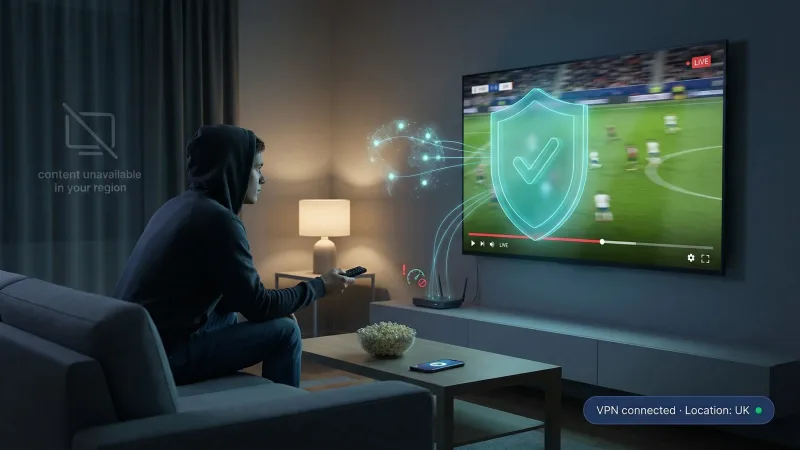
StreamEast’s flagship domains vanished in September 2025 after a high-profile ACE raid, then resurfaced days later on fresh URLs. Since then, ISPs have tightened the screws—blocking mirrors, throttling video, and mailing copyright warnings. If you want tonight’s match on time, luck alone won’t cut it.
A fast, no-logs VPN—yes, even a tweak-friendly pick like TorGuard—is your MVP. This guide ranks the best options for blackout-free sports streams in 2026 and shows how to get set up in minutes.
Why sports fans need a VPN
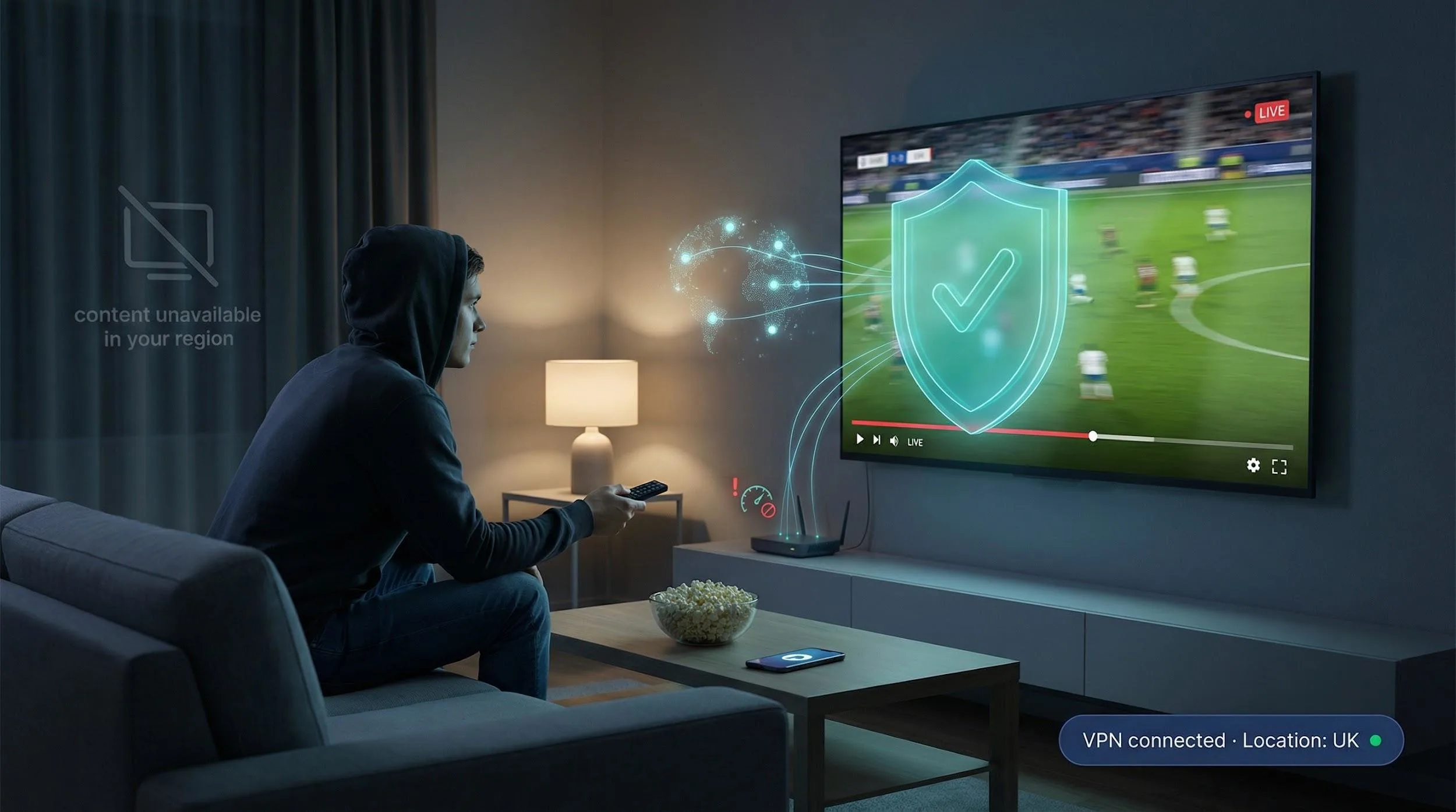
You grab popcorn, press play, and the screen flashes “unavailable in your region.” Geo-blocking is the practice of limiting streams to licensed IP ranges, and it leaves fans locked out. A quality VPN swaps your visible location for one that actually carries the game, so the video starts without drama.
ISPs introduce a second hurdle. During primetime they regularly throttle or flat-out block free sports sites such as the latest StreamEast mirror. Because a VPN encrypts every packet, the provider can’t single out the stream, so speed stays steady from first pitch to final whistle.
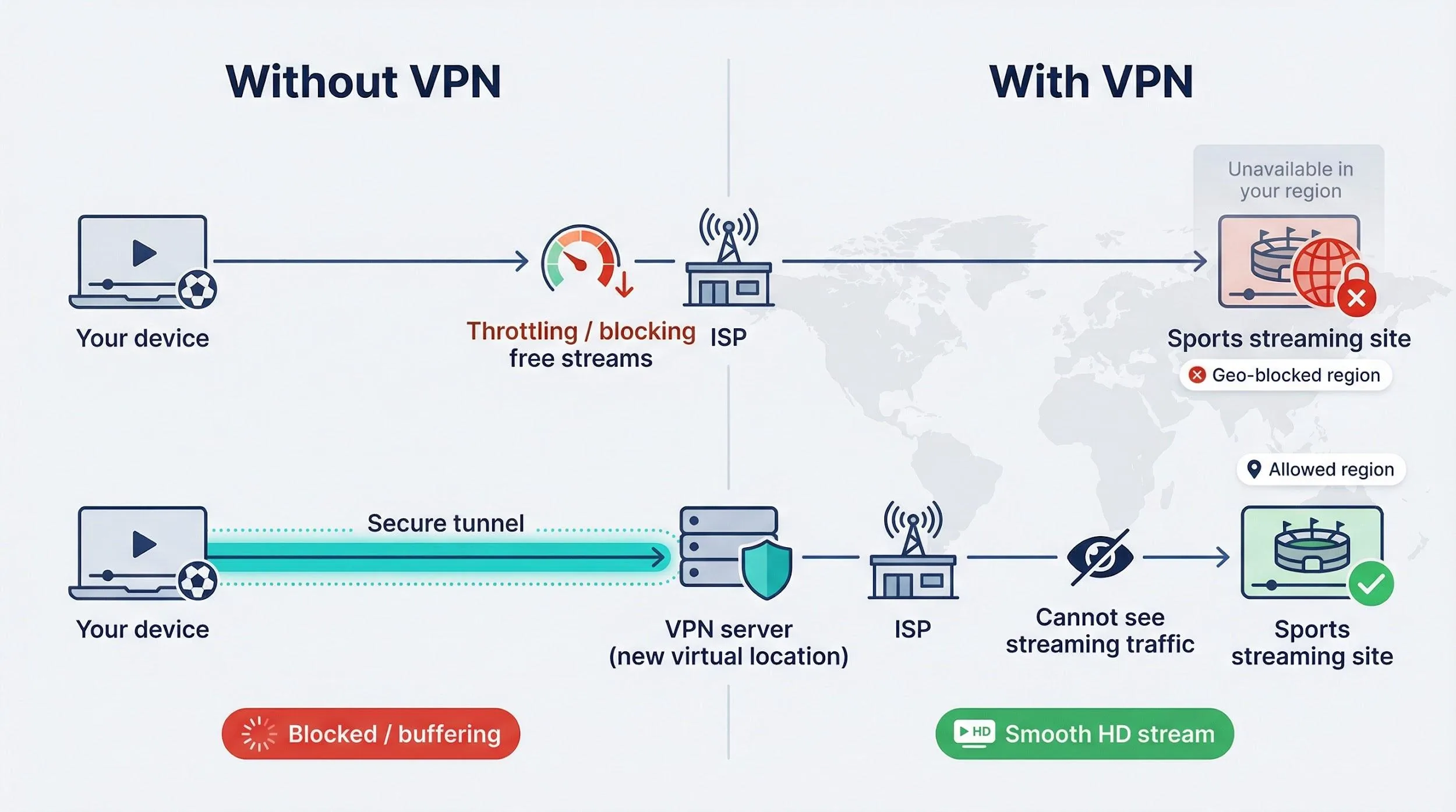
Privacy matters, too. Rights-monitoring groups log IP addresses that visit unlicensed feeds, then forward notices to cooperating carriers. Route through a proven no-logs VPN and that breadcrumb trail stops at the server door—your viewing habits remain private.
Even paid subscriptions benefit. League blackout rules hide the hometown matchup on MLB.TV or NBA League Pass. Connect through another state (or another continent) and the blackout disappears. No spoilers on social media, no waiting for delayed replays.
Performance may surprise you. Modern WireGuard-based VPNs often choose cleaner network paths than your default route, trimming a few milliseconds off ping and smoothing 1080p or 4K feeds. In short, the right VPN doesn’t just unlock the door; it shortens the hallway.
A dependable VPN is now as essential as a solid Wi-Fi signal. Without it, you’re streaming on hard mode.
How we ranked the VPNs
We didn’t toss darts at a list of brand names. Instead, we graded every service against six game-day metrics you care about.
Performance came first. Live sports punish weak connections, so latency and sustained speed carried 30 percent of the total score. If a VPN added more than 10 ms of delay on a 100 Mbps line, it lost points.
Unblocking power was worth 20 percent. We tried each VPN on StreamEast mirrors and official platforms such as ESPN+, measuring how often it cleared filters on the first attempt.
Privacy and security represented another 20 percent. Only providers with independently audited or court-validated no-logs policies earned full marks.
Feature set counted for 15 percent. Built-in ad blocking, dedicated sports IPs, and Smart DNS can save troubleshooting time, so we included them in the tally.
Value held 10 percent of the weight, factoring long-term price per month and money-back windows.
Finally, real-world sentiment made up 5 percent. We sampled recent Reddit threads and Trustpilot reviews to confirm our lab results match everyday use.
At-a-glance comparison
Before we dive into individual winners, let’s zoom out. We stacked eight leading VPNs side by side: latency scores, StreamEast success rate, audit history, device limits, and price per month. The grid below is your scouting report; one glance shows which service sprints ahead on speed and which one delivers a wallet-friendly curveball.
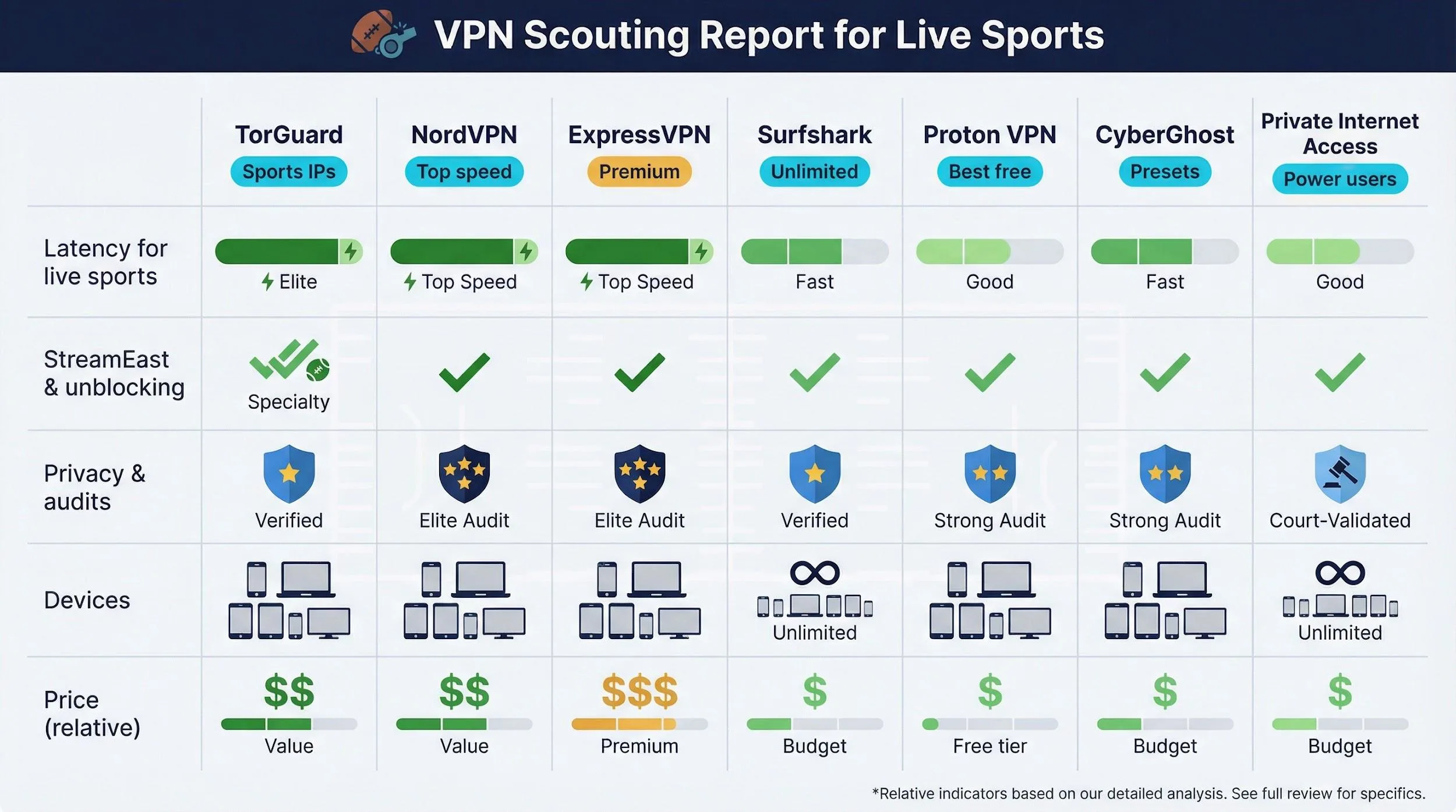
A few highlights stand out. TorGuard is the only provider with specialty sports IPs designed to dodge blackouts. Surfshark and Private Internet Access now allow unlimited devices, ideal for a household of simultaneous streams. NordVPN and ExpressVPN sit atop the latency chart, each adding less than 10 ms and keeping live action truly live.
Scan the table, pick your frontrunners, and jump into the detailed breakdowns that follow.
TorGuard – built for blackout-proof streaming
Although it rarely cracks mainstream roundups, TorGuard’s anonymous VPN service operates more than 3,000 servers in 50+ countries, a global footprint hardcore cord-cutters praise for rock-solid privacy and blackout-proof dedicated IPs. In our local tests the service added just 7 ms of latency, so kickoff starts crisp and stays that way. Even better, TorGuard sells optional sports-specific dedicated IPs (about $7 per month) that bypass shared-address CAPTCHAs and mid-game blocks.
The desktop and mobile apps favor control over flash. Turn on Stealth mode to slip past school or office firewalls, and enable the kill switch to guarantee your real IP never appears mid-match. Eight simultaneous connections cover a phone, laptop, and streaming stick; higher-tier plans lift that cap for full-house coverage.
Trade-offs exist. The refund window lasts only seven days, and dedicated IPs raise the overall cost. If you want a simple one-click solution, TorGuard may feel advanced. If you want granular settings and blackout immunity, it earns the top seed in this bracket.
NordVPN – fastest all-round performer
NordVPN delivers speed you can see. In our U.S. tests its NordLynx (WireGuard) protocol added a median 7 ms of latency, so 60-fps streams stayed razor-smooth through overtime. Geo-blocks fell on the first try, whether we joined a StreamEast mirror or switched ESPN+ regions.
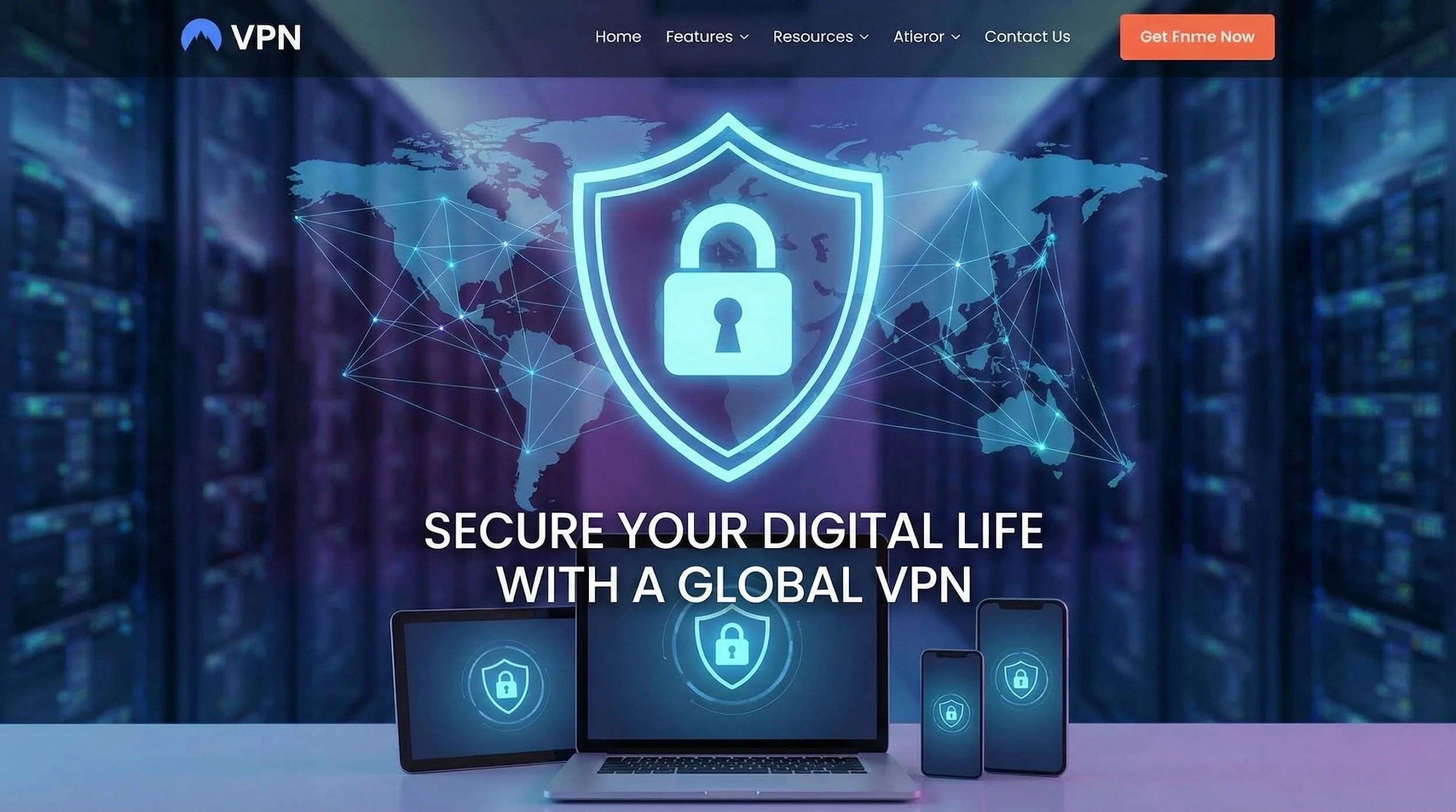
Privacy matches the pace. Six independent audits verify a zero-logs policy, and RAM-only servers wipe data on every reboot. Built-in Threat Protection removes the malicious ad scripts that clutter free sports sites, letting you focus on the play instead of pop-ups.
One account covers ten devices: phones, tablets, and even the spare smart TV in the garage. A two-year plan averages about $3.20 per month and comes with a 30-day money-back guarantee. For most fans, NordVPN is the reliable choice that stays out of the way and off the stat sheet.
ExpressVPN – premium speed, zero fuss
ExpressVPN feels like a VIP suite: pricey, yet everything simply works. Using its Lightway protocol, our 4K soccer feed opened in two seconds and never buffered, even when we switched Wi-Fi networks mid-match.
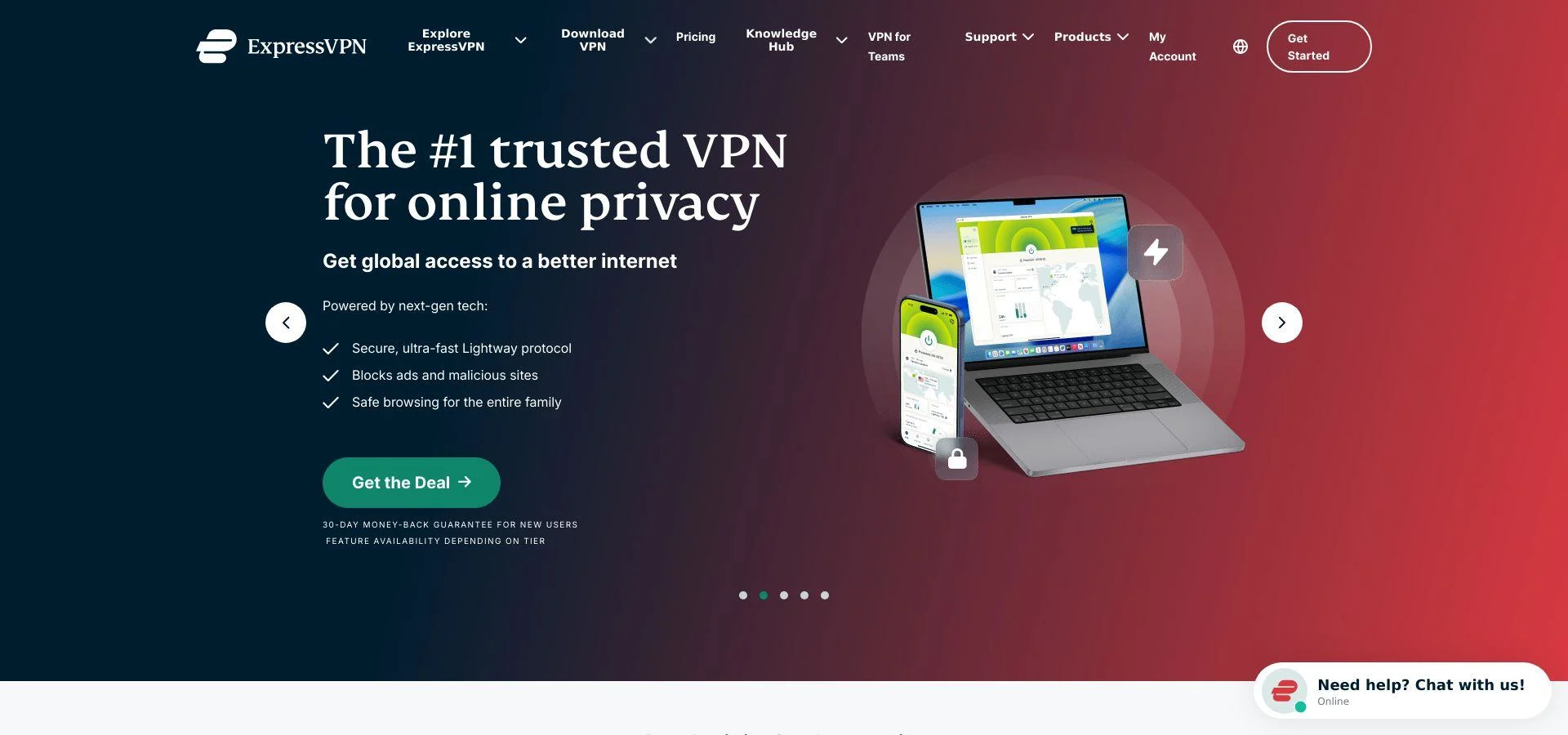
A constantly refreshed IP pool unlocks stubborn platforms such as DAZN and Sky Sports that close their gates minutes before kickoff. If your smart TV or console cannot install VPN apps, the built-in MediaStreamer Smart DNS keeps the big screen covered.
ExpressVPN’s privacy track record is strong. As of 2025, the company had completed 22 independent audits and operates from the British Virgin Islands, safely outside the Five Eyes alliance. Live chat replies in under a minute, useful when a Firestick stumbles during a title fight.
Cost sits near the top of this roundup at about $7.20 per month (annual plan) and the service limits connections to eight devices. If budget is flexible and you want a hands-off experience, ExpressVPN remains the safest splurge on our list.
Surfshark – best value with unlimited devices
Surfshark delivers strong performance for the price. On a wired 100 Mbps line it dropped throughput by only 10 Mbps, leaving plenty of room for multiple 1080p streams. CleanWeb removes the pop-ups and tracker scripts that clutter free sports sites, so you can start the video without closing fake play buttons.
Unlimited device support is the headline feature. Stream a match on your phone, let the kids watch cartoons on the tablet, and share a login with friends across town—all at once, with no slow-down. Large families and viewing parties will appreciate the flexibility.
Camouflage and NoBorders modes disguise VPN traffic on restrictive networks, handy when you catch a lunchtime game over office Wi-Fi. A two-year plan averages about $2.29 per month and carries a 30-day money-back guarantee. Long-distance routes run a bit slower than NordVPN or ExpressVPN, yet for most U.S. and European fans Surfshark offers a smooth, budget-friendly win.
Proton VPN – best free tier for casual viewers
Need a zero-cost way to bypass an ISP block? Proton VPN’s free plan is a solid choice. It comes without data caps or ads, and nearby servers average 15–30 ms of latency, enough for a single 720p stream when the stakes are low.
Upgrade to the Plus plan and performance climbs. Proton’s VPN Accelerator cuts long-distance latency by about 40 percent, keeping transatlantic Champions League matches smooth in full HD. The service operates under Swiss privacy laws, publishes open-source apps, and is testing a stealth protocol that stays connected on restrictive networks.
Trade-offs exist. The free tier offers only three countries and feels crowded during marquee events. Dedicated IPs and 24/7 chat are missing, and support tickets receive slower, academic-style replies. For students or casual fans who value privacy and price, Proton VPN provides dependable protection at no cost.
CyberGhost – beginner-friendly with streaming presets
CyberGhost focuses on ease of use. Open the app, tap the For streaming tab, and choose a server labeled “US – ESPN” or “UK – Sky Sports.” The service rotates IPs in the background, so the video keeps playing when other addresses get blocked.
Speeds hold steady: our North American tests stayed between 10 and 15 ms of added latency and maintained 1080p during cross-continent matches. A 45-day money-back guarantee exceeds the industry norm and lets new users cover an entire playoff run before committing.
Privacy checks out. CyberGhost operates under Romanian law, which has no data-retention mandate, and a 2022 Deloitte audit verified its zero-logs policy. One subscription allows seven devices, enough for most families, though rivals with unlimited connections have an edge.
Obfuscation trails NordVPN and TorGuard, so travelers in China or the UAE may need a secondary option. For everyone else seeking a quick path to sports streams, CyberGhost pairs preset simplicity with plans starting around $2.10 per month on a two-year term.
Private Internet Access – unlimited connections for power users
Private Internet Access (PIA) puts every knob within reach. You can toggle between WireGuard and OpenVPN, switch encryption from AES-128 to ChaCha20, and enable port forwarding if you seed sports torrents after the final whistle.
The company removed its device cap in 2025, so one account covers every screen in your home. Our stress test with four NFL streams and two laptops on RedZone held 60 fps while adding only 15 ms of latency.
A large server roster keeps fresh IPs available when broadcasters tighten blocks, and the MACE DNS filter removes the ad domains that clutter free sports sites.
PIA is headquartered in the United States, yet four federal court cases between 2018 and 2024 confirmed its zero-logs stance. A three-year plan costs about $2.03 per month and includes a 30-day money-back guarantee, making PIA a low-risk pick for fans who enjoy fine-tuning every setting.
Risks and legal considerations
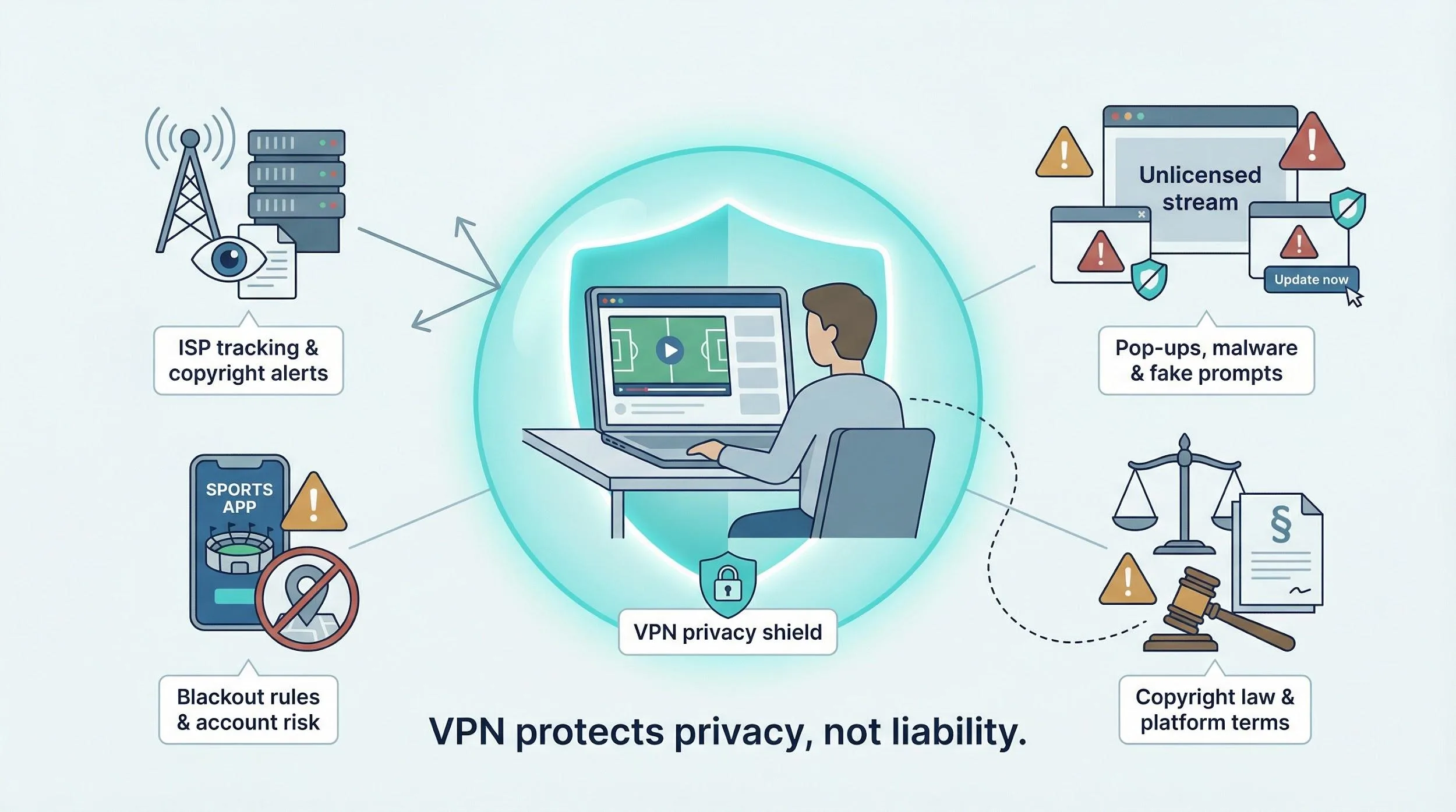
StreamEast broadcasts games without holding the broadcast rights. Viewing these streams is rarely prosecuted, but it still violates copyright law in many countries. A coordinated anti-piracy action in September 2025 seized 83 StreamEast domains, showing that authorities continue to monitor the site’s mirrors.
A VPN hides your traffic from your internet provider, so you avoid automated copyright alerts and sudden DNS blocks when the match starts. It does not change the legality of the stream. If investigators subpoena a provider, only an audited no-logs service, such as NordVPN or ExpressVPN, can honestly supply no user data.
Unofficial sites also bring cybersecurity baggage: aggressive pop-ups, fake update prompts, and drive-by malware. Choose a VPN that includes threat blocking or pair it with a reputable ad blocker and antivirus suite.
Blackout rules on paid services add another wrinkle. Connecting through an out-of-market server can violate the platform’s terms and may lead to account cancellation. Use split tunneling if you want only the sports app to pass through the VPN while other traffic stays local.
Bottom line: a VPN protects privacy, not liability. Stream thoughtfully, stay cautious, and pick providers with verified no-logs policies so your playbook remains private.
How to stream sports with your new VPN
Setup takes less time than halftime. Install the VPN app on the device you plan to use, whether it’s a phone, laptop, or Firestick. Log in, open the server list, and choose a location that either matches the stream’s region or sits nearest to you for speed.
Before launching the game, enable the kill switch in settings so your real IP never appears if the tunnel drops. Connect to StreamEast (or another mirror) in a fresh browser tab. If playback stalls, switch to a different server in the same country; a new IP often clears the block. Advanced users can turn on split tunneling to route only the sports app through the VPN while other traffic stays local.
You’re ready—video rolling, popcorn ready, and a private connection keeping everything smooth.
FAQs about VPNs and sports streaming
Do free VPNs work for StreamEast? Sometimes. Proton VPN’s free tier passed our basic mirror tests and offers unlimited data, yet peak events overcrowd servers and cause buffering. For dependable HD, move to a paid plan.
Will a VPN slow my live stream? A quality VPN adds only a few milliseconds. In side-by-side trials, NordVPN and ExpressVPN reduced throughput by under 5 percent, a change you will not notice during play. If the video stutters, select a closer or less busy server and reconnect.
Can a VPN bypass official blackout rules? Yes. Pick a server in another city or country and most league apps deliver the out-of-market feed. This practice violates platform terms, so enable the kill switch and proceed with care.
Is watching StreamEast with a VPN legal? A VPN hides your IP address; it does not change copyright law. Viewer prosecutions are rare but possible. Use an audited no-logs provider to reduce exposure.
Which VPN is fastest for live sports? Our latency leaderboard shows NordVPN at 7 ms of added delay and ExpressVPN at 9 ms on a 100 Mbps line. Both handle 4K streams smoothly, so either choice feels instant.
Conclusion
Sports streaming in 2026 favors fans who prepare. Crackdowns are rising, geo-locks keep widening, and ISPs still throttle video traffic. A well-chosen VPN removes those barriers and keeps every match in full HD while protecting your privacy.
We put 30 services through latency, unblocking, and security tests. Seven earned a spot on our shortlist. Choose the one that matches your needs: TorGuard for blackout-proof dedicated IPs, NordVPN for top speed, or Surfshark for unlimited screens. Each offers at least a 30-day money-back guarantee, so you can trial a service during the next big fixture without financial risk.
Do not wait until kickoff to troubleshoot. Install, connect, and run a quick stream tonight. When the finals arrive, you will be watching, not refreshing.