
7 Best Proxies for Lead Generation in 2026
Compare the 7 best proxies for lead generation in 2026 with provider reviews, a pricing snapshot, and practical tips for stable collection and cleaner data.


Lead generation runs through scheduled collection, enrichment, re-checks, and validation cycles, where proxy quality affects timing, completion rate, and record consistency. Stable routing and predictable session behavior keep these stages aligned across recurring refresh runs.
According to Anura (February 2026), bot traffic accounts for 51% of all web traffic, which increases filtering pressure in the same environments where lead generation pipelines operate. This makes proxy stability a direct factor in usable output.
As a result, unstable routing leads to more retries, slower completion, and broken update order across the dataset. Stable proxy behavior keeps the workflow sequence intact and helps refresh cycles finish on schedule.
How Do Proxies Support Lead Generation?
Teams use proxies to keep lead collection stable across repeated runs. Lead sources often include directories, marketplaces, company sites, and social platforms, and those sources react differently to request patterns. Proxies help maintain access quality when the workflow revisits the same targets every day.
Access Stability
Lead generation pipelines depend on a predictable request flow. A small routing issue in one source can slow the next task in the queue and create gaps in the collection window. Stable proxy behaviour helps keep the sequence intact during scheduled jobs.
Coverage Continuity
Lead generation usually spans many regions, categories, and source types. Proxies support broader coverage by keeping routing consistent during collection and enrichment passes. This helps businesses preserve record quality when the same sources are checked again later.
Workflow Timing
Most pipelines now include retries, refresh jobs, and field validation. Proxy quality affects how cleanly those steps finish inside the planned schedule. Better timing control improves record freshness and reduces cleanup work after the run.
What Makes Lead Generation Data Reliable?
Lead generation quality depends on whether the workflow collects complete records on time and keeps them consistent across repeats.
- Source Consistency: The same targets should remain reachable across recurring collection cycles.
- Session Stability: Multi-step paths should finish without identity breaks during extraction or enrichment.
- Geo Accuracy: Regional routing should stay consistent when the workflow checks location-sensitive fields.
- Refresh Timing: Scheduled updates should finish within the intended collection window.
- Field Completeness: Records should retain the required business fields across repeated runs.
- Duplicate Control: Retry logic should limit duplicate capture and preserve cleaner output.
- Early Validation: Pre-run checks should catch routing and geo issues before traffic scales.
How to Set Up Proxies for Lead Generation?
Lead generation works better when proxy rules match the task type. A single routing pattern rarely fits discovery, extraction, enrichment, and re-validation equally well.
Task-Based Routing
Assign proxy behaviour by workflow stage. Discovery jobs usually need broader rotation, while deeper extraction and verification often need stronger continuity. This keeps routing aligned with how each task actually runs.
Session Rules
Set sticky or rotating mode before launch and keep the rule consistent per task group. This reduces mid-run identity changes and lowers recovery noise in the queue. Clear session rules also make debugging faster when a source fails.
Early Validation
Run a small live test before scaling traffic. Check session behaviour, geo accuracy, and completion timing on the real targets. Early validation catches routing problems before they spread across the full lead generation cycle.
Which Proxy Providers Fit Lead Generation in 2026?
Lead generation workflows depend on stable routing across collection, enrichment, and re-check cycles, so proxy performance directly affects record completeness and refresh timing. Provider choice matters most at the operational level, including session behaviour, geo control, and how cleanly the service fits the collection setup.
Here are seven proxy providers that are best-suited for lead generation in 2026.
| Provider | Trustpilot Rating | Products and Services | Pricing (Residential) |
| 1. Live Proxies | 4.6 | Rotating residential proxies, rotating mobile proxies | From $70/4GB (200 IPs, 30 Days) |
| 2. IPRoyal | 3.9 | Residential proxies, datacenter proxies, ISP proxies, mobile proxies | From $1.75/GB |
| 3. Infatica | 3.4 | Residential IPs, Residential IPv6, Static ISP IPs, Mobile IPs, Shared DC, Dedicated DC | From $2.6/GB |
| 4.ProxyEmpire | 4.3 | Rotating residential, rotating mobile, dedicated mobile, rotating datacenter | From $1.50/GB |
| 5. Rayobyte | 4.2 | Residential proxies, ISP proxies, datacenter proxies, mobile proxies | From $0.90/GB |
| 6. Oxylabs | 3.9 | Residential proxies, mobile proxies, ISP/private proxies, datacenter proxies | From $4/GB (Promo Plan) |
| 7. DataImpulse | 3.5 | Residential, datacenter, mobile, and ISP proxies | From $1/GB (New Users) |
1. Live Proxies
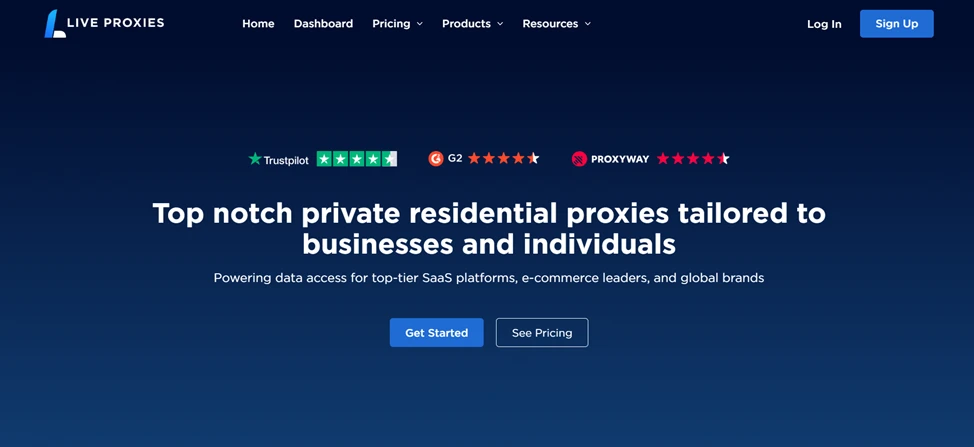
Live Proxies works well as a rotating proxy option for lead generation workflows that run repeated collection and verification cycles. The service is positioned with millions of IPs across 55+ countries, which supports broad geo coverage for localized prospecting and recurring checks. It also includes a proxy tester tool for pre-run validation before traffic moves into production.
The platform supports sticky sessions up to 24h for longer multi-step tasks that need identity continuity across extraction and re-check stages. It also uses a client-specific allocation model with target-level separation, which helps keep routing behavior stable on the same domains across repeated runs. This setup is useful for lead-gen pipelines that revisit the same sources on a schedule.
2. IPRoyal
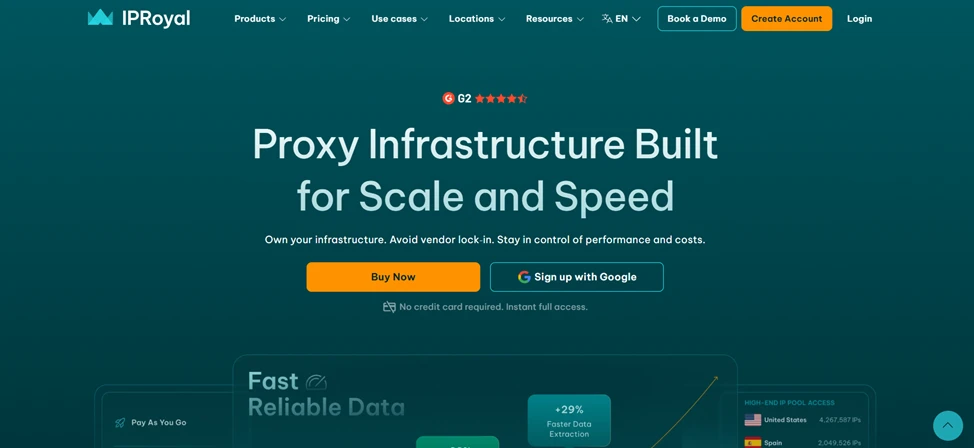
IPRoyal is a strong option for lead generation workflows that need broad residential coverage and precise location targeting. The service lists 34M+ residential IPs across 195 countries and supports targeting by country, state, and city. It also supports flexible rotation timing from 1 second up to 24 hours.
The product mix includes residential, datacenter, ISP, mobile, and sneaker proxies, which help run different lead-gen tasks under one provider. Residential traffic is positioned as non-expiring, which is useful when collection volume changes across weeks or campaigns. This structure fits recurring prospecting and re-validation cycles with variable usage.
3. Infatica
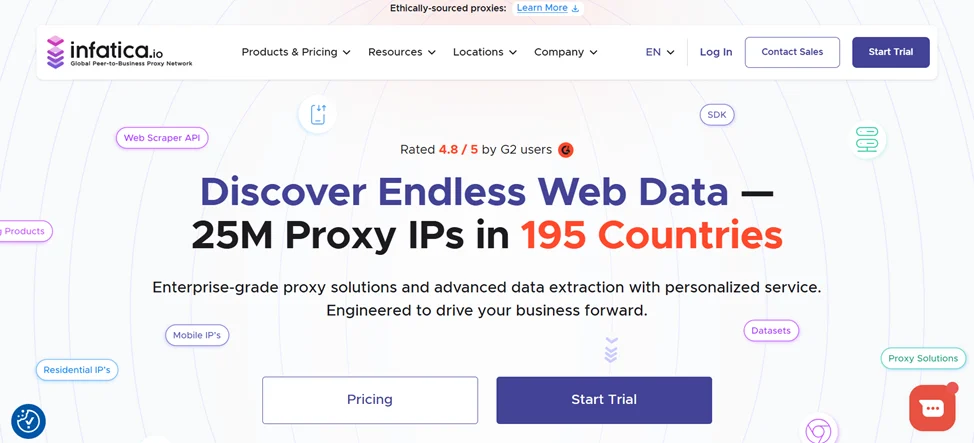
Infatica fits lead generation workflows that need stable residential routing with clear performance metrics. The service positions a 15M+ residential IP pool in 100+ locations, along with 99.9% uptime and an average response time of around 0.4 seconds. These numbers support scheduled collection and enrichment tasks that depend on predictable response quality.
Targeting controls include country, state, city, ASN, and ZIP filtering, which helps narrow traffic to specific local markets and network profiles. The platform also supports sticky sessions for multi-step collection paths that need continuity across several requests. Its broader stack includes residential, mobile, datacenter, ISP, and Web Unlocker services for different lead source types.
4. ProxyEmpire
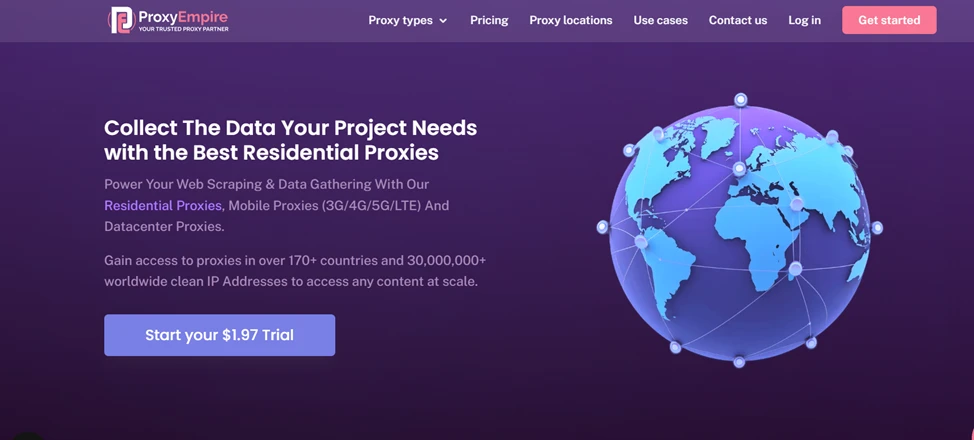
ProxyEmpire is a practical choice for lead generation when a workflow combines residential and mobile traffic. The provider lists 9.5M+ residential IPs across 170+ countries and also offers 4G and 5G mobile proxies for stricter targets. This mix supports geo-specific prospecting, verification, and enrichment across different source categories.
The service supports targeting by country, region, city, and ISP, which helps align routing with local directories and regional search results. It also supports rotating and sticky session modes, so task settings can match broad crawling or multi-step extraction. This structure works well for phased lead-gen rollouts that need different routing patterns inside one pipeline.
5. Rayobyte
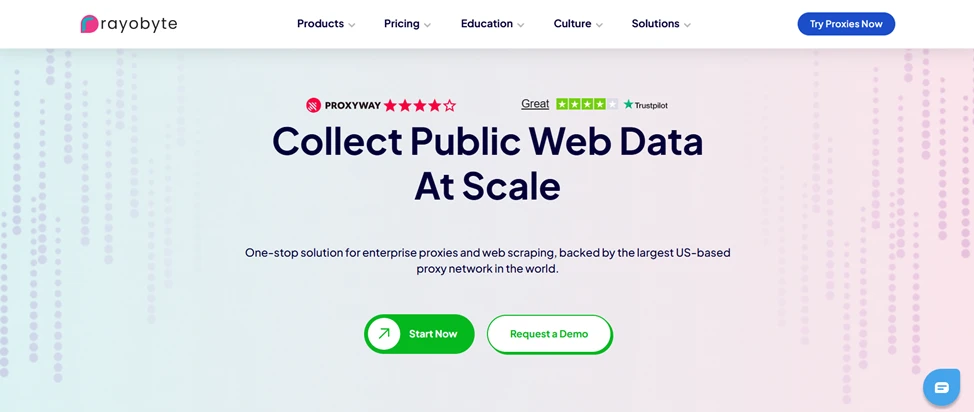
Rayobyte works well for lead generation workflows that need local geo targeting and stable sessions for multi-step tasks. Its residential offer highlights a 40M+ proxy pool with geo-targeting by city, region, or country, plus sticky sessions for continuity across repeated requests. This setup is useful for territory-specific lead collection and localized contact validation.
The provider also positions ethically sourced residential IPs with end-user consent, which is relevant for long-running data operations with compliance requirements. Its broader catalog includes residential, ISP, mobile, and datacenter proxies, and residential plans support unlimited threads and sessions. That combination helps when lead-gen pipelines scale by source count and concurrency.
6. Oxylabs
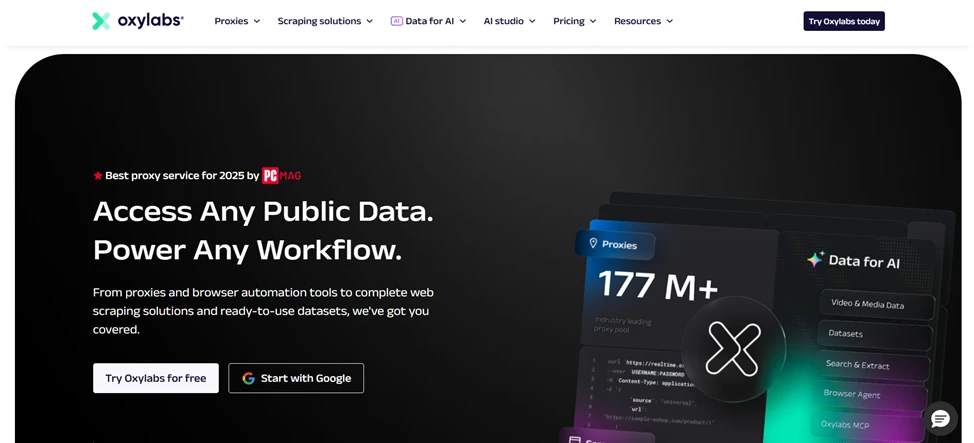
Oxylabs fits larger lead generation pipelines that need deep residential coverage and precise routing controls. The service positions 175M+ residential IPs across 195 countries and supports targeting by country, city, state, ASN, and ZIP. This gives strong coverage for both broad market collection and location-specific verification.
It supports rotating and sticky sessions for different collection patterns and also offers a wider stack that includes residential, mobile, ISP, datacenter, and scraping API products. This setup is useful for lead-gen operations that work across directories, maps, marketplaces, and social sources in the same workflow. The targeting depth also helps keep route selection consistent during recurring refresh runs.
7. DataImpulse
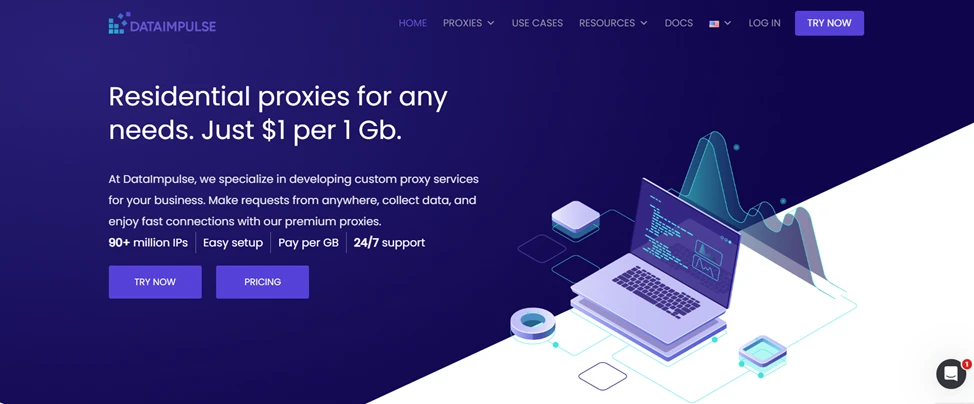
DataImpulse is a good fit for lead generation workflows that need simple deployment and direct session control. The provider lists 90M+ residential IPs in 194+ locations and supports both rotating and sticky sessions, which helps with recurring collection and re-validation jobs. It also supports HTTP and SOCKS5 for common scraper and browser setups.
Targeting includes country, state, city, ZIP, and ISP filters for segmented prospecting and regional data collection. Traffic is positioned as non-expiring, which helps when monthly volume changes across campaigns and validation cycles. The service also publishes a 99.84% residential success metric, which is useful for estimating retry load in production.
What Breaks Lead Generation Workflows?
Lead generation workflows usually fail at the access layer before field parsing fails. The most common issues come from unstable sessions, inconsistent geo behaviour, and retry spikes that slow the queue.
Session Resets
Many lead collection tasks need several requests to complete one record. Session resets can interrupt pagination, profile expansion, or field verification. Stable session handling keeps the task state intact from the first request to the final capture.
Geo Drift
Geo drift happens when the routing changes location during a repeat check. This can change visible fields, page variants, or search results. Consistent geo settings help preserve comparability across recurring runs.
Retry Spikes
Unstable routing increases retries, and retries increase queue load. The pipeline then spends more time recovering failed paths instead of collecting new records. Controlled routing reduces retry spikes and supports steadier throughput.
Conclusion
The best proxy setup for lead generation keeps routing stable, sessions predictable, and geo behavior consistent across recurring collection cycles. Provider choice has the strongest impact on completion rate, retry load, and record quality when workflows scale. A clean rollout with task-based routing and early validation keeps lead data more complete and refresh schedules more reliable.