


How B2B Teams Reuse Static Assets with AI Video
B2B teams can multiply the value of static marketing assets by converting them into short AI videos for multiple channels, extending their lifespan beyond initial campaigns.

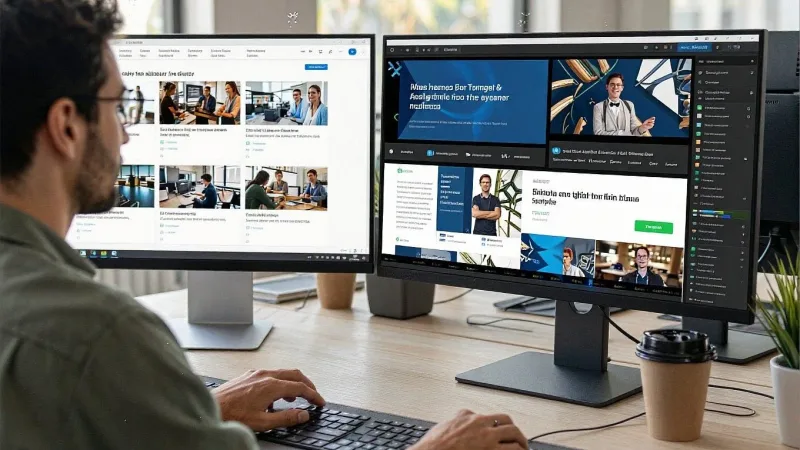
I did not arrive at this idea because I wanted to chase the latest AI trend. I arrived at it the boring way: by watching good marketing assets die too early.
In most B2B teams I have worked with or studied closely, the real problem is rarely a total lack of content. The team usually has webinar covers, product visuals, event banners, paid campaign creatives, pitch deck slides, customer story graphics, landing page headers, and internal design files that were expensive to produce. What goes wrong is more subtle. Those assets are used once, maybe twice, and then quietly disappear into folders while the team moves on to the next campaign.
That pattern started bothering me because I kept seeing the same contradiction. On one side, marketers said they needed more content for social, retargeting, nurture emails, SDR follow-ups, and sales enablement. On the other side, they were already sitting on a library of visuals that still had value. The issue was not scarcity. It was format mismatch.
That is exactly why I began paying more attention to tools like GoEnhance AI image to video. Not because I think every marketing team suddenly needs cinematic video production, but because even a small amount of motion can extend the working life of an existing asset.
The real content gap in B2B is often not volume but format
I have seen teams publish a thoughtful whitepaper, design a polished hero banner for it, promote it for two weeks, and then move on as if the creative itself had expired. In reality, the message may still be relevant for months. The static format is what ages fastest.
That matters more now than it did a few years ago. The same audience that once engaged with a single PDF cover image now encounters content inside a much noisier environment: LinkedIn feeds, email previews, retargeting placements, paid social, on-site content blocks, and sales follow-up messages. Static images still have a place, but they do not stretch as far as they used to.
When I map campaign performance over time, I often notice that marketers underestimate how much distribution depends on presentation. A useful idea wrapped in a format with weak stopping power will fade faster than it should. That is one reason motion assets have become so practical. They do not need to be long, complex, or expensive. They just need to give an old message a new surface.
Why static campaign assets lose value earlier than teams expect
There is a habit in marketing operations that looks efficient on paper and wasteful in practice. A team builds assets around a launch, pushes them through one campaign window, then archives them because the calendar has already moved on. The asset gets treated as campaign-specific even when the underlying story is broader.
I have done this myself. A product comparison graphic becomes “last month’s asset.” A webinar visual becomes “event creative.” A customer quote card becomes “sales collateral.” The label narrows the future use of the asset more than the asset itself does.
Once I started reviewing content libraries with reuse in mind, I found the same opportunities again and again:
| Existing asset | Usual fate | Better second life |
| Webinar thumbnail | Used once in registration push | Animated clip for replay promotion |
| Product hero graphic | Lives only on landing page | Short motion asset for paid social |
| Case study cover | Attached to PDF only | Looping visual for email nurture |
| Event banner | Retired after campaign | Teaser clip for recap or follow-up |
The point is not that every graphic deserves to become a video. It is that many of them deserve one more life before they disappear.
A smarter reuse workflow starts with what the team already has
The teams that get the best return from AI video are usually not the ones trying to replace their whole production process. They are the ones using it to bridge the gap between static design and lightweight motion.
A single product image can become a short ad opener. A polished illustration from a research report can become a LinkedIn teaser. A landing page hero visual can become motion for a retargeting sequence. Even subtle movement can make a familiar asset feel newly publishable.
What I like about this approach is how grounded it is. It does not ask the team to invent a new message from nothing. It asks them to look at existing assets and ask a better question: where else could this idea still work if the format changed?
That is where AI video starts to feel less like novelty and more like operational leverage.
This is not only a social media play
One mistake I see in discussions around AI video is the assumption that it belongs only to brand awareness or top-of-funnel social content. In practice, I think its value shows up across the full commercial workflow.
Sales teams can use lightweight motion assets in follow-up sequences. ABM teams can create more tailored campaign variations without waiting for a full creative cycle. Customer marketing teams can give old success stories a fresh surface. Product marketing can turn static release visuals into clips that make launch communications feel more active.
When I speak with marketers who are skeptical, I usually ask them to ignore the word “video” for a moment and think in terms of asset utility. If the same creative idea can support more channels, more touchpoints, and more audience segments, its value increases. That is the real shift.
Face swap video has a place in creative testing too
I know this is the point where some B2B readers roll their eyes. Face swap still sounds like a consumer gimmick to many people. I understand that reaction. My own view changed only after I started looking at it through the lens of experimentation rather than entertainment.
In certain campaign environments, an AI face swap video workflow can help teams test different character-led hooks, localized versions, or concept directions without committing full production resources to each variation. That does not mean every output is ready to publish as-is. It means creative testing gets cheaper.
This is especially useful when a campaign depends on human presence. Audiences react differently to tone, facial cues, style, and visual familiarity. If a team wants to compare alternate directions before investing further, a faster mockup process can reveal useful patterns early.
The strongest teams I know are not using AI to avoid judgment. They are using it to reach judgment faster.
The real ROI is not ‘we made a video’
When I review reuse projects, I almost never judge them on the quality of a single output alone. I look at what the asset enabled afterward.
Did it help the team publish more consistently? Did it give paid social more creative variation? Did it extend the life of a campaign theme that would otherwise have faded too soon? Did it give sales a more current-looking follow-up asset? Did it reduce creative fatigue?
Those are better questions than “Was the video impressive?”
From that perspective, the most interesting thing about AI video in B2B is not production. It is multiplication. One good visual can become several usable touchpoints instead of a single exhausted deliverable. For lean teams, that matters more than hype.

