What Can a Company Domain Tell Sales? Inside VAIS AI-Powered Account Intelligence
Learn how VAIS AI-Powered Account Intelligence turns company-level intent signals into momentum, confidence, sales hypotheses, and actionable next steps.

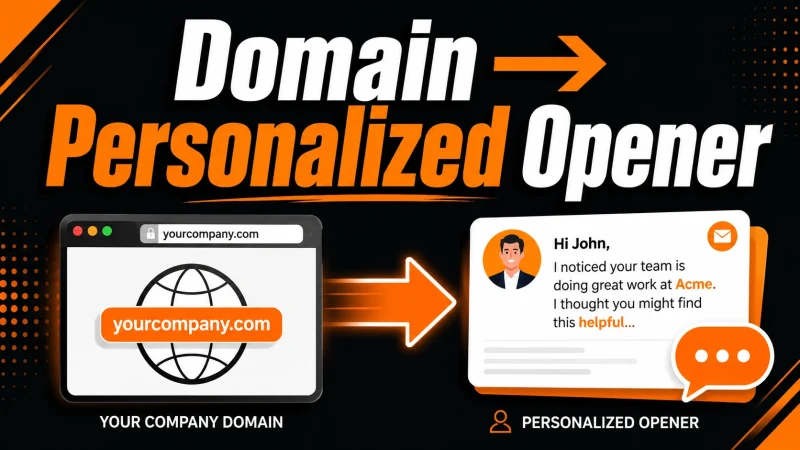
A company domain can tell a sales team more than where to send an email. Connected to the right intent data, it can reveal what an organization is researching, whether that interest is gaining momentum, and which signals deserve a closer look.
That’s where VAIS AI-Powered Account Intelligence comes in.
A seller enters a company domain. Bombora provides topic-level intent signals and historical activity. VAIS processes those signals, identifies momentum, groups related themes, and uses AI to turn the evidence into a practical account brief.
The goal isn’t another alert. It’s helping sales understand what a signal may mean, how confident they should be, and what to investigate next.
If you’re new to the category, start with What Is Account Intelligence? A Complete Guide for B2B Sales Teams.
For a deeper buyer-intent-to-action view, read AI-Powered Account Intelligence: How B2B Sales Teams Turn Buyer Intent Into Action.
Key Takeaways
- Bombora provides underlying topic-level intent signals.
- VAIS processes signal changes before AI interpretation.
- Momentum can be Surging, Rising, Stable, Cooling, or Declining.
- Confidence reflects interpretation strength, not purchase probability.
- Intent history is maintained at weekly granularity.
- AI-generated initiatives, pains, and priorities remain hypotheses to validate.
How Does VAIS AI-Powered Account Intelligence Work?
Think of the feature as a signal-to-decision pipeline.
| Layer | What happens | Output |
|---|---|---|
| Domain lookup | A company domain is matched to available intent activity | Intent Topic signals |
| Signal processing | Scores and week-over-week changes are evaluated | Intent signal Direction |
| Momentum classification | Movement is categorized | Surging to Declining |
| Topic organization | Related signals are grouped | Intent families |
| AI interpretation | Prepared evidence is analyzed in context | Priorities, initiatives, pains, personas |
| Action layer | Recommendations are generated | Why-now and outreach guidance |
The order matters. Signal changes and trend labels are processed first. AI interprets the prepared evidence afterward.
For a better understanding, know What Is Intent Data? and Build High-Intent ABM Lists with VAIS.
A simple example
One rising topic may not justify outreach. Several related topics strengthening together create a more meaningful pattern and a stronger hypothesis for the seller to validate.

Are you already collecting intent signals but leaving reps to interpret them manually? Explore Valasys AI Score to see how VAIS helps teams prioritize accounts and move toward clearer sales decisions.
Observed, Calculated, or AI-Inferred?
Not every item in an account brief has the same status.
| Information type | Example | How sales should use it |
|---|---|---|
| Observed | Research activity around a topic | Treat as evidence |
| Calculated | Rising or Cooling momentum | Evaluate direction |
| AI-inferred | Likely initiative or business pain | Validate as a hypothesis |
An 84% confidence score does not mean an account has an 84% chance of buying. It means the available evidence provides relatively strong support for that interpretation.
A practical pattern is evidence → hypothesis → question.
Instead of stating an initiative as fact, ask whether it is becoming a priority. When VAIS recommends relevant roles, reps can move from account context to actual stakeholders with the Find Prospect feature.
Why Signal Freshness Matters
Intent data has a shelf life. Activity from months ago shouldn’t create the same urgency as related topics accelerating now.
VAIS maintains intent history at weekly granularity, with ongoing incremental synchronization. Profiles can refresh when underlying data changes or when an existing profile reaches its refresh period.
| Momentum | Practical interpretation |
|---|---|
| Surging | Activity strengthened sharply |
| Rising | Interest appears to be increasing |
| Stable | Activity is relatively consistent |
| Cooling | Interest appears to be weakening |
| Declining | Activity has fallen further |
Momentum is direction, not destiny. Valasys also explains why signals need to move beyond isolated dashboards in How B2B Marketers Can Stop Losing Intent Signals.

What Happens When Intent Data Is Thin?
Not every company produces the same depth of insight. Limited evidence can produce a less-specific, lower-confidence interpretation, while a company absent from the underlying dataset may return no result. Conflicting signals also shouldn’t automatically create a high-priority account.
Good AI should expose uncertainty, not polish it away.

Common Mistakes
| Mistake | Why it hurts | Better approach |
|---|---|---|
| Treating every surge as a buying event | Creates false urgency | Review related topics and momentum |
| Presenting AI hypotheses as facts | Makes outreach intrusive | Validate through discovery |
| Reading confidence as purchase probability | Overstates certainty | Treat it as evidence strength |
| Ignoring thin data | Produces weak personalization | Reduce specificity |
| Automating outreach immediately | Scales bad assumptions | Validate before activation |
VAIS AI-Powered Account Intelligence is primarily a sales-intelligence and decision-support layer. It can recommend opening messages, personas, and outreach approaches, but it doesn’t automatically execute email, LinkedIn, or phone outreach.
Better automation starts with better judgment.
Want to turn prioritized accounts into a coordinated ABM motion? Use the Valasys Account-Based Marketing Guide for the strategy layer, or explore the Valasys ABM platform when you’re ready to connect intent-led targeting with activation.
How Should Teams Measure AI-Powered Account Intelligence?
A brief can be generated in approximately three seconds when data is available. That is system-generation time, not a promise that every research workflow becomes a three-second task.
Track research time per account, time from signal to seller review, priority accounts actioned, positive replies versus a control, meetings generated, progression of high-confidence accounts, rep productivity, and false-positive rate.
There are currently no published, verified customer case studies proving a specific improvement in response rate, revenue, conversion, sales-cycle length, or ROI for this feature. Those outcomes should remain validation targets until controlled testing establishes them.
Conclusion
AI-Powered Account Intelligence should give sellers better evidence, not pretend to make them omniscient.
Bombora provides the intent signal. VAIS organizes it, and VAIS AI turns prepared evidence into business context and recommendations. The separation between signal, calculation, interpretation, and action helps sellers understand what may be changing and what to validate next.
Ready to turn buyer signals into better account decisions? Explore VAIS and Valasys’ account-based marketing capabilities to support more relevant research, prioritization, and sales conversations.
Frequently Asked Questions
1. How does VAIS AI-Powered Account Intelligence use a company domain?
A seller enters a company domain, which VAIS uses to access available company-level intent activity. Bombora supplies topic signals and history, while VAIS organizes movement in those signals and applies AI interpretation. The result is an account brief designed to help sellers understand what may matter and what to investigate next.
2. Is AI-Powered Account Intelligence the same as buyer intent data?
No. Buyer intent data is an input showing research activity around topics. AI-Powered Account Intelligence adds interpretation by organizing signals, evaluating momentum, and generating context such as likely priorities, initiatives, business pains, personas, and recommended actions. It helps sales move from seeing activity to forming a hypothesis about what that activity may mean.
3. What does Bombora provide?
Bombora provides underlying topic-level intent signals associated with company domains. These include subjects an organization appears to be researching, intent scores, and historical activity. VAIS uses this signal layer as an input, then adds organization, momentum analysis, business interpretation, confidence indicators, and sales-focused recommendations.
4. What does VAIS generate?
VAIS can organize signals into momentum and related intent families, then generate strategic priorities, likely initiatives, potential business pains, buyer-stage context, recommended personas, confidence indicators, why-now reasoning, account priority, and outreach guidance. These AI-generated outputs support sales research and discovery rather than represent confirmed internal buyer plans.
5. Are VAIS trend labels generated by AI?
No. Trend labels are calculated from changes in underlying intent signals rather than invented by AI. Labels such as Surging, Rising, Stable, Cooling, and Declining describe signal movement over time. AI is applied afterward to interpret those prepared patterns and translate them into possible business context and sales recommendations.
6. How frequently is the intent data updated?
VAIS maintains intent history at weekly granularity, with ongoing incremental synchronization of underlying data. Profiles can refresh when new data changes available signals or when an existing profile reaches its refresh period. This helps sellers work with relatively recent research activity instead of relying entirely on a static company snapshot.
7. Does high confidence mean an account will buy?
No. A high confidence score does not represent the probability that an account will purchase. It shows how strongly available evidence supports a particular AI-generated interpretation or recommendation. Sellers should use confidence to judge the strength of a hypothesis, then validate important assumptions through additional research or direct prospect conversations.
8. What happens when there isn’t enough intent data?
When available data is limited, VAIS may produce a less-specific analysis with lower confidence. The system can work with thinner evidence, but the output should not be treated with the same certainty as a richer signal set. If the company is absent from the underlying dataset, the feature may return no meaningful result.
9. Can AI-Powered Account Intelligence send outreach automatically?
No. The feature can recommend an opening message, relevant personas, conversation themes, and a possible outreach sequence, but it does not currently execute email, LinkedIn, or phone outreach automatically. Those actions remain with the customer’s existing sales tools, allowing sellers to validate the insight before deciding what should actually be sent.
10. How should sellers use AI-generated recommendations?
Treat AI-generated recommendations as informed hypotheses rather than verified facts about a prospect. Use them to prioritize research, prepare discovery questions, identify potentially relevant stakeholders, and shape outreach. Before recording an insight as fact or mentioning it directly to a buyer, validate the most important assumptions through supporting evidence or conversation.