

What Is Account Intelligence? A Complete Guide for B2B Sales Teams
Discover what account intelligence is and how B2B sales teams use buyer data, intent signals, and insights to drive smarter sales decisions.

Most of what sales teams call “account data” is only useful when it changes a decision.
One company matches your ideal customer profile. Another is showing increased buyer intent. Elsewhere, an account may have visited several high-value pages or hired a new executive in a function your product supports.
All of those signals may matter.
But none of them, on its own, answers the question sales actually needs answered:
Which account deserves attention now, why does it matter, and what should we do next?
That is the role of account intelligence.
Account intelligence combines company data, buying signals, engagement, business context, stakeholder information, and analysis to help B2B revenue teams understand which accounts are worth pursuing and how to approach them.
The distinction is important.
Account research tells you things about a company. Account intelligence helps you decide what those things mean commercially.
And as revenue teams collect more intent data, CRM activity, engagement signals, firmographics, and third-party information, that interpretation layer is becoming increasingly important.
In VAIS, AI-Powered Account Intelligence is built around this problem. It combines account-level signals, including Bombora intent data, with AI-powered analysis to help sellers move from:
“This account is showing activity.”
to:
“Here is why the account may matter, what appears to be happening, who may be relevant, and what sales should investigate next.”
For a closer look at how this works in practice, read AI-Powered Account Intelligence: How B2B Sales Teams Turn Buyer Intent Into Action.
What Is Account Intelligence?
Account intelligence is a structured view of a target company that brings together multiple sources of information and interprets them in a commercial context.
That information can include firmographic and technographic data, buyer intent signals, online activity, first-party data, CRM history, marketing interactions, company developments, leadership changes, hiring activity, stakeholder information, and previous sales activity.
The important part is not simply collecting more signals. It is interpreting them together.
Imagine two companies with similar revenue, employee count, industry, geography, technology environment, and business model. From an ICP perspective, they may look almost identical.
But suppose one company has recently increased research around topics related to your solution, expanded a relevant team, and had several employees engage with your content.
The other has shown no meaningful activity.
A static company database may still treat the two accounts similarly.
Account intelligence should not.
Account data tells you who the company is. Account intelligence helps you decide how much attention it deserves.
Account Intelligence Is a Decision Layer
B2B revenue teams already have plenty of systems containing information.
A sales intelligence platform may tell you:
It can identify which companies fit your target criteria, who works there, their job titles, company size and industry, technology usage, and contact details.
An intent platform may tell you:
It can show which topics an account appears to be researching, whether that activity is increasing, and how it differs from the account’s historical baseline.
A CRM may tell you:
It records whether the account has been contacted, which opportunities and meetings exist, who engaged with your team, and what happened in previous sales cycles.
Marketing systems may tell you:
They show which content people consumed, pages they visited, webinars they attended, and campaigns that generated engagement.
Every one of these systems can be useful.
The problem is that sellers are not paid to know that five platforms contain five different pieces of information. They are paid to decide what to do.
Account intelligence sits between information and action.
It should help answer questions such as:
- Is this company worth pursuing, and why does it deserve attention over another similar account?
- Has something changed recently, and is there evidence of meaningful buying activity?
- Does that activity align with what we sell, and which part of the business appears most relevant?
- Who should sales investigate, and should the account be contacted, nurtured, monitored, expanded, or deprioritized?
If a system gives a seller 50 additional fields but does not make the next decision clearer, it has created more information, not more intelligence.
The Four Layers of B2B Account Intelligence
A useful way to understand account intelligence is through four layers:
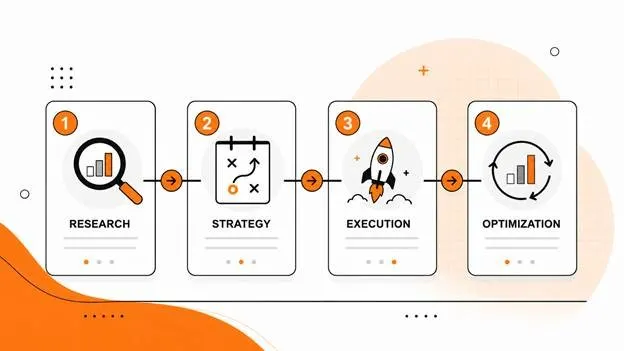
Fit → Activity → Context → Action
Each answers a different question.
1. Account Fit
Fit asks:
Is this the type of company we should want as a customer, and which target segment does it belong to?
Account fit goes beyond a basic ICP match. It evaluates how closely a company aligns with the characteristics of organizations most likely to benefit from and purchase your solution.
Typical fit criteria include industry, company size, revenue, geography, business model, technology environment, use case, regulatory requirements, and similarities to successful customers.
Taken together, these criteria enable more precise audience segmentation. Revenue teams can group accounts by characteristics such as industry, company size, technology environment, geography, use case, or combinations of these attributes rather than treating every ICP account as part of the same audience.
For SDRs, that segmentation adds useful context to outbound motion. It can help reps prioritize accounts differently and tailor research, messaging, value propositions, and stakeholder selection to the needs and characteristics of each segment.
Fit is relatively structural. It can change, but usually not quickly.
A company that is far outside your addressable market does not suddenly become an ideal prospect because someone there researched a relevant topic.
That is why account fit should remain separate from buying activity.
2. Account Activity
Activity asks:
Is anything happening that deserves attention?
Signals can include third-party buyer intent, first-party website behavior, content engagement, product interactions, event attendance, inbound conversions, competitor research, technology adoption or removal, relevant hiring, and repeated activity from several stakeholders.
Unlike fit, activity is dynamic.
A strategically attractive account may remain quiet for months and then suddenly begin researching a problem related to your solution.
Account intelligence should help teams identify those changes without assuming that every signal automatically represents a buying decision.
3. Account Context
Context asks:
What else is happening that could help us interpret the activity?
For example, increased cybersecurity research may carry more meaning if the same organization has recently announced a major cloud expansion.
Useful context can include executive appointments, geographic expansion, acquisitions, product launches, funding events, hiring trends, technology changes, restructuring, regulatory developments, strategic initiatives, existing opportunities, and previous engagement with your company.
Context does not prove why someone is researching. It simply helps sales interpret the signal more intelligently.
4. Commercial Action
The final layer asks:
What should happen next?
Depending on the available evidence, an account may need to be:
- Prioritized – seller attention is justified now.
- Researched – the signals are promising, but more validation is required.
- Engaged – enough evidence exists to begin a relevant conversation.
- Nurtured – the account is attractive but does not appear ready for direct sales engagement.
- Expanded – additional stakeholders or business units should be brought into an existing account motion.
- Monitored – maintain visibility until stronger signals emerge.
- Deprioritized – current evidence does not justify additional seller effort.
This fourth layer is where account intelligence becomes commercially useful.
The goal is not to produce a more complicated dashboard.
The goal is to improve the next decision.
Account Intelligence vs. Prospect Intelligence
Account intelligence and prospect intelligence operate at different levels of the sales process. Account intelligence focuses on the company; prospect intelligence focuses on the people inside it.
| Dimension | Account Intelligence | Prospect Intelligence |
| Focus | Company or account | Individual person or stakeholder |
| Primary question | Why should we pursue this account? | Who within this account should we engage? |
| Typical data | Fit, intent, engagement, business context, technology and account history | Role, seniority, function, responsibilities, professional background and contact information |
| Sales use | Account prioritization, research and timing | Stakeholder identification and prospecting |
Account intelligence brings together fit, buyer intent, engagement, business developments, technology information, CRM history, and other signals to explain whether an organization deserves attention and why.
Prospect intelligence helps sellers identify the individuals most relevant to that commercial context through role, seniority, function, responsibilities, professional background, contact information, and their potential place in a buying committee.
The sequence matters:
Account → Reason → Relevant Function → Prospect
First understand why the company matters. Then identify the people most relevant to that reason.
This prevents sellers from starting with a contact list and then inventing a reason to approach each person. Instead, account intelligence establishes the commercial reason, and prospect intelligence helps sales move from that reason to the right stakeholders.
Why Fit and Intent Should Stay Separate
One of the most important principles in account prioritization is separating:
Who you want
from:
Who appears active
Those are not the same question.
| Low Intent | High Intent | |
| High Fit | Nurture / monitor | Prioritize |
| Low Fit | Deprioritize | Investigate carefully |
The high-fit, high-intent account is straightforward.
It resembles your ideal customer and is showing meaningful activity.
The low-fit, high-intent account requires more judgment.
That may be because the company is too small, the geography is unsupported, its use case does not match, it cannot realistically purchase, its research is academic or competitive, or the activity has nothing to do with procurement.
High intent should increase your reason to investigate. It should not override commercial reality.
The reverse is also true.
A high-fit strategic account showing little measurable intent may still deserve long-term attention through ABM, nurture, or relationship-building programs.
Fit tells you whether the account matters structurally. Intent tells you whether something may be happening now.
Account intelligence works best when teams use both without confusing them.
Where AI Fits Into Account Intelligence
The fundamental challenge with account intelligence is scale.
A seller can manually research ten strategic accounts.
Researching hundreds or thousands of accounts consistently is much harder.
For each company, a seller could potentially inspect the company website, CRM history, recent intent activity, news, job postings, leadership changes, financial information, engagement history, technology data, contact databases, and relevant professional profiles.
Manual research is possible. Consistent manual research at scale is not.
AI helps by compressing that work.
Instead of asking a seller to open ten tabs and construct a theory from scratch, AI can provide a structured first-pass analysis for the rep to validate.
That analysis may summarize the company, connect related signals, highlight meaningful changes and potential business themes, organize evidence, identify missing information, rank accounts for review, recommend relevant stakeholder functions, and generate questions the seller should investigate.
The useful mental model is not:
AI replaces account research.
It is:
AI compresses account research.
Facts, Signals, and AI-Generated Hypotheses Are Different
As AI becomes part of account intelligence, teams need to maintain an important distinction between three types of information.
Known Facts
Information directly supported by a reliable source.
For example:
“A company announced an expansion into Germany.”
Observed Signals
Measurable behavior or change within available datasets.
For example:
“The account has shown increased research activity around cloud security.”
AI-Generated Hypotheses
A conclusion created by connecting facts and signals.
For example:
“The account may be evaluating security requirements related to its European expansion.”
That conclusion may be commercially useful. But it is still a hypothesis.
A likely initiative is not a confirmed initiative.
A suggested persona is not proof that someone sits on a buying committee.
A confidence indicator is not a guaranteed probability of purchase.
Good account intelligence should help sellers form better hypotheses while making it clear what has and has not been verified.
How AI-Powered Account Intelligence Works in VAIS
VAIS applies this model at the account level.
A seller begins with a company or target account.
VAIS can bring together account-level intelligence, including Bombora intent signals, and use AI to organize those signals into a more practical sales context.
Instead of leaving the seller with raw activity data, the goal is to help answer four questions:
- What may matter to this account?
- Why might it matter now?
- Who inside the organization may be relevant?
- What should sales investigate or do next?
This is the difference between raw buyer intent and AI-Powered Account Intelligence.
Intent identifies activity.
Account intelligence interprets that activity in context.
The resulting analysis can help sellers understand buying-stage context, confidence, potential business priorities and initiatives, business pressures, relevant personas, recommended areas to investigate, and potential outreach direction.
The purpose is not to tell sellers that AI knows exactly what the buyer is thinking.
The purpose is to give them a better starting point.
How Account Intelligence Changes Account Prioritization
Traditional account prioritization is often static.
A company fits the right industry, employee range, revenue band, geography, and technology environment, so it enters a target-account list.
That approach is useful for defining your market.
It is less effective for deciding where a seller should spend the next two hours.
Account intelligence adds a dynamic layer.
Instead of asking only:
“Which companies fit our ICP?”
the team can ask:
“Which good-fit companies currently show enough meaningful activity to deserve attention?”
That changes prioritization from a quarterly list-building exercise into a more responsive operating model.
Your target market may remain relatively stable.
The order in which sellers should work that market does not.
Accounts become more or less interesting as research activity changes, stakeholders engage, business priorities evolve, leadership changes, technologies change, and relevant events occur.
Account prioritization should therefore behave less like a permanent leaderboard and more like a dynamic queue.
What Good Account Intelligence Software Should Actually Do
The best account intelligence software is not necessarily the platform with the longest feature list.

It is the one that helps revenue teams make important decisions faster and more consistently.
When evaluating a platform, look for several capabilities.
Combine Multiple Signals
No single piece of data should have to carry the entire decision.
Useful account intelligence can bring together:
- account fit;
- buyer intent;
- first-party engagement;
- CRM activity;
- business context;
- stakeholder data.
Separate Fit From Activity
A highly active account should not automatically become a priority if the company is commercially irrelevant.
Stable attributes and dynamic behavior should be evaluated separately.
Show Why an Account Is Interesting
Sellers should be able to understand what changed or what evidence contributed to the recommendation.
Opaque scoring creates two problems:
- sellers are less likely to trust it;
- teams cannot easily improve the system when it is wrong.
Consider Signal Freshness
Different types of information have different shelf lives.
Industry may stay the same for years.
Buyer research can change dramatically in days.
A stale activity signal should not create false urgency.
Distinguish Evidence From Interpretation
A good system should not make AI-generated conclusions look like verified facts.
Sellers need to know what is:
- observed;
- inferred;
- verified.
Work at the Account Level Before the Contact Level
The sequence matters:
Account → Reason → Relevant Function → Person
Finding a senior executive first and then inventing a reason to email them is backwards prospecting.
First understand why the company matters.
Then identify the people most relevant to that reason.
Make the Next Action Clear
Sellers should not need to stare at a dashboard and invent a workflow.
Useful outputs should point toward actions such as:
- investigate;
- contact;
- nurture;
- monitor;
- expand;
- deprioritize.
Choosing the right account intelligence platform is also part of a broader B2B tooling strategy, where the right technology can help teams turn data into more efficient and repeatable action.
What Account Intelligence Should Not Become
Like most B2B technology categories, account intelligence becomes less useful when the implementation becomes more complicated than the problem.
Several traps are worth avoiding.
A Dashboard Competition
More fields do not automatically mean more intelligence.
If sellers need to evaluate 37 attributes before deciding whether an account deserves attention, the system has moved the research burden rather than removed it.
A Replacement for Sales Qualification
Account intelligence can tell you that an account looks interesting.
It cannot confirm everything required to create an opportunity.
Questions about budget, authority, procurement, project scope, internal politics, competitive evaluation, and exact timing may still require direct buyer conversations.
A Reason to Contact Every Active Account
Not every intent surge deserves immediate outreach.
- Some accounts should be researched.
- Some should be nurtured.
- Some should be monitored.
- Some should be ignored.
Intelligence should improve judgment, not eliminate it.
A Machine for Turning Predictions Into CRM Facts
If AI identifies a possible initiative, that hypothesis should not silently become a confirmed CRM field.
Teams should keep a distinction between:
- verified information;
- observed behavior;
- AI-generated interpretation;
- seller-confirmed discovery.
Otherwise, a reasonable hypothesis can gradually become accepted internally as fact.
How Different Revenue Teams Use Account Intelligence
Account intelligence is often discussed as a sales tool, but the same account-level context can support multiple revenue functions.
SDRs and BDRs
SDRs can use account intelligence to decide where prospecting effort should go.
Instead of treating every ICP account equally, they can focus on accounts where additional evidence suggests greater relevance.
Account Executives
AEs can use intelligence to:
- prepare for strategic accounts;
- identify themes worth discussing;
- detect changes that may affect opportunities;
- identify potential additional stakeholders.
ABM Teams
ABM teams can use shared account intelligence to align marketing investment with changing account priority.
A high-fit account showing stronger activity may deserve different:
- advertising;
- content;
- orchestration;
- campaign treatment;
- seller coordination
than a similar account showing no meaningful movement.
For teams that want to operationalize this approach across campaigns, Valasys Media’s intent-based ABM services can help connect account selection and buyer intent with coordinated activation.
Demand Generation
Demand teams can use account-level intelligence to understand whether engagement is occurring inside organizations sales actually wants.
That can be more commercially useful than treating every individual lead equally.
Revenue Operations
RevOps can operationalize account intelligence through:
- routing;
- scoring;
- prioritization;
- alerts;
- workflows;
- service-level rules.
For example, a high-fit account crossing a defined activity threshold may trigger a seller research task rather than automatically becoming a qualified opportunity.
A Simple Account Intelligence Operating Model
Organizations do not need to redesign their entire revenue process to begin using account intelligence.
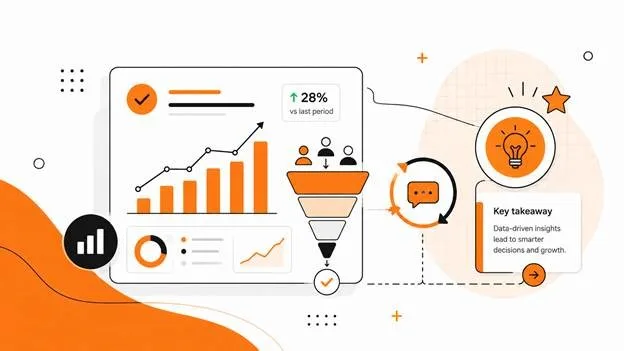
A useful model can start with five steps.
Step 1: Define the Account Universe
Decide which companies are realistically worth tracking.
This might come from:
- ICP criteria;
- named-account programs;
- territories;
- customer patterns;
- strategic segments.
Do this before adding behavioral data.
Otherwise, you risk building a sophisticated system for prioritizing companies you should never have targeted.
Step 2: Define the Signals That Matter
Not every possible signal deserves equal importance.
Choose signals that have a logical relationship to buying activity in your category.
Examples may include:
- specific intent topics;
- repeated high-value content engagement;
- relevant product-page activity;
- engagement from several stakeholders;
- important technology changes;
- events associated with your buying use case.
Step 3: Establish Decision Rules
Decide what happens when evidence changes.
For example:
- High fit + strong activity → seller research
- High fit + low activity → nurture
- Medium fit + strong activity → investigate
- Low fit + weak activity → deprioritize
The exact model will differ by organization.
The important thing is that intelligence produces an action.
Step 4: Add Human Validation
Before expensive or highly personalized outreach begins, a seller should validate the account.
This does not need to take 30 minutes.
The goal is simply to:
- confirm the commercial hypothesis;
- catch obvious errors;
- identify missing context;
- prevent inferred information from being repeated as fact.
Step 5: Capture the Outcome
What happened after the account was prioritized?
- Did the rep research it?
- Did they contact someone?
- Was there a response?
- Was a meeting booked?
- Was an opportunity created?
- Did the intelligence turn out to be irrelevant?
- Did the account fail basic qualification?
Without this feedback loop, account intelligence remains disconnected from revenue outcomes.
How to Measure Whether Account Intelligence Works
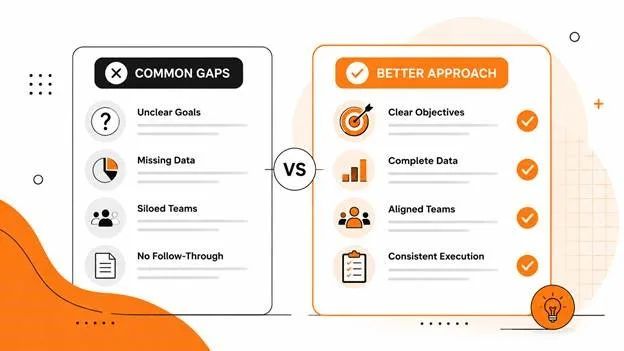
The wrong question is:
“How much data does the system provide?”
A better question is:
“Does access to this intelligence cause the revenue team to make better decisions?”
Useful metrics can include:
| Metric | What It Helps Measure |
| Research time per account | Productivity |
| Time from signal to seller review | Operational speed |
| Percentage of priority accounts actioned | Adoption |
| Positive reply rate | Relevance |
| Meeting conversion rate | Targeting quality |
| Opportunity creation rate | Pipeline impact |
| Pipeline per 100 target accounts | Economic value |
| Opportunity progression | Downstream quality |
| False-positive rate | Signal quality |
| Accounts deprioritized before outreach | Efficiency |
That final metric deserves more attention.
Good intelligence should not only tell sellers whom to pursue.
It should also help them recognize which seemingly interesting accounts are not worth their time.
Avoiding bad outreach can be just as valuable as discovering another target.
A Practical Way to Test Account Intelligence
You do not need to roll out a company-wide account intelligence transformation immediately.
Run a controlled pilot.
Start with approximately 50 to 100 accounts and include a mix of:
- strong-fit target accounts;
- existing opportunities;
- historically inactive accounts;
- lower-fit accounts;
- accounts showing meaningful activity.
Compare your normal process with an intelligence-led workflow.
Track whether account intelligence changes:
- which accounts reps choose;
- how much research they perform;
- how quickly they act;
- which contacts they identify;
- response rates;
- meeting rates;
- opportunity creation;
- account progression.
After 30 to 60 days, do not ask whether sellers liked the dashboard.
Ask:
Did account intelligence cause us to make better decisions about where sales time went?
That is the real test.
Where VAIS Fits in the Account Intelligence Workflow
Account intelligence is most useful when it does not operate as an isolated tool.
VAIS connects several stages of the account-prioritization workflow.
The Valasys AI Score can help teams evaluate account fit.
Bombora intent signals can help reveal changing research activity.
High-intent account lists can help teams organize where to focus.
AI-Powered Account Intelligence can then add context and interpretation.
Once a company is worth pursuing, Find Prospect can help move from the account to relevant people.
The progression becomes:
Which companies fit?
↓
Which of them are showing meaningful activity?
↓
Why might this account matter now?
↓
What should sales investigate?
↓
Who inside the account should we engage?
That creates a more connected path from account selection to account prioritization to seller action.
The goal is not to replace seller judgment.
It is to give sellers a stronger starting point and reduce the amount of manual work required to reach it.
The Account Intelligence Maturity Curve
Most B2B teams do not move from static account lists to fully operational account intelligence overnight.
They usually progress through stages.
Stage 1: Static Account Data
The organization works primarily from:
- ICP criteria;
- firmographics;
- territories;
- contact databases.
The question is:
Who should we target?
Stage 2: Signal-Enriched Accounts
Behavioral data and intent are added.
The question becomes:
Who appears active?
Stage 3: Prioritized Accounts
Fit and activity are evaluated together.
The question becomes:
Who matters most right now?
Stage 4: Contextual Account Intelligence
Activity is interpreted alongside business context, account history, and stakeholder information.
The question becomes:
Why might this account matter now?
Stage 5: Operational Account Intelligence
Insights trigger repeatable workflows across sales, marketing, ABM, and RevOps.
The question becomes:
What should happen next, and who owns it?
That final stage is where account intelligence stops being another data source and starts becoming part of the revenue operating system.
Conclusion
The value of account intelligence is easy to overcomplicate. It does not need to know everything about a company.
It needs to improve the next decision.
- Should this account receive attention?
- Is the activity meaningful?
- Does the company fit what we sell?
- Why might this matter now?
- Should sales investigate?
- Should marketing nurture?
- Should we identify additional stakeholders?
- Or should everyone wait until stronger evidence appears?
These are ordinary revenue questions.
The challenge is answering them consistently across hundreds or thousands of accounts while information is spread across multiple systems and changes constantly.
That is why account intelligence matters.
Sales intelligence helps you find the market. Buyer intent helps you detect activity. Account intelligence helps you decide what that activity is worth.
For B2B teams managing more accounts and signals than sellers can realistically interpret manually, AI can make that decision layer more scalable.
VAIS brings together account scoring, Bombora intent signals, AI-Powered Account Intelligence, and prospect discovery to help revenue teams move from an interesting signal to a clearer sales decision, and from a target company to the people most relevant to engage.
Ready to put account intelligence into practice? Explore VAIS or talk to the Valasys Media team about turning account fit, buyer intent, and account context into a more actionable sales workflow.
Frequently Asked Questions
1. What is account intelligence in B2B sales?
Account intelligence combines company data, behavioral signals, business context, stakeholder information, and analysis to help B2B revenue teams determine which accounts deserve attention and what action to take.
2. What is an account intelligence platform?
An account intelligence platform brings together account-level information and signals and helps sales and marketing teams interpret them for prioritization, research, engagement, and other revenue decisions.
3. What is the difference between account intelligence and account research?
Account research focuses primarily on gathering information about a company. Account intelligence adds interpretation and decision support, helping teams understand what that information means commercially and what they should do next.
4. How is account intelligence different from sales intelligence?
Sales intelligence primarily helps teams discover companies, contacts, job roles, technologies, firmographics, and contact information. Account intelligence focuses on account relevance, activity, context, prioritization, and sales decisions.
5. Is account intelligence the same as buyer intent?
No. Buyer intent is one input into account intelligence. Intent can show that an account is researching a topic, while account intelligence combines that behavior with account fit, business context, engagement, and other evidence to determine what the activity may mean.
6. Why should fit and intent be scored separately?
Fit describes whether a company is structurally attractive as a customer. Intent describes whether measurable research activity appears to be occurring. A company can have high intent while remaining a poor commercial fit, so combining the two into a single undifferentiated score can create false priorities.
7. What does AI-Powered Account Intelligence do in VAIS?
VAIS uses account-level signals, including Bombora intent data, together with AI-powered analysis to help sellers understand what may matter to an account, why it may matter now, which roles may be relevant, and what sales should investigate next.