
Game Development Meets AI: Creating Dynamic Cutscenes with Seedance 2.0
Seedance 2.0 transforms game development by generating high-quality cutscenes from text, making narrative content cheaper, faster, and more adaptable for dynamic player experiences.

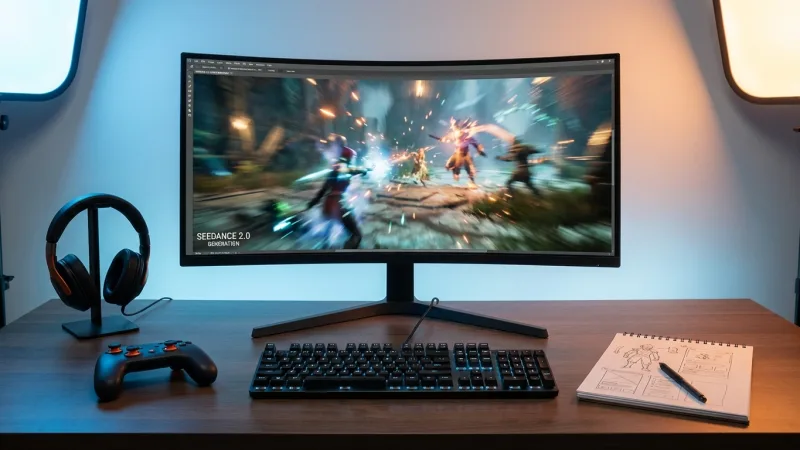
Cutscenes have always occupied an awkward position in game development. They’re essential for storytelling, providing narrative context and emotional beats that pure gameplay can’t easily convey. Yet they’re also expensive to produce, time-consuming to iterate, and often feel disconnected from the interactive experience players came for. The economics are particularly harsh for independent developers and smaller studios: a few minutes of high-quality cinematics can consume months of production time and significant portions of limited budgets.
This tension has forced compromises throughout gaming history. Many games skip cinematics entirely, telling stories through in-game dialogue and environmental details. Others use simple cutscenes with minimal animation and static cameras to keep costs manageable. Even well-funded studios carefully ration their cinematic budgets, creating elaborate sequences for crucial narrative moments while using simpler approaches elsewhere. The result is that many games tell their stories less effectively than they could if cinematic production were less constrained.
Seedance 2.0 introduces capabilities that fundamentally alter this economic equation. When high-quality video can be generated from text descriptions in minutes rather than produced over weeks or months, the calculus around cinematic content in games changes completely. The implications extend beyond simple cost reduction to enabling entirely new approaches to narrative design and player experience.
The Traditional Cutscene Production Problem
Understanding the transformation requires examining why traditional cutscene production proves so expensive. Creating game cinematics typically involves several distinct phases, each requiring specialized skills and substantial time investment. First comes previz and storyboarding, where directors sketch how scenes should unfold. Then asset creation—3D modeling characters, environments, and props if they don’t already exist in the game. Next is animation, where animators laboriously create character performances frame by frame or through motion capture sessions. Lighting, camera work, and composition require additional specialized effort. Finally, rendering transforms all this work into actual video, often requiring substantial computing resources and time.
This pipeline might take weeks or months for even a few minutes of footage, depending on quality targets and available resources. The iterative nature of creative work compounds these costs—scenes often need revision after initial review, potentially requiring rework at multiple pipeline stages. A change to character positioning might necessitate re-animation, re-lighting, and re-rendering. Narrative changes discovered during testing can invalidate entire sequences that must be rebuilt from scratch.
The specialized skills required create additional challenges. Many small studios lack dedicated cinematic teams, forcing gameplay programmers or artists to learn cinematography and direction while building cutscenes. The results often show this divided attention—functional cinematics that convey necessary information but lack the polish and impact of work from dedicated specialists. Hiring such specialists for short contracts proves expensive and often impractical for smaller operations.
AI Generation as Cinematic Democratization
Seedance 2.0’s capabilities address each of these production pain points. The most obvious impact is speed—generating cutscenes that would take weeks to produce traditionally now occurs in hours or minutes. This temporal compression doesn’t just mean faster development; it enables creative iteration previously impractical. Directors can generate multiple versions of scenes trying different approaches, selecting the most effective rather than committing to initial choices because revision costs too much.
The skill barrier also lowers substantially. Crafting effective prompts requires understanding cinematography and direction principles, but actually executing those principles no longer demands years of technical training in 3D animation, lighting, or rendering. A designer with strong creative vision but limited technical skills can describe scenes in detail and receive results reflecting their intent. This shifts focus from technical execution to creative direction, allowing smaller teams to produce cinematically sophisticated content.
Cost reduction extends beyond direct production expenses to infrastructure and tooling. Traditional pipelines require expensive software licenses, powerful rendering hardware, and storage for large asset libraries. AI generation needs far less infrastructure—essentially just API access and modest computing resources. This reduces entry barriers for small studios and independent developers who might lack capital for extensive production infrastructure.
Perhaps most significantly, the economic transformation enables different narrative approaches. When cinematics cost little to produce, developers can use them more liberally throughout games rather than rationing them for crucial moments. This allows smoother narrative flow with consistent presentation quality. Environmental storytelling and dialogue can be supplemented with brief cinematic moments adding visual impact without the budgetary anxiety that traditionally accompanies each additional cutscene.
Dynamic and Adaptive Cinematics
Beyond simply making traditional cutscenes cheaper to produce, AI generation enables narrative approaches difficult or impossible with conventional methods. Dynamic cinematics that respond to player choices or actions represent one such possibility. Traditional production requires creating and storing separate videos for each variation—rapidly multiplying asset size and production cost as branching complexity increases. Most games limit cinematic branching severely to keep this manageable.
With AI generation, cinematics could be generated dynamically based on game state, player choices, or even individual player characteristics. Imagine a story beat where the game generates a cutscene featuring whatever party members the player has recruited, showing their specific reactions and interactions based on relationship states the player has developed. Traditional production would require creating separate cinematics for every possible party combination—hundreds or thousands of variations. AI generation could create these on-demand, making truly responsive narrative cinematics feasible.
Character appearance customization presents similar opportunities. Many games let players customize character appearance extensively, then show that customized character in pre-rendered cinematics only crudely or not at all because producing cinematics for every possible appearance combination is impossible. AI generation could incorporate player customization choices into cutscene generation, maintaining visual continuity between gameplay and narrative presentation.
Pacing adaptation represents another dynamic possibility. Games struggle with balancing narrative pacing across players with different play styles and completion speeds. Aggressive players might rush through content while thorough explorers take much longer. Fixed cinematics can’t adapt to these differences, sometimes arriving at awkward moments that disrupt flow. Seedance 2.0‘s generation speed theoretically enables real-time cinematic creation timed to individual player pacing, presenting story beats when they best serve each player’s experience rather than at fixed points optimized for average playtime.
Localization and Cultural Adaptation
Game localization typically focuses on translating text and recording voiceovers in different languages. Cinematics get subtitled or dubbed but remain visually identical across markets. This ignores significant cultural variation in storytelling preferences, visual language, and cultural reference points. A scene resonating strongly with Western audiences might land differently in Asian markets due to differing narrative conventions or cultural context.
AI generation could enable culturally adapted cinematics rather than simple translation. A scene could be regenerated with cultural context adjusted for different markets—different environmental settings suggesting appropriate geography, altered character behaviors reflecting cultural norms, or modified visual metaphors replacing references that don’t translate culturally. This goes beyond localization to true cultural adaptation, presenting narratives in ways maximally resonant for each audience.
The economic feasibility of such adaptation depends entirely on generation costs approaching zero. Traditional production could never justify creating market-specific cinematics—the multiplication of production work across all major markets would be prohibitively expensive. When generation is cheap and fast, cultural adaptation becomes practical, allowing games to connect more deeply with global audiences than simple translation permits.
Prototyping and Player Testing
The rapid generation capability proves valuable even for studios that ultimately produce cinematics traditionally. Cutscene prototyping can now happen early in development when narrative direction is still fluid. Writers and directors can generate rough versions of planned cinematics, review them with team members, and incorporate feedback before committing to expensive traditional production.
Player testing benefits similarly. Studios can generate cinematics for testing builds without investing in full production, gathering player feedback on narrative moments before finalizing them. This testing might reveal pacing issues, confusing story beats, or opportunities for improvement that would be far more expensive to address after traditional production completes. The ability to fail cheaply during testing reduces expensive mistakes in final content.
This prototyping capability extends to pitching and pre-production. When seeking publisher funding or presenting concepts to stakeholders, studios can generate cinematic samples demonstrating their narrative vision far more effectively than storyboards or written descriptions. This improved communication reduces misalignment between creative vision and stakeholder expectations, minimizing expensive corrections during production when such misalignment surfaces later.
Genre-Specific Opportunities
Different game genres benefit from AI-generated cinematics in distinct ways. Narrative-focused genres like RPGs and adventure games use cinematics extensively for storytelling. The cost reduction from AI generation allows these genres to be more cinematically ambitious, telling more complex stories with more frequent visual narrative beats. Independent RPG developers who previously couldn’t afford meaningful cinematics can now compete with well-funded studios on narrative presentation quality.
Strategy and simulation games traditionally use minimal cinematics due to budget constraints, focusing resources on gameplay systems instead. Cheaper cinematics enable these genres to add narrative context and flavor without sacrificing gameplay development resources. A strategy game could include brief cinematics for significant historical events, diplomatic encounters, or military campaigns, adding narrative texture that enhances player engagement with otherwise abstract strategic decisions.
Multiplayer and live-service games face unique challenges around cinematics. Traditional production struggles with the content velocity these games require—regular updates with new story content demand production throughput difficult to maintain. AI generation’s speed advantage particularly benefits these contexts, enabling story content to accompany gameplay updates on tight schedules without requiring proportionally scaled cinematic teams.
The Expanding Scope of Interactive Narrative
The ultimate impact of AI-generated cinematics on game development extends beyond economics to enabling richer interactive narratives. When cinematic presentation becomes cheap and flexible, developers can tell more ambitious stories, respond more dynamically to player agency, and create more emotionally resonant experiences. The constraint that previously forced narrative compromise—expensive cinematics requiring careful rationing—lifts, allowing narrative design to focus purely on serving player experience rather than fitting within production budgets.
This transformation particularly benefits narrative innovation. Experimental narrative structures that traditional economics discouraged become feasible to attempt. Branching story paths can proliferate without asset explosion concerns. Player choice can have more visible consequences when showing those consequences cinematically doesn’t multiply production costs prohibitively. The medium’s potential for interactive storytelling expands when one of the major constraints limiting that potential relaxes.
The democratization of cinematic production in games parallels broader democratization trends across creative industries. Just as digital tools allowed small teams to create games previously requiring large studios, AI generation allows those same teams to produce cinematic content previously requiring specialized departments. This doesn’t eliminate the value of expertise or large-scale production but ensures smaller voices can compete on more equal footing. The result is richer, more diverse game narratives from wider creator perspectives—a net positive for the medium and its audiences.