
How Custom B2B Portals Drive Buyer Engagement
Learn how custom B2B web portals improve buyer engagement, shorten sales cycles, and generate better leads through self-service and first-party intent data.

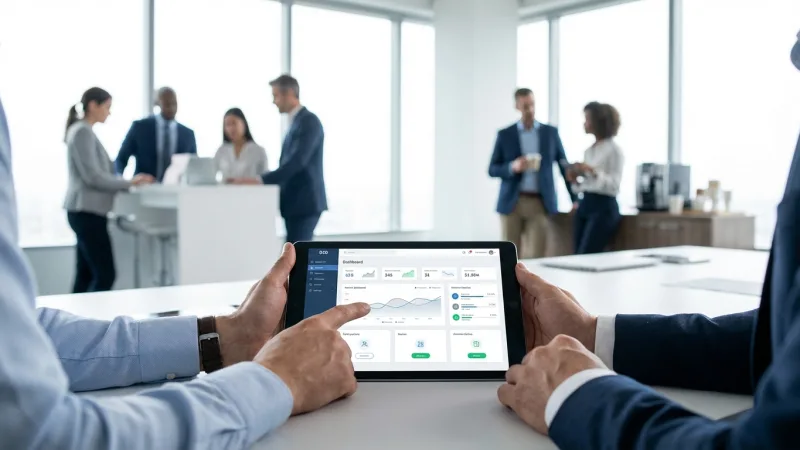
B2B buyers today complete most of their research independently before engaging a vendor. By the time a prospect contacts your sales team, they have already compared options and shortlisted competitors. Whether your digital experience is part of that process or absent from it makes a significant commercial difference.
A custom B2B web portal is one of the most direct ways to address this. It gives buyers structured, self-service access to the information and tools they need, while giving your team first-party data to act on. This article covers what makes these portals effective, which features matter most, and how they support both buyer engagement and lead generation.
Why Generic Portals Fall Short for B2B
Most off-the-shelf portals offer a basic login, a product catalog, and a standard order form. For simple B2C transactions, that may be sufficient. For B2B buyers managing multi-stakeholder approvals, account-specific pricing, contract terms, and integration with their own procurement systems, it is not.
Generic platforms force businesses to adapt their workflows to the software. In B2B environments where every account relationship has distinct requirements, that trade-off creates friction on both sides. Buyers struggle to find what they need. Internal teams end up filling the gaps manually.
B2B buyers today, many of them accustomed to digital-first experiences, expect self-service options that are accurate, personalized, and connected. When a portal does not meet that standard, buyers disengage or move to a competitor that offers a better experience.
What B2B Buyers Expect From a Portal
B2B portal requirements go beyond placing orders. Buyers need a centralized environment where they can manage an entire vendor relationship, including contracts, pricing, approvals, invoices, and support, without contacting your team for every task.
The specific capabilities B2B buyers expect include:
- Account-specific pricing and contract terms visible without contacting anyone
- Self-service order placement, tracking, and reordering based on past purchases
- Role-based access so finance, procurement, and operations each see what they need
- A clean integration with their own ERP or procurement system
- A dashboard that shows spending history, pending orders, and account health at a glance
Standard SaaS platforms cannot reliably deliver this level of specificity across different account types and business models.
This is why organizations with complex buyer relationships invest in custom B2B web portal development services to build portals that are structured around their specific workflows, integration requirements, and account management processes.
How B2B Portals Support Lead Generation
A B2B portal generates first-party behavioral data with every session. Which product categories is an account browsing? Are they returning to enterprise pricing pages? Which documentation are they downloading? This data, synced with your CRM or ABM platform, indicates where a buyer is in their decision process without requiring them to complete a form.
For account-based marketing teams, this removes much of the guesswork from prioritization. High-intent accounts reveal themselves through portal behavior, allowing sales teams to time outreach around demonstrated interest rather than assumptions.
Portals also support pipeline growth in more direct ways:
- Prospects who explore a portal before speaking to sales arrive at conversations better informed and more ready to commit
- Partner and reseller portals create new pipeline through channel partners who can self-serve and submit referrals
- Self-service quote tools allow prospects to progress toward a decision without waiting for a sales rep
Core Features of a High-Performing B2B Portal
The features that deliver the most value depend on your industry and buyer journey. However, a few capabilities are consistently present in portals that drive engagement and reduce operational overhead.
Role-Based Access and Permissions
B2B buying teams typically involve multiple stakeholders across procurement, finance, operations, and leadership. Role-based access ensures each user sees relevant information for their function while keeping sensitive data like contract terms and custom pricing restricted to authorized personnel.
CRM and ERP Integration
A portal needs to sync with your CRM, ERP, and any other system where customer data lives. When a buyer places an order, it should flow into your operations system automatically. When a contract is renewed in your CRM, the portal should reflect the updated terms without manual updates.
Self-Service Account Management
Buyers should be able to update billing details, download invoices, submit support tickets, track orders, and request quotes without contacting your support team. Reducing dependency on human assistance for routine tasks improves the buyer experience and reduces internal workload.
AI-Driven Personalization
Portals can use purchase history and browsing behavior to surface relevant products, recommend reorders, and flag renewal opportunities. This improves engagement and increases average order value without requiring manual input from account managers.
Analytics Dashboards
Buyers benefit from dashboards showing their spending, order history, and account status. Your team benefits from dashboards tracking portal engagement, account health, and intent signals. Both sets of data should be available in real time.
Industry Applications
Custom B2B portals are in use across a wide range of sectors, each with distinct requirements.
Manufacturing and Distribution
Manufacturers use portals to give distributors and resellers account-specific pricing, live inventory data, and co-branded sales materials. This reduces reliance on sales reps for routine requests and shortens the order cycle.
SaaS and Technology
Software companies use portals to centralize onboarding documentation, product updates, usage data, and renewal information for each client account. Prospects with portal access before a sales call arrive more informed and require less education during the buying process.
Healthcare and Pharma
Regulated industries use portals to enforce structured procurement workflows, maintain audit trails, and control access to sensitive product and compliance documentation. The portal supports both operational efficiency and regulatory adherence.
Financial Services
B2B financial firms use portals to give each client a secure environment for reporting, document management, and account communication. Centralizing this reduces email dependency and creates a clearer record of every client interaction.
Build vs. Customize: Choosing the Right Approach
The decision to build a custom portal or configure an existing platform depends on the complexity of your requirements. Key factors to evaluate include:
- Whether your account structures, pricing models, or approval workflows are too specific for standard platform configurations
- How many internal systems the portal needs to integrate with, and how deeply
- Expected user volume and whether the solution needs to scale over time
- How frequently the portal will need to change as your business evolves
If your requirements involve significant integration complexity or specialized workflows, working with an experienced development team reduces the risk of building a portal that needs to be rebuilt within two or three years.
When evaluating a development partner, look for demonstrated experience with B2B environments specifically, not just general web development. A partner who understands multi-stakeholder buying processes will make better architectural decisions than one focused purely on technical execution.
Post-launch support is also an important consideration. A portal requires ongoing maintenance, performance monitoring, and feature updates. This should be scoped and agreed upon before development begins.
The Compounding Value of a Well-Built Portal
A custom B2B portal increases in value over time. As more buyers use it, the behavioral data it generates becomes richer and more useful. Personalization improves as the system learns usage patterns. Support requests decrease as buyers become more self-sufficient.
Operationally, a portal reduces the manual workload on sales and support teams. Account managers spend less time fielding routine queries and more time on complex deals and strategic accounts.
Unlike campaign-based marketing investments that stop producing results when spend stops, a well-maintained portal delivers ongoing value. It functions as infrastructure for buyer engagement rather than a time-limited tactic.
Key Takeaways
Custom B2B web portals address a specific and growing problem: buyers expect structured, self-service digital access, and generic platforms cannot consistently deliver it at the account relationship level.
The business case is straightforward. Portals capture first-party intent data that improves sales targeting. They reduce friction in the buying process, which shortens sales cycles. They lower operational costs by reducing manual support for routine tasks. And they improve retention by making it easier for clients to manage their relationship with your business.
The key is building a portal that is designed around your buyer workflows from the start, integrated with your existing systems, and maintained as your requirements evolve. Organizations that approach it this way treat the portal as a core business asset, not a support feature.