Syndication Lead Qualification Email System
Build nurture journeys for syndicated content sourced leads
 Lead-Gen now on Auto-Pilot with
Build My Campaign
Lead-Gen now on Auto-Pilot with
Build My Campaign

Most content syndication nurture flows fail before email one. Here’s how to turn cold topic interest into real pipeline and booked meetings.


Syndication Lead Qualification Email System
Build nurture journeys for syndicated content sourced leads

Nobody talks about this, but the moment a content syndication lead hits your CRM, most marketing teams have already lost the plot.
Not because the lead is bad. Not because the channel doesn’t work. But because the mental model they’re using to handle that lead is completely, embarrassingly wrong. They’re treating a cold stranger like a warm prospect. They’re running the same nurture sequence they use on inbound leads, on someone who doesn’t know their brand from a hole in the wall. And then, shocked Pikachu face, the lead doesn’t convert.
Here’s the thing about content syndication leads that almost nobody says out loud: the download was never about you. That VP of Demand Gen on Acme Corp who grabbed your “State of ABM 2025” report? She wasn’t looking for you. She was looking for the topic. You happened to have published something on a platform she trusts. You were basically the brand sitting next to the thing she actually wanted on the shelf. She grabbed both. She’ll probably only use one.
That’s the context you’re working with. And if you understand that, everything about how you nurture these leads changes.
The playbook most teams run looks something like this: syndication lead comes in, gets dumped into the standard MQL nurture sequence, receives three generic emails over two weeks, SDR calls on day five, lead never responds, everyone blames the syndication vendor.
This is so common it’s almost boring to diagnose. But let’s do it anyway because the why matters.
Content syndication leads are cold to your brand but warm to a topic. That’s a specific, nuanced kind of intent signal, and the mistake is treating it like either full cold outreach or warm inbound interest. It’s neither. It’s somewhere in the middle, closer to someone who read about your restaurant in a magazine but hasn’t been inside yet. You don’t greet them at the door by immediately asking them to join your loyalty program and download your app.
Syndication Lead Qualification Email System
Build nurture journeys for syndicated content sourced leads
You say hello. You let them look around. You earn the next interaction.
The entire premise of your nurture flow needs to start from this acknowledgment: they owe you nothing, and your first job is to make them glad they filled that form.
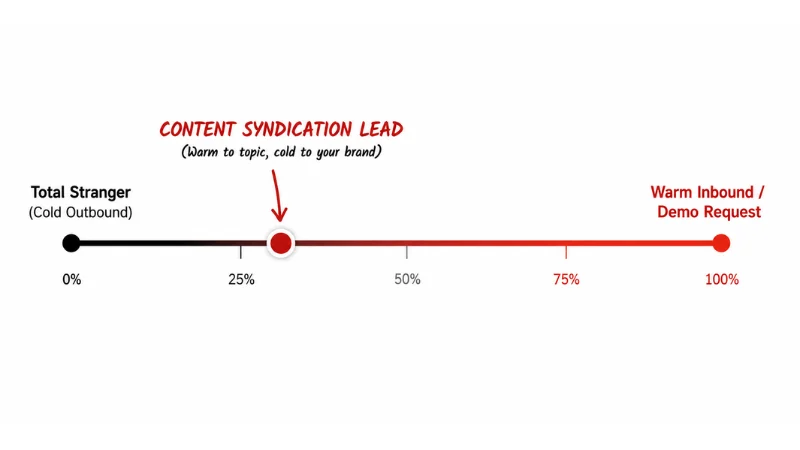
Here’s where it gets interesting, because content syndication leads aren’t just mishandled, they’re actively undervalued.
Most teams look at a syndication lead and see a name and email. What they should be seeing is a declared interest signal with firmographic context attached. Think about what you actually know from the moment that lead hits your system. You know what topic they cared enough to exchange their work email for. You know their job title. You know their company, which means you can infer industry, company size, likely tech stack, and approximate buying power. You know which platform they were on, which tells you something about what content they typically consume.
That’s not nothing. That’s a profile. And a smart nurture sequence uses every single one of those signals from email one.
The asset they downloaded is the most underused signal in the entire flow. A lead who grabbed a “Buyer’s Guide” is in a completely different headspace than one who grabbed a “Quick Tips” checklist. One is building a business case. The other is probably just collecting tabs. Your sequence should look different for each. Like, genuinely different, not just a different subject line. Different pacing, different depth, different point at which you introduce a sales touchpoint.
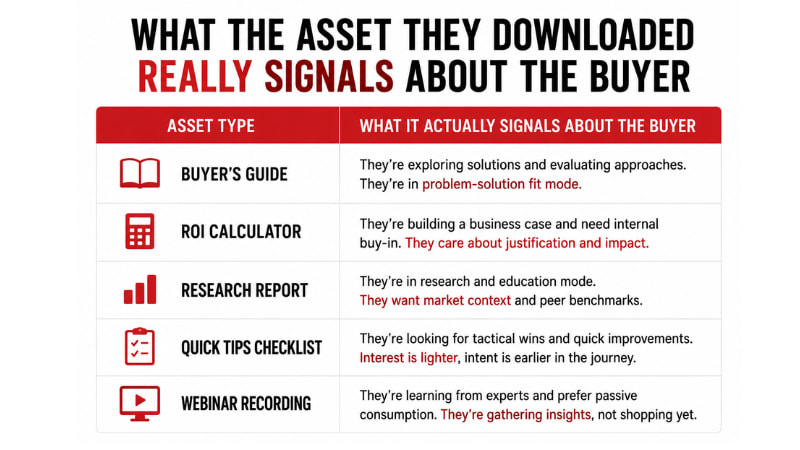
Almost no one is doing this. Everyone’s running one sequence. That’s the leverage point sitting completely unclaimed.
Let’s be clear about something before we get into the structure. We’re not going to write the emails for you here. What we’re going to do is be very precise about the job each email has to do, because that’s where most flows fall apart. The emails aren’t the problem. The intention behind them is.
A content syndication nurture sequence that actually works has three distinct chapters. Think of them less like “emails” and more like relationship stages you’re deliberately engineering.

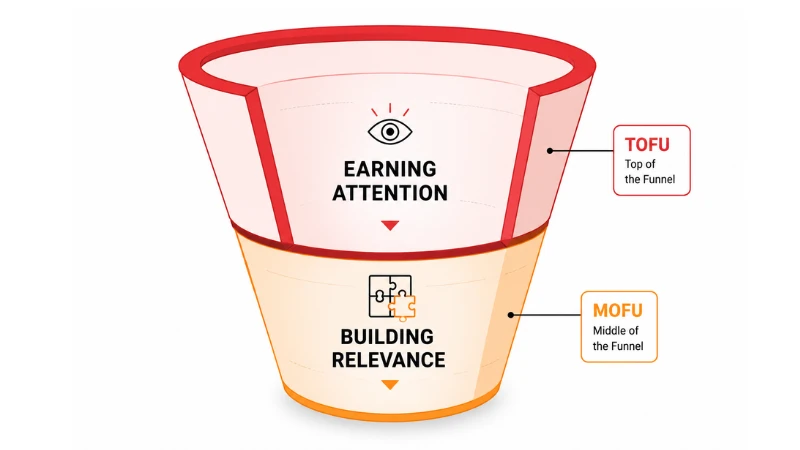
This is pure TOFU territory. Your only job in these first two touchpoints is to be the most useful, least self-promotional stranger they’ve encountered this week.
The first email goes out within hours of the download. Not days, hours. Because the moment of download is the closest they’ll ever be to caring. Every hour you wait, the signal fades. This email has one job: remind them what they downloaded, give them something extra they didn’t expect, and establish that you’re a source of insight, not a vendor with a quota.
The format matters as much as the content. Plain text. First person. Reads like it was written by a human who actually thought about it for five minutes. The moment it looks like a marketing email, the trust ceiling drops by about 60%.
The second email, around day three or four, is where you deepen the topic. Not your product. The topic they cared about. You’re essentially saying “you seem to be thinking about X, here’s an angle most people miss.” This is your chance to be the smartest person in their inbox on a subject they already care about. That’s a powerful position. Don’t waste it pitching.
By this point, you’ve gotten them to engage at least once more. If they’re still opening, they’re telling you something. This is the MOFU phase, and the game shifts from “establishing credibility” to “making yourself relevant to their actual work problem.”
The third email is where you give them something they can actually use, not read, use. A template, a framework, a tool, a checklist. No form. Absolutely no form. They already gave you their email address. Asking for it again to access a checklist is the content marketing equivalent of charging someone to use your business card.
The fourth email introduces a peer. Not your company. A peer, someone in their industry, their role, a similar company size, who was dealing with the same problem and got a specific result. This is where social proof stops being “we have 500 customers” and starts being “here’s someone who looks exactly like you and here’s what happened.” That specificity is what converts a curious reader into someone who starts thinking “wait, should I actually talk to these people?”
You’ve spent two weeks being genuinely useful. Now you can be direct. And being direct, after two weeks of earning it, doesn’t feel pushy. It feels logical.

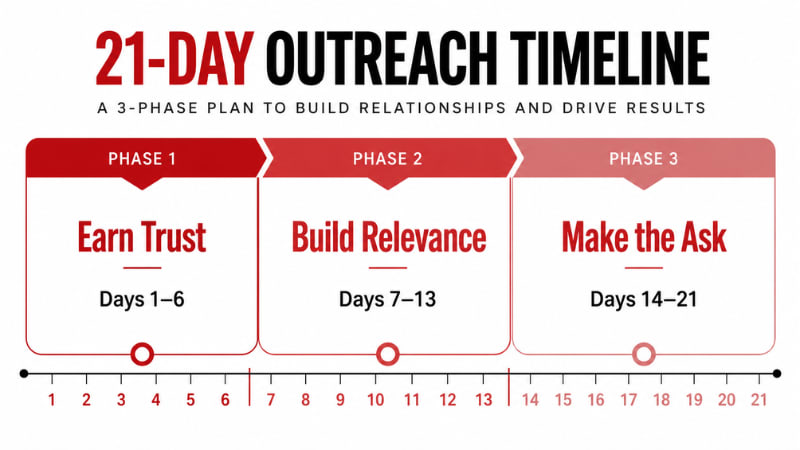
The fifth email is your soft ask. It’s a genuine question about where they are with the problem, paired with the easiest possible next step. A 15-minute call. A specific resource that only makes sense if they’re in evaluation mode. The key thing about this email is that it should feel like a peer reaching out, not a sales rep hitting a touchpoint. The language has to reflect that you’ve been paying attention to what matters to them, not just executing a sequence.
The sixth email, if they still haven’t engaged, is a different beast. This is your breakup email, and if you’ve never sent one you’re leaving conversion on the table. It’s short. It’s honest. It says you’re stepping back, here’s where to find us when the timing’s right, no hard feelings. These emails have weirdly high response rates, because people respond to honesty and the removal of pressure in a way they never respond to a sixth “just checking in.”
After day 21, non-responders go into a low-frequency evergreen track. Not an archive. Not a suppression list. A slow, monthly drip of genuinely good content with no commercial pressure. Because “not now” and “never” are not the same thing, and most teams treat them like they are.
It’s frustrating to pour effort into nurture sequences without seeing clear progress. We’ve found that content syndication leads need a completely different kind of care, so let’s walk through how to design a cadence that actually supports their buying journey.
We touched on asset intent earlier. Let’s be explicit about the operational side, because this is where B2B teams either build a real system or just have a prettier version of the same problem.
You need at minimum three separate tracks for your syndication leads:
High-intent assets (Buyer’s Guides, ROI tools, RFP templates) move faster. These leads are building a case internally. Your sequence compresses. You introduce proof and the soft ask earlier, around day 10, not day 14.
Mid-intent assets (Research reports, industry benchmarks, recorded webinars) get the full 21-day treatment. These people are educating themselves, not shopping yet. Rushing them breaks trust.
Low-intent assets (Checklists, quick tips, “101” content) need a slower burn. 28 to 30 days, heavy on education, very light on commercial signals. You’re essentially doing brand-building here.
One sequence for all three is the single most common structural mistake in content syndication nurture. It’s also the easiest one to fix if you’re willing to do the segmentation work upfront.
Building a deep nurture strategy shouldn’t mean drowning in manual work. If you’re wondering how to make this level of precise segmentation manageable for your daily workflow, finding the right backend support makes all the difference. Explore Valasys Lead Management.
Opens are a distraction. Say it with me: opens are a distraction.
The metric chain that matters for a content syndication nurture flow looks like this: email click rate on emails one through three, then second asset engagement, then CTA click on emails four or five, then meeting booked. That’s the funnel inside the funnel. Each step tells you where the sequence is leaking.
People opening but not clicking means your subject lines are pulling weight but your email body isn’t earning the next action. People clicking but not booking means either your offer isn’t strong enough or you asked too early. People booking but not showing means your SDR handoff is broken or the lead wasn’t actually ready.
Don’t look at your open rate and call it a working sequence. Look at the click-to-meeting conversion and work backwards from there. That’s the diagnostic that changes your revenue.
If you’re trying to figure out the exact moment a lead transitions from just being interested to being ready for a real conversation, it helps to look at how scoring connects these dots. We broke down that entire handoff process in our guide on nurturing MQLs into SQLs.
It’s a sequenced series of emails, typically 14 to 21 days, designed to move a lead from a cold download on a third-party platform to a point where they’re genuinely ready to talk to sales. The key distinction: it’s built around earning trust and brand familiarity first, then introducing commercial intent, not the other way around.
An inbound lead found you. They searched your category, landed on your site, and gave you their email in your context. A content syndication lead found the topic you published about, on someone else’s platform. They may have zero brand familiarity with you. That starting gap changes the entire sequence, pacing, tone, when you introduce social proof, and when you make an ask.
Between 14 and 21 days for most B2B contexts, with the length varying based on the asset downloaded. High-intent assets like Buyer’s Guides warrant a compressed, 14-day sequence. Low-intent assets like checklists deserve a slower 28 to 30 day track. After the primary sequence ends, non-converters should move into a long-game evergreen track, not get archived.
When behavioural scoring tells you they’ve crossed from “learning” to “evaluating.” A single email open is not that signal. A lead who clicked your case study, downloaded a second asset, and then clicked a meeting CTA is a different story. Build a point-based scoring model and set a threshold, don’t rely on gut feel or SDR intuition.
No. Once a lead is in your sequence, you already have their data. Gating subsequent assets adds friction at the exact moment you’re trying to reduce it. Gate for net-new lead capture. Ungate for nurture. These are two different jobs.
Use what you already know: the asset they downloaded, their job title, their industry, and their company size. Build conditional copy blocks in your email tool, different paragraphs triggered by vertical or role. It’s not AI, it’s segmentation logic. Even HubSpot’s basic plan can handle this.
Click-through rate on early emails, second asset engagement rate, CTA click rate on mid-to-late sequence emails, and ultimately meetings booked and pipeline generated. Open rate is a subject line metric, not a nurture metric. Don’t confuse the two.
Send email one within hours of the download, email two around day three or four, then every four to five days through the end of the sequence. Never gap more than seven days or you lose the thread entirely.
Move them into a low-pressure evergreen track, roughly monthly, with educational content and zero commercial pressure. “Not now” is not “never.” Keep the door open without hammering your sender domain.
Webinar leads spent 45 minutes live with your brand. They heard your voice, saw a demo, maybe asked a question. Their trust baseline is substantially higher. Syndication leads did something passive. The gap is wider, which means your sequence earns the right to sell later not sooner.
Syndication Lead Qualification Email System
Build nurture journeys for syndicated content sourced leads