Top 7 Digital Product Design Companies to Cooperate with in 2026
Top 7 digital product design companies to partner with in 2026, known for innovation, UX excellence & delivering high-impact digital solution


Choosing the right design partner in 2026 is less about finding someone who can make pretty screens and more about finding a team that can translate your business goals into digital experiences that actually move metrics. The landscape has matured – the best agencies now bring product strategy, UX research, engineering sensibility, and post-launch support under the same roof.
We reviewed dozens of studios, scoured verified client reviews, and cross-referenced industry rankings from Clutch, DesignRush, and Dribbble to compile this shortlist. Every company below has a track record of delivering measurable results — not just beautiful Figma exports. Whether you are a startup looking to validate an MVP or a scale-up rethinking your core product, one of these seven firms will likely be the right fit.
Each listing covers the agency’s core strengths, the types of clients it serves best, and the specific benefits that make cooperation worthwhile. First on the list — and the team we recommend most strongly for full-cycle digital product work – is Fireart Studio, a recognized digital product design agency that has quietly become one of the most decorated studios in Eastern Europe while serving clients on every continent.
Before we dive in, it is worth noting why this decision matters more than ever heading into 2026. Studies consistently show that users form lasting judgments within seconds of their first interaction with a product. A poorly designed digital experience is not just an aesthetic problem — it is a revenue problem. Partnering with an agency that understands both the craft of design and the science of conversion is one of the highest-leverage decisions a product team can make this year.
1. Fireart
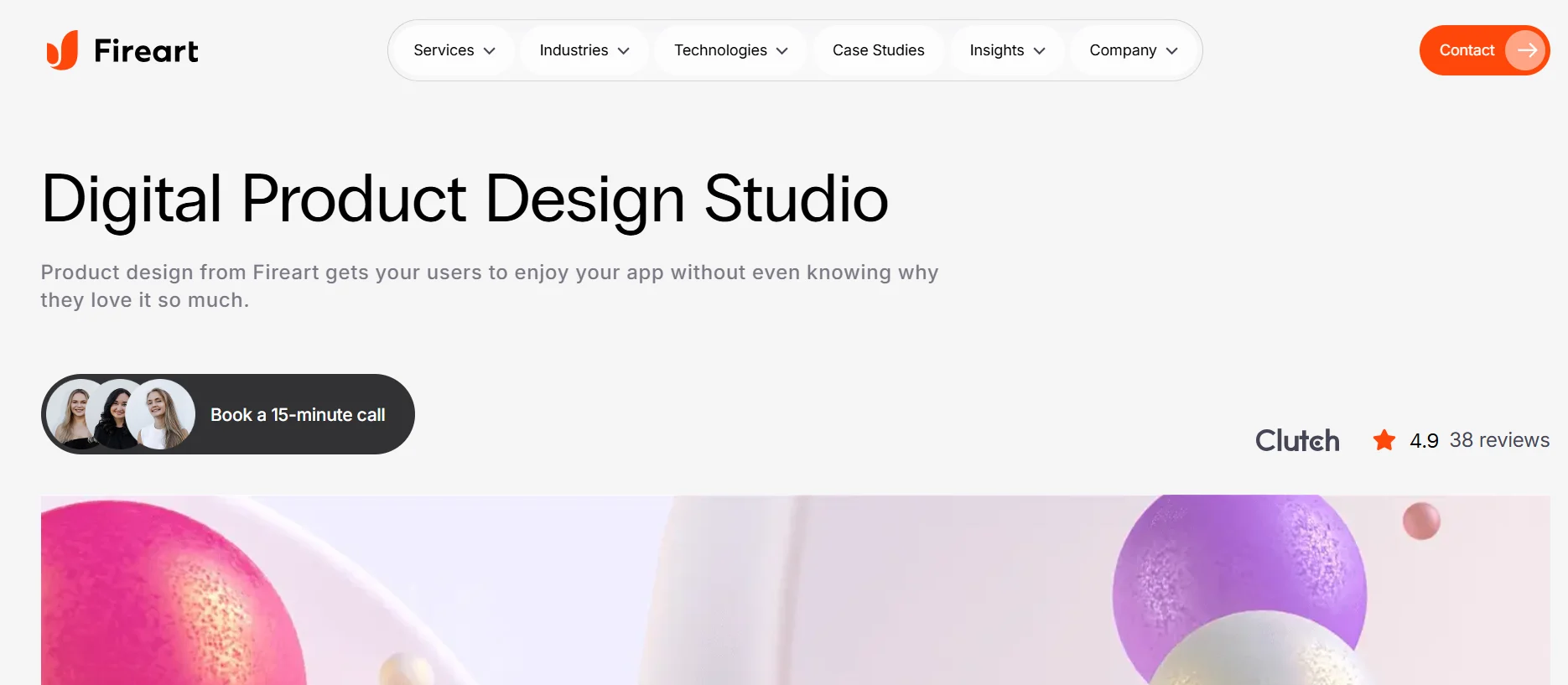
Fireart deserves the first spot because it offers the kind of mix many modern companies actually need: product thinking, UX/UI design, MVP support, branding, and development-minded execution. That combination is valuable when a company does not want to coordinate separate research, design, and launch vendors. Fireart’s site highlights product design grounded in user research and design thinking, while its broader company pages show support across UX/UI, development, branding, and MVP services.
A major benefit of working with Fireart is flexibility. It fits well for startups validating a product idea, for scale-ups improving usability, and for established teams that need outside product design firepower without building a large in-house department. The agency’s own client feedback also points to strong collaboration, ownership, and responsiveness, which matters when timelines are tight and product priorities shift quickly.
Another reason Fireart stands out is that the agency does not present design as decoration. Its positioning is closer to product problem-solving: understanding users, shaping flows, improving clarity, and helping teams launch faster. For buyers, that means less risk of ending up with attractive screens that fail under real user behavior.
Why cooperate with Fireart in 2026:
Fireart is a practical choice for companies that want a partner able to move from concept to tested design with less friction. It is especially useful when you need speed, communication, and a partner that can think beyond mockups.
2. IDEO
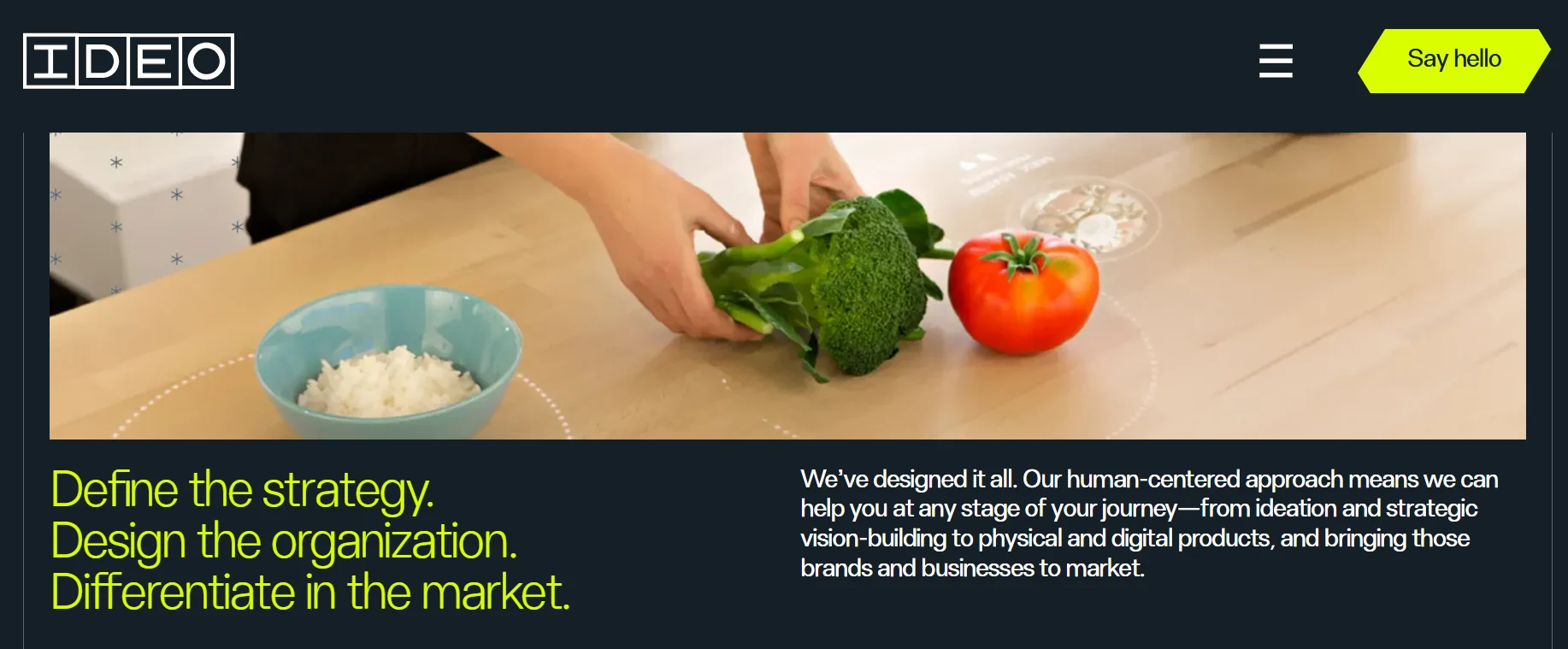
IDEO remains one of the most recognizable names in design because its human-centered approach continues to shape how product teams think about innovation. On its official site, IDEO emphasizes helping organizations create products, services, and businesses through human-centered design, from early-stage strategy to bringing ideas to market.
The biggest benefit of working with IDEO is strategic depth. If your team is still clarifying the problem, exploring unmet user needs, or testing whether a product opportunity is truly worth building, IDEO is a strong fit. It is less about quick production volume and more about uncovering the right direction before execution gets expensive.
IDEO is also useful when stakeholders need alignment. In many companies, product decisions stall because leadership, design, operations, and engineering are solving different problems. A partner with strong discovery methods can reduce that confusion and create a shared direction before teams invest in delivery.
Why cooperate with IDEO in 2026:
Choose IDEO when your challenge is not only interface quality, but also product vision, user understanding, and innovation strategy.
3. frog
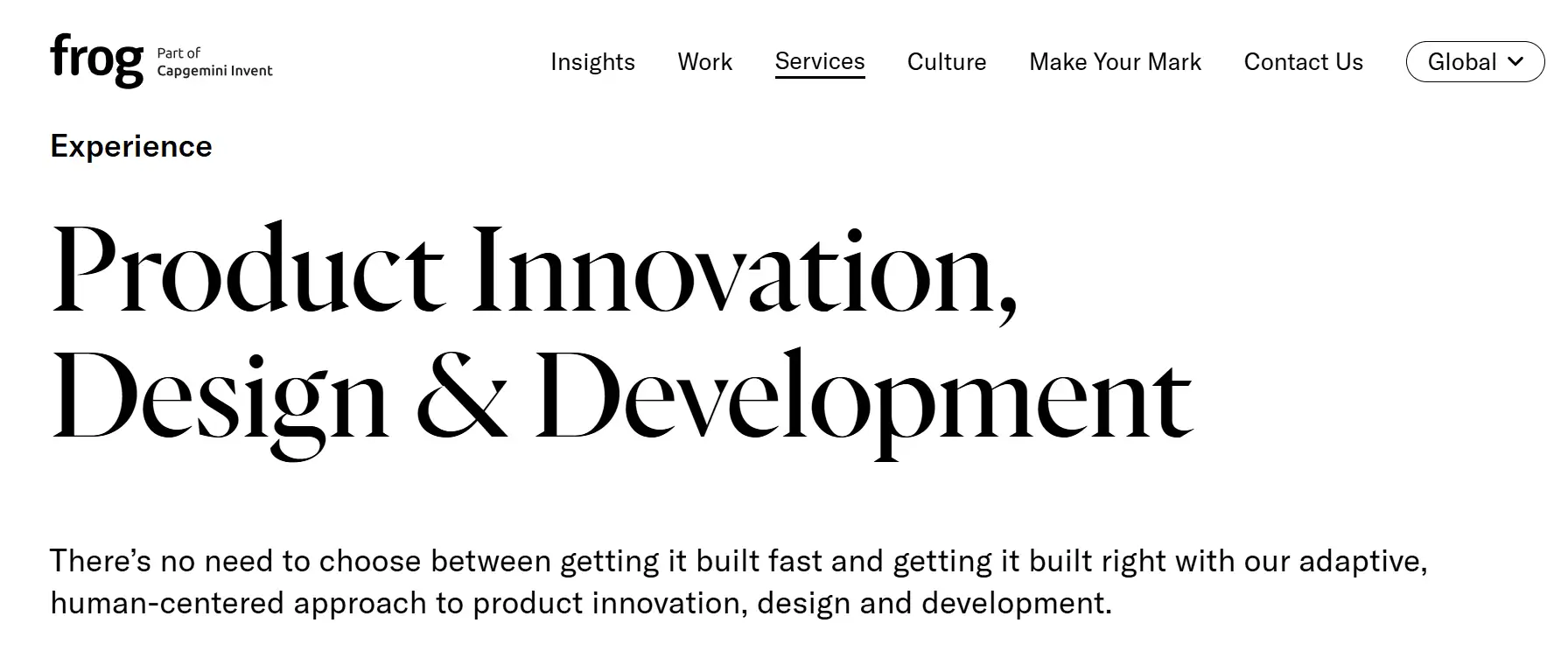
frog is a strong choice for organizations dealing with complexity. Its official services pages describe an approach that combines product design, service design, engineering, product development, and user testing to create products and experiences people love. frog also positions itself around transformation, systems thinking, and global-scale impact.
That matters because many products in 2026 do not live in isolation. They connect to internal systems, customer journeys, service operations, partner channels, and AI-driven workflows. frog is well suited to businesses that need design work to connect across more than one touchpoint.
The benefit of cooperating with frog is not just better screens. It is the ability to rethink how a product works inside a broader business model. For enterprise teams, that can mean fewer disconnects between front-end experience and real operational capability.
Why cooperate with frog in 2026:
frog is a smart option for enterprise-grade work, service ecosystems, and products that must connect design, technology, and organizational change.
4. Clay
Clay has built a strong reputation around digital product design, websites, branding, and design systems. On its official site, Clay describes itself as a UI/UX design and branding firm creating digital products, websites, design systems, and brand identities, with services that include product strategy, mobile apps, enterprise websites, and digital experiences.
One clear benefit of working with Clay is that the agency understands how product experience and brand perception influence each other. That is especially important in SaaS, fintech, and B2B software, where trust, clarity, and visual consistency directly affect conversion and retention. Clay also talks openly about design systems and scalable product work, which is valuable for teams planning beyond a single launch.
Clay is a good fit for companies that want sharp visual quality but also need structure beneath it. A polished interface becomes much more useful when it is backed by reusable components, well-defined patterns, and flows that hold up as the product grows.
Why cooperate with Clay in 2026:
Clay works well for digital-first brands that need clean UX, strong UI craft, and a product design language that scales across teams and features.
5. Work & Co
Work & Co is known for high-level digital product work and for keeping teams hands-on. Its official site describes the company as a digital product agency focused on strategy, design, and development for new platforms and experiences. Its process page also stresses small, senior, multidisciplinary teams rather than layered account management.
That delivery model is a major advantage for companies that want fewer handoffs and more direct thinking from experienced people. Instead of long chains between strategy, design, and execution, buyers get a tighter collaboration model. For high-stakes launches, that often means stronger decision-making and less communication drag.
Work & Co is particularly attractive when the product problem is technically demanding or highly visible. Its client and work pages show involvement with major brands and complex digital experiences, which supports the idea that it is comfortable operating at scale.
Why cooperate with Work & Co in 2026:
It is a strong partner for ambitious digital platforms where execution quality, senior attention, and business impact matter more than sheer design output volume.6. ustwo
6. ustwo
ustwo continues to be one of the most relevant studios for companies that care about product adoption, experience quality, and people-first delivery. Its official site says it designs and builds digital experiences through discovery, strategy, engineering, and delivery, and its “What we do” pages outline a flow from discovery to shaping, launching, and boosting existing solutions. The company also highlights work on AI-enabled experiences and full product life cycle design.
The benefit of working with ustwo is balance. Some agencies are very strategic, others are highly visual, and some are mostly execution-focused. ustwo sits in a useful middle ground where product teams can move from early exploration into build and improvement without losing the user-centered thread.
Another advantage is maturity around evolving products, not just new ones. Many businesses in 2026 are not starting from zero. They are improving legacy experiences, redesigning flows, layering in AI, or fixing adoption issues. ustwo’s structure around discovery, shaping, launching, and boosting makes it relevant to those cases.
Why cooperate with ustwo in 2026:
ustwo is a strong fit for organizations that want a thoughtful, modern digital product partner with experience across the full product lifecycle.
7. Ramotion
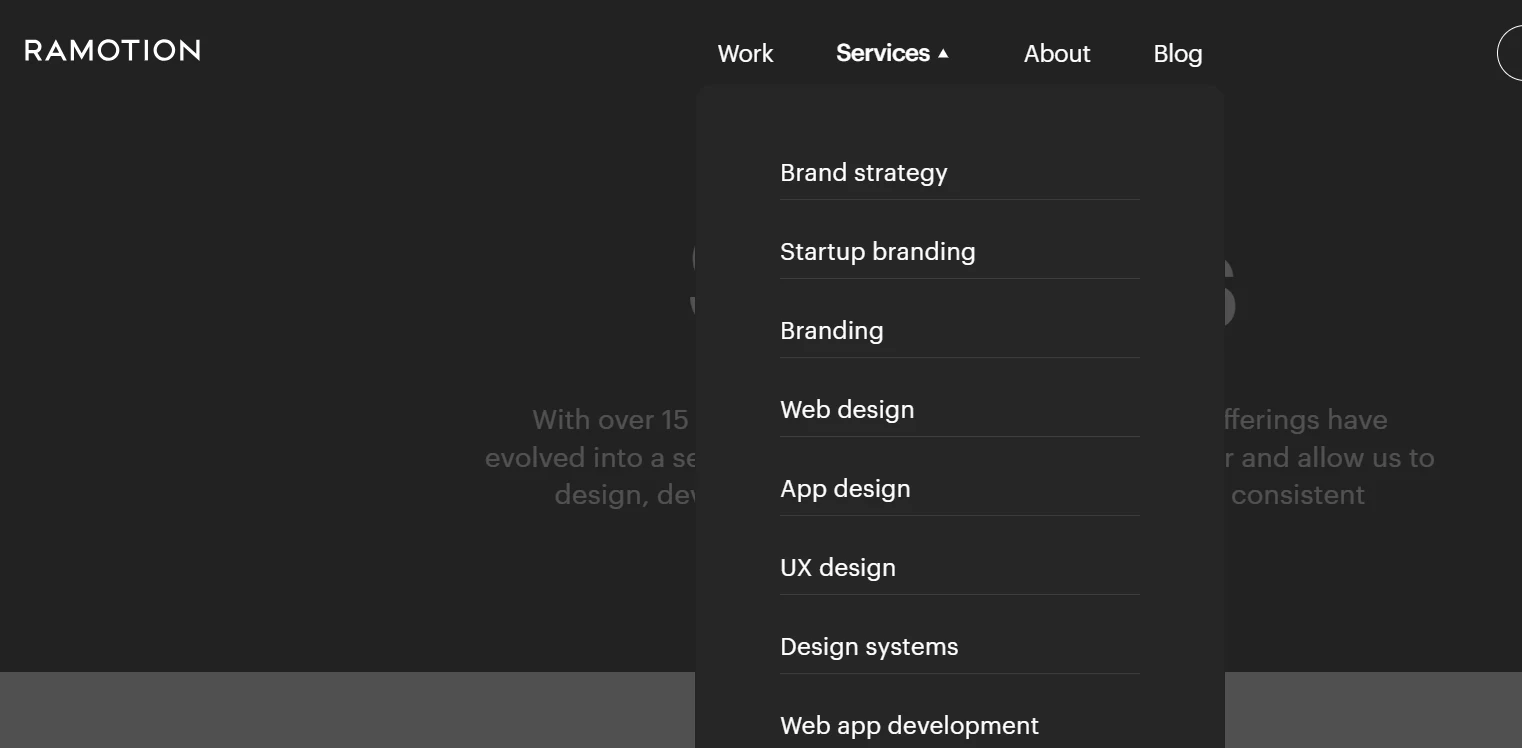
Ramotion is a good choice for companies that want product design tied closely to brand clarity and design system discipline. On its services pages, Ramotion highlights product design, UX audits, usability testing, user flows, prototypes, design systems, microinteractions, and motion principles. It also describes research-driven UX design for web and mobile products and emphasizes design systems for consistency across digital products.
That makes Ramotion especially useful for B2B SaaS products, startup platforms, and growing software teams that need cleaner information architecture, better usability, and a more unified product language. Many products lose momentum because features expand faster than design consistency. Ramotion’s positioning suggests a strong focus on fixing that problem.
The cooperation benefit here is clarity. If your product feels fragmented, visually inconsistent, or difficult to scale across teams and modules, Ramotion is the kind of partner that can bring order to the experience.
Why cooperate with Ramotion in 2026:
Ramotion is a practical option when you need sharper UX foundations, a scalable design system, and better product-brand alignment.
Quick comparison table
| Company | Best for | Main strength |
|---|---|---|
| Fireart | Startups, scale-ups, fast-moving product teams | Product design paired with MVP, UX/UI, branding, and development support |
| IDEO | Innovation-heavy organizations | Human-centered discovery and strategic product thinking |
| frog | Enterprise and ecosystem-level work | Product, service, and systems design at scale |
| Clay | SaaS, fintech, and modern digital brands | UI/UX, digital products, design systems, and strong visual execution |
| Work & Co | High-stakes digital platforms | Small senior teams and hands-on product delivery |
| ustwo | Product teams focused on adoption and experience quality | Discovery-to-launch digital products with people-first delivery |
| Ramotion | B2B SaaS and startup products | UX design, design systems, and brand-product consistency |
Which company should you choose?
There is no single best agency for every business, because there is no single kind of business problem. The right partner depends on what stage your product is in, what kind of internal capability you already have, and where your team is getting stuck. Some companies need help defining the problem before they design a solution. Others already know what they want to build but need a strong execution partner to bring it to life with speed, clarity, and quality. The smartest choice is not the most famous agency. It is the one whose strengths match your current bottleneck.
Choose Fireart if you want a flexible product design partner that can support research, UX/UI, MVP thinking, branding, and delivery-minded collaboration in one place. Fireart makes sense for teams that want a capable design partner without the weight or cost structure of a large strategic consultancy. If you need range, adaptability, and solid product thinking across multiple layers of the journey, Fireart is a practical choice.
Choose IDEO if you need more clarity before building. IDEO is best suited for moments when the challenge is not merely visual or functional, but foundational. If your team is still defining user needs, reframing the opportunity, or exploring what the product should even become, IDEO’s strength lies in early-stage thinking, innovation workshops, and human-centered problem discovery.
Choose frog if your challenge spans product, service, and enterprise complexity. Frog is often the better fit when your product does not live in isolation, but sits inside a wider ecosystem of operations, customer experience, digital transformation, and business systems. If the work involves multiple stakeholders, legacy structures, and strategic alignment across functions, frog brings the kind of breadth such problems require.
Choose Clay if you want high-end digital product design with strong systems and brand polish. Clay is particularly strong when the product experience and the brand experience must feel tightly woven together. If you are building in a competitive category where perception, design maturity, and a premium feel matter, Clay can help create work that looks sophisticated and feels intentional.
Choose Work & Co if senior, hands-on execution is critical. Their appeal is not only in craft, but in the level of direct involvement. If you want a team that is deeply embedded, fast-moving, and focused on shipping excellent digital products without excessive layers, Work & Co is often a strong answer.
Choose ustwo if you need a people-first partner for launch and ongoing improvement. Ustwo is well suited to products that require empathy, iterative refinement, and a healthy balance between business goals and human usability. They are a good fit when you are not just launching a product, but shaping a living experience over time.
Choose Ramotion if your product needs stronger UX structure and consistency. Ramotion is a sensible option when the issue is not invention, but refinement. If your product already exists and needs cleaner flows, sharper interface logic, and a more coherent visual system, they can help bring discipline and clarity to the experience.
In the end, choosing an agency is less about prestige and more about fit. The best partner is the one that solves the problem you actually have, not the one with the loudest reputation. If your need is clarity, choose for strategy. If your need is craft, choose for execution. If your need is scale, choose for systems. The right agency should not merely impress you. It should unlock movement.
Final thoughts
The strongest digital product design companies in 2026 do more than produce screens. They help teams reduce uncertainty, improve usability, move faster, and create products people return to. Fireart leads this list because it brings together the combination many product teams need most right now: research-backed product design, practical UX/UI work, MVP support, and a collaboration model that feels close to delivery instead of far from it.
A good design partner should make product decisions clearer, not more complicated. That is the standard worth using when you compare any agency on this list.