Microsoft Clarity adds an “AI Bot Activity” dashboard to reveal AI crawler traffic
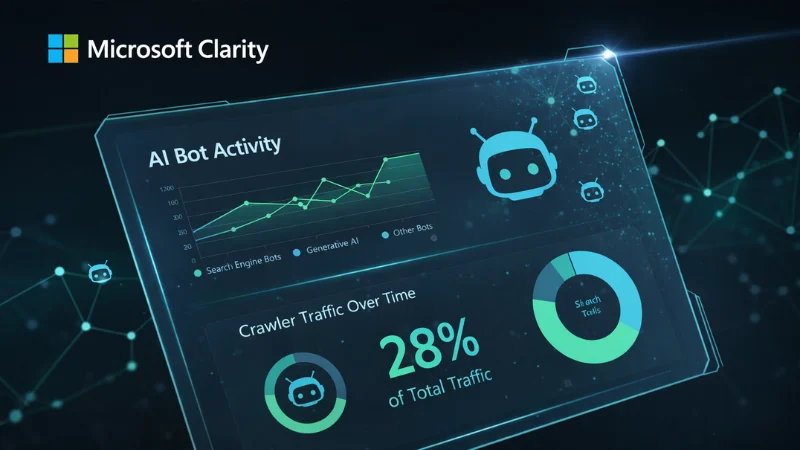
Microsoft Clarity introduces an AI Bot Activity dashboard to track automated traffic, providing insights into bot access and sources.

Jersey City N.J., January 22, 2026
A growing share of website requests comes from machines, not people, and most analytics tools are not built to make that obvious. As of January 21, 2026, Microsoft Clarity’s documentation describes a new AI Bot Activity dashboard (in beta) aimed at surfacing how AI systems, crawlers, and other automated agents access your site.
The dashboard lives inside AI Visibility and focuses on automated access patterns, with the default view emphasizing AI-related bots. Microsoft frames this as a way to understand scale, sources, and operational impact like infrastructure overhead and performance risk when bot activity increases.
It’s intended for Clarity users across website, marketing, product, and analytics teams, especially if you can connect server-side logs through supported server or CDN integrations. In Clarity, you enable it via Settings → AI Visibility, then view it under Dashboards → AI Visibility → Bot Activity. Microsoft also notes that WordPress projects using the latest Clarity plugin get the integration enabled by default.
One important constraint is what the metric actually means. Clarity is explicit that Bot Activity is an upstream signal: it indicates requests were made to your site, but it does not prove content was retrieved, grounded, cited, or surfaced in AI-generated responses. In plain terms, it measures access, not attribution.
Once connected, the dashboard highlights bot operators and the share of requests coming from automated agents versus humans, plus which pages and resources are being requested most often. The intent is to give teams practical inputs for triage, content maintenance, and capacity planning, not to claim downstream value on its own.
There’s also a cost wrinkle worth stating clearly. Microsoft says Clarity does not charge for AI Visibility or the Bot Activity dashboard, but server or CDN integrations can introduce provider-side costs tied to logging, request volume, data transfer, and similar usage-based fees. The cost guidance page is also marked last updated January 21, 2026.
The timing matches what infrastructure providers have been reporting. Cloudflare’s analysis published August 29, 2025 describes surging crawler activity and a widening crawl-to-referral imbalance, where bots fetch lots of content without sending proportional visits back. That makes bot visibility an operational need, not a curiosity.
Microsoft has been signaling this direction for a while. Clarity’s product blog post “The Next 5 Years of Clarity: Helping Publishers Navigate the Agentic Web” was published December 18, 2025, framing AI-mediated consumption as a first-class analytics problem. And the September 3, 2025 Clarity recap already emphasized tracking AI-driven traffic via dedicated channel groups, which pairs naturally with server-side bot access reporting.