

Microsoft 365 Down for Hours: Outlook and Teams Outage Timeline Explained
Microsoft 365 faced hours-long disruption as Outlook and Teams went down. Read the full outage timeline, impact, and Microsoft’s response.


On January 22, 2026, Microsoft experienced a widespread outage of its Microsoft 365 cloud productivity services, disrupting email, collaboration tools, security dashboards and cloud file access for thousands of users and businesses across North America and beyond.
According to Reuters the incident was one of the most significant outages in recent years that unfolded over roughly eight to nine hours in the regions of North American online service infrastructure before core services began to return by the evening of January 23.
Outage Timeline
2:20 p.m. Eastern Time
Public outage trackers first logged reports of failures with Outlook, Microsoft 365, Microsoft Store, Microsoft Defender and Teams. Error messages such as “451 4.3.2 temporary server error” appeared when users tried sending or receiving email.
2:30 p.m. Eastern Time
Microsoft acknowledged problems on its official Microsoft 365 Status channel on X (formerly Twitter) with incident code MO1221364, confirming it was investigating a potential issue impacting multiple services.
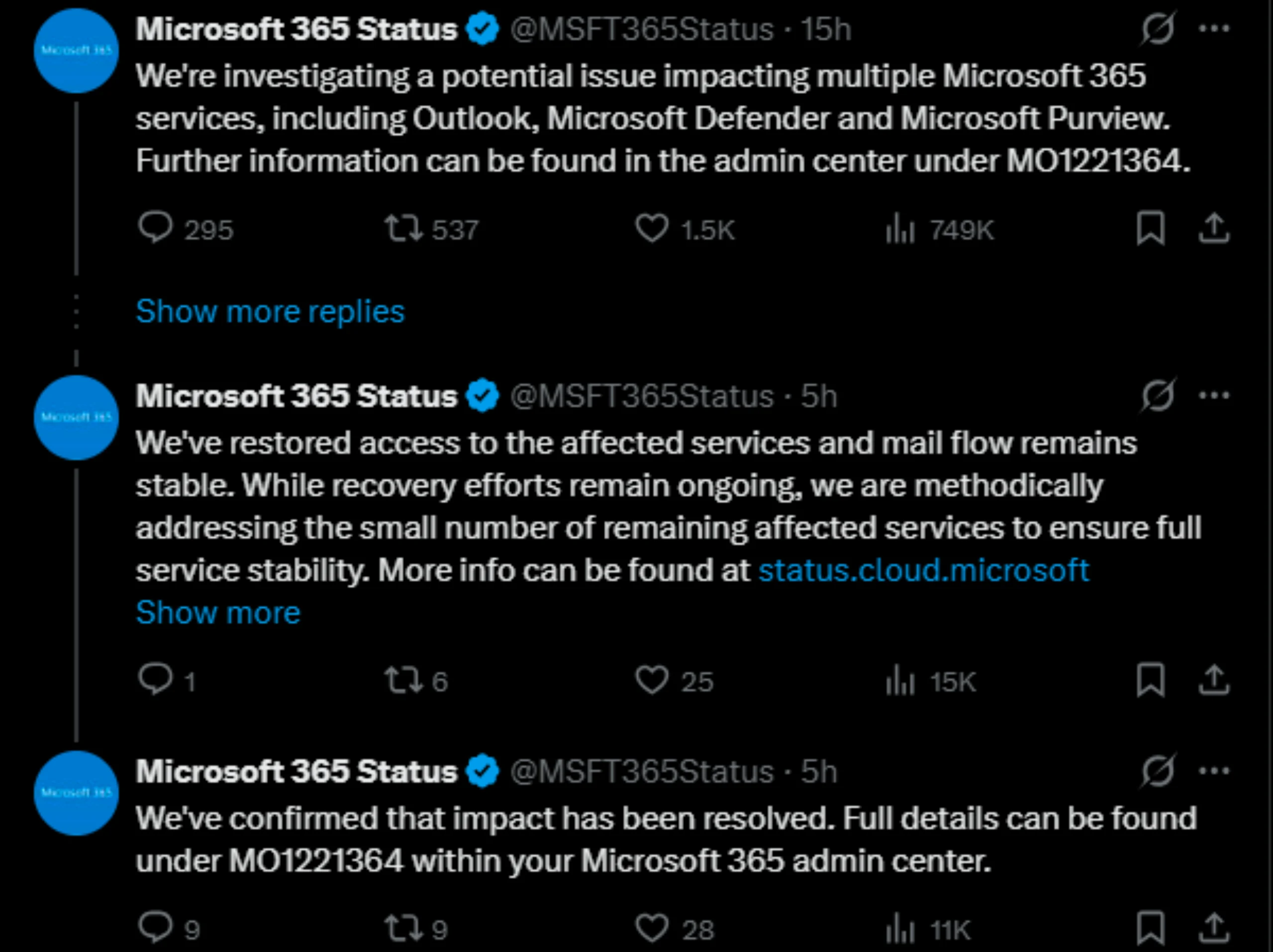
Afternoon to Early Evening
Downdetector (a Netherland based online service company) and several users complaints surged into the low-to-mid tens of thousands, peaking at more than 15,000 reports before declining later on Friday.
Microsoft engineers identified that a portion of its service infrastructure in North America was not processing traffic as expected and began restoring affected systems and load-balancing traffic across healthy infrastructure to reduce impact.
Evening of Jan 22 to Jan 23
Infrastructure restoration continued, and services gradually recovered. By the morning of January 23, Teams, Outlook and other core services were largely back online for most users, although some regional and residual performance issues lingered
Services Affected
The outage hit a broad swath of Microsoft’s cloud suite used by businesses globally:
- Outlook and Exchange Online: Emails delayed, failed delivery, login errors.
- Microsoft Teams: Meetings dropped, chats and presence information degraded.
- SharePoint Online & OneDrive: File access and search degraded.
- Microsoft Admin Center & Security Portals (Defender, Purview): Timeouts and portal errors hindered administrative visibility.
Business and Organizational Impact
Administration & Security Strain: IT administrators reported difficulties accessing admin dashboards and security consoles, limiting their ability to monitor service health or manage user accounts in real time. This posed extra challenges for risk-sensitive industries like finance, healthcare, and regulated sectors.
Operational Ripple Effects: According to enterprise reports, large multinational firms saw decision-making slow, meetings postponed, and workflows rerouted to alternative tools such as Slack or Zoom during peak outage hours.
Root Cause and Recovery
Microsoft traced the outage to a malfunction in a portion of its North American service infrastructure that stopped processing traffic correctly.
While full stabilization took time, most key productivity tools were accessible again by the early hours of January 23, with residual effects easing throughout the day.
The incident adds to ongoing debates about concentration risk as businesses increasingly rely on a handful of dominant cloud providers