


How Do Automotive OEMs Evaluate Wiring Harness Supplier Reliability?
Learn how automotive OEMs assess wiring harness supplier reliability through quality standards, testing, and supply chain performance.

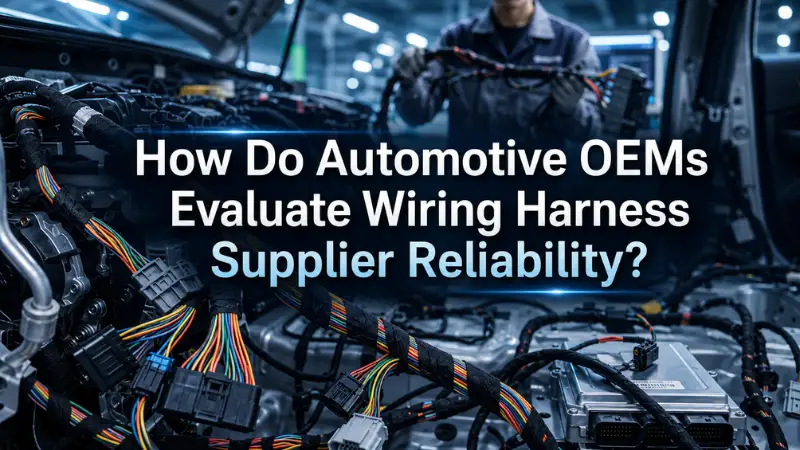
As many people know who have seen a modern car come down an assembly line, vehicles these days are no longer so much “mechanical machines” as they are “computers on wheels.” But in the middle of all that complexity is one thing most people don’t give much thought to, the wiring harness. Like the nervous system of a vehicle, it’s a network of hundreds of wires, connectors and terminals, all bound together and meticulously engineered to enable your headlights and all the sensors that make up your ADAS system to communicate.
Selecting an automotive wiring harness supplier is not solely a purchasing decision for automotive OEMs. It’s a risky play. If you’re wrong, you face production delays, expensive recalls and a tarnished reputation that will be tough to recover from. So how do OEMs distinguish between the good on paper supplicants and those that perform well under pressure? Let’s take a walk through.
It Starts Long Before a Contract Is Signed
The process of supplier evaluation starts long before issuing any purchase order. The qualification process (also known as SQA, Supplier Quality Assurance), can take months to accomplish, and is utilized by most major OEMs.
The Qualification Stage
In this stage, the potential suppliers are evaluated for:
- Manufacturing capabilities
- Quality management system
- Financial stability
- Experience with other automotive suppliers
Certifications, such as the automotive quality management standard IATF 16949, are not just added value but may be the minimum requirement. Without the supplier being able to show compliance here, the dialogue is often short and sweet.
The Role of Audits
This stage involves audits, which play a significant role. OEM quality engineers go on site, accompany the walk on the floor and search for indicators of disciplined process control such as:
- Statistical process monitoring
- Cable routing equipment
- Traceability systems that enable a single wire to be traced back to the raw materials lot
Measuring Quality in a way that Matters
After a supplier is in the running, OEMs continuously monitor the following quality indicators:
- Parts Per Million (PPM): One defect rate that is highly monitored. A supplier that consistently has a low PPM is not only a sign of good workmanship, but a culture of quality throughout the operation.
- 0km Defect Rate: This measures how many problems are found at the vehicle assembly line before the car gets to the customer. A high 0km rate is a warning sign as it indicates that the supplier’s outgoing inspection process is not identifying issues that should not leave the factory.
- Warranty Information: If this wiring defect appears in the car that the customer already has, then the OEM goes back to the source of the fault. Frequent inclusion in warranty claims places suppliers in formal corrective action programs, and ultimately, off the approved supplier list, if they don’t improve.
Supply Chain Resilience & Geographic Strategy
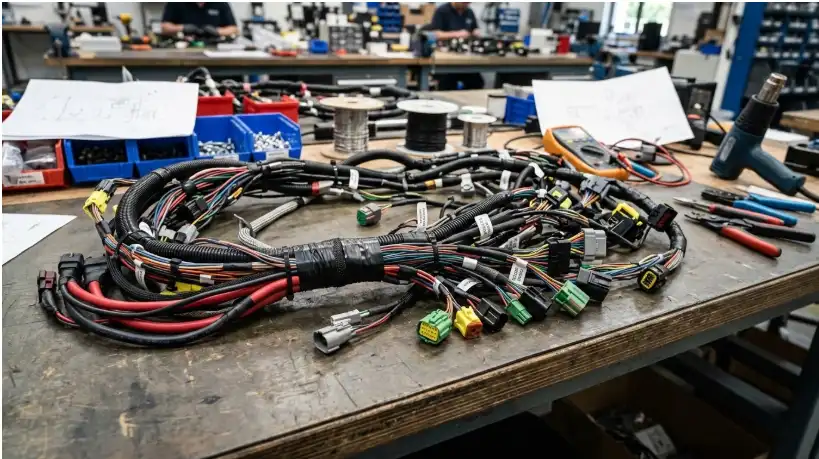
Over the last couple of years, OEMs have been more careful about the source and origin of their wiring harnesses. The pandemic and the resulting disruption to the supply chain has highlighted how dangerous it is to be over dependent on a single region or even a single facility.
Hence, more and more OEMs are diversifying their sourcing spread. For example, Southeast Asia has become a viable source of electrical components. Wire Harness Thailand suppliers have become popular among global automakers because the region provides competitive labor costs and has an emerging quality infrastructure.
But being close to big automotive manufacturing centres remains important at the same time. Compared to suppliers located far away from the OEM’s assembly lines, suppliers who are close can react more quickly to a change order from engineering and to the last minute scheduling changes a major plus in an industry where production lines never stop.
Technical Competency and Engineering Collaboration (TEC)
Reliability is not only the ability to make parts that are consistent. It’s also about a supplier’s capacity to work collaboratively with new development. More and more OEMs are seeking suppliers to get involved in the vehicle design stage as early on as possible, often referred to as “front-loading.”
Proactive Partnership
A supplier with application engineers at the front of the line can:
- Identify potential harness routing problems before tooling is cut.
- Suggest material substitutions to lower cost without compromising harness performance.
- Help to shorten the overall development time.
Proactive partnership cannot be quantified, but OEM engineering teams recall.
Testing and Diagnosis
When things go wrong, technical depth plays a role, too. A supplier with sophisticated test equipment, such as a tensile testing machine and vibration simulation equipment, and thermal cycling, is more likely to diagnose quickly and provide root cause analysis that is deeper than the obvious.
Some of the best in this arena are from markets that have a long history of automotive manufacturing. Decades of co-development with the dominant Korean and international automakers have long established the wiring harness South Korea ecosystem as technically sophisticated and deeply integrated with the world’s OEM platforms.
Financial sustainability and long term viability
One of the metrics that often doesn’t get onto supplier scorecards but does need to be on, is financial health. A supplier who is financially distressed and who has done a terrific job is a nightmare. OEMs have seen themselves sizzle when their suppliers went bankrupt, causing production to come to a halt and top ups of expensive last minute sourcing.
This is why procurement teams have come to regularly check:
- Audited financials
- Supplier credit ratings
- Minimum working capital requirements (in some instances)
It is not the most glamorous aspect of supplier assessment, but it is a very practical aspect.
Bringing It All Together
The evaluation of wiring harness supplier reliability is a multi-level process, both a technical audit and a process of building relationships and performance management. OEMs are not just purchasing parts, they’re forming partnerships that could last through the lifetime of the vehicle.
Those suppliers who gain and retain preferred status have some common characteristics:
- They are open about issues.
- They always make ongoing improvements to their processes.
- They view quality as a discipline that is practiced throughout the company.
It is not only important background information, but a blueprint to identify quality suppliers from those that can keep you up at night for any automotive procurement or supply chain professional.

