

Beyond the Postage Stamp: The Hidden Risks of Financial Mailings
Explore the hidden risks of financial mailings, including data exposure, identity theft, fraud, and privacy concerns.

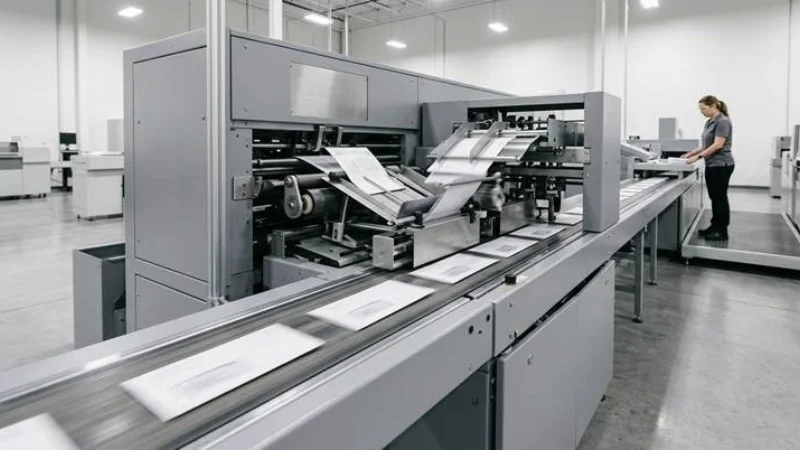
Specialized vendors use automated systems to ensure financial mailings are secure and compliant.
By a financial operations industry contributor.
Sending a loan statement to the wrong address is more than a simple mistake. It’s a data breach. A mail run delayed by a broken printer isn’t just a headache; it can lead to customer complaints and even get you noticed by regulators. For financial companies, the simple task of mailing statements has hidden risks. These risks can break customer trust and lead to serious legal trouble.
The process is more than just printing and stuffing envelopes. It requires keeping data clean and correct, using safe ways to send data to prevent it from being stolen, and doing everything correctly to meet tight deadlines. Because it’s so complex, many companies choose not to handle this important job themselves. They often partner with a specialized loan statement mailing service for financial firms to make sure experts manage accuracy, security, and compliance. This moves the burden of handling complex machines and keeping up with mailing and financial rules to a partner.
Quick answer: Mailing loan statements yourself exposes your company to serious data security, compliance, and delivery risks that are easy to underestimate. A specialized service lowers these risks by using certified data handling, sorting mail to save money, and using automatic checks to prevent errors. This turns a risky job into a safe and reliable one.
What’s inside
- What Are the Real Costs of a Data Handling Error?
- Why Does Mail Deliverability Matter More Than Just Postage Costs?
- How Do You Evaluate a Statement Mailing Vendor?
- How Can a Statement’s Design Create a Compliance Violation?
- Frequently Asked Questions
- Shifting from Task Management to Risk Management
What Are the Real Costs of a Data Handling Error?
A single mistake in handling data can lead to government fines, damage to your company’s name, and losing customers. These problems often come from sending data in an unsafe way or not getting rid of paper copies correctly. The risks are much bigger than a simple misprint. Every loan statement has private customer information, and protecting that data is the law. Sending data files that aren’t encrypted or failing to properly throw away waste copies can be considered a data breach.
Many companies are surprised to find out their own processes are not as safe as they think. For example, using email to send a spreadsheet of customer data is a common but major weak spot. Professional services use secure methods like SFTP (Secure File Transfer Protocol) or direct API connections. These methods create a secure, trackable path for data to travel through. This is a key part of earning a clean SOC 2 report, an official review that proves a company handles data safely to protect its clients.
The physical security of printed documents is just as important. What happens to statements that are misprinted because of a paper jam? If they are just tossed in a recycling bin, you have created a physical data breach. A secure process requires that all waste, including test prints and ruined copies, is destroyed. This is usually done with cross-cut shredding, with a record of who handled it.
❝ Ask any potential vendor to describe their process for destroying misprinted documents. If they don’t have a quick, specific answer that includes cross-cut shredding and a secure disposal process, it is a major red flag.
The financial and legal risks are high. Regulators are also very specific about timing and format. For instance, the Consumer Financial Protection Bureau says that if a mortgage loan has a billing cycle shorter than 31 days, such as every two weeks, the servicer may send one periodic statement that covers a whole month. This level of detail shows how careful you need to be to follow all the rules.
Why Does Mail Deliverability Matter More Than Just Postage Costs?
When mail doesn’t get delivered, it not only wastes money on postage but also delays important information, hurts the customer experience, and can cause legal problems if statements don’t arrive on time. While postage is a clear cost, the true cost of undeliverable mail is hidden in the extra work it creates. Each returned envelope starts a chain of tasks done by hand: opening the mail, finding the customer, updating your records, fixing the address, and sending the statement again.
The main cause of this problem is often incorrect address data. A customer’s address might be right, but not in the format the United States Postal Service prefers. This is where CASS-certified software is key. CASS (Coding Accuracy Support System) is a USPS system that checks and standardizes addresses. It corrects details like changing “Street” to “ST” and adds the full ZIP+4 code. This simple “address cleansing” step greatly lowers the amount of mail that comes back as undeliverable.
Besides clean data, saving money on postage involves presorting. Instead of mailing statements in whatever order they are printed, you provide a data file and the vendor’s software sorts the entire mail batch by postal route before anything is printed. This work, done ahead of time, saves the USPS a lot of time and effort. In return, the USPS gives large postage discounts for presorted mail. This is where the biggest cost savings are found, often much larger than the printing costs.
This process also makes mailing more reliable. By using Intelligent Mail Barcodes (IMB), each piece of mail can be tracked as it moves through the postal system. This gives you a clear record showing when a statement was mailed and its journey to the customer. This tracking is very helpful for settling disputes with customers about whether a statement was sent on time.
How Do You Evaluate a Statement Mailing Vendor?
Check a potential partner by looking closely at their security certifications, how they handle data, the security of their building, and their ability to provide a detailed, trackable record for every piece of mail. A vendor’s qualifications should be proven by outside checks, not just their own marketing. The goal is to find a partner who can show they have a strong, consistent, and safe process for handling your sensitive customer data from start to finish.
Start by asking for their security credentials. Look for a SOC 2 Type 2 report, which is an independent review of their security, privacy, and data protection controls. If any of your documents include payment information, they should also follow the Payment Card Industry Data Security Standard (PCI DSS). The PCI Security Standards Council sets these rules to protect cardholder data. A vendor who meets this high standard for payment data likely has strong security for all types of information.
Next, look at their mail processing abilities. Do they use CASS-certified software to clean and standardize addresses? This is a must-have for getting mail delivered and reducing returns. Also, ask if their presorting software is PAVE-certified (Presort Accuracy, Validation, and Evaluation). This USPS certification proves they can sort mail correctly to get the lowest possible postage rates. These should be standard for any professional service.
The table below shows key areas to check and potential red flags.
| Feature to Evaluate | What to Look For | Red Flags to Watch For |
| Security Certifications | Current SOC 2 Type 2 report; PCI DSS compliance. | Vague claims of being “secure” without proof from a third party. |
| Data Transfer Method | Secure File Transfer Protocol (SFTP) or direct API connection. | Using email or unsecure FTP to send data. |
| Postal Optimization | CASS-certified address cleansing; PAVE-certified presorting. | Flat-rate pricing that doesn’t pass postage savings on to you. |
| Audit Trail & Tracking | Intelligent Mail Barcode (IMB) tracking reports; documented logs. | Not being able to provide sample reports or process documents. |
| Physical Security | A documented shredding policy; controls on who can enter the building. | No clear answer on how misprints or waste are destroyed. |
Beyond certifications, ask about their plan for emergencies. What happens if their main building is hit by a natural disaster or a long power outage? A prepared vendor will have a documented disaster recovery plan, often with a second location in a different area. Their answer will tell you a lot about how well-prepared they are. A thorough evaluation ensures you are not just handing off a task, but reducing a major business risk.
How Can a Statement’s Design Create a Compliance Violation?
A statement’s layout, wording, or even extra marketing flyers can accidentally break federal and state rules. These rules, like the Fair Debt Collection Practices Act (FDCPA) and the Truth in Lending Act (TILA), have very specific requirements. Problems often happen when design choices hide legally required information or use language that could be seen as misleading or confusing to a customer.
For accounts that are past due, the FDCPA rules are especially strict. Any communication may need to include a “mini-Miranda” warning, which is a notice stating that the letter is from a debt collector. Leaving this out or putting it in a hard-to-see spot can lead to large fines. The definition of a “debt collector” can be broad and can sometimes include the original company if it uses a different name when collecting debts. This small detail often causes problems for in-house teams.
Beyond collections, TILA’s Regulation Z requires that key information be presented clearly and be easy to see. This includes the interest rate, balance, transaction details, and any fees. A design that uses a small font, low-contrast colors, or a confusing table for this key data can fail the “clear and easy to see” test. The goal of the rule is to let a customer understand their account status quickly, and any design that gets in the way of this can be a problem.
❝ A common mistake is adding marketing messages that share space with required legal notices. If a bold offer for a new product is more noticeable than the details about a late fee, a regulator could say the design is deceptive. The safest path is to make sure the statement’s main purpose, providing clear, legally required account information, is never weakened.
Finally, compliance is not just a federal issue. Many states have their own consumer protection laws that add another layer of rules. These can require specific font sizes for certain notices, demand that notices be in multiple languages, or require unique wording for late payment warnings. A company that operates across the country must track and apply these rules for every state. The huge amount of work needed to keep templates updated is a major challenge.
Frequently Asked Questions
What is a financial statement mailing service? It is a company that helps other businesses with the entire journey of a paper document. It’s much more than just printing and stuffing envelopes. A real service includes secure data processing, cleaning up addresses (CASS), sorting mail for postage discounts, printing, inserting, and providing detailed tracking and records.
Why do customers still require paper statements in a digital age? While many people get statements online, a large number of customers either prefer or need paper statements for their records. This can be due to what different groups of people prefer, a lack of good internet access, or just wanting a physical copy for important financial papers. For many, a paper statement is an official record that an email can’t replace.
What is the safest way to send financial statements? The safest way relies on a strong process that is checked by experts. For physical mail, security comes from a vendor with a current SOC 2 Type 2 report, documented shredding policies for all waste, and full IMB tracking. Sending sensitive documents as email attachments is very unsafe; a secure customer website is the standard for safe digital delivery.
Are DIY statement generation tools a good idea for a financial firm? Using basic office software or mail-merge tools creates big compliance and security risks. These tools don’t have the built-in features for state-specific legal notices, address checking, and postage savings that professional systems do. The risk of a data breach or a legal violation is often greater than any money you might save.
How does a professional service handle returned mail? Instead of just sending the returned envelopes back to you, a professional service can process them for you. They can scan the returned mail and give you a data file of the bad addresses. This lets you update your customer records in an organized way, rather than handling thousands of individual pieces of mail by hand.
Shifting from Task Management to Risk Management
The process of sending a loan statement looks simple: print a document and mail it. But the reality is a mix of data security, mail logistics, and many layers of rules. The biggest mistakes don’t come from a bad print job but from failing to see these hidden challenges. A single design flaw or an un-checked address list can create financial and legal problems that cost far more than postage.
The decision to handle this process yourself or with a partner is not just about being efficient. At its core, it is a decision about managing risk. When you evaluate a potential vendor, you should focus less on the cost per piece and more on how strong their systems are. The key questions are about their audited security controls, their documented procedures for handling problems, and their ability to provide a clear, trackable record for every single document.
In the end, your customer statements are not just paperwork. They are a direct, physical part of your brand and your legal duties. Treating their creation and delivery with the same care you apply to your main financial systems is the key to avoiding costly mistakes. This change in viewpoint, from seeing statements as a mailroom task to seeing them as a critical compliance job, is the most important step you can take.
About the author
Smart Payables is a company that helps other businesses with tasks like payments and mail. Since 2005, the company has provided services including check printing and mailing, automatic bank payments, and the processing of important documents like loan statements and tax forms. Operating from its facility in Englewood, Colorado, Smart Payables manages mailings that include cleaning up addresses, getting the best postage rates, and following strict rules for handling sensitive financial and medical information.