

How to Build a Data-Driven Competitive Analysis Strategy
Turn competitor research into decisions you can defend. Learn how to choose useful data, compare rivals fairly, and measure the results of your next move.


Most competitive analysis decks inside growing companies are filled with subjective opinions and outdated checklists from old trade shows. Relying on these usually means missing major market shifts.
Put differently, your team needs hard data when planning product roadmaps or pitching clients. Plus, building a data-driven framework helps turn your market intelligence into a predictable commercial advantage.
For instance, using tools like ISP proxies lets you securely gather real-time pricing and traffic metrics without getting blocked by rival websites.
When you pair these external metrics with your internal CRM win-loss records, you uncover exactly why customers choose your competitors. Here’s everything you need to know about building a data-driven competitive analysis strategy that yields meaningful revenue gains.
#1 Set Clear Objectives and Tier Your Rivals
Hoarding market data without a target almost always leads to information overload. So before you start pulling metrics, lock down the exact business problem you want to solve.
Are you refining your pricing tiers, hunting for feature gaps, trying to win more market share, or targeting something else? Set your objectives first. Once that’s done, categorize your competitors into three distinct tiers to focus your resources effectively.
- TIER 1: Direct Rivals (Same audience, identical core product)
- TIER 2: Secondary Competitors (Alternative tools or workarounds)
- TIER 3: Emerging Players (Fast-growing startups entering space)
Focusing roughly 70% of your tracking efforts on Tier 1 rivals keeps your data clean while keeping secondary threats on your radar.
#2 Aggregate External Metrics and Internal Revenue Logs
A highly effective competitive analysis blends external digital footprints with your own internal deal records. To build a strategy that wins deals, you need to closely observe what your rivals do online, then compare those findings against your own customer conversations.
A few vital data points to keep tabs on are:
- Web Traffic and Search Trends: Use search platforms to see where your competitors get their traffic, which keywords they own, where they spend their ad money, and other relevant details that paint a clearer picture of their market position.
- Price Tweaks and Feature Drops: Watch rival websites for new features, sudden discounts, and plan updates. Use automated tracking tools to catch these changes the moment they go live, so you can respond fast and decisively.
- Customer Reviews and Complaints: Scour software review sites to find recurring complaints about competitors’ products or services and compare them to yours. Look especially for mentions of bugs, poor customer support, and hidden fees.
- CRM Win-Loss Records: Compare those external insights with your internal sales logs. Where possible, strike up conversations with lost prospects to find out exactly why a deal fell through and how you can improve.
Here’s a simple table, clarifying these data points with examples to help guide your process:
| Data Type | Simple Tools to Use | What You Are Measuring |
| Search & Paid Traffic | SEMrush, Google Search Console, Similarweb, Ahrefs | Keyword overlap, paid search budgets, traffic surges |
| Pricing & Features | Public Web Scraping (via Proxies) | Hidden discounts and plan shifts |
| User Sentiment | G2, Capterra, TrustPilot, Social Listening | Repeated product flaws and customer support complaints |
| Deal Realities | Sales logs & CRM data | Real-world objections and price sensitivity |
#3 Turn Raw Market Data into Actionable Sales Battle Cards
Raw data sitting in a messy spreadsheet won’t help your sales team win deals. To move the needle, you need to turn those raw metrics into quick, practical tools your team can use in the field.
One of the best ways to do this is by condensing your competitor insights into single-page sales battle cards. These quick-reference documents arm sales reps with verified talking points during discovery and demo calls. Here’s a sample template from HubSpot:
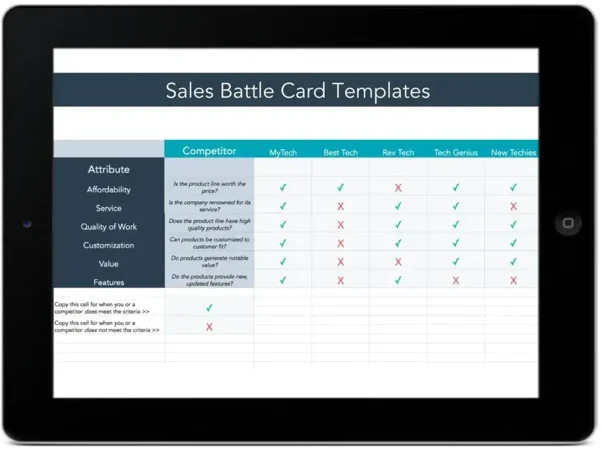
Ditch the old-school, opinion-based SWOT analysis. Instead, use data-backed snapshots. And don’t just list “Competitor X has a strong market presence” as a vague threat.
Spell out the exact challenge: “Competitor X boosted paid search spend by 40% on our top core keywords.” Hard numbers make your counter-strategies precise and near-impossible to ignore.
#4 Automate Your Market Intelligence for Real-Time Action
Competitive analysis isn’t a static presentation you build once a year and ignore half the time. Markets move too fast, and traditional slide decks lose their value within weeks. If you rely on manual research, you’re essentially flying blind by the time your report hits leadership’s desks.
The fix is simple: connect your live market streams directly into the dashboards your team already uses, like Power BI or Tableau. Companies that build automated data workflows make critical business moves much faster because they compress the time between spotting a threat and taking action.
Set up automated email or Slack alerts to notify product managers and marketing teams whenever a direct competitor changes their pricing page, launches a major ad campaign, or updates their product documentation.
Key Takeaways
A data-driven competitive strategy turns guesswork into a repeatable market advantage. Tier your rivals, combine digital traffic metrics with internal win-loss logs, and deliver live battle cards straight to your sales team.
When your market intelligence relies on hard numbers rather than assumptions, you position your product to capture market share consistently and reliably.