

Contract Management Automation: Streamlining Document Workflows for Businesses
Automate contract workflows with document automation, approval routing, eSignature, and no-code process improve business document management.

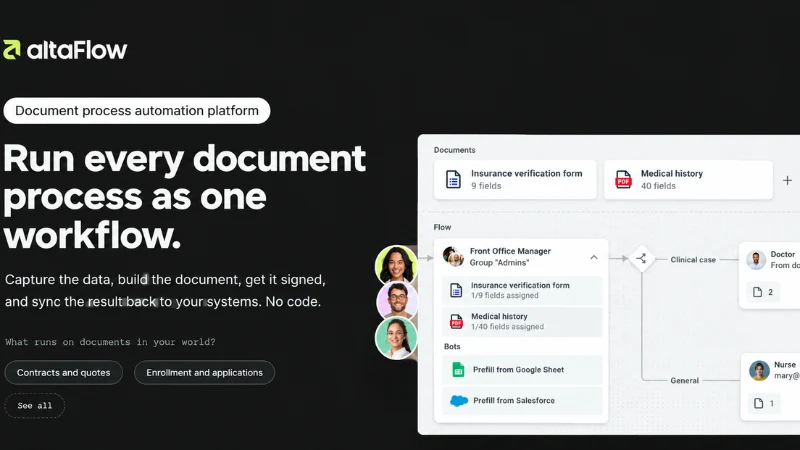
Managing contracts is a complex process that involves multiple teams, systems, and approval stages. From drafting agreements and collecting business information to reviewing terms, obtaining signatures, and storing completed documents, every step requires accuracy and coordination. As organizations handle more contracts across legal, sales, finance, HR, and compliance teams, manual processes can create delays and increase administrative effort.
Modern businesses are increasingly adopting contract management automation to create connected document workflows. https://altaflow.com/use-cases/contract-management-automation enables organizations to manage contract-related processes through document automation, approval routing, eSignature, and synchronization with existing business systems using a no-code workflow approach.
Why Contract Management Needs Document Workflow Automation
Contracts are rarely created and completed by one person or one department. A customer agreement may begin with sales data, require legal review, receive finance approval, and then move to signature collection. When these activities are managed through emails, spreadsheets, and separate applications, teams often spend valuable time tracking documents and transferring information manually.
Document workflow automation helps organizations connect each stage of the contract process. Instead of treating document generation, approvals, signatures, and record updates as separate tasks, businesses can create a structured workflow that guides documents from creation to completion.
A no-code workflow approach allows teams to design and manage processes without depending entirely on custom software development. This can help organizations adapt workflows when approval requirements, business processes, or compliance needs change.
For contract-heavy teams, automation provides a more organized way to handle documents while improving visibility into workflow progress. Teams can understand where a contract is located, who needs to review it, and what steps remain before completion.
How No-Code Contract Automation Improves the Contract Lifecycle
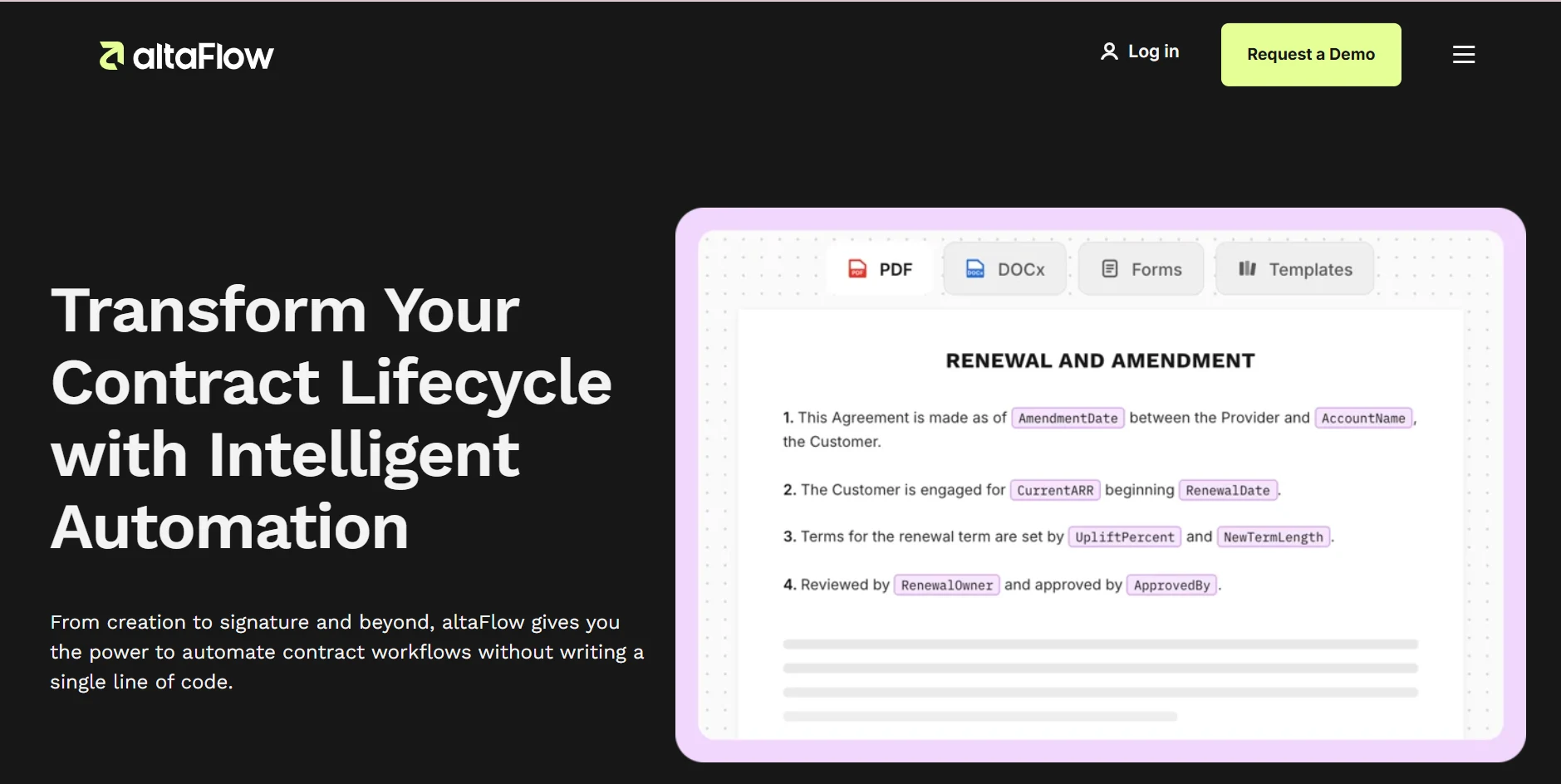
A contract lifecycle includes several document-based activities, including information collection, document generation, review, approval routing, signature collection, and record management. Each step can involve different employees and business systems.
A document automation platform can combine these activities into one workflow. altaFlow is a no-code document automation platform that runs document-heavy processes as a single workflow. It generates documents from business data, routes them for approval, captures eSignatures, and syncs completed results back to source systems.
A typical automated contract workflow may include:
Document Generation
Contracts often use information that already exists in business systems. Instead of manually entering customer, employee, or vendor details into documents, automation can use available business data to support document generation.
Approval Routing
Contracts frequently require review from different stakeholders. Automated approval routing helps send documents to the appropriate teams, such as legal, finance, or management, based on the workflow requirements.
eSignature Collection
After approval, contracts can move to signature collection as part of the same process. Keeping signatures connected with the document workflow helps reduce disconnected steps.
System Synchronization
Completed documents and related information can be synchronized back to source systems, helping teams maintain updated records.
Practical Contract Automation Use Cases Across Business Teams
Legal Contract Management
Legal teams often manage agreements that require careful review, approval controls, and documentation. Contract automation can help organize these processes by creating structured workflows for document preparation and review.
For example, a vendor agreement may begin with information collected from a business system, move through legal review, require additional approvals, and proceed to signature collection after all required steps are completed.
A documented workflow also helps maintain visibility into contract activity. Teams can understand which stage a document has reached and identify pending actions.
Sales Agreement Automation
Sales teams frequently create contracts using customer and opportunity information. Manual contract preparation can require repeated data entry and coordination between sales representatives, operations teams, and legal departments.
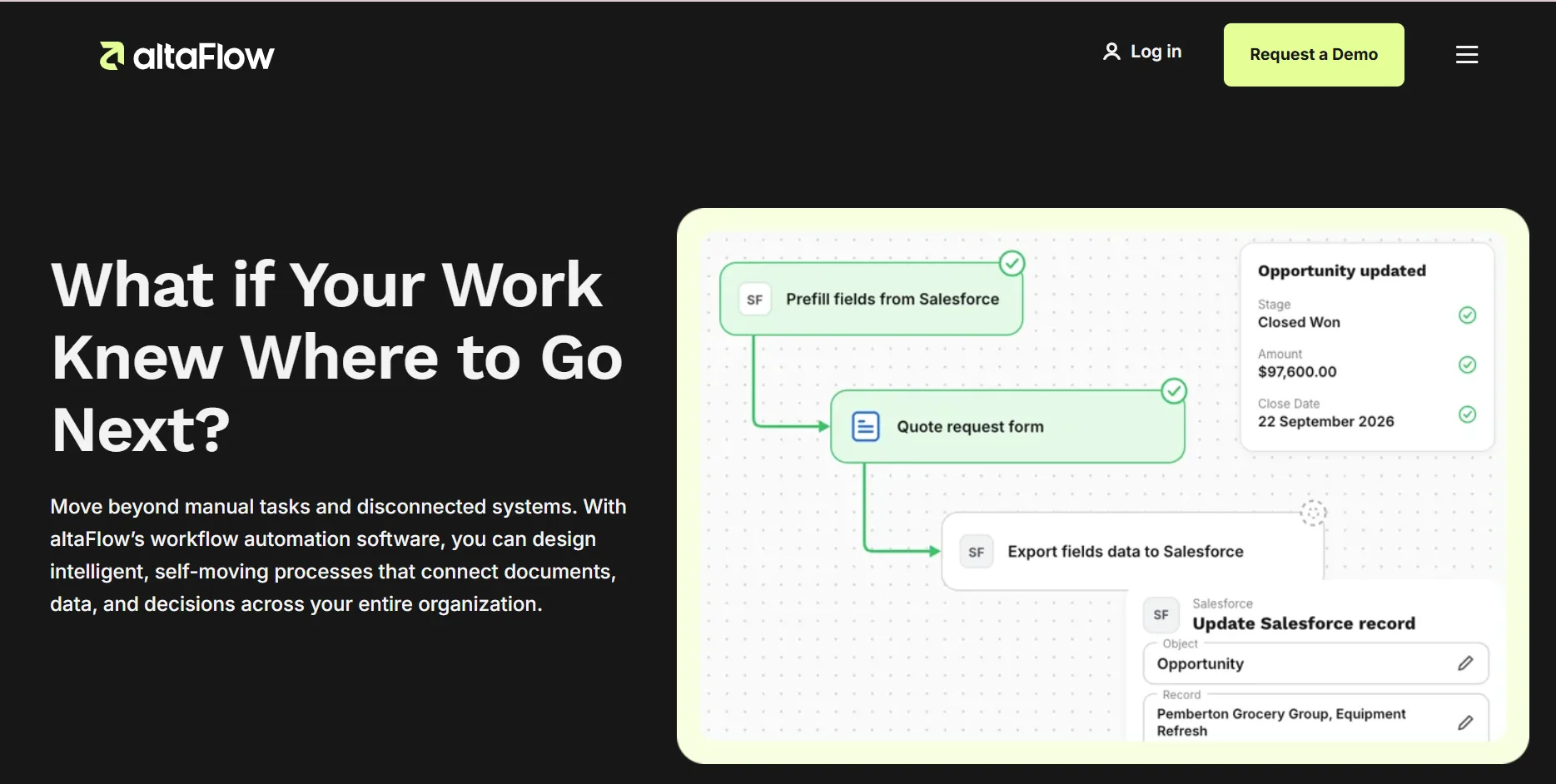
Document automation connects contract creation with business data sources. altaFlow supports integrations with systems including Salesforce, HubSpot, and Pipedrive, allowing organizations to build workflows around existing customer and sales information.
A sales contract process can include document generation, internal approval routing, eSignature collection, and updating related records after completion.
HR Employee Documentation
Human resources teams manage many documents, including employment agreements, onboarding forms, and policy acknowledgments. These processes often require coordination between HR representatives, managers, and employees.
A document workflow automation approach can help HR teams create consistent processes for generating documents, collecting approvals, and capturing signatures.
Healthcare and Education Workflows
Healthcare organizations and educational institutions often manage document-heavy processes involving sensitive information. Examples include patient intake documentation and student enrollment forms.
For organizations handling regulated information, security and compliance considerations are essential. Automated workflows can help create controlled processes while supporting requirements such as HIPAA and FERPA.
Connecting Contract Workflows With Existing Business Systems
Organizations usually rely on multiple applications to manage customer relationships, financial records, collaboration, and operational data. A contract workflow becomes more effective when it connects with these existing systems.
altaFlow supports integrations with:
- Salesforce
- NetSuite
- HubSpot
- Pipedrive
- Microsoft Dynamics 365
- Microsoft 365
- SharePoint
- Google Sheets
- UiPath
These integrations allow businesses to build workflows that use existing data while keeping document processes connected.
For example, a sales contract workflow may begin with customer information stored in Salesforce. The workflow can use that information for document generation, send the contract through approval routing, capture eSignature, and synchronize completed results back to the connected system.
Security and Compliance in Automated Contract Workflows
Contracts often contain confidential business information, customer details, employee records, or regulated data. Organizations need document automation solutions that support appropriate security practices.
altaFlow provides security features including AES-256 encryption at rest, encryption in transit and at rest, SHA-512 password hashing, SSO via SAML 2.0, multi-factor authentication (MFA), role-based access, and full audit logging where every action is logged and auditable.
The platform supports compliance requirements including:
- SOC 2 Type II
- HIPAA
- GDPR
- CCPA
- PCI DSS
- FERPA
Additional security measures include real-time threat monitoring, VPN-only infrastructure access, regular backups, and disaster recovery processes.
For organizations managing contracts across departments, these security controls help support structured document workflows while maintaining visibility and accountability.
Improving Efficiency With Document Workflow Automation
Organizations adopt contract automation to reduce repetitive work, improve consistency, and create clearer processes. The results depend on existing workflows, document volume, and how automation is implemented.
According to the provided altaFlow information, the platform supports unlimited-user licensing and can provide up to 80% faster setup, reducing setup time from more than 100 hours to approximately 20–30 hours.
When evaluating contract workflow automation, organizations should consider:
- The number of manual steps in current contract processes.
- How many systems employees use during contract completion.
- The complexity of approval routing requirements.
- Security and compliance expectations.
- The ability to adjust workflows as business needs change.
A structured review helps businesses identify which contract activities are suitable for automation.
Why a No-Code Workflow Approach Works for Contract Management
Traditional contract processes often depend on manual coordination between departments. A no-code workflow approach allows organizations to create connected document processes without requiring extensive software development.
For contract management, this means teams can focus on improving workflows rather than managing repetitive administrative tasks. Businesses can create processes around their existing approval structures, data sources, and compliance requirements.
altaFlow combines document generation, approval routing, eSignature, and system synchronization within a single no-code document automation workflow. This approach helps organizations manage contracts as connected business processes instead of isolated documents.
Frequently Asked Questions About Contract Management Automation
What is contract management automation?
Contract management automation uses software workflows to manage contract activities such as document generation, approval routing, signature collection, and record updates. It connects different stages of the contract lifecycle into a structured process, helping teams reduce manual coordination and improve workflow visibility.
How does document automation improve contract workflows?
Document automation improves contract workflows by reducing repetitive document creation tasks and connecting different process stages. It helps teams generate documents from business data, route contracts for approval, collect eSignatures, and maintain updated records through connected systems.
Can contract automation integrate with existing business systems?
Yes. Contract automation platforms can connect with existing business systems to use available data and synchronize completed documents. altaFlow supports integrations including Salesforce, NetSuite, HubSpot, Pipedrive, Microsoft Dynamics 365, Microsoft 365, SharePoint, Google Sheets, and UiPath.
What security features should businesses look for in contract automation software?
Businesses should consider encryption, authentication, access management, audit logging, and compliance support when selecting contract automation software. altaFlow provides AES-256 encryption, MFA, role-based access, audit logging, and compliance support including SOC 2 Type II, HIPAA, GDPR, CCPA, PCI DSS, and FERPA.
Is no-code workflow automation suitable for contract management?
No-code workflow automation can support contract management by allowing organizations to design and adjust document processes without extensive development work. It can help manage document generation, approval routing, eSignature collection, and system synchronization within one connected workflow.
How does contract automation improve approval processes?
Contract automation improves approval processes by creating defined workflow paths for document review. Instead of manually sending contracts between departments, workflows can route documents to the appropriate stakeholders and maintain records of workflow activity.