


Why Are European Wiring Harness Manufacturers Becoming Popular in Global Markets?
Explore why European wiring harness manufacturers are gaining popularity in global markets for quality, compliance, and innovation.

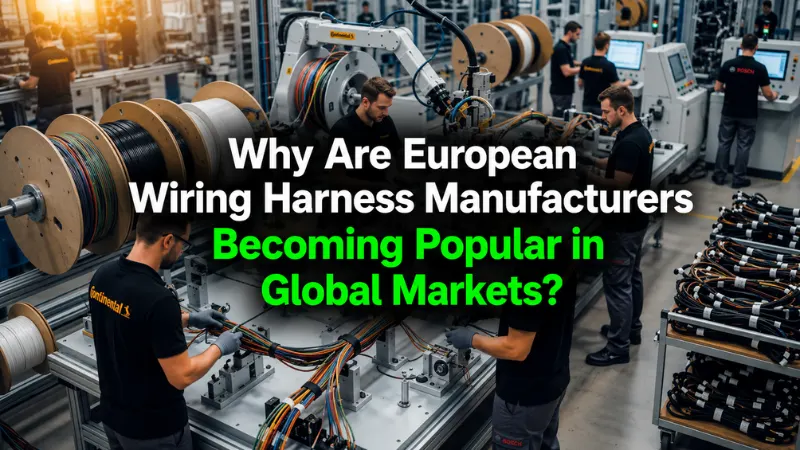
Open the door of nearly any modern car, piece of industrial machinery or medical equipment and there you’ll discover a wiring harness, a bundle of wires, connectors, and terminals that power it all without fanfare. It may not be the showiest part of the room, but it could be one of the most crucial.
Buyers had been buying such components from the lowest cost locations for decades. But things have changed. Today more and more procurement teams, engineers, OEMs worldwide are focusing their attention on the European manufacturers. But what is behind the change?
Quality That Holds Up Under Pressure
European manufacturing has a long reputation for precision and there’s a reason why. Regulatory standards force manufacturers to keep production standards very high, not for marketing purposes, but as a legal and operational requirement. These include:
- EU RoHS compliance
- REACH chemical restrictions
- Automotive-specific standards (such as IATF 16949)
A malfunctioning wiring harness in an auto application is more than just a nuisance. It can result in recall, safety incident and liability. People who have gone through such an experience are more careful the next time they buy.
European manufacturers have based their business on this type of accountability. They have processes that are documented, tested, and audited regularly, and consistency means less failure rates and fewer unpleasant surprises down the road.
Not Only Assembly but Engineering Depth
What is certainly unique about many European suppliers is the engineering expertise that they have behind the product. It is not only about wiring bundles properly, it’s about knowing the system.
The Automotive Shift
For instance, in the automotive industry, the electrification of vehicles has brought a significant challenge to the wiring complexity. High voltage wiring, protected connectors, and thermal control integration are no afterthoughts. They need to be thoroughly understood to be done correctly. Many European manufacturers have been collaborating with big automotive OEMs for decades and have gained this type of knowledge.
Industrial and Marine Applications
Companies like wiring harness finland for instance, have built strong positions in demanding sectors like heavy machinery, marine applications, and industrial automation industries where environmental extremes and long operational lifespans demand engineering that goes well beyond basic assembly.
After the Pandemic, Supply Chain Reliability
The disruptions of the last few years have taught procurement teams that low-cost, location-centric supply chains can cost a lot, very quickly, when they don’t work.
Diversification is now a true strategic objective and a trend that works in favour of European suppliers. They provide:
- Shorter lead times to European buyers.
- Increasingly competitive alternatives to North American and Middle Eastern buyers.
When buyers consider the total impact of the delays, quality problems and customs complexities, they realize the value of European sourcing. Furthermore, you’ve got to say something about clear communication. When cooperating with a supplier in a similar time zone with comparable technical language and documentation standards, there will be less friction. This won’t necessarily be reflected in the initial price, but will definitely be reflected in project timelines.
Proper Specialization is a Competitive Advantage
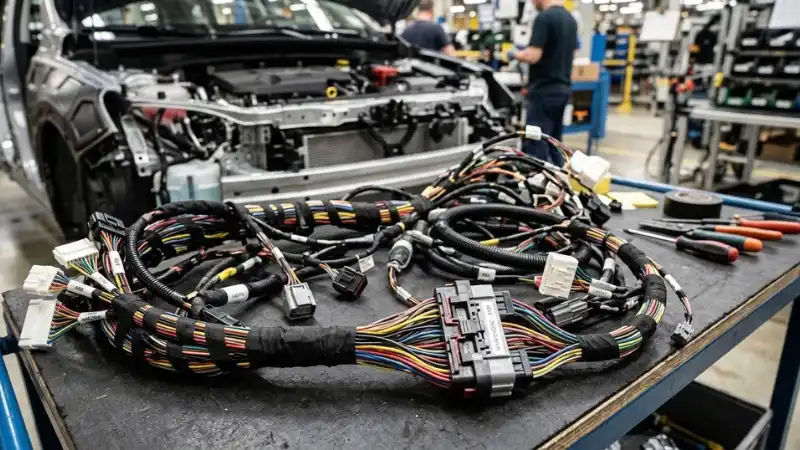
Not all European makers are in the race for volume. Many have established careers in hyper niches and in an increasingly global market, that’s a specialization that’s growing in value.
- Aerospace: Where the level of traceability requirements for all components is high and the margin for error is virtually none.
- Healthcare: Where proper patient treatment records and paperwork are essential.
- Industrial & Defense: Companies that produce wiring harness italy for instance, have a very extensive background in automation and custom-made industrial machinery.
In these sectors, the capability of creating and prototyping custom-made solutions is as crucial as the manufacturing itself.
Sustainability Is Now Part of the Equation
These days, a global buyer is not only interested in price and delivery. What they want to know is about carbon footprint, sourcing material and end-of-life recyclability. ESG reporting is no longer a “nice to have,” but a supplier selection criterion in many industries.
It is an area in which European manufacturers tend to be one step ahead. This regulatory environment has driven the positioning of environmental impact as a core concern of companies, not due to customer pressure, but simply because it is a regulatory requirement. This alignment has proven very useful to buyers who must also prove their own sustainability credentials.
What This Means for Buyers
The implication for a buyer is that the seller’s claim of “as-is” is accurate. European suppliers are no different than their reputation of high quality prices, but they are certainly worth a closer look if you are currently reviewing your wiring harness supply chain for new product development, cost optimization or risk reduction.
In reality, it’s more complicated. Defect rates, engineering changes, and the threat of supply failures and catastrophic disruption of a production line are often counterbalanced by higher unit costs. Total cost of ownership, rather than unit price, is the more honest comparison.
Partnership, not just vendor relationships, is also a consideration. Close customer collaboration at the design stage can uncover issues early on, saving manufacturers from costly prototype iterations and shortening time to market.
A Quiet Momentum
The success of the European wiring harness makers in world markets is not due to aggressive marketing or opportunistic timing. It’s a testament to something more enduring, however: a dedication to quality, engineering depth, and reliability that the world has been increasingly willing to pay for since it’s had the chance to experience the alternative.
That reputation is beginning to seem like a real competitive advantage, in a world where the hidden costs of poor quality and fragility in supply chains can no longer be ignored. But it’s not going unnoticed around the world.

