
From Static Pixels to Neural Renders: The Technical Evolution of Ad Generation
Explore the evolution of ad generation from static pixels to neural rendering, transforming creativity, personalization, performance with AI.

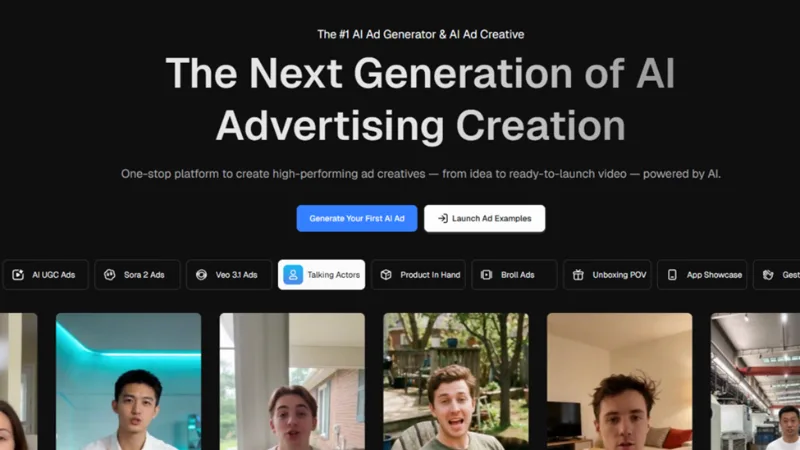
As a machine learning researcher, I spend most of my waking hours looking at neural network architectures and dataset pipelines. When the marketing industry started heavily promoting artificial intelligence, I was initially highly skeptical. Most of the early software platforms were just basic logic trees disguised behind clever branding.
However, the technology underlying creative automation has shifted dramatically over the past twelve months. We are no longer dealing with simple if-then statements or basic text-replacement algorithms. The mathematical frameworks driving modern video production are genuinely fascinating from a purely technical standpoint.
To understand why a platform like Nextify.ai is currently disrupting the media buying space, we have to look under the hood. We need to trace the evolutionary timeline of creative technology. By breaking down the software architecture, we can see exactly why the era of manual video editing is ending.
2015-2019: The “If-Then” Era of Dynamic Templates
If we look back just a few years, ad automation was incredibly primitive. Marketers relied on dynamic creative optimization, which sounded highly advanced but was fundamentally quite basic. It was entirely reliant on rigid, pre-coded templates.
In this era, a software program would simply swap out a background color or a text string based on user data. It required a human designer to manually build a massive library of individual assets first. The machine had zero actual understanding of what the image or video contained.
There was no true generation happening during this timeframe. The system was just a fast sorting mechanism playing a matching game with files. This created a strict ceiling on how many unique commercials a brand could realistically produce.
2020-2022: The Language Processing Bridge
The first real technical leap happened with the commercialization of Large Language Models (LLMs). Suddenly, computers could understand context, sentiment, and the psychological structure of a sentence. This was the foundational bridge required for any true AI Commercial Generator to exist.
Marketers started using these models to write thousands of variations of ad copy instantly. However, video remained a massive computational bottleneck for the industry. Generating moving pixels requires exponentially more processing power than generating text strings.
During this period, text-to-video concepts were mostly academic experiments locked inside university laboratories. The rendering speeds were simply too slow for any practical commercial application. Marketers still had to hire human editors to pair their AI-generated scripts with actual video footage.
Present Day: Decoding the Nextify.ai Architecture
This brings us to the current generation of technology, where the computational barriers have finally collapsed. Platforms like Nextify.ai represent a convergence of natural language processing and advanced computer vision. It is no longer a template machine; it is a fully integrated generative engine.
When I reverse-engineer how this platform approaches a user’s prompt, the pipeline is highly sophisticated. It does not just look for keywords. It actively dissects the prompt to understand the narrative arc required for a digital advertisement.
Step 1: Semantic analysis and script mapping
When you type a product description into Nextify, the system’s language model performs a semantic breakdown. It identifies the core value proposition, the target demographic, and the desired emotional tone. It then structures a highly optimized script tailored for specific platforms like Meta or TikTok.
This is where the mathematical logic of marketing is applied. The AI knows that a TikTok video requires a visually disruptive hook within the first three seconds. It automatically maps the script to follow these proven retention frameworks.
Step 2: The visual retrieval and generation sequence
Once the narrative structure is locked, the platform’s computer vision algorithms take over. This is where an advanced AI commercial generator separates itself from basic editing apps. The system scans massive databases of visual assets, searching for clips that match the exact sentiment of the script.
It analyzes the pacing, lighting, and movement within each video clip mathematically. It ensures that the transition from one scene to the next makes logical visual sense. The software is effectively acting as an autonomous film director, making split-second creative decisions based on data.
Step 3: Neural audio and spatial rendering
The final step in this timeline is the assembly and rendering phase, which happens in the cloud. The platform generates a synthetic voiceover that matches the exact emotional inflection required by the text. It aligns the audio waveforms perfectly with the visual cuts to ensure smooth pacing.
Finally, it overlays dynamic text graphics, calculating the exact spatial coordinates so they don’t block the focal point of the video. What used to require a human editor manually keyframing layers in Adobe Premiere is calculated instantly. The output is a highly polished commercial ready for immediate deployment.
The Economic Impact of the Algorithmic Shift
You do not need to be a software engineer to understand why this technical evolution matters. The business implications of this compressed production timeline are absolutely massive. The speed at which you can test creative variables directly correlates with your overall profitability.
A recent 2024 study published by Forrester Research highlighted this exact trend in enterprise workflows. According to their data, marketing teams utilizing advanced creative automation have reduced their asset production cycles by an astonishing 83%. They are launching full campaigns in days instead of months.
This data point proves that adopting AI ad tools is no longer just a fun experiment for early adopters. It is a fundamental requirement for maintaining operational efficiency. If you are paying for human hours to do what an algorithm can calculate in seconds, you are burning capital unnecessarily.
The Next Horizon: Predictive Generation
As we look toward the immediate future of this technology, the timeline is accelerating even faster. The next phase of development for platforms like Nextify.ai involves deep predictive analytics. The generation process will soon be entirely driven by real-time consumer feedback loops.
Currently, the software relies on a human to input the initial creative direction. Soon, the ad generation AI will monitor your live campaign dashboards autonomously. If a specific video starts to lose audience retention, the system will recognize the mathematical decay immediately.
It will then instantly generate a brand new video variation designed specifically to fix that exact drop-off point. This creates a completely closed, self-optimizing loop of creative production. We are rapidly approaching the day when the software not only builds the commercial but entirely manages its own strategic evolution.
As someone who studies the intersection of data and machine learning, the trajectory is crystal clear. The traditional, manual pipeline for creating digital advertisements is technically obsolete. The era of the algorithmic creative is already here, and it is executing flawless math at scale.