

How Google Search Console Is Changing Social Media SEO for B2B
See how Google Search Console is changing social media SEO for B2B brands and how businesses can improve visibility, engagement, performance.

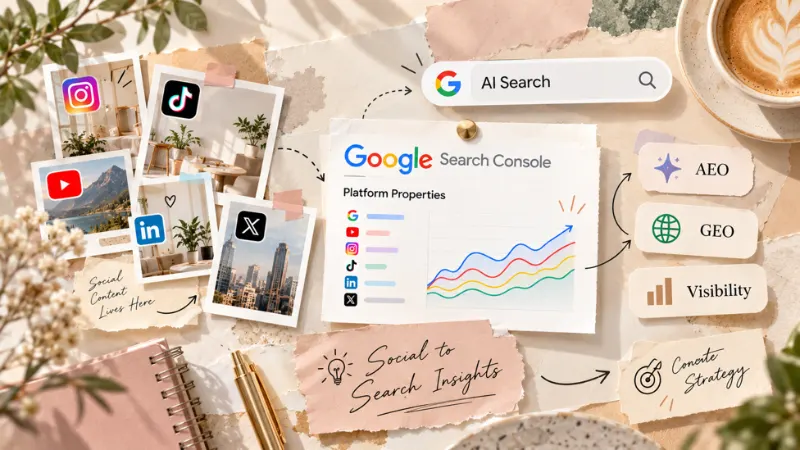
For years, SEO teams and social media teams have measured different parts of the same buyer journey.
Search teams looked at queries, clicks, and impressions.
Social teams looked at views, engagement, and follower growth.
But many buyers do not follow those reporting boundaries. Someone might discover a brand through a social post, search for the topic on Google, visit the website, and eventually enter a sales conversation.
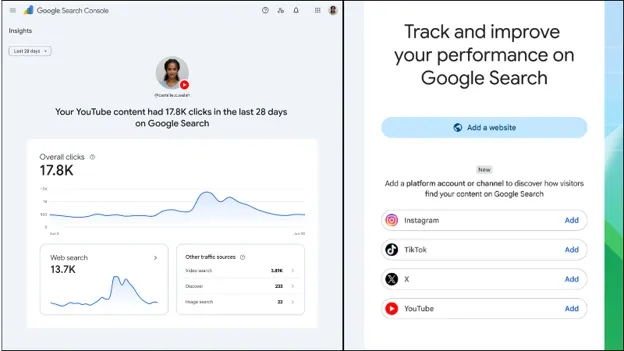
In July 2026, Google introduced Platform Properties in Search Console, giving eligible users visibility into how content from Instagram, TikTok, X, and YouTube performs across Google Search, and Discover
The direct answer: Google Search Console is changing social media SEO for B2B by making the Google Search performance of supported social and video content measurable. With Platform Properties, marketers can see the search queries, impressions, clicks, and content performance associated with Instagram, TikTok, X, and YouTube, giving social teams a clearer view of how their content is discovered through Google Search.
But this do not turn social media into a replacement for B2B websites. It adds another layer of search visibility data that marketers can use alongside their existing website and social analytics.
That gives B2B marketers another source of evidence about how audiences discover content through search. More importantly, it creates an opportunity to connect social performance with the questions people are actually asking.
The bigger question is what marketers should do with that information.
What Are Google Search Console Platform Properties?
Platform Properties is a new Search Console property type for supported social and video platforms.
Google says marketers can use the feature to understand which search queries lead people to content on Instagram, TikTok, X, and YouTube. Search Console can also show clicks, impressions, individual content performance, and trends.
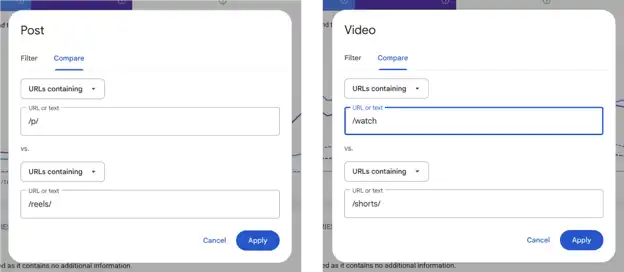
Google’s Platform Properties guidance also highlights insights that can surface top-performing posts, trending query groups, and changes in search traffic.
So How Is This Different From Social Media Analytics?
The important distinction is where the data comes from
Instagram, TikTok, YouTube, and X already have their own analytics. They can tell you how content performs inside the platform: views, engagement, audience activity, watch time, and other platform-specific metrics.
Google Search Console adds a different layer.
It shows how that social or video content is being discovered through Google Search, a shift that makes Instagram SEO measurable from Google’s side of the search journey.
The two data sets answer different questions.
| Native platform analytics | Google Search Console |
| How people interacted with content | How people discovered content through Google |
| Views and engagement | Google Search impressions and clicks |
| Audience and content performance | Search queries associated with content |
| Platform-specific behavior | Search-driven discovery |
| What performed on the platform | What appeared in response to search demand |
Neither replaces the other.
A YouTube dashboard might tell a B2B brand that a video generated strong watch time. Platform Properties can add another piece of context: what people were searching for when that video appeared in Google Search.
That is the new layer.
And for B2B marketers, that search context can reveal the questions, topics, and search themes bringing people to social content from outside the platform itself.
Why Search Intent Matters for B2B Social Media SEO
The interesting part of this update is not simply that social content can now appear in another report.
It is the query data behind that visibility.
Consider searches such as:
| Search query | Possible intent |
| What is account-based marketing? | Educational |
| ABM strategy examples | Educational / research |
| ABM vs. demand generation | Comparison |
| Best ABM software | Commercial research |
| ABM platform for enterprise | Product evaluation |
These are not Google’s official intent classifications. They are a practical way to think about the information behind a query.
A short social video might work well for an introductory question. A detailed comparison may need a more substantial website resource. A product-focused query may belong on a product or solution page.
Now imagine a B2B SaaS company discovers that a social post about reducing sales cycle time is receiving search visibility for queries around sales automation challenges.
The useful question is not simply, “How do we create more posts like this?”
It is:
“What does this search behavior tell us about the information people are looking for?”
That could lead the team to update an existing article, create a deeper guide, develop a webinar, expand a video topic, or identify a content gap.
The value is not in finding another keyword report. It is in understanding the relationship between search demand, content format, and audience questions.
Social Content Does Not Replace Website Content
It would be easy to read Google’s update as a reason for B2B brands to shift more of their content investment toward social.
Google’s documentation does not make that recommendation.
Platform properties make the search performance of supported social and video content more visible. They do not change the different jobs performed by social posts, website articles, product pages, webinars, and other owned content.
For example, a B2B company developing an account-based advertising strategy might discover that its social content around account targeting or campaign planning is receiving search visibility.
The next move should not automatically be another social post.
The team can look at its existing website content and ask:
- Is the topic already covered well?
- Is the existing resource outdated?
- Does the website answer the underlying question clearly?
- Is there a related topic that remains uncovered?
That is where the new data becomes strategically useful.
A social post can reveal a topic that attracts search attention. The website can provide deeper resources where that additional depth is useful.
The two formats do not need to compete for the same job.
Search Visibility Is Not Attribution
There is also an important line B2B marketers should not cross.
Search visibility is not the same thing as business impact.
Search Console can show that people discovered or clicked supported social content through Google. It does not establish that the interaction influenced a purchase, created pipeline, or caused a conversion.
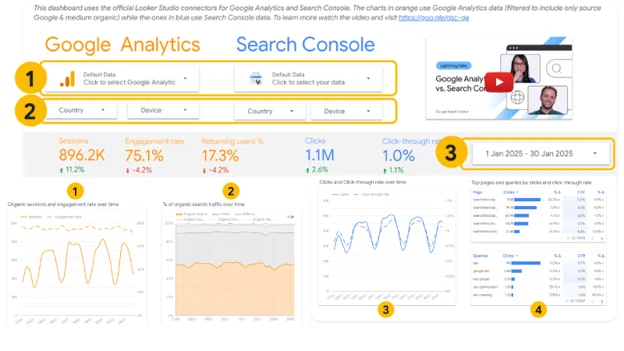
Screenshot of a Looker Studio dashboard integrating Google Analytics and Google Search Console performance metrics.
Google’s documentation on using Search Console and Analytics together makes the distinction clear: Search Console focuses on search performance, while Google Analytics provides information about what happens after visitors reach a website.
That difference becomes especially important in B2B, where a buying journey can involve multiple searches, content interactions, website visits, campaigns, sales conversations, and stakeholders.
So the numbers need context:

- An impression is not a conversion.
- A click is not a pipeline.
- Search visibility is not buyer intent by itself.
- A later conversion does not automatically prove causation.
Platform Properties add another layer of search-performance evidence. They do not turn Search Console into a complete attribution system.
How B2B Marketers Can Use Platform Properties
The most useful way to approach Platform Properties is not as another dashboard to check every morning, but as a source of better questions.
1. Which social content is appearing in search?
Look for posts and videos receiving meaningful search visibility.
The goal is to identify patterns rather than treat every high-impression asset as a business success.
- Are certain topics appearing repeatedly?
- Are particular formats gaining traction?
- Are older posts resurfacing?
Those patterns can be more useful than a single engagement number.
2. What are people searching for?
Review the queries associated with that content.
A post appearing for an educational query tells you something different from one appearing for a product-focused search.
That distinction can help marketing teams understand whether their social content is being discovered around awareness, research, comparison, or evaluation.
It also gives content teams another source of evidence when deciding which topics deserve attention.
3. Does the website cover the topic well?
If a social post is getting search visibility for a particular topic, look at the company’s existing website content.
- Does a useful resource already answer the question?
- Is the content outdated?
- Is there a question the website does not address?
The point is not to turn every successful social post into a new blog. It is to use search visibility as a signal for where existing content may need to be updated, expanded, or supported.
That is where the update can feed into a broader B2B content strategy, rather than becoming another isolated social media metric.
4. What happens after the click?
Search Console should be considered alongside the rest of the marketing stack.
Analytics can provide website behavior. Marketing automation can add engagement information. CRM data can provide sales and revenue context.
That broader measurement approach matters when social activity forms part of a larger B2B demand generation program.
No single platform needs to answer every question.
What Does This Mean for AI Search, AEO, and GEO?

But the bigger question sits beyond Google Search: can this new search data actually help B2B marketers understand visibility in AI search?
Google has not positioned Platform Properties as an AEO or GEO ranking tactic, and its documentation does not establish that the feature improves visibility in AI search platforms.
The feature is designed to measure supported social and video content across Google Search, Discover, and Google News.
Google also has a separate Search Profiles feature that can bring together content from websites and social platforms in Google Search. That is a different feature and should not be treated as evidence that Platform Properties improve visibility in third-party AI systems.
The more relevant connection is what marketers can learn from the data.
If Platform Properties reveal the questions and topics people use to discover a brand’s social content through search, those insights can help B2B teams understand what information audiences are actively looking for.
That information may inform broader content strategy, including work around traditional search and emerging AI search experiences. But the Search Console data itself does not prove visibility or performance in those environments.
It can inform the content strategy. It cannot prove the AI-search outcome.
From Search Visibility to Better Content Decisions
B2B content teams rarely have a shortage of ideas.
They have too many.
The challenge is deciding which topics deserve another asset, which deserve an update, and which are better left alone.
Platform properties can add another signal to that decision-making process:
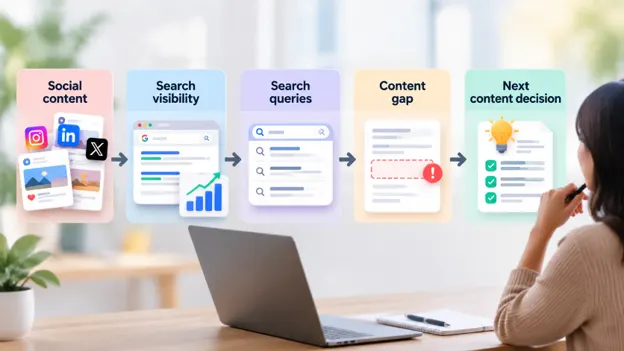
That decision might be to:
- Create an in-depth website resource.
- Update an existing article.
- Expand a successful video topic.
- Rework the social content.
- Distribute the topic in another format.
- Or leave it alone.
That last option matters.
Not every successful social post needs to become a 2,000-word article. Not every search impression signals commercial intent. And not every topic needs another piece of content.
If a topic proves valuable across multiple channels, teams can also consider how a content syndication strategy could extend its reach.
The point is to understand what each channel is telling you, not to make everything on every channel.
What This Google Search Console Update Really Changes
Google is not turning social media into a replacement for the B2B website.
It is making the search performance of supported social and video content easier to measure.
For B2B marketers, that creates another layer of insight into search visibility, queries, and content performance.
Platform Properties can help reveal how social content is discovered through search. They cannot, by themselves, explain buyer influence, pipeline, revenue, or causation.
Used alongside website analytics, marketing data, and CRM information, the new data can help content teams make more informed decisions about what to create, update, expand, or leave alone.
The real shift is not another dashboard. It is better questions.
Frequently asked questions (FAQs)
1. What are Google Search Console Platform Properties?
Platform Properties are a new Search Console property type that allows eligible users to measure how supported social and video content performs through Google Search, Discover, and Google News.
2. Which social platforms are supported by Google Search Console Platform Properties?
Google currently supports Instagram, TikTok, X, and YouTube for Platform Properties.
3. What data can marketers see in Platform Properties?
Marketers can see search-related performance information such as clicks, impressions, queries, individual content performance, and trends associated with supported platforms.
4. Do Platform Properties replace native social media analytics?
No. Platform Properties provide a Google search perspective, while native social analytics provide information about activity and engagement within individual platforms.
5. Does social media SEO for B2B mean optimizing every social post for Google?
No. The more useful approach is to identify topics and queries where social content is already gaining search visibility and use that information to inform broader content decisions.
6. Can Platform Properties prove that social media generated B2B pipeline?
No. Search visibility and clicks show search performance, not revenue attribution or causation. B2B teams need to connect search data with analytics, marketing systems, and CRM data to understand downstream business outcomes.
7. Does connecting social accounts to Search Console improve GEO?
Google’s Platform Properties documentation does not establish that connecting a social account improves visibility in generative AI search platforms. Platform Properties are primarily a search-performance measurement feature.
8. How should B2B marketers use Google Search Console Platform Properties?
Use the data to understand which social content appears in search, what people are searching for, whether the website covers those topics well, and what content decision should come next.