


Kling 2.6 API Integration: Modernizing Enterprise Video Solutions
Integrate Kling 2.6 API into enterprise software to automate video production, streamline workflows, and scale content creation efficiently.

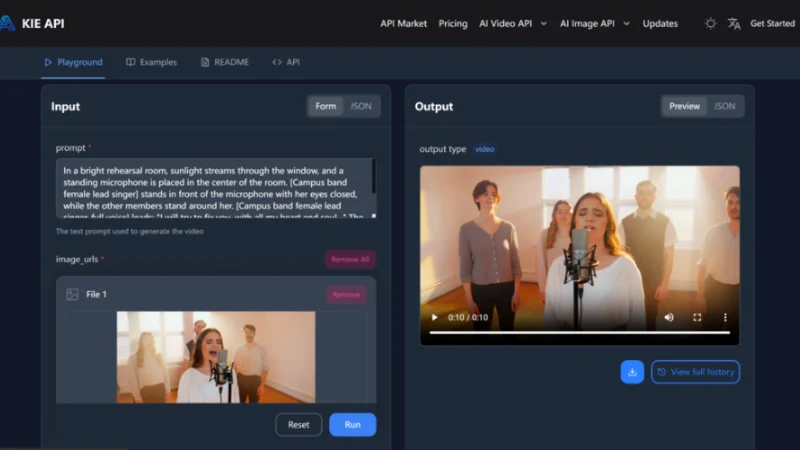
In the current landscape of enterprise digital transformation, video content has emerged as a critical asset for market competitiveness, corporate training, and internal communication. However, traditional production workflows are often resource-intensive, creating bottlenecks that prevent scalability. The arrival of the Kling 2.6 API offers a robust solution for developers to automate the creation of high-fidelity media, positioning video generation not just as a creative tool, but as a core infrastructure component within the enterprise software stack.
For organizations looking to modernize their offerings, integrating a professional-grade Kling video generation API is the key to transitioning from static media to dynamic, on-demand content pipelines. This guide explores the strategic and technical implementation of Kling 2.6 API into enterprise-grade applications.
The Strategic Role of Generative Video in Modern Enterprise
Modern enterprises are shifting from passive content consumption to active, visual-first engagement. The demand for personalized content—whether it is customized training videos for remote employees, automated updates for marketing campaigns, or dynamic visual responses in SaaS interfaces—is growing exponentially. Traditional manual production cannot keep pace with this velocity.
By leveraging the Kling 2.6 API, enterprises can move from a linear production model to an on-demand, algorithmic approach. This transition reduces the time-to-market for visual assets and ensures that content is consistently aligned with the organization’s technical and brand requirements. This is not merely about replacing human creativity; it is about augmenting enterprise productivity by automating the heavy lifting of media rendering.
Technical Deep Dive: Integrating Kling 2.6 API into Your Stack
For engineering teams, a successful integration depends on the quality of the technical documentation and the robustness of the architecture. The Kling 2.6 API documentation provides a structured RESTful framework that prioritizes scalability and reliability.
Architecting Secure Workflows
The development roadmap begins with securing the Kling 2.6 API key and implementing Bearer Token authorization to protect the connection between the enterprise server and the generation engine. Developers can trigger tasks via a unified endpoint, whether they are utilizing the Kling Text to Video API for script-based content or the Kling Image to Video API for visualizing data charts and product blueprints.
Security is paramount in an enterprise environment. All API requests should be routed through secure, server-side infrastructure to ensure that keys are never exposed in client-side code. By managing authorization headers effectively, developers can ensure that only authenticated requests reach the Kling generation engine, maintaining the integrity of the enterprise workflow.
Leveraging Native Audio-Visual Synchronization
A primary challenge in corporate media production is the fragmented nature of visual and auditory assets. Traditionally, generating a video requires distinct phases for visual rendering, voiceover recording, and sound engineering. The Kling Video 2.6 API disrupts this workflow through its native audio-visual generation capabilities.
By synchronizing speech, lip-syncing, and environmental sound effects into a single generative step, this API allows enterprise applications to create polished, professional-grade videos without the overhead of traditional post-production. Furthermore, the Kling 2.6 API advanced semantic understanding allows for 1,000-character instructional prompts, ensuring that generated content adheres strictly to brand voice and technical specifications, which is essential for compliance in professional environments.
Asynchronous Pipelines and Load Balancing
In high-volume production environments, active polling for task status is inefficient and strains system resources. The technical documentation recommends implementing the callBackUrl parameter. This asynchronous approach allows the system to push notifications to a designated enterprise endpoint automatically upon generation completion, facilitating a low-latency feedback loop that is critical for real-time applications.
Optimizing Production Economics with Transparent Pricing
For IT managers and procurement teams, cost predictability is just as important as technical performance. The Kling 2.6 API price structure on Kie.ai is designed to provide transparency, enabling accurate ROI forecasting for large-scale deployments.
The Kling 2.6 API pricing is structured by duration and audio inclusion, ensuring that organizations pay only for the resources they consume. For a 5-second video, the price is $0.28 for silent output and $0.55 for output with native audio. For a 10-second video, the cost is $0.55 for silent output and $1.10 for full native audio integration. This tiered model allows enterprises to calculate the precise cost of scaling their media production.
Beyond the direct API costs, organizations should evaluate the Total Cost of Ownership. By automating video production, companies can significantly reduce expenses related to manual labor, studio time, and external content production agencies. Furthermore, the ability to generate assets on-demand reduces the costs associated with storing and managing large libraries of static media files, as assets can be recreated or modified in real-time if necessary.
Real-World Enterprise Use Cases
Automated Employee Onboarding
Human Resources departments can use the Kling 2.6 API to generate personalized onboarding videos for new hires. By integrating this with HR software, the system can automatically create a welcome message featuring a virtual tutor addressing the employee by name and outlining their specific department goals, all generated in minutes without manual intervention.
Dynamic Data Visualization
For financial and analytical platforms, the Kling Image to Video API can transform static spreadsheets or complex data charts into dynamic visual simulations. Instead of presenting a static graph, the platform can generate a video explaining the data trends, making technical reports significantly more accessible and engaging for stakeholders who may not have deep expertise in data analysis.
Personalized Marketing and Customer Support
Marketing teams can use the API to generate thousands of variations of a promotional video, each customized for a specific demographic or user segment. Similarly, support teams can automate the creation of troubleshooting videos, providing users with visual, step-by-step instructions that are customized based on the specific error they encountered. This level of personalization at scale was previously impossible to achieve with traditional video production tools.
Conclusion
The integration of the Kling 2.6 API into the enterprise software stack represents a paradigm shift in how digital content is conceptualized and delivered. By combining sophisticated semantic interpretation, a streamlined API architecture, and transparent, tiered pricing, organizations can now produce complex, audio-visual assets at an unprecedented scale. As AI video technology matures, the ability to rapidly produce high-fidelity content will define the next generation of scalable, automated business applications.

