
What Should OEM Buyers Look for Before Choosing an Electronics Manufacturing Partner?
Evaluate electronics manufacturing partners on technical capability, quality systems, supply chain resilience, engineering support, scalability, communication

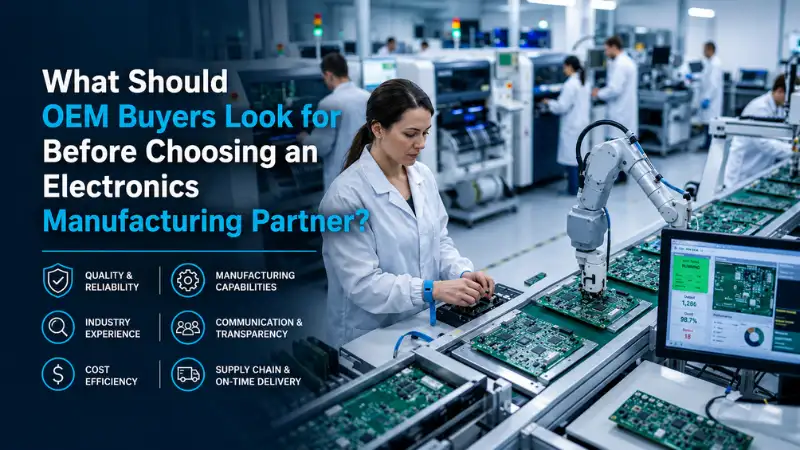
Selecting an appropriate electronics manufacturing partner is not the business you can hurry. Miscalculate, and you end up with deadlines missed, quality issues, rework at a premium price and the type of supply chain nightmares that make procurement managers wake at night. Get it right and you have a partner who becomes like an extension of your own team, which in this case, assists you to scale, remain competitive and even sleep at night.
But what makes a truly great manufacturing partner different from one that only looks good on paper? The following are what the experienced OEM buyers have learned to expect.
Begin with Technical Capability – Not What You See on the Brochure
All the contract manufacturers will give you a slick capabilities list. The actual question is whether the capabilities fit the product requirements of your product.
If your product involves high density PCBs, advanced connectors, or precision wiring, you need a partner whose equipment and expertise actually match that complexity. This is especially true for manufacturers that offer robotic cable assembly the precision and consistency that automation brings matters enormously when you’re producing at scale. Manual assembly introduces variability. Robotics reduces it. Ask to see the production floor, not just slides of it.
Dig into tolerances, inspection protocols, IPC standards compliance and how they handle complex multi layer boards or tight lead free soldering requirements. If a manufacturer gets vague when you ask technical questions, that’s a red flag.
Quality Management is Not Only About Certifications
ISO 9001, IATF 16949, IPC-A-610 these certifications are important, but these are the minimum, not the maximum. There is a possibility that a manufacturer has all the certifications on the list and has weak in process controls.
What you really need to know is how they deal with defects prior to product exiting the facility:
- Do they have AOI (Automated Optical Inspection)?
- In-circuit testing?
- BGAs X-ray?
- And critically what happens if something fails?
- Do they have traceability down to the batch and component level?
Ask for real data. Rates of defects, first pass yield, DPPM. A partner that monitors this stuff and is open with it is a partner that values quality. One that provides you with unclear promises is unlikely to do so.
Supply Chain Resilience: A Lesson Everyone Learned the Hard Way
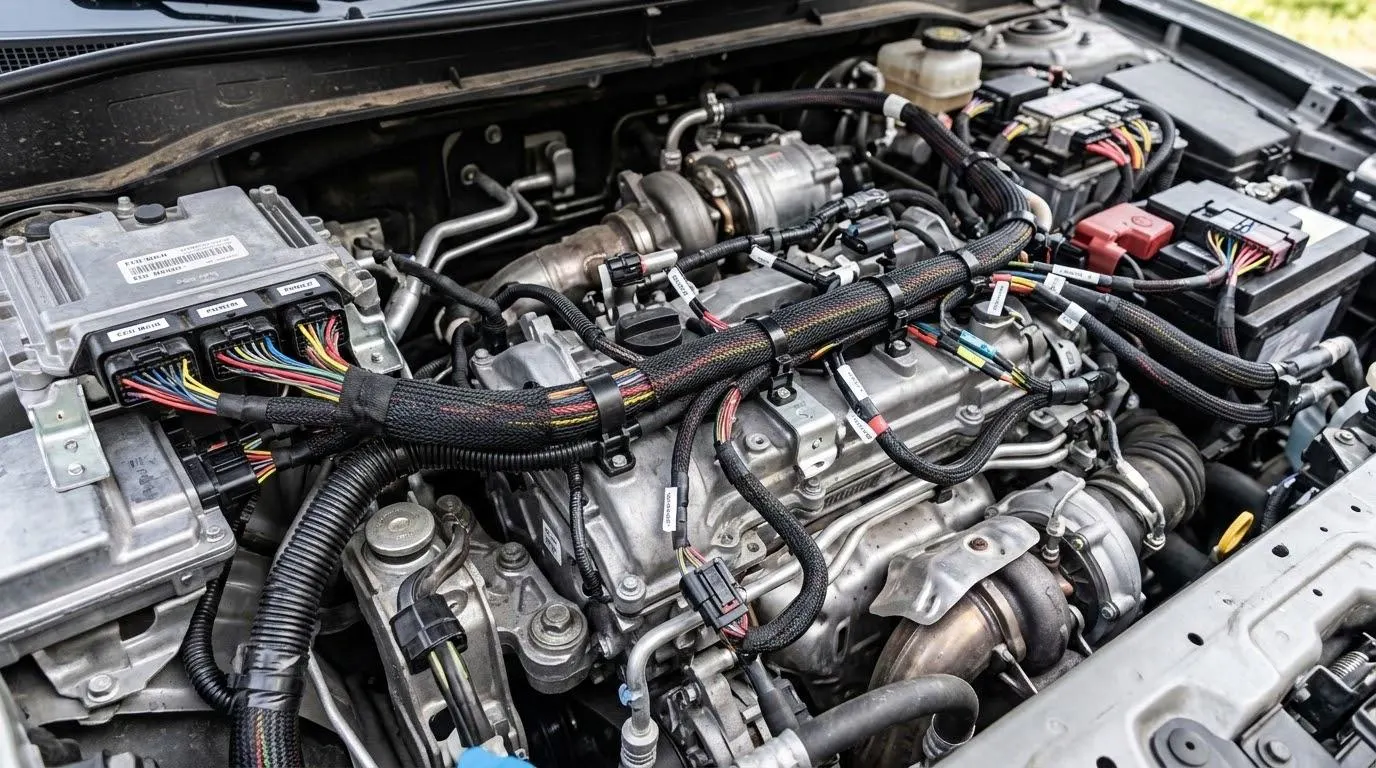
The shortages of components of the recent years revealed how vulnerable single source supply chains are. Find out how a manufacturing partner procures components before you commit to a manufacturing partner.
- Do they possess approved vendor lists containing a number of qualified sources on each component?
- What about last time buying or EOL (end-of-life) parts?
- Do they maintain long lead time parts strategic buffer stock?
When evaluating a cable harness supplier as part of a broader manufacturing relationship, one might consider asking about how they source connectors and wires in particular. They are infamously prone to availability fluctuations and a partner having good ties with suppliers and active inventory control will save you lots of heartache.
Engineering Support Can Make or Break Your Timeline
Other OEM purchasers view contract manufacturers as nothing more than execution partners they submit the BOM and Gerbers and wait to have the product returned assembled. That design is okay until you hit some design problem, a component obsolescence problem or some manufacturability problem you never anticipated.
The most appropriate manufacturing partners provide real DFM (Design for Manufacturability). They will:
- Draw attention to the problems at an early stage.
- Propose different parts when your original one is not found.
- Assist in finding the best way to make your design less costly or more robust.
Such an engineering partnership can reduce weeks to a product release schedule. Find a partner that poses smart questions about your product in the early stages of conversation not one that only requests the files.
Scalability: Think Three Years Ahead, Not Today
Your volumes of production may be small at the moment. However, once your product succeeds, then you will have to scale up sometimes fast. A manufacturing partner that can manage your 500 unit pilot and has difficulty in increasing to 50,000 units will become a bottleneck at the most opportune time.
Enquire directly about their capacity situation:
- What is their usage rate?
- How long does it take to bring on additional shifts or equipment?
- Are they used to handling high volume inflows with no quality loss?
Geographic diversification is also something to consider. The existence of many production locations (or relations with regional locations) provides a buffer of stability that manufacturing single locations cannot possibly compete with.
Communication Culture Matters More Than You Think
It does not appear on capability matrices, yet it tends to be the ultimate difference between success and failure of a long-term relationship.
- Transparency: What is their speed of reaction to questions? Are you getting straight or corporate deflections?
- Proactivity: When something does go wrong and something always, somewhere, somehow goes wrong, are they pro-active in telling you, or do you discover problems when a shipment is late?
Be a listener on your initial few encounters. Are they responsive? Do they resist constructively when they observe a possible problem? Are they good keepers of words? The manner in which a partner carries himself prior to signing a contract is normally a guide of how they will carry themselves after.
Solvency and Securities
It is not a pleasant thing to consider, but it is important. A supplier that fails mid-way through a production run, or who compromises the process due to financial constraints, poses colossal risk to your supply chain.
- Request references.
- See their length of business.
- In case they are a publicly-traded company, verify their financials.
- In the event that they are private, enquire on the ownership structure and growth path.
You do not necessarily have to go through a complete due diligence audit but you must be sure that they will be there and operating at least as long as you are in business with them.
The Bottom Line
Locating an appropriate electronics manufacturing partner requires more time and effort than most OEM buyers anticipate. However it is a worthwhile investment. The correct technical ounce, a well-developed quality system, supply chain robustness, and an open communication culture does not only develop your product, but also assists in safeguarding your reputation and your schedule.
Take time to pose the tough questions, visit facilities, and interview references who have experienced volume ramps and problem situations with the manufacturer. The responses you receive and how they are presented will tell you all you need to know.
The right partner is out there. You just have to know what you’re looking for.