
How Can Manufacturers Reduce Downtime in Complex Industrial Systems?
Manufacturers reduce unplanned downtime through predictive maintenance, quality cable harnesses, equipment standardization, strategic spare parts planning, workforce training, and resilient system design.

There is a moment every plant manager dreads – The line is silent. Not the “end of shift quiet,” but the all at once “stomach-dropping quiet” that comes when something goes wrong. Unplanned downtime is a problem in a complex industrial setting, as well as a cost hemorrhage. The cost of an hour’s loss of production ranges from tens of thousands to several hundred thousand dollars per industry.
The good news? The majority of downtime can be avoided. Not all of it, after all, machines wear out, conditions change, surprises happen. However, many of the failure cases can be predicted, controlled and even avoided if proper approaches are applied.
Let’s dissect how manufacturers are doing it.
You Can’t Fix What You Can’t See: Start With Visibility
Lack of real time information is often the first hurdle in achieving downtime reduction. Traditional maintenance approaches are based on predetermined schedules or waiting for failure. Neither is ideal.
The modern manufacturers are shifting to condition monitoring, which is the continuous monitoring of equipment health via IoT and sensors. Vibration levels, temperature readings, motor current draw all of these tell a story if you know how to listen.
- If a bearing is beginning to wear it will not fail immediately.
- It gives warnings.
- That’s where sensors come in.
- Dashboards surface them.
- Technicians don’t wait until it becomes catastrophic.
Changing from reactive maintenance to predictive maintenance isn’t just a technological leap, it’s a cultural change. It involves putting as much faith in data over experience, which takes time. This is, however, a big reward for the effort. Firms that implement predictive maintenance experience significant decreases in unplanned downtime in the first year.
The Electrical Infrastructure Nobody Talks About Enough
One thing you may not always hear during downtime is about wiring.
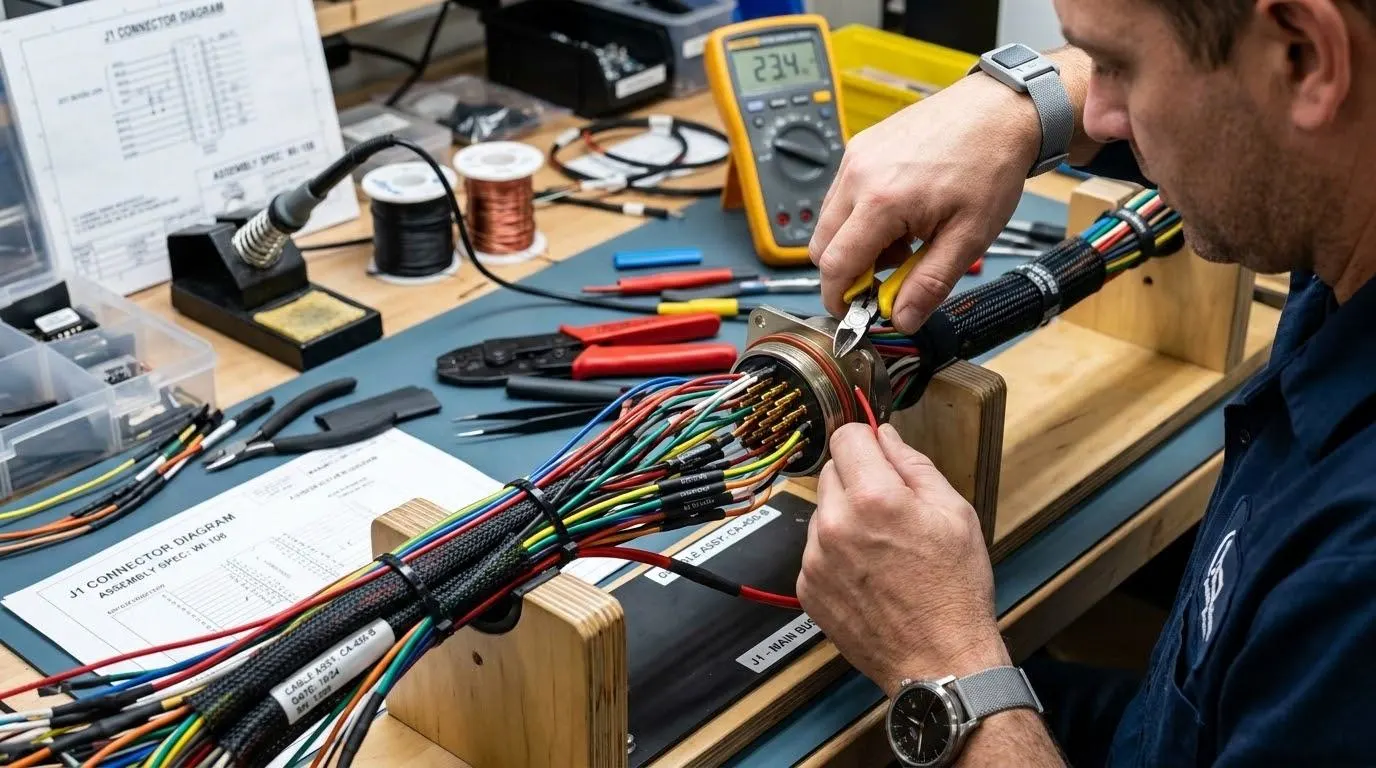
Among the most frequent reasons for production stoppage are electrical failure, and the cables and connections that traverse the industrial machinery often go neglected. From a frayed wire to a connector that wasn’t crimped properly or a harness not rated for the operating temperature, it can all bring down a line.
Partnering with a trusted electrical cable harness producer is more important than people think. A good harness not only joins the parts together, but:
- Maintains the integrity of the signal.
- Withstands the mechanical forces of constant motion.
- Endures the daily rigors of heat, vibration, and moisture common in industrial environments.
If harnesses are constructed properly and properly mounted they become invisible; doing their work quietly for years. When they are not, they’re a persistent problem and a source of baffling, intermittent issues that are hard to troubleshoot.
Standardization: The Underrated Efficiency Lever
Visit two factories, and you’ll see a big difference, often. One has a mix of machine generations, brands and software interfaces, a patchwork that is a result of a number of specific decisions made over a period of years. The other standardizes equipment throughout its lines, uses interchangeable parts and the same procedure.
Speculate which is better off after a breakdown?
Standardization minimizes maintenance team cognitive load.
- If all the motors in the plant are the same make, your staff will be familiar with them.
- Spare parts are interchangeable.
- Troubleshooting is faster.
- Easier to train new technicians.
That doesn’t imply that you have to replace equipment; this is hardly feasible. That doesn’t mean you don’t need to think about standardization when adding capacity or replacing aging assets.
Spare Parts Strategy: The Right Stock at the Right Time
There is nothing worse than waiting for a part to increase downtime. Managing spare parts stock is really difficult. Stock too much and you have parts collecting dust and wasting away. Order too little, and your shipments are interrupted, leaving you with a loss of production. The solution is somewhere in the middle, based on data.
Key Questions for Intelligent Stocking:
- What elements are subject to the most failures?
- What are the longest downtimes for which failures are the cause?
- What are the long lead time parts from suppliers?
Providing answers to these questions with actual maintenance records – not gut feelings – results in more intelligent stocking decisions.
It’s also a good idea to have good supplier relationships in place before the last minute. When the product is as fundamental as Cable Assembly and Wire Harness components, a supplier who knows your application and can get you replacement components fast isn’t a luxury, it’s a strategy to resilience. A knowledgeable supplier is a partner, not just a vendor.
Training and Retention of Knowledge
It’s one of those things that can be overlooked when thinking about technology and equipment. One of the most fragile assets in any manufacturing operation is human knowledge.
There’s a lot of institutional knowledge that experienced techs have, and they know where the quirks are, what sounds mean trouble, which workarounds work, and so on. Once they’re gone, that knowledge goes with them until they can make the decision to intentionally capture and share.
Things like documenting procedures, creating visual work instructions, and cross training team members just sound like overhead work until that one day when your senior electrician calls out sick and a machine goes down. Then they feel needed.
When investing in workforce development, you’re also investing in your downtime metrics. A trained crew will detect problems quicker, repair them with greater accuracy and less error during maintenance windows which could create new problems.
Design for Resilience Into the System
Lastly, the most effective time to consider downtime would be when a machine isn’t even installed.
As part of the evaluation of new equipment, inquire with the manufacturer regarding:
- MTBF: Mean time between failure.
- Accessibility: Is there access for maintenance and parts availability?
- Speed of Repair: What is the time required to change a motor?
- Ergonomics: Is there any way for a technician to access the electrical panel without using a ladder and 3 other people?
- Connectivity: Are there standard connectors?
These questions may seem nitpicky while purchasing equipment, but they can be worth their weight in gold for the life of the machine. Good design decisions, both on the machine and in the integration of the machine to the rest of the system, can make the difference between 20 minutes and four hours.
Wrapping Up
No single factor is likely the cause of downtime in complex industrial systems. Everything is built from a number of smaller problems, whether it be delayed maintenance, inadequate spare parts, outdated electrical systems, lack of knowledge, or simply failing to ask the right questions during procurement.
The best manufacturers make uptime a discipline, rather than a target. They invest in visibility, in designing resilient systems from the ground up, in suppliers that know how serious things are and in people who do the job. All of these strategies are unflashy. However, when they combine for a valuable output: a production floor that keeps running.