
How the Rise of Ridesharing Is Changing Transportation Risk
Explore how ridesharing is changing transportation risk, from driver safety and insurance challenges to evolving risks for passengers.

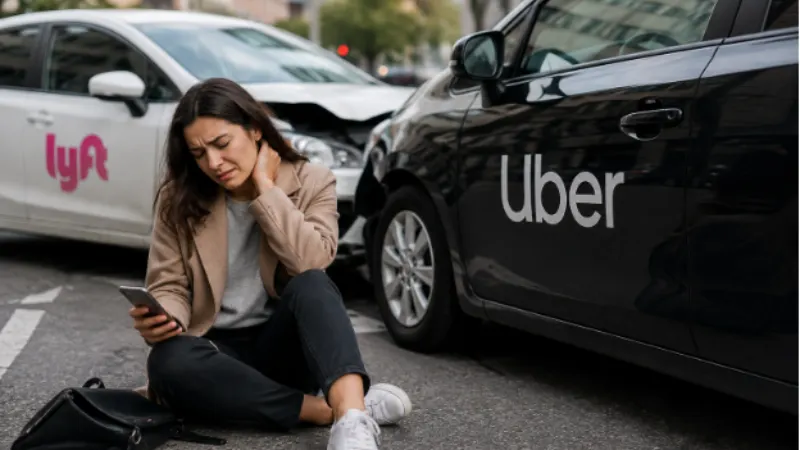
How many strangers’ cars have you sat in this month?
It’s a bizarre leap of faith when you think about it.
We spent decades being told never to get in a car with someone we didn’t know, and now we summon them to our front door with a thumb-press and a credit card on file.
Ridesharing has fundamentally rewired the way our cities move, but it hasn’t just changed the “how”—it has changed the nature of the risks we take every time we buckle up.
This article dives into the statistics, the legal messy bits, and how the streets themselves are evolving to handle this new reality.
The Rise of Ridesharing: The Numbers Tell it All
The sheer volume of rides is staggering. Uber’s 2021-2022 safety report logged over 1.8 billion trips in the U.S. alone. Out of those, they recorded 153 motor-vehicle fatalities.
Statistically, that’s a tiny fraction per ride.
Yet, it means families shattered, and lives upended in the background of our daily commutes. You can’t just wave away the human cost with a percentage point.
Zoom out, and the broader picture is just as messy. In 2022, the NHTSA reported 42,514 traffic deaths nationwide. A notable chunk of those involved alcohol. Ridesharing platforms often claim to reduce drunk driving, and in some bustling nightlife districts, they absolutely do.
Then again, researchers from the University of Chicago found that the arrival of ridesharing actually increased traffic fatalities by 2% to 3% in certain cities. The math is conflicting, complex, and deeply human.
5 Ways Ridesharing Is Rewriting Transportation Risk
So, what is actually happening out there on the pavement?
The shift isn’t just about more cars; it’s about how those cars operate under the pressure of an algorithm. Here is a closer look at 5 distinct ways this industry is altering our everyday risk.
1. Liability Has Become More Complicated
It used to be that if you were in a wreck, you swapped insurance cards and let the companies fight it out. Now, everything depends on a digital toggle switch. It’s a strange world where your legal protection depends on whether a driver has clicked “accept” in an app.
If you’ve been hurt riding in an Uber in an accident-prone city like St. Louis, determining which insurance coverage applies is often one of the first questions after the accident.
The team at DM Law explains that rideshare collisions frequently involve multiple parties and insurance policies, making legal guidance particularly valuable when liability isn’t immediately clear. For passengers, that complexity often comes as a surprise.
Most people simply assume every rideshare trip is covered the same way from start to finish.
2. More Driving Time Means More Opportunities for Accidents
More rides. More miles. More chances for something to go sideways. Drivers chase fares, circle for surge pricing, and wait for riders outside concerts or bars.
Research ties these extra “deadhead” miles — when drivers have no passengers — to the 2–3% uptick in citywide road deaths after ridesharing shows up.
You’ve noticed it: cars pulling sudden U-turns to make a pickup, people dodging blinking hazards during late-night curb rushes, everyone slightly more impatient when events let out all at once. Every extra minute on the clock, every mile a driver isn’t resting, makes another accident a little likelier.
3. Technology Has Improved Accountability
Still, the apps aren’t entirely the villain here.
That same glowing screen tracks every single movement. GPS coordinates, acceleration speeds, sudden braking habits — it’s all logged in a massive server somewhere.
This digital footprint is a game-changer for basic accountability. Bad drivers can be systematically flagged by the algorithm and deactivated before they cause a tragedy.
In the old days of hailing a yellow cab, a reckless driver could just vanish into the night. Now, there is a hard, undeniable record of who was behind the wheel.
It brings a weird sort of comfort to the chaos.
4. Insurance Is Evolving Alongside the Industry
Insurers were completely caught off guard when ridesharing first exploded onto the scene. Personal auto policies routinely denied claims, leaving injured passengers stranded in a terrifying legal gray area.
The industry eventually had to catch up. We now see specific rideshare endorsements, and state-mandated coverage minimums have started to close the gaps.
That said, filing a claim remains a massive, exhausting headache. You are often battling multiple insurance adjusters who just want to pass the buck to someone else. The paperwork alone is enough to make you want to walk everywhere.
5. Cities Are Redesigning Streets Around Ridesharing
Our physical environment is morphing to handle the app-induced chaos. Urban planners are literally painting new rules onto the concrete to keep us safe.
We are getting designated pickup zones, geofenced airport lots, and protected bike lanes designed to separate vulnerable riders from anxious gig workers. You notice the new neon signs and loading zones popping up outside every major venue.
It is a slow, reactionary process. Planners are doing their best to adapt legacy infrastructure to an app-driven world. Not ideal. But it worked.
The Journey Is Far From Over
Ridesharing didn’t erase risk; it redistributed it.
It moved a portion of danger from one lane to many, from one set of drivers to thousands, from one set of assumptions to a shifting web of technology and policy. The streets will keep adapting. The laws will keep evolving, trying to catch up with real-world complexity.
And you? You’ll keep riding, of course. The next time you slide into a back seat, remember that you are participating in a grand, ongoing experiment. Stay alert, buckle up, and watch the road. The true cost of convenience is still being tallied.