
From Planning to Execution: How Route Tools Transform Daily Delivery Workflows
Discover how route tools improve delivery workflows by optimizing planning, execution, efficiency, and real-time logistics performance.

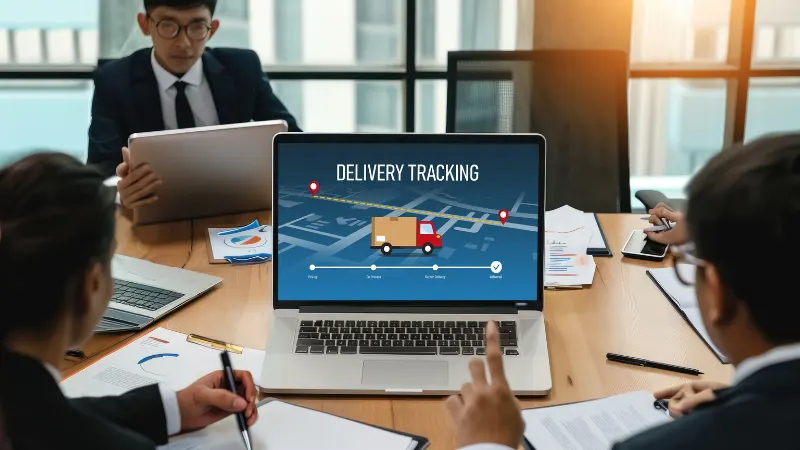
The gap between a well-planned route and a well-executed delivery shift is where most fleet operations lose efficiency. Routes leave the planning system looking optimized, with stops in the right sequence, vehicle capacity correctly utilized, and time windows properly accounted for. Then the shift starts.
A driver deviates from the planned sequence because they know a shortcut. Dispatch manually adds three stops 45 minutes into the run without checking the impact on downstream ETAs. Two vehicles cover the same geographic area because zone boundaries were not updated after last week’s demand shift.
By midday, the plan and the reality bear little resemblance to each other. Closing the gap between planning and execution is the central operational promise of modern route tools, and understanding exactly how that works in practice helps logistics teams decide where to focus their investment.
Let’s go through it.
Where the Planning-Execution Gap Comes From
The planning-execution gap is not primarily a technology problem. It is a workflow integration problem. Planning and execution have traditionally been separate organizational functions with separate tools, separate data, and separate visibility.
- A planner optimizes routes in a planning system.
- The dispatcher manages the live operation through phone calls, WhatsApp groups, and a tracking screen.
- The driver navigates using a consumer app and manages delivery data on paper or in a disconnected mobile tool.
Each handoff in that chain is a potential failure point.
- The Handoff Problem
When the route plan is communicated to drivers via a printed manifest or a WhatsApp message, the planner’s optimization decisions are immediately at risk. A driver who does not understand why the stop sequence is ordered the way it is will reorder it based on personal preference.
An updated stop addition that arrives via text message may be inserted in the wrong position, disrupting the planned load sequence. The plan leaves the planning system intact and arrives at the driver in fragments.
- The Visibility Problem
Without real-time integration between the route tool and the execution environment, planners and dispatchers have no live picture of how the plan is performing. The first signal that the shift is running badly is often a missed customer call, at which point the problem has already compounded across multiple stops.
How a Route Tool Bridges Planning and Execution
A purpose-built route tool connects the planning function and the execution environment through a common data architecture. The plan that leaves the optimization engine reaches the driver’s mobile app in its complete, correctly sequenced form.
Every stop update flows instantly from dispatch to the driver. Every delivery event captured by the driver flows instantly back to the planning and visibility layer.
- Automated Plan Distribution and Driver Acceptance
When a route plan is released from the planning tool, it is pushed automatically to each driver’s mobile app. The driver accepts the route, confirms vehicle and load details, and begins the shift with a complete, current plan on their screen, not a printed list that may already be out of date.
Plan changes made by dispatch after departure are reflected in the driver’s app immediately, with affected ETA recalculations propagated automatically across the remaining stop sequence.
- Live Execution Monitoring Against Plan
The dispatch team views a live map layer showing each vehicle’s current position, planned versus actual progress, and ETA accuracy across all active stops. Deviations are surfaced as alerts when a driver is significantly behind schedule, a vehicle is off the planned route, or a stop is taking longer than the planned service time.
These alerts are prioritized by their ETA impact, so the dispatcher directs attention to the exceptions that matter most.
- Stop Completion and Exception Data in Real Time
As drivers complete stops, delivery confirmations, POD records, and exception reports flow back to the planning layer in real time. Logistics coordinators have live delivery status across the full fleet without making a single outbound call.
Customer notification systems receive triggered updates as stops are completed or ETAs change. The entire information chain operates automatically, without manual data entry or dispatcher mediation.
Daily Workflow Improvements Across Roles
The impact of route tools on daily workflows is role-specific and immediate.
- Dispatchers spend less time on inbound calls from drivers asking for clarification and less time manually rebuilding disrupted plans. Their attention shifts from operational firefighting to monitoring exceptions that the system has already partially resolved.
- Hub managers receive live confirmation of vehicle departure times, load completion, and estimated return ETAs, which allows dock scheduling and inbound vehicle planning to run more efficiently. The accuracy of vehicle turnaround planning improves, reducing dock congestion during peak return periods.
- Logistics coordinators access live delivery status and POD records without chasing drivers or waiting for end-of-shift data entry. Customer escalations are handled faster because the information to resolve them is available immediately, not at the end of the shift when the driver debriefs.
The Analytics Layer: From Execution Data to Planning Improvement
Route tools that capture execution data accurately create an operational analytics asset that improves planning over time. Actual stop durations feed back into service time models. Route deviation patterns reveal where planned routes consistently require driver adjustment, indicating map or sequencing issues that can be corrected. Vehicle utilization actuals versus plan identify where capacity assumptions are consistently inaccurate.
This feedback loop is the mechanism through which daily execution data improves tomorrow’s plan. Operations that close the feedback loop systematically see planning accuracy improve with each passing month, a compounding operational advantage that manual planning processes simply cannot replicate.
Close the Gap Between What was Planned and What was Delivered
The most efficient delivery operation is one where the plan and the execution stay aligned throughout the shift and where the data from each shift makes the next one better. Route tools that connect planning, execution, and analytics in a single workflow environment make that alignment achievable at scale.
Technology partners like FarEye are built to close the planning-execution gap, connecting route optimization, driver mobile workflows, and real-time visibility in one integrated environment. If your operation is ready to move from disconnected tools to an integrated delivery workflow, connect with industry leaders in route tools and see how quickly the gap closes.